Geomechanics.io

  • Free Tools
Sign UpLog In

    Geomechanics.io

    Geomechanics, Streamlined.

    © 2026 Geomechanics.io. All rights reserved.

    Geomechanics.io

    CMRR-ioGEODB-ioHYDROGEO-ioQCDB-ioFree Tools & CalculatorsBlogLatest Industry News

    Industries

    MiningConstructionTunnelling

    Company

    Terms of UsePrivacy PolicyLinkedIn
    Projects
    Standard/Guideline
    Product

    Helical piles FAQ: design, torque capacity and corrosion notes for engineers

    April 29, 2026|

    Reviewed by Tom Sullivan

    Helical piles FAQ: design, torque capacity and corrosion notes for engineers

    First reported on Geoengineer.org – News

    30 Second Briefing

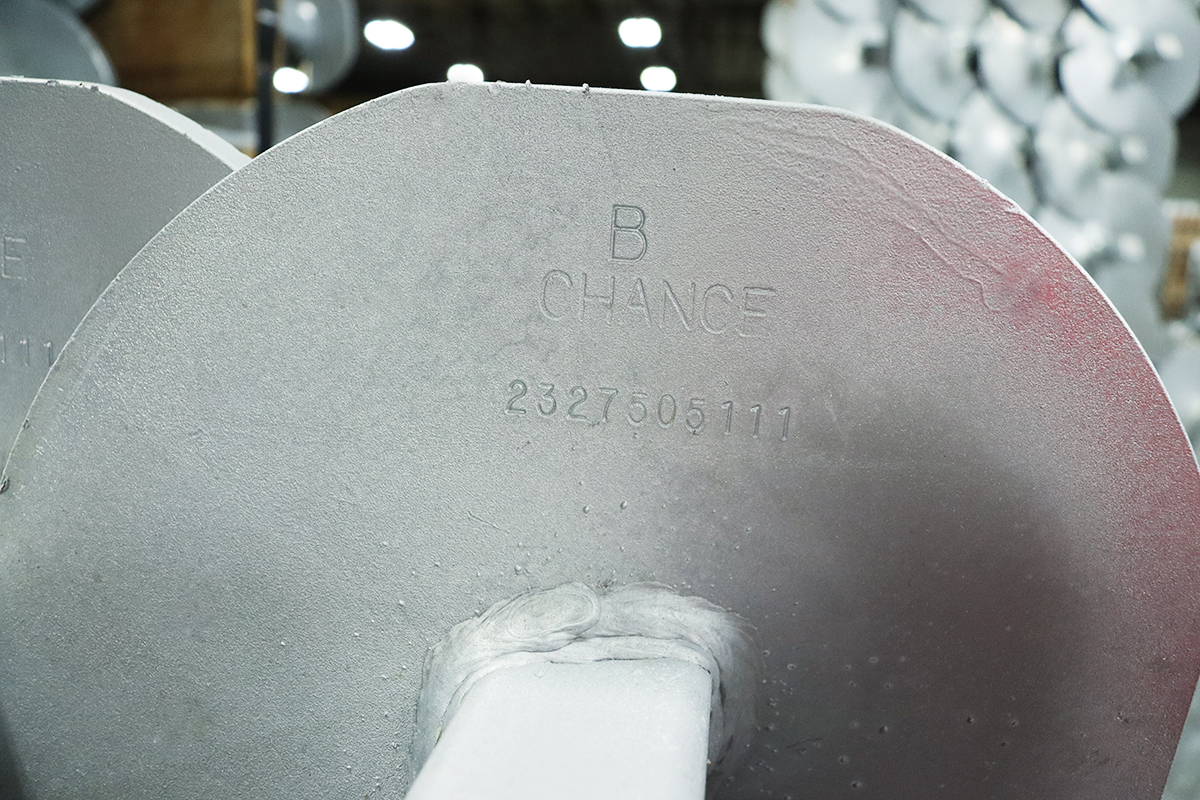
    Helical piles are presented as displacement deep foundations that can be installed with small hydraulic drive heads on mini-excavators or skid steers, generating minimal spoil and vibration compared with driven piles. The FAQ addresses load capacity verification via torque correlation (e.g. kN-m per kN of capacity), corrosion protection options such as hot-dip galvanising and increased sacrificial thickness, and suitability in soft clays, fills, and below groundwater. Design is framed around ICC-ES AC358, with emphasis on tension, compression, and lateral performance for underpinning, boardwalks, and utility structures.

    Technical Brief

    • Helical piles are a proven deep foundation solution used across commercial, industrial, utility, and infrastructure applications.

    Geotechnical Software for Modern Teams

    Centralise site data, logs, and lab results with GEODB-io, CMRR-io, and HYDROGEO-io.

    No credit card required.

    • Save and export unlimited calculations
    • Advanced data visualisation
    • Generate professional PDF reports
    • Cloud storage for all your projects

    Prepared by collating external sources, AI-assisted tools, and Geomechanics.io’s proprietary mining database, then reviewed for technical accuracy & edited by our geotechnical team.

    Related Articles
    Settlement prediction in layered soils with Settle3, RS2, RS3: design notes for geotech...
    Geotechnical
    1 day ago

    Settlement prediction in layered soils with Settle3, RS2, RS3: design notes for geotech...

    Settlement prediction in layered soils is shown to depend strongly on how vertical stress increments are computed, comparing classical Boussinesq-based methods with numerical analyses in Settle3, RS2, and RS3. The piece contrasts 1D influence-factor approaches against 2D/3D finite element and finite difference models that capture stiffness contrasts, non-linear behaviour, and complex load geometries. For practitioners, it signals when simple elastic solutions become overly conservative and when full numerical stress redistribution is needed to refine serviceability settlement estimates.

    Quaise superhot geothermal plant: design and subsurface risks for engineers
    Geotechnical
    7 days ago

    Quaise superhot geothermal plant: design and subsurface risks for engineers

    Quaise Energy is advancing Project Obsidian in Oregon, aiming to build the first superhot geothermal plant by drilling into rock above 300°C and delivering a baseload 50 MW from only a handful of wells by 2030. A modelling analysis presented at the 2026 Stanford Geothermal Workshop by senior mechanical engineer Daniel W. Dichter indicates higher subsurface temperatures could ultimately support 250 MW in phase two, with a regional goal of 1 GW. The confirmation well is due online later this year, with lab work at Oregon State University recreating extreme downhole geochemical conditions.

    Keller North America leadership changes: procurement and delivery notes for engineers
    Geotechnical
    14 days ago

    Keller North America leadership changes: procurement and delivery notes for engineers

    Keller has appointed Scott Nichols as President of Keller North America and promoted Curtis Cook to President of its US Foundations business unit, reshaping leadership at one of the region’s largest geotechnical contractors. Nichols will oversee a portfolio spanning ground improvement, grouting, deep foundations and earth retention across Canada, the United States and Mexico, while Cook will focus on US piling and shoring operations. The changes signal continuity of in-house leadership and may influence procurement, partnering and design–build delivery on major foundation and ground engineering projects.

    Related Industries & Products

    Construction

    Quality control software for construction companies with material testing, batch tracking, and compliance management.

    CMRR-io

    Streamline coal mine roof stability assessments with our cloud-based CMRR software featuring automated calculations, multi-scenario analysis, and collaborative workflows.

    HYDROGEO-io

    Comprehensive hydrogeological testing platform for managing, analysing, and reporting on packer tests, lugeon values, and hydraulic conductivity assessments.

    GEODB-io

    Centralised geotechnical data management solution for storing, accessing, and analysing all your site investigation and material testing data.

    AllGeotechnicalInfrastructureHazardsEnvironmental