Geomechanics.io

  • Free Tools
Sign UpLog In
Built byBoxcut Studio

Geomechanics.io

Geomechanics, Streamlined.

© 2026 Geomechanics.io. All rights reserved.

Geomechanics.io

CMRR-ioGEODB-ioHYDROGEO-ioQCDB-ioFree Tools & CalculatorsBlogLatest Industry News

Industries

MiningConstructionTunnelling

Company

Terms of UsePrivacy PolicyLinkedIn
    Projects

    Keller North America leadership changes: procurement and delivery notes for engineers

    April 16, 2026|

    Reviewed by Tom Sullivan

    Keller North America leadership changes: procurement and delivery notes for engineers

    First reported on Geoengineer.org – News

    30 Second Briefing

    Keller has appointed Scott Nichols as President of Keller North America and promoted Curtis Cook to President of its US Foundations business unit, reshaping leadership at one of the region’s largest geotechnical contractors. Nichols will oversee a portfolio spanning ground improvement, grouting, deep foundations and earth retention across Canada, the United States and Mexico, while Cook will focus on US piling and shoring operations. The changes signal continuity of in-house leadership and may influence procurement, partnering and design–build delivery on major foundation and ground engineering projects.

    Technical Brief

    • Keller North America is described as the largest geotechnical contractor in the region.

    Our Take

    Keller North America’s leadership changes come soon after the reported death of former Keller Group chief executive Michael Speakman, suggesting a period of wider organisational transition across the Keller brand rather than an isolated US reshuffle.

    With Hayward Baker now fully integrated into Keller and still being recognised through awards like the Wallace Hayward Baker Award to long-time staff, Keller North America’s leadership team inherits a deep foundations culture that is strongly tied to legacy brands and specialist expertise in the United States.

    Geotechnical Software for Modern Teams

    Centralise site data, logs, and lab results with GEODB-io, CMRR-io, and HYDROGEO-io.

    Cancel at any time.

    • Save and export unlimited calculations
    • Advanced data visualisation
    • Generate professional PDF reports
    • Cloud storage for all your projects

    Prepared by collating external sources, AI-assisted tools, and Geomechanics.io’s proprietary mining database, then reviewed for technical accuracy & edited by our geotechnical team.

    Related Articles

    Former Australian coal mine solar and battery: geotechnical lessons for engineers
    Geotechnical
    about 6 hours ago

    Former Australian coal mine solar and battery: geotechnical lessons for engineers

    A 176MW solar farm with a 100MWh battery system is being built on a former coal mine site near Muswellbrook in New South Wales, repurposing disturbed land for large-scale renewable generation. Converting the pit and spoil areas to PV arrays and battery pads will require detailed geotechnical validation of backfilled ground, settlement behaviour and drainage, along with management of any residual mine subsidence. For civil contractors, the project offers brownfield grid connection advantages but demands careful earthworks, foundation design and contamination control.

    Low water storage levels: on-farm reservoirs and design notes for engineers
    Geotechnical
    5 days ago

    Low water storage levels: on-farm reservoirs and design notes for engineers

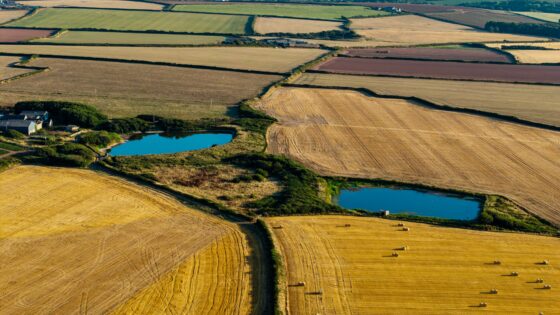
    Below-average water levels in England’s strategic reservoirs are prompting industry bodies to push for easier planning and permitting of on-farm reservoirs to secure irrigation supplies. Proposals focus on small to medium earth-bunded storage ponds drawing winter high flows from local rivers or boreholes, with lined embankments and controlled abstraction to protect low summer flows. For civil and geotechnical engineers, this signals rising demand for costed designs, slope stability assessments and leakage control for numerous dispersed reservoirs on agricultural land.

    Homes that can’t connect to the sewer: geotechnical design notes for engineers
    Geotechnical
    13 days ago

    Homes that can’t connect to the sewer: geotechnical design notes for engineers

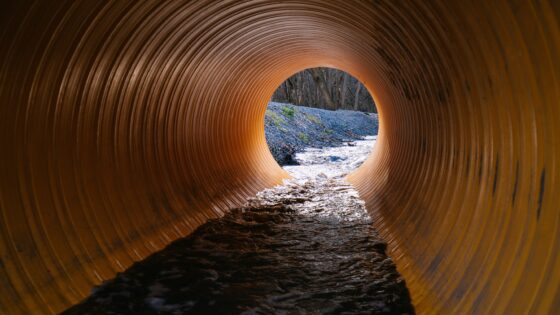
    Rethinking wastewater for homes that cannot connect to the public sewer is pushing UK engineers towards on-plot and small-cluster solutions such as packaged treatment plants and advanced septic systems with tertiary filtration. Designers are weighing infiltration fields, reed beds and pumped rising mains against tighter Environment Agency discharge consents and limited garden footprints on dense housing sites. For geotechnical and civil teams, this means more site-specific percolation testing, higher loadings on shallow soakaways, and closer coordination of drainage layouts with foundations and groundwater protection zones.

    Related Industries & Products

    Construction

    Quality control software for construction companies with material testing, batch tracking, and compliance management.

    Tunnelling

    Specialised solutions for tunnelling projects including grout mix design, hydrogeological analysis, and quality control.

    CMRR-io

    Streamline coal mine roof stability assessments with our cloud-based CMRR software featuring automated calculations, multi-scenario analysis, and collaborative workflows.

    HYDROGEO-io

    Comprehensive hydrogeological testing platform for managing, analysing, and reporting on packer tests, lugeon values, and hydraulic conductivity assessments.

    GEODB-io

    Centralised geotechnical data management solution for storing, accessing, and analysing all your site investigation and material testing data.

    AllGeotechnicalInfrastructureHazardsEnvironmental