Geomechanics.io

  • Free Tools
Sign UpLog In

Geomechanics.io

Geomechanics, Streamlined.

© 2026 Geomechanics.io. All rights reserved.

Geomechanics.io

CMRR-ioGEODB-ioHYDROGEO-ioQCDB-ioFree Tools & CalculatorsBlogLatest Industry News

Industries

MiningConstructionTunnelling

Company

Terms of UsePrivacy PolicyLinkedIn
    Projects
    Research

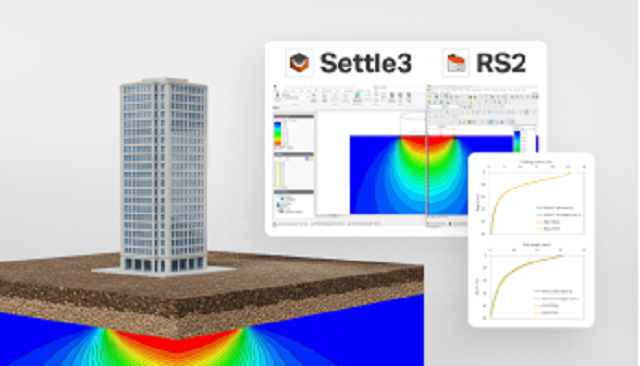
    Settlement prediction in layered soils with Settle3, RS2, RS3: design notes for geotech...

    April 28, 2026|

    Reviewed by Tom Sullivan

    Settlement prediction in layered soils with Settle3, RS2, RS3: design notes for geotech...

    First reported on Geoengineer.org – News

    30 Second Briefing

    Settlement prediction in layered soils is shown to depend strongly on how vertical stress increments are computed, comparing classical Boussinesq-based methods with numerical analyses in Settle3, RS2, and RS3. The piece contrasts 1D influence-factor approaches against 2D/3D finite element and finite difference models that capture stiffness contrasts, non-linear behaviour, and complex load geometries. For practitioners, it signals when simple elastic solutions become overly conservative and when full numerical stress redistribution is needed to refine serviceability settlement estimates.

    Technical Brief

    • Practical application is refinement of serviceability checks for foundations over soft–stiff sequences, including embankments and rafts.
    • Scope is limited to drained, static loading; cyclic, dynamic and time-dependent consolidation effects are not treated.
    • Findings mainly address vertically layered, laterally continuous strata, so strongly heterogeneous or faulted ground remains outside coverage.

    Geotechnical Software for Modern Teams

    Centralise site data, logs, and lab results with GEODB-io, CMRR-io, and HYDROGEO-io.

    No credit card required.

    • Save and export unlimited calculations
    • Advanced data visualisation
    • Generate professional PDF reports
    • Cloud storage for all your projects

    Prepared by collating external sources, AI-assisted tools, and Geomechanics.io’s proprietary mining database, then reviewed for technical accuracy & edited by our geotechnical team.

    Related Articles
    BGS 11% UK subsidence forecast by 2070: design and risk notes for engineers
    Geotechnical
    5 days ago

    BGS 11% UK subsidence forecast by 2070: design and risk notes for engineers

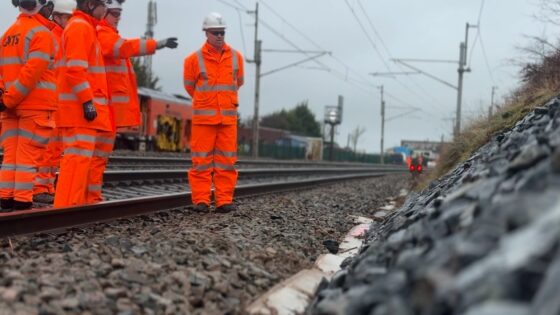
    New climate-modelling by the British Geological Survey (BGS) projects that up to 11% of UK homes – several million properties – could face increased clay-related subsidence risk by 2070 as hotter, drier summers drive greater soil shrink–swell. The work uses UKCP18 climate scenarios to map susceptibility on shrink–swell clays, flagging particular exposure in southern and eastern England where high-plasticity London Clay and similar formations are widespread. For geotechnical and asset engineers, this points to tighter foundation design, tree and drainage management, and targeted monitoring of existing low-rise housing stock.

    Professor Lyesse Laloui as ISSMGE President: priorities and signals for geotechnical engineers
    Geotechnical
    8 days ago

    Professor Lyesse Laloui as ISSMGE President: priorities and signals for geotechnical engineers

    Professor Lyesse Laloui has been elected President of the International Society for Soil Mechanics and Geotechnical Engineering (ISSMGE) for 2026–2029 at the Vienna Council Meeting held alongside the XXI ICSMGE 2026. Laloui, Chair Professor at EPFL and director of its Laboratory for Soil Mechanics, brings a portfolio of more than 560 publications and 19,000+ citations spanning constitutive modelling, energy geostructures, CO₂ storage and multiphase porous media. The Council also confirmed XXII ICSMGE for Shanghai in November 2029 and the next Council Meeting in Istanbul, 20–25 August 2028.

    CAPG panel at ICSMGE 2026: digital, testing and risk takeaways for geotechnical teams
    Geotechnical
    12 days ago

    CAPG panel at ICSMGE 2026: digital, testing and risk takeaways for geotechnical teams

    The Corporate Associates Presidential Group of ISSMGE will run a dedicated panel at the 21st International Conference on Soil Mechanics and Geotechnical Engineering in Vienna in 2026, focusing on the future of geotechnical engineering practice. Industry leaders from major consulting firms, contractors and equipment suppliers are expected to address digital design workflows, advanced in situ testing, and risk allocation in large infrastructure projects. Outcomes are likely to influence updates to corporate design standards, procurement strategies and adoption of emerging investigation and monitoring technologies.

    Related Industries & Products

    Construction

    Quality control software for construction companies with material testing, batch tracking, and compliance management.

    CMRR-io

    Streamline coal mine roof stability assessments with our cloud-based CMRR software featuring automated calculations, multi-scenario analysis, and collaborative workflows.

    HYDROGEO-io

    Comprehensive hydrogeological testing platform for managing, analysing, and reporting on packer tests, lugeon values, and hydraulic conductivity assessments.

    GEODB-io

    Centralised geotechnical data management solution for storing, accessing, and analysing all your site investigation and material testing data.

    AllGeotechnicalMiningInfrastructureMaterialsHazardsEnvironmentalSoftwarePolicy