Geomechanics, Streamlined.
© 2026 Geomechanics.io. All rights reserved.
Perkins&Will has secured planning permission from Oxford City Council to redevelop the Ozone Leisure Park into a mixed‑use research, leisure, and community campus while retaining and integrating a 12th‑century farmhouse. The scheme converts existing retail and leisure units into laboratory and research space, alongside public amenities, rather than building on a greenfield site. For engineers, the project signals further demand for lab‑ready building services, vibration control, and sensitive heritage interfaces within brownfield commercial envelopes.
Clarion Housing Group and Taylor Wimpey have topped out 116 new affordable homes at the East Riverside project in Poplar, part of the wider Rivermark scheme delivering about 550 units for Tower Hamlets Council. The 116 homes are arranged in four buildings and split 50:50 between London Affordable Rent and Tower Hamlets Living Rent tenures, targeting completion of first units by late 2026. For civil and geotechnical teams, the scheme signals continued medium‑rise residential build-out on constrained East London riverside plots, with associated foundation and services coordination demands.
Amey has appointed Jonathan Goring as executive advisor, tasking the former HS2 and Neom programme lead with strengthening the front end of its consulting pipeline. Drawing on senior roles at Capita, Morgan Sindall, PA Consulting, Mott MacDonald and Systra, he will target strategic growth across key contracts and frameworks and support entry into new infrastructure sectors and international markets. Goring will work with Amey’s senior leadership to align business development, improve cross‑discipline collaboration and position the firm for longer-term client and partner frameworks.
Citizen has invested £2.1m to refurbish post-war maisonettes in Coventry, with Equans as principal contractor and additional funding from the Matrix Housing Partnership and the West Midlands Combined Authority. Works typically include upgrading external fabric, windows and roofs on 1950s–60s medium-rise blocks, improving thermal performance and extending structural life. For civil and materials engineers, the scheme signals continuing demand for retrofit solutions on ageing social housing stock rather than full demolition and rebuild.
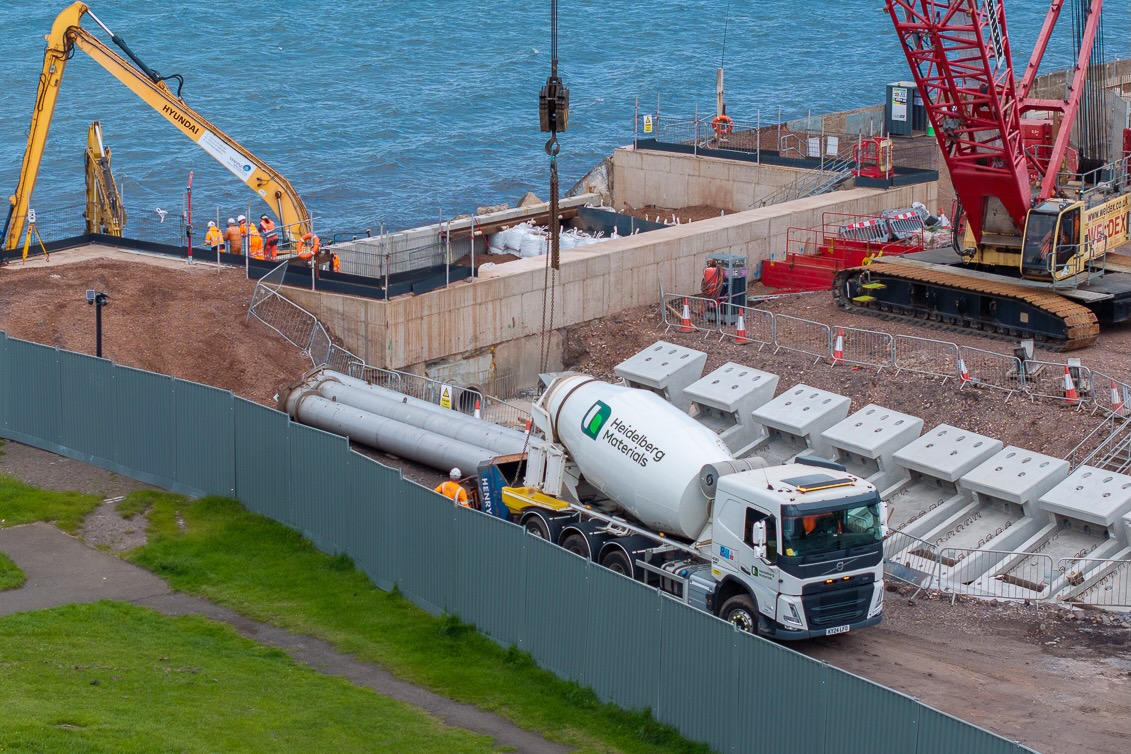
Heidelberg has launched a new range of high-thermal-conductivity, low-resistivity backfill and bedding materials specifically engineered for high and ultra-high voltage underground power cables. The products are formulated to improve heat dissipation from cable systems, reducing localised temperature rise and associated ampacity constraints compared with conventional granular or cementitious surrounds. For civil and geotechnical designers, this allows tighter cable spacing, potentially shallower trench sections, and more reliable performance in dense urban corridors where thermal bottlenecks often limit circuit capacity.
Laing O’Rourke is expanding production at its Crown House Technologies Manufacturing (CHtM) and Explore Manufacturing plants to scale up industrialised, offsite construction. The investment targets higher throughput of MEP modules and precast structural components, supporting faster assembly on major UK infrastructure schemes and reducing site labour intensity. For designers and contractors, this signals greater availability of standardised, factory-built elements that will influence detailing, tolerances, logistics planning, and early-stage design coordination.
Copper for September delivery slipped 1.1% in after-hours trade to $6.27 per pound on Comex, about 6% below its early-June record above $6.60, as a US strike on an oil tanker near Iran’s main export terminal lifted the dollar and rekindled Fed rate-hike fears. Losses were capped by supply risk from a Category 5 atmospheric river hitting Chile, forecast to dump up to 150 mm of rain on the central copper belt, with the government already coordinating emergency access to mining infrastructure and equipment. Antofagasta’s H1 copper output fell 9.5% to 285,000 tonnes, BHP has warned of lower Chilean production next year, and Chile has raised its 2026 copper price assumption to $5.90 per pound even as major miners’ shares dropped 2–5% on the day.
Ferrovial has appointed John L. Morton as CEO of its Airports division from September, succeeding Luke Bugeja after his five-year tenure. Morton previously served as managing director at Global Infrastructure Partners, now part of BlackRock, where he built and led the Americas Transportation team focused on large-scale aviation and transport assets. His background in transportation infrastructure, aviation and public-private partnerships signals continued emphasis on equity-funded airport concessions and long-term asset management within Ferrovial’s global portfolio.
Oxford Skip Hire has deployed an 8.5‑tonne Kubota KX085‑5 compact excavator at its Abingdon waste transfer station, equipped with a CMB SM‑80E sorting grab on a Keen Attachments rotator supplied via Boss Plant’s Socomec franchise. The Stage V turbocharged diesel engine delivers 46.5kW (63.2hp) to a load‑sensing, twin‑pump hydraulic system, allowing simultaneous boom operation and travel during continuous domestic and commercial waste inflow. Two standard auxiliary circuits with pre‑settable oil flows for up to five attachments and joystick‑controlled auxiliary functions support flexible, powered tooling for waste handling operations.
JCB has upgraded its LiveLink telematics for Hi‑Viz Loadall telehandlers (models 535‑125, 540‑140 and 540‑180), adding remote adjustment of Auto Stop parameters, speed limits, IntelliSense activation, tyre pressure monitoring settings and PIN codes across mixed fleets. Fleet managers can now configure health alerts, maintenance notifications, geofencing and out‑of‑hours alerts for the 580,000 connected machines, improving control of utilisation, fuel burn and unauthorised use. An AI-based pedestrian detection system logs near‑miss events with video, allowing off‑site review for site safety management and incident analysis.
Quantity surveyors Solomons Europe and NEC specialist Dr Jon Broome have confirmed AVRS and demolition contractor Meldrums as new partners in the Clause 10 Collective, a collaboration initiative built around NEC’s mutual trust and co-operation provisions. The group aims to pool commercial, demolition and dispute-avoidance expertise to improve delivery on NEC-procured infrastructure schemes, particularly where early contractor involvement and complex enabling works are critical. For project teams, this signals growing structured support for collaborative risk management and more consistent application of NEC Clause 10 behaviours on live sites.
Helical plans to return about £29m to shareholders, combining a £5m on‑market buyback (1,109,980 shares already repurchased at an average 189.71p) with a proposed £12m B Share Scheme paying 9.72p per existing ordinary share and a 100‑for‑105 share consolidation, plus a 2.50p total dividend for FY to 31 March 2026. The capital return is funded largely from the £31m profit on the sale of 100 New Bridge Street. Operationally, The Bower in London is now 96.6% let, with 32,000 sq ft newly let and re‑gears on a further 50,000 sq ft, while 10 King William Street, Brettenham House and Delta Paddington progress through the development pipeline.
Jacobs has secured National Highways contracts to design asset renewal works on the M32 Eastville Viaduct (Stages 3–5 Detailed Design) and M5 Wynhol Viaduct (Stages 1–2 Preliminary Design) under the Technical Assurance and Asset Management Framework. The Eastville Viaduct scheme targets life extension and reduced unplanned closures on the key Bristol–M4/M5 commuter and freight link, while Wynhol Viaduct design will define sustainable interventions for the M5 north–south freight corridor. Jacobs has also been appointed to Lot 2 of the Project Management Services Framework, leading a multi-disciplinary team on at least 15 schemes over a five-year term.
Barratt Redrow has completed 17,667 homes in its 2026 financial year, reported pre-tax profits in line with expectations, and announced a £400m share buyback. The volume figure is broadly consistent with recent UK output for a top-tier housebuilder, signalling stable utilisation of landbanks, subcontractor capacity and materials supply chains. For infrastructure and civils contractors, the steady build rate and large capital return suggest no imminent surge in Barratt Redrow’s demand for bulk materials, groundworks capacity or offsite manufacturing beyond current levels.
The UK government has moved to nationalise British Steel to secure domestic supply for major infrastructure schemes, including HS2, large-scale offshore wind foundations and planned nuclear new-build. Ministers argue that maintaining integrated primary steelmaking capacity at Scunthorpe and Teesside is critical for long-rolled sections, plate and rail production that meet UK-specific standards and lead times. Contractors and designers can expect closer alignment between public project pipelines and mill output, but also potential changes in pricing structures and procurement routes for structural and reinforcement steels.
£130bn rail proposal The Loop, championed by Riba president Chris Williamson, would form a high-capacity orbital route linking major northern English cities as an alternative to the cancelled HS2 northern leg. The concept envisages reusing and upgrading existing corridors where possible, with new high-speed sections to close gaps and create a continuous loop for intercity, commuter and freight services. For civil and rail engineers, the scheme would drive large-scale track, electrification, junction remodelling and station works across multiple legacy networks.
Mining’s hidden margin leak is framed by James Metro, EFESO’s 3M practice lead, as chronic reliability shortfalls rather than labour costs, with unplanned downtime, schedule churn and deferred preventive maintenance quietly stripping several EBITDA margin points. He argues that mines often misdiagnose overtime, contractor dependence and growing maintenance backlogs as workforce inefficiency, when the real issue is operational variability forcing teams into constant firefighting. High-performing sites instead treat reliability as a core business strategy, keeping weekly schedules intact so more work is planned, fixed costs are spread over more saleable tonnes, and availability-driven throughput gains drop straight to the bottom line.
BHP’s first strike at its Pilbara iron ore hub in 26 years has halted work for eight hours at Port Hedland, where about 200 operators and maintenance workers represented by the Combined BHP Ports Unions walked off the job after Fair Work Commission-facilitated talks stalled. The stoppage at the world’s largest bulk-export terminal, which handled about 575 million tonnes of iron ore last year, coincides with Singapore iron ore futures touching $102/t and a 2.3% fall in BHP’s Sydney-listed shares. BHP, which has tabled a 16% pay rise over four years, is also pressing ahead with a $900 million Ministers North project to add 20 Mt/y of high-grade Brockman ore capacity by FY2029 towards a 305 Mt/y target.
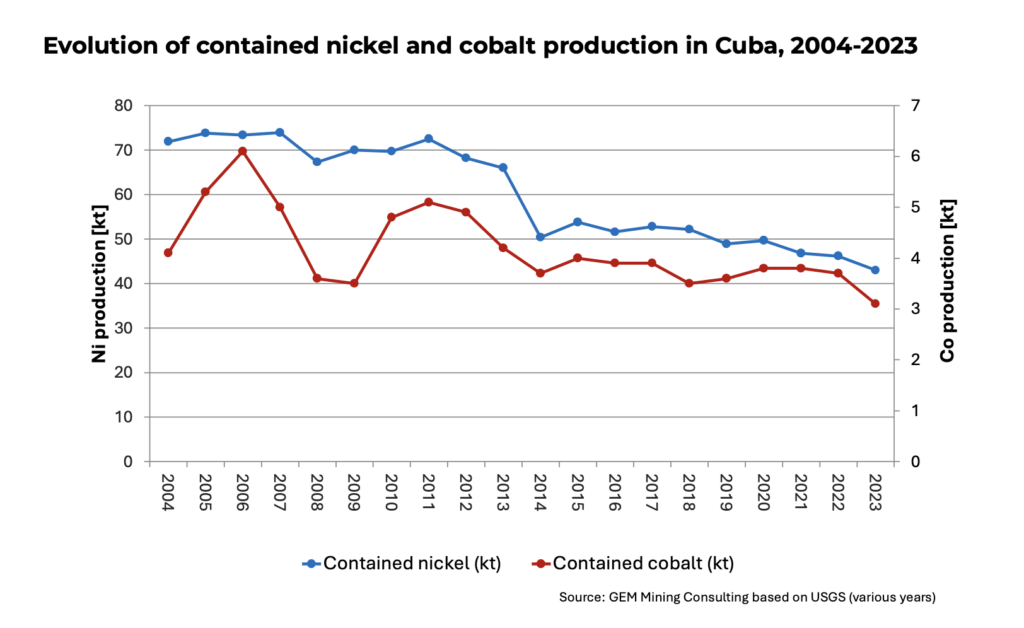
Canada’s only cobalt refinery, Sherritt International’s Fort Saskatchewan plant in Alberta, has been idled after a May US executive order widened sanctions on Cuba’s metals and mining sector, cutting off mixed sulphide precipitate feed from the Moa nickel-cobalt HPAL operation. Analyst Patricio Faúndez of GEM Mining Consulting warns that Western critical mineral strategy remains exposed because refineries in allied jurisdictions still depend on politically and legally “financeable” upstream supply. With China producing about 79% of refined cobalt and Cuba’s nickel output down to roughly 43,000 tonnes in 2023, the disruption shows how sanctions within Western frameworks can strand both Cuban resources and scarce Western refining capacity.
President Donald Trump will appear on a new US one‑dollar “gold coin” for the country’s 250th anniversary, although the piece will be struck in base metals with only a gold‑coloured finish and no precious‑metal content. Production is scheduled at the Philadelphia Mint ahead of a planned autumn 2026 release, with the design showing Trump’s portrait, “In God We Trust”, and the dates 1776‑2026. The move contrasts sharply with bullion issues like the American Gold Eagle and Buffalo and has triggered legal debate over bans on depicting living presidents.
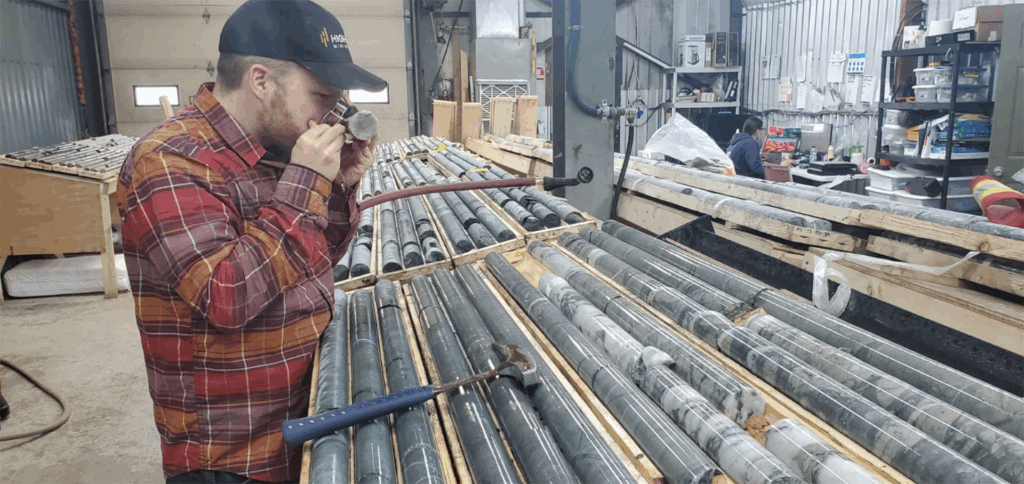
Drill results at Onyx Gold’s Munro-Croesus project in Ontario extend the Argus gold system at depth, with hole MC26-274A at Argus North cutting 28.1 metres grading 3.5 g/t from 380 metres, including 17.8 metres at 5.3 g/t, and MC26-324 at Argus Main returning 93 metres at 1 g/t from 316 metres, including 20 metres at 2 g/t. Argus North has now been intersected below 700 metres vertically and remains open, hosted in broad altered volcanic units with steeply plunging high-grade shoots. Onyx has completed 75,000 metres of a planned 110,000-metre, fully funded programme across 188 holes, targeting an initial resource beyond the historic Croesus mine, which averaged 93.5 g/t gold between 1908 and 1936.
Central Nevada Gold plans to restart the past-producing Mule Canyon mine in Nevada’s Argenta district after acquiring it from Newmont, targeting a 2027 production decision backed by an active plan of operations, existing water rights and grid power on site. The brownfield project hosts six mineralised zones over 2.5 km, with historical data indicating 8.2 million tonnes of open-pittable ore at 3.81 g/t Au, average head grade of 3.8 g/t and about 94% metallurgical recovery, plus a 41.1 m intercept grading 24.8 g/t Au. Pre-feasibility, mine planning and permitting are underway, supported by a 2,149-hole, 335,000 m drilling database and a planned IPO.
BMI now projects widening structural copper deficits reaching nearly 1.5 million tonnes annually by 2035, pushing prices to $17,000/t, with its upgraded 2026 outlook still below market consensus but turning more bullish than most banks from 2028. The Fitch unit’s long-range view implies sustained pressure on new sulphide project approvals, brownfield expansions and higher-grade resource discovery to offset declining head grades and ageing pits. Mine planners and project financiers may need to stress-test cut-off grades, capex and permitting timelines against a markedly higher long-term price deck.
Copper supply risks have “worsened considerably”, with the IEA warning that sulphuric acid shortages now threaten more than 15% of global primary output produced via SxEW, after the effective closure of the Strait of Hormuz cut roughly half of global seaborne sulphur trade and China banned acid exports through year-end. The DRC and Chile are most exposed, with about 1.5 Mt and 1.2 Mt of leached production and some sites down to 30–60 days of sulphur/acid inventory, while 2025 disruptions already removed 1.5 Mt of mined supply and pushed prices above $14,000/t. Despite project additions in the DRC, Zambia, Peru, Russia and Canada, the IEA still sees primary supply around 25% short of 2035 requirements, with ore grades down 40% since 1991 and copper needing roughly $310 billion of the $750+ billion mining and refining investment required to 2040.