Geomechanics, Streamlined.
© 2026 Geomechanics.io. All rights reserved.
Civil nuclear power plants in the UK are now formally rated at risk from AI‑enabled cyber-attacks and malicious insiders in the government’s National Risk Register 2026, elevating digital threats alongside conventional safety hazards. The register points to AI tools that can automate vulnerability scanning, generate bespoke phishing campaigns and help non-experts craft malware targeting industrial control systems and SCADA networks. For designers, operators and Tier 1 contractors, this signals tighter requirements on cyber-physical security, access control and digital resilience across reactor protection, cooling and backup power systems.
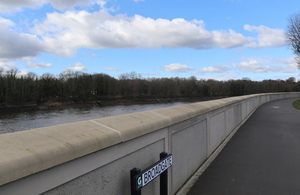
Phase 1 of the £55M Preston and South Ribble Flood Risk Management Scheme has been completed by VolkerStevin for the Environment Agency, marking the first major upgrade to defences along this reach of the River Ribble. The works form part of a multi-phase programme to reduce fluvial and tidal flood risk to urban areas in Preston and South Ribble, where existing embankments and walls are locally substandard against current design flood levels. Engineers should watch for forthcoming phases that will tie into these initial assets and may require interface works on existing riverfront infrastructure.
Former Autostrade per l’Italia CEO Giovanni Castellucci has been sentenced to 12 years’ imprisonment, alongside convictions for 31 others, over the 2018 collapse of Genoa’s Morandi Bridge that killed 43 people and injured 13. The ruling centres on failures in managing the ageing cable-stayed structure’s stay-cable and deck corrosion, with prosecutors arguing that critical maintenance and strengthening were delayed despite known deterioration. For designers and asset managers, the case signals heightened personal liability where structural health monitoring, inspection records and intervention decisions do not match documented risk.
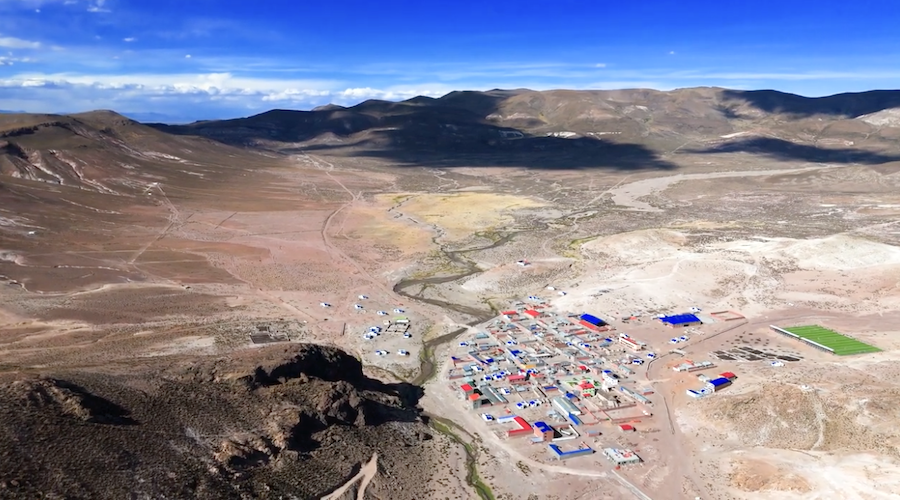
New Pacific Metals has lifted the Carangas silver-gold project’s after-tax NPV to US$2.65 billion in an updated PEA by Ausenco, outlining average annual output of nearly 18 million oz silver-equivalent over a 19-year mine life at projected all-in sustaining costs of US$19.16/oz. The study, based on US$45/oz silver and US$3,400/oz gold, delivers a 35.9% after-tax IRR, 2.4-year payback on US$644.5 million initial capex, and total production of 339 million silver-equivalent oz including 1.1 million oz gold. New Pacific plans a 30,000-metre infill drill programme while navigating Bolivia’s fuel, FX and permitting constraints.
Energy Transition Minerals claims Greenland has effectively expropriated the Kvanefjeld rare earth project by refusing to renew its exploration licence and applying Act 20’s 100 ppm uranium limit retroactively to block a mining licence lodged in 2020. The company says it has invested about US$150 million since 2013 and argues 2025 drilling identified rare earth mineralisation below the uranium threshold in largely untested parts of the licence, alongside proposals to separate uranium from concentrate and return it underground. Greenland cites community opposition near Narsaq, while ETM pursues arbitration and diversifies with the Penouta brownfield tantalum project in Spain.
Malaysia is facing political scrutiny over Lynas Rare Earths’ US$96 million, four-year rare earth oxide supply agreement with the US Department of Defense, with a Malaysian parliamentary special select committee examining whether the deal conflicts with the country’s pro-Palestine stance. Chaired by MP Wong Chen, the committee took evidence from government officials, NGOs including Greenpeace Malaysia, and Lynas executives, and has urged a clearer foreign investment framework for rare earths and an official government position within two weeks. Outcomes could influence permitting, investment terms and ESG expectations for Lynas’ large processing facilities in Malaysia.
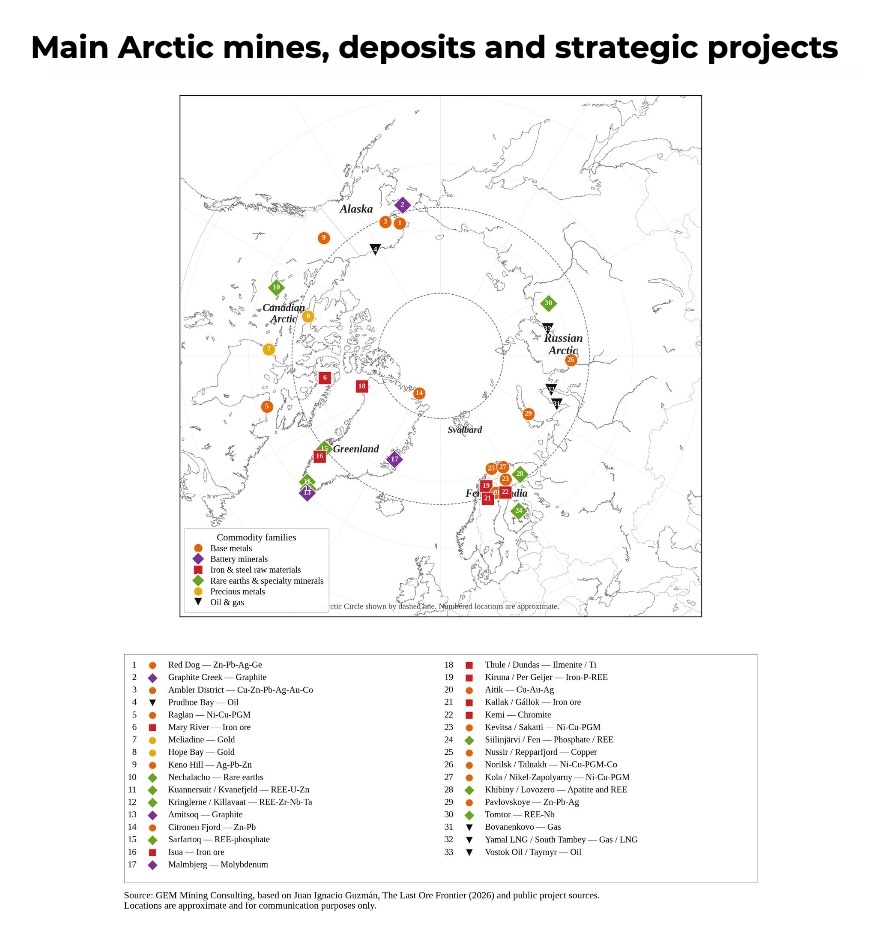
The Arctic’s vast copper, nickel, graphite and rare earth deposits will not by themselves secure the energy transition, as long, diesel-dependent supply chains, permafrost, short construction seasons and limited power grids can turn apparently robust orebodies into uneconomic projects. Juan Ignacio Guzmán of GEM Mining Consulting contrasts northern Scandinavia’s rail-linked, renewable-powered districts in Sweden, Finland and Norway with logistics‑constrained projects in northern Canada, Alaska and Greenland that still need ports, roads, processing plants and skilled workforces. He argues that Indigenous rights, rigorous baseline data on water, biodiversity and permafrost, and upfront closure planning now sit alongside grade and tonnage as decisive investment criteria.
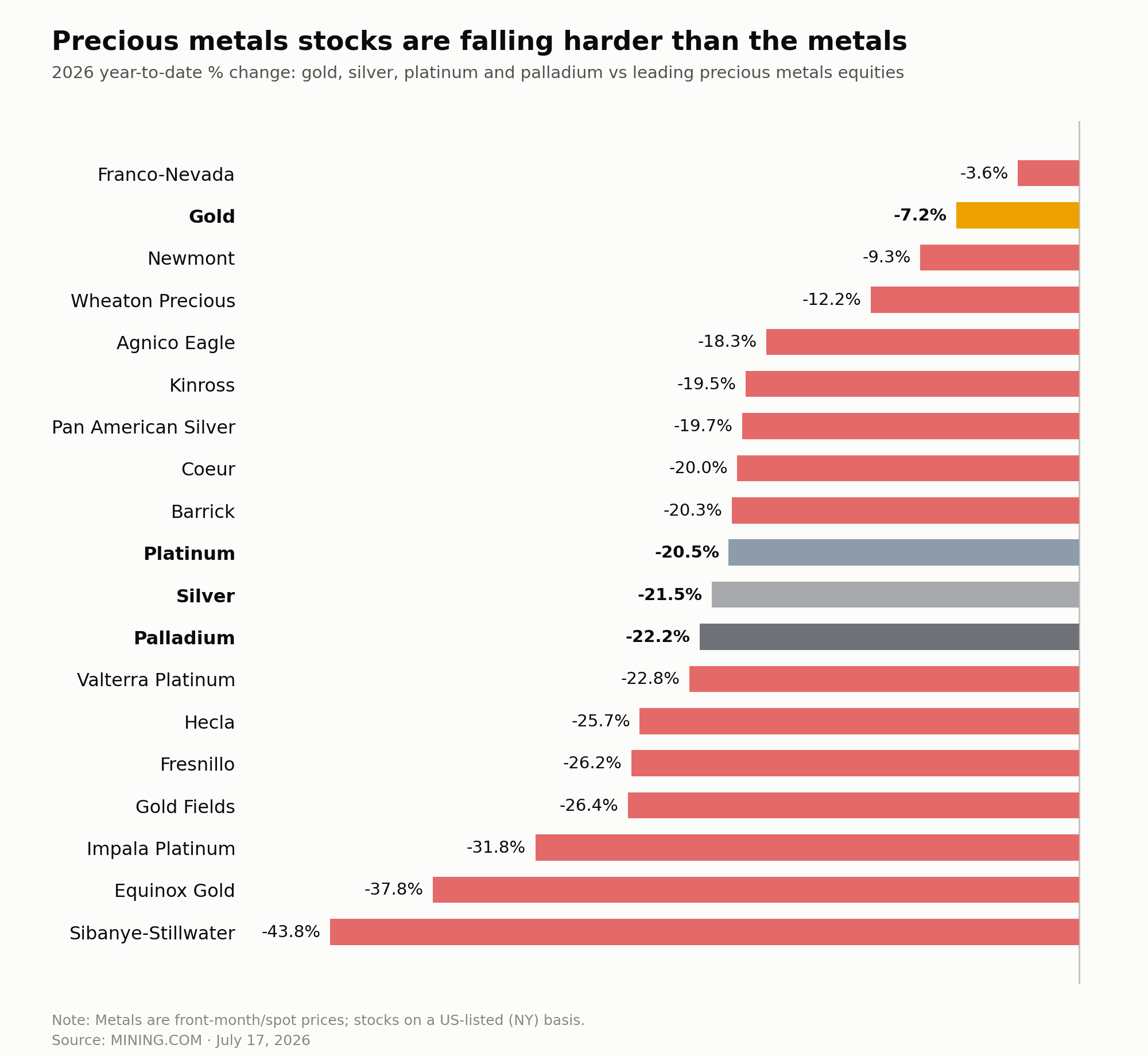
Gold is holding near $4,000/oz, with spot at $3,992 in New York and Comex futures back above $4,000, even after a 3% weekly drop and a 29% retreat from January’s ~$5,600 peak amid war-driven oil gains of almost 13% in five sessions and renewed Fed hike bets. Physical demand is weak, with Indian dealers quoting discounts up to $45/oz and Chinese premiums shrinking to par, while gold ETFs shed $8.9 billion in June. Equities are absorbing the real pain: the median leading US-traded gold and copper miner is ~38% below its 52‑week high, with Hecla 58%, Sibanye 62% and Equinox 54% off their peaks, signalling sustained funding and balance-sheet pressure for project pipelines.
China’s physical gold demand stayed near decade lows in June, with Shanghai Gold Exchange withdrawals at 87 tonnes, up 36% on May but still 27% below the 10-year average for H1 2026 as total withdrawals reached 598 tonnes. Jewellery demand weakness is keeping manufacturers from rebuilding inventories even as the gold price holds around $4,013/oz, roughly 8% lower year-to-date. In contrast, the People’s Bank of China added 15 tonnes in June, lifting reserves to 2,346 tonnes, while domestic gold ETFs saw record monthly outflows of RMB 15 billion and a 17-tonne holdings drop to 277 tonnes.
Artificial intelligence is emerging as a third structural driver of rare earth demand alongside defence and electrification, with the five largest hyperscale data-centre operators planning about US$400 billion of 2025 capex and AI data centres forecast by the IEA to consume 3% of magnet rare earths by 2030. Sprott’s Steve Schoffstall links this to China’s control of about 94% of global permanent magnet production and recent Chinese export controls on military-related products. Western responses include US equity support and neodymium-praseodymium price guarantees for MP Materials, plus similar diversification moves in Australia and Japan.
Washington has committed about $46 billion in grants, loans and tax incentives to critical raw materials projects over five years, roughly eight times EU support, and is tying this to preferential access deals in the DRC, Ukraine and other jurisdictions. London-based Pensana has moved its Longonjo rare earth processing plant from Britain to the US to pursue Export-Import Bank financing, while Brazil’s Serra Verde secured US-backed funding tied to long-term magnetic rare earth offtake. The EU is scrambling to respond with a €3‑billion financing hub, strategic stockpiles and a 2030 target that no single supplier exceed 65% of any strategic raw material.
British Columbia and the Simpcw First Nation have signed a consent-based agreement to govern the environmental assessment of Trekor Metals’ Yellowhead copper project in Simpcwul’ecw Territory, the first time Simpcw has applied its Indigenous-led consent process to a major mine. Trekor has submitted a Detailed Project Description to the BC Environmental Assessment Office after early engagement and additional technical work, alongside an economic impact study for construction and operations. The proposed open pit is scoped as a 90,000 t/d operation over 25 years, targeting 178 million lb/y copper at US$1.90/lb cash costs, rising to 206 million lb/y at US$1.62/lb in the first five years.
Mining’s next two years will be dominated by mergers and acquisitions as producers with strengthened balance sheets but thin project pipelines move to buy reserves after a decade of underinvestment, veteran investor Rick Rule told The Northern Miner at the 2026 Rule Symposium in Boca Raton. Rule expects intensified takeover interest in copper, uranium and gold developers holding permitted or near-build assets, as long mine discovery-to-production timelines collide with tightening supply. Projects with genuine scale, robust economics and proven management teams are likely to command premium valuations.
Vale has agreed with Wabtec to deploy its Positive Train Control (PTC) system on Brazil’s Carajás Railway (EFC) and Vitória a Minas Railway (EFVM), the core heavy-haul corridors for iron ore from Carajás and Itabira to coastal ports. The PTC platform uses continuous data transmission, GPS-based train location and real-time monitoring to enforce movement authorities and speed limits, reducing collision and overspeed risk on long, mixed-traffic sections. For mine-rail interface teams, tighter control of train movements should improve slot reliability for high-tonnage ore consists and reduce unplanned line closures.
Agnico Eagle has deployed a new remote‑operated firefighting and intervention robot to support underground emergency response teams at its Quebec mines after nearly two years of research and testing. Operated from a safe distance, the unit is designed to enter smoke‑filled headings, approach active fire zones and carry firefighting equipment where human access is restricted. For mine operators, this points to growing use of robotic platforms for high‑risk tasks such as underground fire attack, re‑entry assessment and hazardous material handling.
Worldsensing has launched the Loadsensing G7 Digital Data Logger, a low-power LoRa edge device with extended battery life for wireless acquisition from digital sensors in industrial, structural, geotechnical and environmental monitoring. The G7 is engineered for harsh, remote sites typical of tailings dams, open pits and underground workings, where wired networks and frequent battery swaps are impractical. For mine operators and geotechnical teams, the unit enables denser sensor networks and more frequent readings without increasing site visits or power infrastructure.
Roads & Infrastructure magazine has launched the Roads & Infrastructure Podcast, a series of in‑depth conversations with senior figures across transport, construction and infrastructure. Each episode will tackle current issues such as road asset management, major project delivery, decarbonisation of pavements and supply chains, and the integration of digital design and construction methods. The format is aimed at practitioners needing practical insight on topics like funding models, procurement risk allocation and the technical delivery of complex road and rail corridors.
Public hearings have opened on extending Hunter Valley Operations near Singleton, with the New South Wales Independent Planning Commission considering approval for coal mining to continue until 2045. The proposal would retain more than 1500 direct on-site jobs and secure several billion dollars in ongoing capital and operational expenditure across the large open-cut complex. For geotechnical and mine planners, a 21‑year life extension would lock in long-term strip sequencing, waste emplacement design and progressive rehabilitation commitments under evolving NSW planning and emissions policy settings.
Ausgold has extended gold mineralisation beyond the current Mineral Resource at its Katanning gold project in Western Australia, with new extensional and in-fill drilling in the Central Zone feeding into an updated Mineral Resource Estimate planned for Q4 2026. Deep drilling is targeting down-dip and along-strike extensions of existing lodes, with a growing backlog of assay results indicating continuity outside the present pit-constrained model. For mine planning and geotechnical teams, the expanded dataset will refine pit shell geometry, rock mass characterisation and potential underground transition options.
Regis Resources is targeting group gold output of 360,000–400,000oz in FY27, driven by higher production from its Duketon operations in Western Australia’s Goldfields offsetting a modest decline at the Tropicana joint venture on the western edge of the Great Victoria Desert. Duketon is forecast to deliver 240,000–270,000oz, implying a reduced contribution from Tropicana but a stronger overall production profile. The guidance signals continued mill throughput and pit development at Duketon, with mine planning and contracting likely to prioritise that corridor.
Black Cat Syndicate’s Lynx discovery at the Paulsens gold mine in Western Australia reveals a previously unrecognised style of high‑grade mineralisation beyond the historical mining footprint, materially changing the interpreted geometry of the gold system. Underground drilling and development at Lynx and the nearby Regulus discovery have defined multiple high‑grade lodes, indicating mineralisation continuity outside previously modelled zones. For mine planners and geotechs, this points to potential extensions of underground workings, revised structural controls on ore shoots, and a likely update to resource models and ground support assumptions.
Datamine has released 2026 upgrades across its mining software suite, tightening data flow between exploration, geology, mine planning, laboratory information management and production control. Key advances include deeper integration between Studio RM resource modelling, Studio OP/UG mine design, Fusion LIMS and the Minemax scheduler, plus improved interoperability with fleet management and plant control systems via standardised APIs. For engineers, the changes aim to cut manual data handling in block model updates, short-interval control and grade reconciliation, and to support more consistent multi-mine planning workflows.
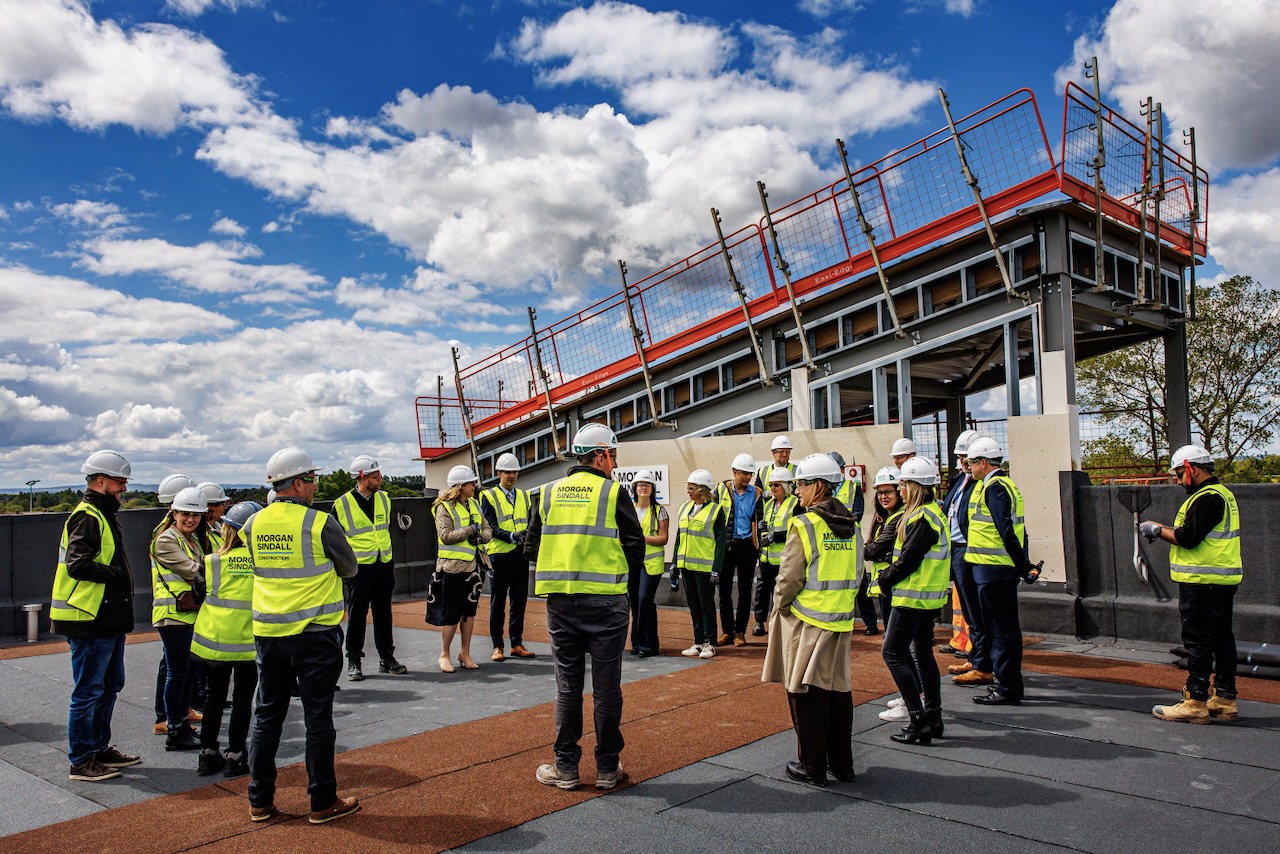
Morgan Sindall Construction’s Northern Home Counties team has topped out a £13m extension to The Kingsbrook School in Aylesbury, procured by Buckinghamshire Council via the Southern Construction Framework. The project delivers additional primary and secondary teaching accommodation to expand the all-through school, supporting phased growth of the Kingsbrook housing development. For contractors and consultants, the scheme signals continued use of SCF routes for mid-value (£10m–£20m) education projects in the region, with associated demand for standardised school design, rapid programmes and tightly managed cost control.
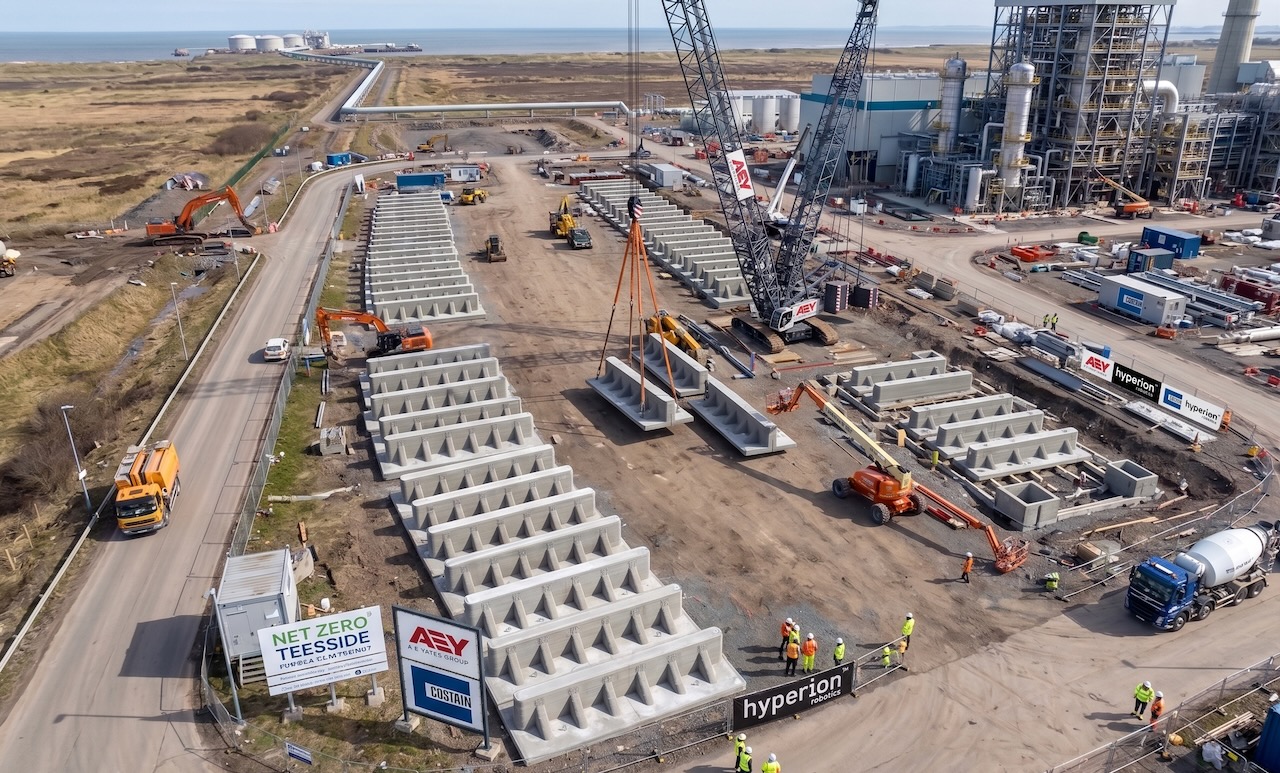
Hyperion Robotics has secured funding to build an AI‑powered robotic microfactory in Flixborough, UK, to produce precast infrastructure components close to project sites. The Finnish company’s system uses automated, modular production cells to fabricate elements faster than conventional casting lines while cutting transport needs and associated CO2 emissions. For civil contractors and asset owners, the model points to more localised, just‑in‑time supply of structural components, with potential benefits for programme certainty and embodied‑carbon targets.