Torness nuclear station’s £2bn saving: policy and design notes for engineers
Reviewed by Joe Ashwell
First reported on New Civil Engineer
30 Second Briefing
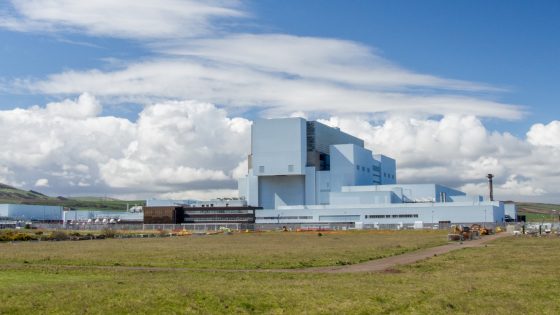
Scotland’s ban on new nuclear build is under renewed pressure after Nuclear Industry Association analysis found EDF’s 1.36GW Torness AGR station has saved Britain’s power system about £2bn since 2021 by displacing gas-fired generation. The NIA argues that, with Torness scheduled to close by 2028 and Hunterston B already offline, Scotland risks losing firm low‑carbon capacity that stabilises grid frequency and reduces reliance on interconnectors. For civil and nuclear engineers, the debate centres on whether to extend existing reactor lifetimes or plan replacement baseload capacity in parallel with offshore wind expansion.
Technical Brief
- For civil and structural teams, any life-extension option would trigger additional containment, seismic and ageing management assessments.
- Policy debate directly affects pipeline for nuclear civils work relative to large offshore wind and interconnector projects.
Our Take
For civil contractors and infrastructure planners in Scotland, the combination of Torness’s demonstrated system value and the Scottish Government’s parallel backing of major non‑nuclear schemes (such as the Port Ellen ferry terminal redevelopment) signals that long‑term baseload and resilience may increasingly have to be delivered through grid upgrades, storage and marine infrastructure rather than replacement reactors.
Prepared by collating external sources, AI-assisted tools, and Geomechanics.io’s proprietary mining database, then reviewed for technical accuracy & edited by our geotechnical team.
Related Articles



Related Industries & Products
Construction
Quality control software for construction companies with material testing, batch tracking, and compliance management.
Mining
Geotechnical software solutions for mining operations including CMRR analysis, hydrogeological testing, and data management.
CMRR-io
Streamline coal mine roof stability assessments with our cloud-based CMRR software featuring automated calculations, multi-scenario analysis, and collaborative workflows.
HYDROGEO-io
Comprehensive hydrogeological testing platform for managing, analysing, and reporting on packer tests, lugeon values, and hydraulic conductivity assessments.
GEODB-io
Centralised geotechnical data management solution for storing, accessing, and analysing all your site investigation and material testing data.