Rio Tinto’s new alumina conveyor at BC Works: design and emissions notes for engineers
Reviewed by Joe Ashwell
First reported on MINING.com
30 Second Briefing
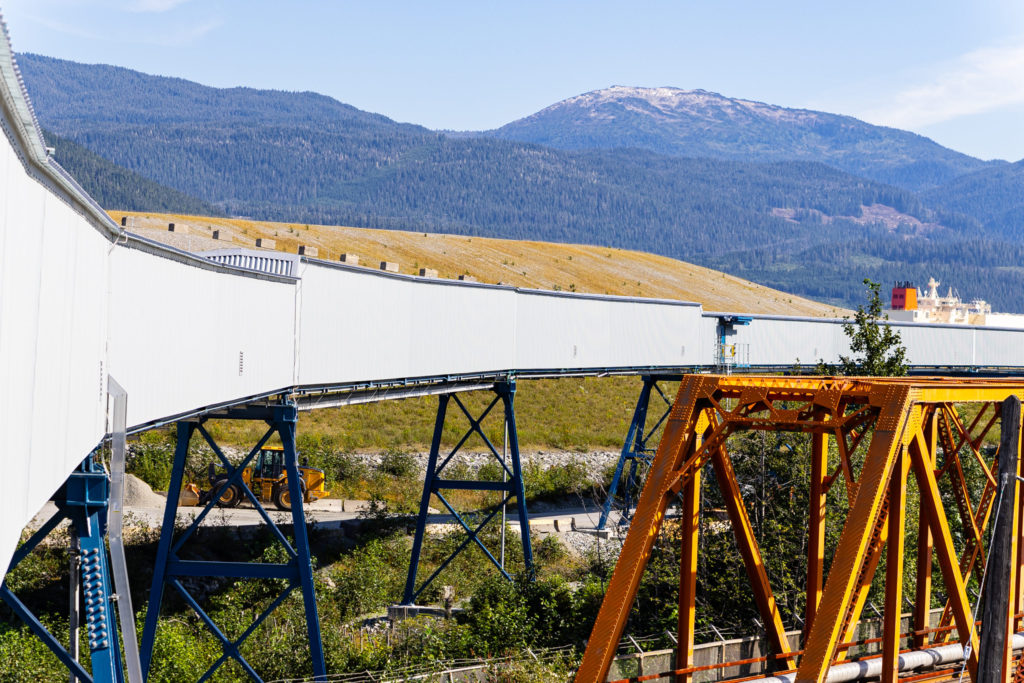
Rio Tinto has commissioned a C$135 million, 1.1‑kilometre alumina conveyor at its BC Works aluminium smelter in Kitimat, designed for a 50‑year life and capacity of 800,000 tonnes per year. The sealed pipe system is engineered to cut particulate emissions by about 40% by enclosing the alumina stream, reducing transfer points and integrating high‑efficiency dust collectors. Recovered alumina is returned to the process, simplifying maintenance and stabilising raw material feed to the long‑running British Columbia operation.
Technical Brief
- Sealed pipe conveyor replaces 1960s-era alumina handling infrastructure at Rio Tinto’s BC Works smelter.
- Commissioning follows a C$135 million capital programme targeted at raw material handling performance.
- Design life of 50 years is matched to Rio Tinto’s long-term operating horizon for the Kitimat facility.
- High-efficiency dust collectors are positioned at key transfer interfaces to capture fugitive alumina fines.
- Captured alumina is re-routed into the process stream, reducing waste and tightening mass balance control.
Our Take
Rio Tinto features across several recent items in our database as managing legal, political and technology risks in iron ore, copper and lithium; this C$135 million upgrade at BC Works signals that its legacy aluminium assets in Canada are still getting capital alongside higher-profile growth metals.
A 50‑year design life for the new alumina conveyor at Kitimat aligns with Rio Tinto’s pattern of very long‑horizon infrastructure at core smelting hubs, which typically strengthens its hand in power and permitting negotiations with provincial authorities in British Columbia.
The link to CenterPoint and an Indiana coal plant underscores that even ‘green’ aluminium supply chains can remain tied to coal logistics in North America, a contrast with other Rio Tinto coverage in our database that focuses on lower‑carbon power sources for new copper and battery‑metal projects.
Prepared by collating external sources, AI-assisted tools, and Geomechanics.io’s proprietary mining database, then reviewed for technical accuracy & edited by our geotechnical team.
Related Articles


Related Industries & Products
Mining
Geotechnical software solutions for mining operations including CMRR analysis, hydrogeological testing, and data management.
Construction
Quality control software for construction companies with material testing, batch tracking, and compliance management.
CMRR-io
Streamline coal mine roof stability assessments with our cloud-based CMRR software featuring automated calculations, multi-scenario analysis, and collaborative workflows.
HYDROGEO-io
Comprehensive hydrogeological testing platform for managing, analysing, and reporting on packer tests, lugeon values, and hydraulic conductivity assessments.
GEODB-io
Centralised geotechnical data management solution for storing, accessing, and analysing all your site investigation and material testing data.