Geomechanics.io

  • Free Tools
Sign UpLog In

Geomechanics.io

Geomechanics, Streamlined.

© 2026 Geomechanics.io. All rights reserved.

Geomechanics.io

CMRR-ioGEODB-ioHYDROGEO-ioQCDB-ioFree Tools & CalculatorsBlogLatest Industry News

Industries

MiningConstructionTunnelling

Company

Terms of UsePrivacy PolicyLinkedIn
    Safety
    Projects

    Cadia quake and underground mine safety: key geotechnical lessons for operators

    April 16, 2026|

    Reviewed by Joe Ashwell

    Cadia quake and underground mine safety: key geotechnical lessons for operators

    First reported on Australian Mining

    30 Second Briefing

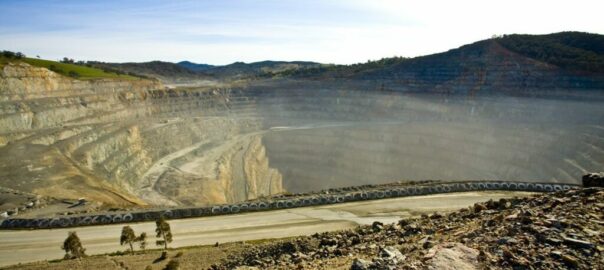
    Suspended underground operations at Newcrest’s Cadia gold mine near Orange following a magnitude‑4.5 earthquake have put the site’s emergency response and geotechnical controls under scrutiny. The event triggered immediate withdrawal of personnel from the underground panels, inspections of ground support and ventilation circuits, and checks on critical infrastructure linking the block cave to the Cadia open pit. For mine operators, the incident reinforces the need for robust seismic monitoring, clear trigger‑action response plans, and rapid re‑entry protocols in seismically active districts.

    Technical Brief

    • For other hard‑rock caving operations, event reinforces integrating regional seismic hazard into trigger‑action plans.

    Our Take

    In our safety-tagged mining coverage, most risk-mitigation pieces focus on vehicle interactions and haul-road hazards (for example the Kal Tire–Decoda real-time hazard detection system), so a 4.5-magnitude seismic event at Newcrest’s Cadia mine highlights a less frequently discussed risk pathway for Australian operators.

    The Cadia incident sits within a cluster of Australian Mining stories emphasising technology-led risk control, from sensor-based hazard detection to battery-electric fleets, suggesting that underground seismic monitoring and automated response protocols are likely to attract similar investment attention from METS suppliers.

    Given Cadia’s scale as a flagship Newcrest asset near Orange, any operational disruption or redesign of underground access and support regimes will be closely watched by other deep Australian operations that share comparable geotechnical conditions and regulatory scrutiny.

    Geotechnical Software for Modern Teams

    Centralise site data, logs, and lab results with GEODB-io, CMRR-io, and HYDROGEO-io.

    No credit card required.

    • Save and export unlimited calculations
    • Advanced data visualisation
    • Generate professional PDF reports
    • Cloud storage for all your projects

    Prepared by collating external sources, AI-assisted tools, and Geomechanics.io’s proprietary mining database, then reviewed for technical accuracy & edited by our geotechnical team.

    Related Articles

    Mining
    about 8 hours ago

    Sandvik’s SEK 175m LKAB Malmberget order: flowsheet notes for plant engineers

    Sandvik has secured a SEK 175 million order from LKAB to supply crushing and screening equipment for the new iron ore sorting plant at Malmberget, booked in Q2 2026. The package includes cone crushers, double-deck screens and vibrating feeders, forming the core of the primary and secondary sizing circuit. For plant designers and process engineers, the deal signals continued reliance on high-capacity, fixed crushing lines for Nordic underground iron ore operations rather than modular or fully mobile alternatives.

    Eurasian Resources–BAUER vertical bauxite mining: design and planning notes for engineers
    Mining
    about 8 hours ago

    Eurasian Resources–BAUER vertical bauxite mining: design and planning notes for engineers

    Eurasian Resources Group’s Aluminium of Kazakhstan unit has commissioned BAUER rotary drilling equipment at open pit No. 4 of the Vostochno-Ayatskoye Krasno-Oktyabrskoye bauxite mine to trial what is described as the world’s first vertical bauxite extraction project. The system uses vertical rotary drilling rather than conventional bench blasting and truck–shovel methods, aiming to access deeper ore zones within the existing pit footprint. For geotechnical and mine planners, the approach could alter pit slope design, drilling patterns and ground support requirements if adopted at scale.

    Mining
    about 8 hours ago

    ExxonMobil–Teck renewable diesel deal: haul fleet implications for mine operators

    ExxonMobil has finalised a supply agreement with Teck for Esso Ethos+ Renewable Diesel R100 in Canada and completed the first delivery to Teck’s Highland Valley Copper (HVC) operations in British Columbia. The 100% renewable diesel will be produced by Imperial Oil’s Strathcona refinery, which is being upgraded to manufacture bio-based fuels for heavy-duty applications such as mine haul trucks and support fleets. For mine operators, the deal signals growing availability of drop-in low-carbon fuels compatible with existing diesel engines and fuel infrastructure.

    Related Industries & Products

    Mining

    Geotechnical software solutions for mining operations including CMRR analysis, hydrogeological testing, and data management.

    Construction

    Quality control software for construction companies with material testing, batch tracking, and compliance management.

    CMRR-io

    Streamline coal mine roof stability assessments with our cloud-based CMRR software featuring automated calculations, multi-scenario analysis, and collaborative workflows.

    HYDROGEO-io

    Comprehensive hydrogeological testing platform for managing, analysing, and reporting on packer tests, lugeon values, and hydraulic conductivity assessments.

    GEODB-io

    Centralised geotechnical data management solution for storing, accessing, and analysing all your site investigation and material testing data.

    AllGeotechnicalMiningInfrastructureMaterialsHazardsEnvironmentalSoftwarePolicy