Geomechanics, Streamlined.
© 2026 Geomechanics.io. All rights reserved.
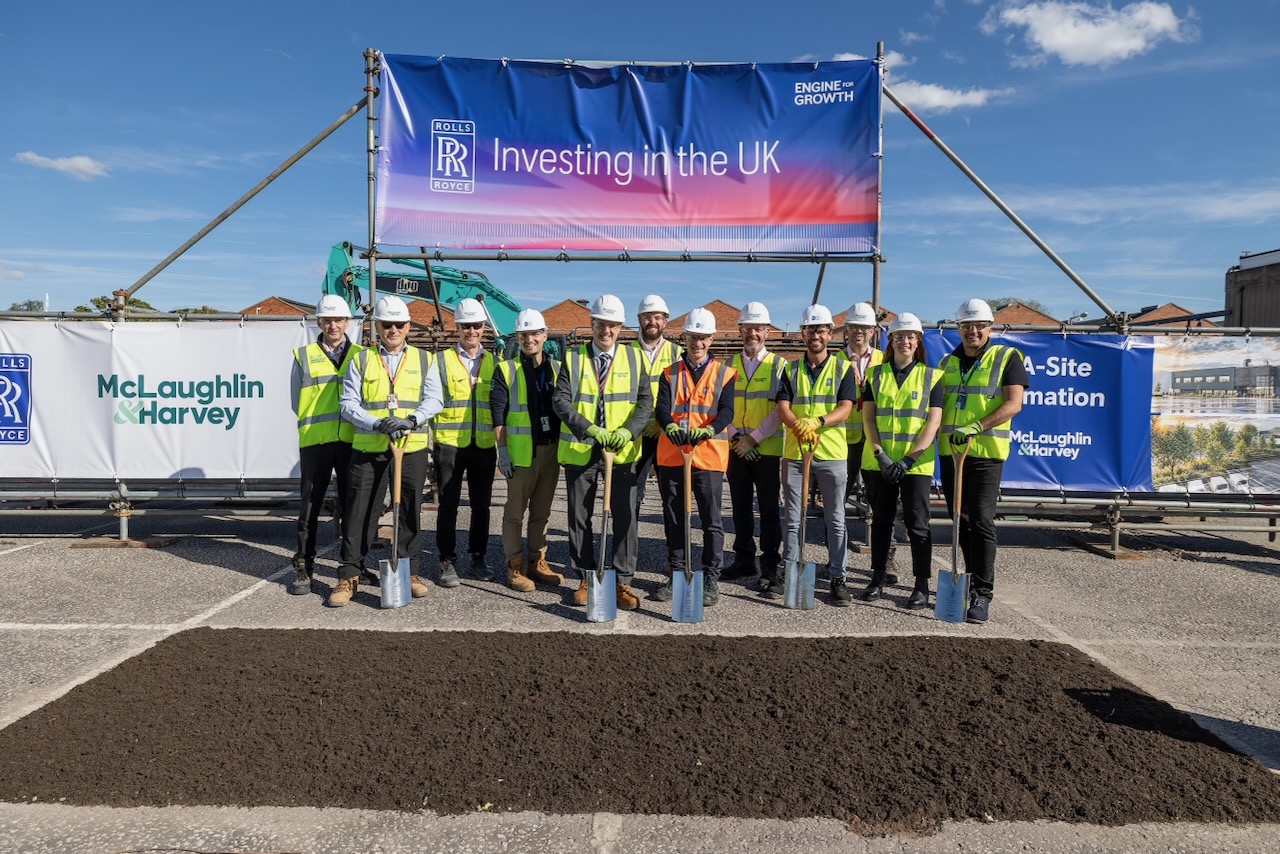
McLaughlin & Harvey has begun construction of a new civil aerospace manufacturing facility at Rolls-Royce’s Derby site, forming part of a £140m investment in UK advanced manufacturing. The project sits within a wider McLaughlin & Harvey programme delivering manufacturing services and engineering, technology & safety (ET&S) buildings for Rolls-Royce, alongside a separate £100m facility in Bristol. Rolls-Royce aims to use the new Derby infrastructure to support future growth in large aero engines, upgrade employee working environments and reinforce UK aerospace and defence capability.
Bentry Capital’s 365-home Abbey Row scheme in Liverpool’s Knowledge Quarter has secured Gateway 2 approval, enabling in-house contractor Mellior Group (Mellior Construction) to move straight into the principal construction phase. The first phase will deliver 241 city-centre apartments across three architecturally distinct blocks on a previously cleared site, with site offices installed and initial subcontractor packages already let. Block C is programmed for completion in 2028 and Block A in 2029, with works due to start on site in October under a delivery strategy embedding new building-safety requirements.
Completion of the 620m fish return tunnel at Hinkley Point C marks seabed breakthrough for the final section of 8km of marine tunnels under the Bristol Channel. The tunnel boring machine, launched from dry land and recovered offshore by floating crane after a five‑month drive, will be cleaned and redeployed on another site. The tunnel will work with an acoustic fish deterrent and four low‑speed seawater intakes designed so fish can escape even when within about 2m of the intake heads.
Pagabo has awarded places to 111 suppliers, including Balfour Beatty, Costain, Kier, Skanska and VolkerFitzpatrick, on its £4.29bn National Framework for Civil Engineering, Infrastructure and Enabling Works 2026, spanning 13 lots over a four‑year term. The framework, compliant with the Procurement Act 2023 and Procurement Regulations 2024, consolidates Pagabo’s previous civils, infrastructure, demolition and land preparation frameworks for use by central and local government, NHS, blue light, housing and education clients. YPO acts as centralised procurement authority, with Pagabo managing delivery through its Pagabo+ digital end‑to‑end platform for call‑offs, performance monitoring and compliance.
Willmott Dixon Developments and Milligan have been appointed via Pagabo’s Developer Led Framework to deliver a £6m council-funded regeneration of Brentwood’s Baytree Shopping Centre, centred on a new leisure quarter anchored by a boutique or premium-format cinema with restaurants, bars and upgraded public realm around the Chapel of St Thomas à Becket ruins. The rear of the site will be prepared separately to safeguard options for future residential development. Immediate technical steps include detailed design, a full planning application and early engagement with existing occupiers.
PTSG has acquired Tamworth-based Neptune Compliance, a specialist in Legionella testing, closed-system water treatment, water storage and cooling tower hygiene, to expand its UK-wide Water Treatment division. Neptune already services major retail and facilities clients including M&S, Morrisons, ASDA, Central England Co-op and Frasers Group, giving PTSG broader national coverage and a deeper compliance-led service offering. Managing director Craig Ward will stay on as sales director for PTSG Water Treatment, supporting cross-selling of Legionella risk management and consultancy across PTSG’s wider customer base.
Sandvik Rock Processing has completed a major upgrade of its jaw crusher range, unifying five models with nominal throughputs from 150 to 1160 tonnes per hour and introducing a common platform for spares and maintenance. The redesigned machines incorporate new safety features such as improved access for liner changes, enhanced nip-angle control and updated guarding around the feed opening and drive. For mine operators, the standardised range simplifies parts stocking, reduces shutdown durations for primary crushing circuits and supports higher, more consistent utilisation of installed capacity.
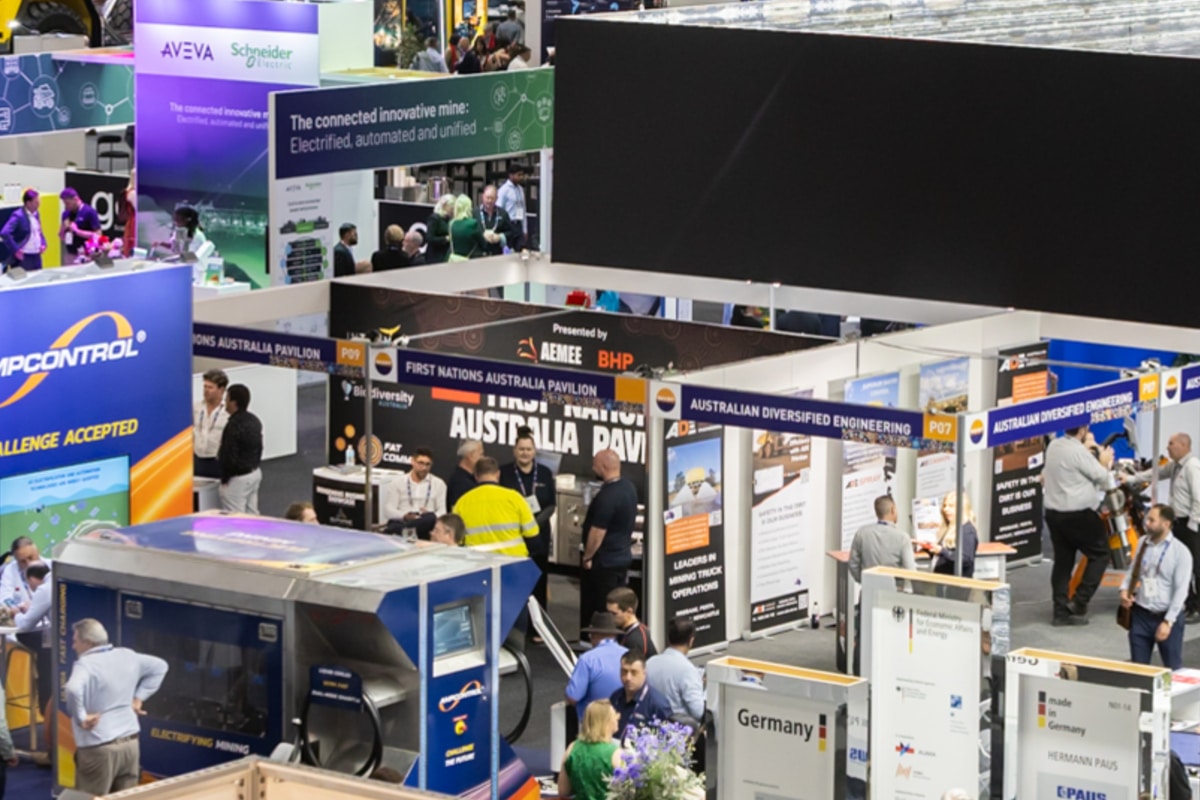
Australian mine operators will take centre stage at the International Mining and Resources Conference + Expo (IMARC) in Sydney, where thousands of global mining leaders, investors, suppliers and technology innovators are expected to attend. Organisers have launched targeted initiatives to bring more local, on-the-ground decision makers into the programme, aiming to connect Australian sites directly with international solution providers. For engineers, this signals strong opportunities to benchmark operational practices, trial new digital and automation tools, and secure partnerships for brownfield and greenfield project delivery.
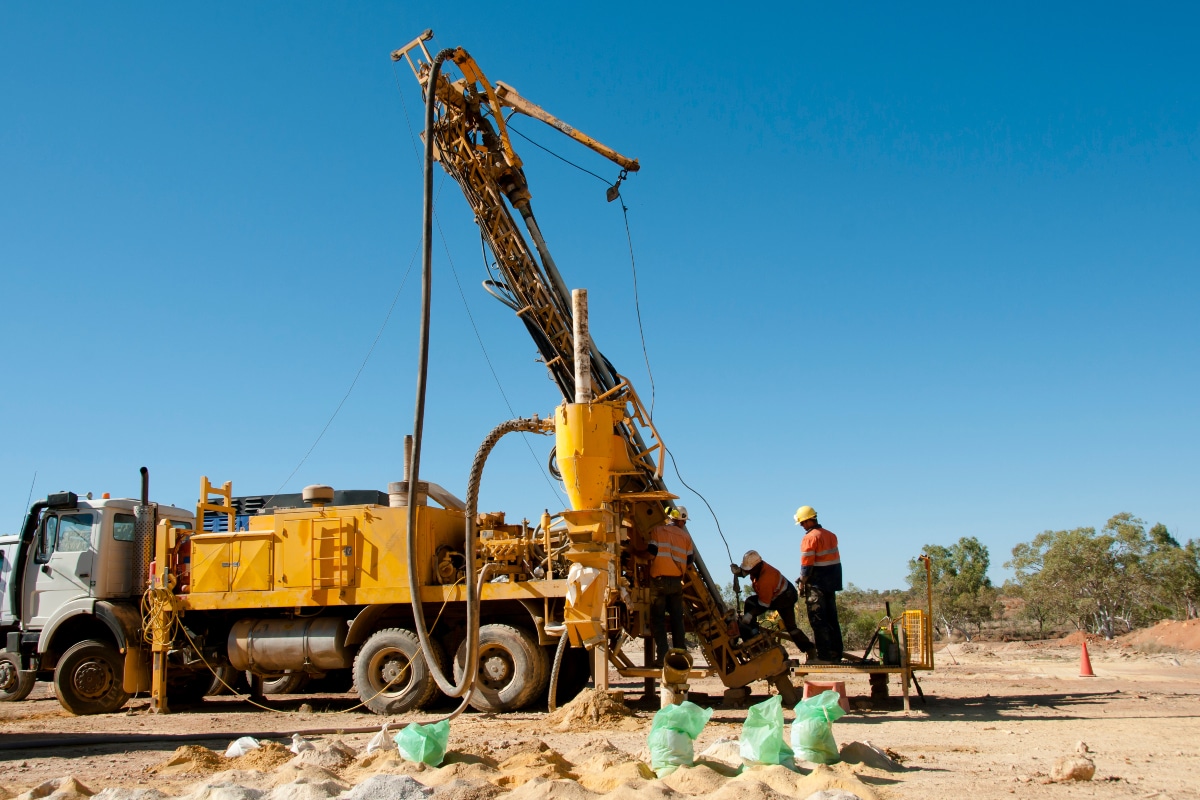
Killi Resources has deployed a second rig at its Lodestone iron ore project in Western Australia’s Mid-West, adding a reverse-circulation unit to the existing diamond core rig to fast-track a 20,000m drilling programme. The campaign is aimed at defining higher-grade, low-impurity iron ore suitable for green steel feedstock, with RC drilling focused on rapid coverage of near-surface mineralisation and core drilling targeting structural and metallurgical detail. Results will guide resource modelling, geometallurgical characterisation and potential project scale for future low-carbon steel supply chains.
CuFe is starting a 20,100m drilling campaign at its Tennant Creek copper–gold project in the Northern Territory, comprising 17,500m of reverse-circulation drilling and 2600m of diamond drilling, with rigs mobilising as earthworks and drill-pad construction progress. The programme follows a $600,000 exploration grant jointly approved by the Northern Territory and Federal Governments, signalling strong backing for further copper–gold definition in the historic Tennant Creek field. Results will guide follow-up targeting, resource expansion and potential development studies in a structurally complex, high-grade IOCG-style district.
Unplanned conveyor shutdowns in bulk material handling are linked to single belt failures or undetected drift conditions that can stop an entire processing plant or export chain, with losses rapidly escalating per hour of downtime. Pacific Automation’s Smart Series approach focuses on eliminating nuisance trips by improving belt drift detection, pull-wire reliability and misalignment sensing, using smarter field devices and better trip logic. For mining engineers, the message is to treat conveyor protection systems as critical process equipment, not simple safety interlocks, and to prioritise condition monitoring and diagnostics in design and upgrades.
Deep cave mining faces an acute skills crunch as Deloitte projects nearly 50% of mining engineers will reach retirement age within a decade, while Australian accredited undergraduate mining graduates fell from 282 in 2015 to 68 in 2021 and most 2025 graduates now come from master’s programmes with uncertain local retention. Professor Andre van As notes that no top-10 mining school offers a dedicated underground mass mining or cave mining programme, and many academics and SMEs are already at or past typical retirement age. The South Gobi Underground Mass Mining Institute at Oyu Tolgoi, funded initially by Rio Tinto, offers a prototype: expert-taught, site-based cave mining training with professional certification, with AI used to capture and scale retiring specialists’ knowledge rather than replace it.
Autonomous deep-level mass caving at operations such as Oyu Tolgoi is driving a shift from tactile, face-level decision-making to remote system control, where engineers manage autonomous LHD fleets, ventilation-on-demand and microseismic arrays from virtual control rooms. Professor Khavalbolot Kyelgyenbai argues mining curricula must integrate AI, ML and control theory so students can interpret real-time data from thousands of sensors, apply stress–extraction relations such as Es = f(Ve, ΔK)·e^(σ1/σ3), and run neural-network-based hazard forecasting. Simulator-centric labs mimicking remote operation centres, with multi-screen cave digital twins and injected seismic or mudrush events, are positioned as core training tools at the Mongolian University of Science and Technology.
Raisebore stability assessment for deep caving operations is shifting from standalone empirical tools to integrated workflows that combine mXrap’s Raisebore Stability App (QR and MSUS from RMD data), Rocscience UnWedge and RocTunnel3 kinematic analyses, and calibrated numerical stress–deformation modelling. The approach targets long, deep raises in highly stressed, structurally complex ground, addressing mechanisms such as face unravelling, wedge failure, spalling and time-dependent degradation along the full raise alignment. For practitioners, this means earlier screening of raise locations, more defensible diameter and alignment selection, and clearer definition of support and monitoring requirements.
Mining education veteran and UWA Professor of Practice Richard Butcher reports that mining and geotechnical graduate salaries now commonly exceed AUD 150,000, driving annual intakes above 50 students and total school enrolments of 200–600, but straining teaching capacity and industry links. Higher mine-site pay means most staff now come from academic rather than operational backgrounds, prompting UWA to trial more “professors of practice” and expand structured industry liaison and vacation placements. Butcher expects AI tools such as Copilot to push curricula towards critical thinking, oral mine design assessments and extended 3‑year graduate training schemes.
The Australian Centre for Geomechanics’ Online Repository of Conference Proceedings now hosts almost 4,000 peer‑reviewed mining papers, including 3,909 ACG papers and MassMin 2020 and 2024, with total downloads surpassing 4 million and Caving/MassMin papers alone exceeding 500,000 downloads. Advanced search functions allow content-level queries, field- or conference-specific filtering (e.g. “underground” or Caving 2022), and DOI-based citation export for every paper. Authors retain copyright, while ACG holds proceedings rights and centralises online hosting, with DOIs encouraged for company sites and ResearchGate to maintain a single, persistent access point.
Planning and site investigation have begun for Victoria’s Mickleham Road Upgrade – Stage Two, which will widen the Dellamore Boulevard–Craigieburn Road section in Melbourne to up to three lanes in each direction. The corridor is a known bottleneck, so geotechnical investigations, utilities mapping and drainage assessments will be critical to staging works while maintaining traffic flow. Designers will need to address urban constraints, tie-ins to Stage One geometry and future-proofing for higher traffic volumes and active transport links.
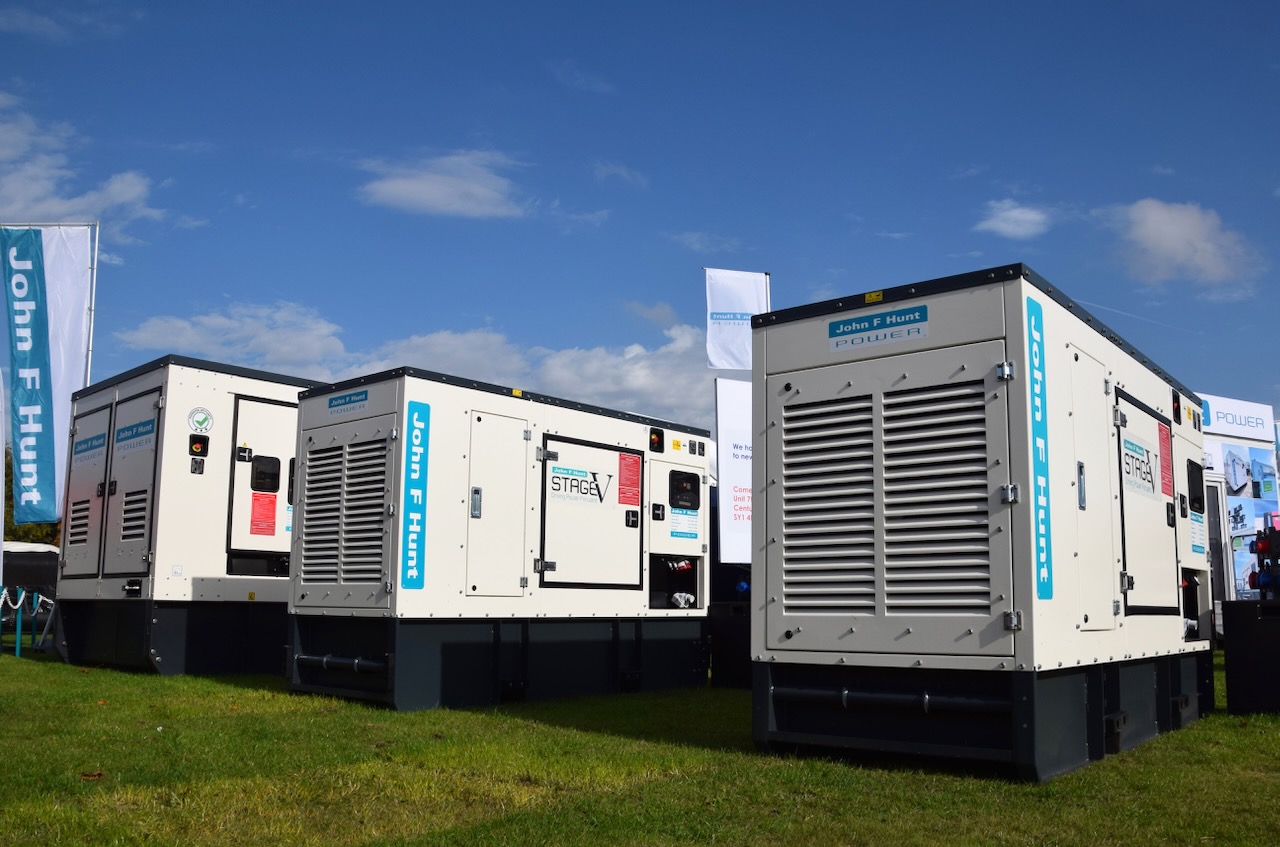
Finning UK & Ireland has acquired generator rental specialist John F Hunt Power Group and equipment dealer Morris Machinery, adding a UK-wide fleet of Stage V, Super Silent and Ultra Quiet generators from 20kVA to 1250kVA plus Sync, Hybrid Battery Units, Flybrid and trailer-mounted sets. Morris Machinery brings 6kVA to 500kVA generators, ArcGen welder generators, Hilta pressure washers and pumps, ItalTower lighting towers and pressure testing kits across construction, infrastructure and utilities. Existing depots, contracts, pricing and account teams remain in place, limiting disruption to ongoing temporary power and site support arrangements.
A passenger train in the 19 June 2024 Bedford collision accelerated from about 90mph to 98mph after its Automatic Warning System (AWS) demanded a brake application for a red signal, the Rail Accident Investigation Branch interim report finds. Data from the on-train recorder show the driver cancelled the AWS warning and power was reapplied roughly 600m before the signal protecting a set of facing points, after which the train struck a stationary engineering train. Investigators are examining driver behaviour, AWS/TPWS configuration on the route, and whether additional train protection or signalling controls could have prevented the overrun.
AtkinsRéalis, Costain, Graham, M Group and Octavius have secured places on Pagabo’s £4.29bn National Framework for Civil Engineering, Infrastructure and Enabling Works 2026, covering large-scale public sector highways, structures and enabling packages. The framework is expected to be used by councils, NHS trusts and other public bodies to procure multi-year programmes of road upgrades, bridge works, flood defences and site preparation under pre-agreed NEC-style contracts. Contractors can now position design-and-build teams and supply chains early, with clearer pipelines for geotechnical investigations, temporary works and complex traffic management.
Sellafield Ltd has selected preferred partners for a new asset care and construction procurement framework worth up to £3.6bn at its nuclear site in Cumbria, covering long-term maintenance, refurbishment and new-build works across ageing process plants and support infrastructure. The framework is expected to bundle multiple civil, structural, mechanical and electrical packages into programme-level contracts, giving suppliers greater visibility on multi-year workloads and complex shutdown interfaces. For contractors and consultants, this signals sustained demand for nuclear-grade concrete, steelwork, containment structures and specialist temporary works in one of Europe’s most regulated brownfield environments.
Chinese autonomous haulage specialist EACON reported an 844% year-on-year gross profit increase for the six months to 30 June 2026, following its US$293 million Hong Kong listing and a pivot to a customer-provided fleet model. The company now focuses on retrofitting and automating existing haul trucks supplied by clients, rather than supplying full fleets, reducing capital intensity and shortening deployment timelines. EACON continues to work with Chinese OEMs including Tonly, LGMG, XCMG and Yutong to integrate AHS kits across multiple truck platforms.
Flotation technology suppliers are pushing towards more adaptive, plant-wide control, with Syensqo targeting flexible, real-time reagent chemistry to stabilise recovery and grade under variable ore feeds. New systems are integrating online mineralogy, froth imaging and advanced process control to adjust collector and frother dosage on the fly rather than relying on fixed setpoints and manual lab assays. For concentrator engineers, this signals a shift towards chemistry strategies that can be tuned per cell or bank in response to short-term changes in mineralogy, water quality and grind size.
Space mining ventures could face a UN-style global tax regime, with Petr Zimčík of NEWTON University proposing a Space Resources Tax Authority linked to COPUOS and a three-stage levy: a small extraction fee, a larger tax at sale or consumption, and final settlement if material enters Earth markets. The core tax would target economic rent only after recovery of capital and operating costs, with thresholds set in a basket-based international accounting unit to neutralise inflation and currency swings. A fixed share of revenue would fund a Global Space Resource Dividend and a separate Global Development Fund, using population, development gaps and space-sector contributions to allocate proceeds without conferring property rights over celestial bodies.