Nova Scotia: Canada’s first mining frontier revisited for project teams
Reviewed by Tom Sullivan
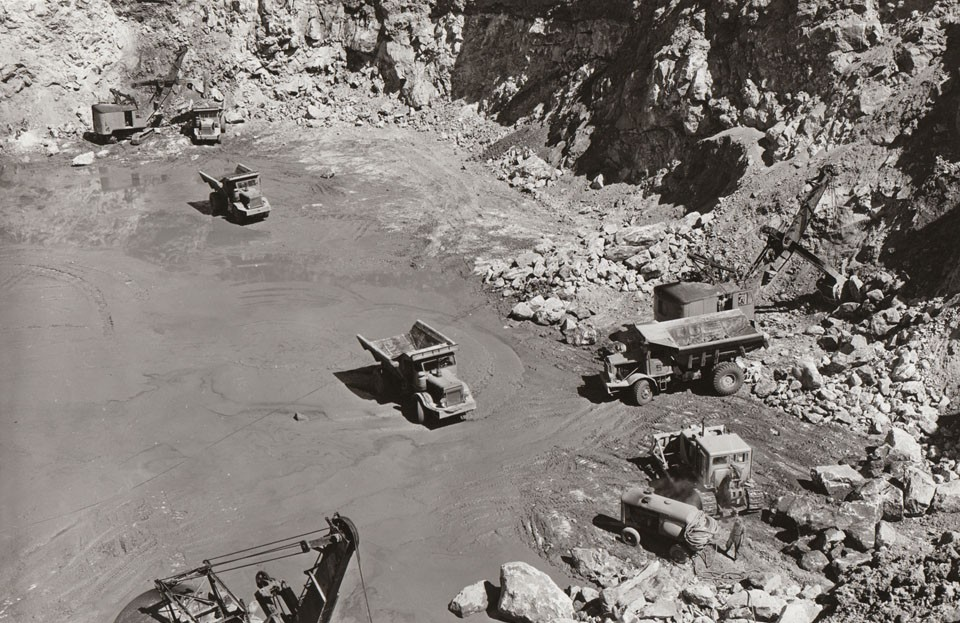
First reported on MINING.com
30 Second Briefing
Nova Scotia’s mining legacy, beginning with exposed Cape Breton coal seams noted in 1672 and the 1861 Mooseland gold rush, established some of Canada’s earliest commercial coal, gold and copper operations, including undersea collieries extending kilometres beneath the Atlantic and the Samson locomotive on iron rails. Hard-won lessons from disasters such as the 1958 Springhill Bump, arsenic- and mercury-laden historical gold tailings, and militant coalfield labour disputes drove stricter safety, labour and environmental standards than in many other provinces. Today the province has rescinded its 44‑year uranium exploration ban, is promoting “faster, smarter permitting” to halve approval times, and is targeting 80% clean power by 2030 while juniors revisit historic gold camps and explore for lithium, rare earths, tin and antimony.
Technical Brief
- Underground coal workings at Cape Breton extended several kilometres beneath the Atlantic, with full marine overburden.
- Early Port Morien operations near Louisbourg in the early 1700s are among Canada’s first commercial mines.
- The General Mining Association introduced steam engines and iron-rail haulage, including the Samson locomotive, to Pictou coalfields.
- Coxheath, near Sydney, hosted late‑1700s copper extraction regarded as one of Canada’s first significant metal mines.
- Londonderry iron mines supplied one of Canada’s earliest steel industries, integrating local ore with regional coal supply.
- Legacy Sydney Tar Ponds contamination from steelmaking became a focal case for mine‑adjacent industrial remediation expectations.
- Arsenic‑ and mercury‑rich historical gold tailings remain spatially scattered near 19th–20th century camps such as Waverley and Sherbrooke.
- Coalfield labour conflicts led by J.B. McLachlan materially influenced subsequent Canadian mine safety and labour regulation baselines.
Our Take
Nova Scotia’s rescission of its 44‑year uranium exploration ban in 2025 stands out in our mining database, where uranium items are otherwise dominated by Saskatchewan, signalling a potential rebalancing of Canadian exploration attention if permitting and social licence can be secured.
The province’s 80% clean power target by 2030, alongside historic coal and iron districts such as Cape Breton and Sydney Mines, implies that any new copper, gold or critical minerals projects in Nova Scotia will be evaluated not just on grade and scale but on their ability to plug into a rapidly decarbonising grid and meet ESG expectations.
With critical minerals (including lithium, rare earths, tin and antimony) now explicitly on the radar in Nova Scotia, operators looking at legacy camps like Coxheath or Londonderry may find more support for re‑logging, tailings re‑evaluation and small‑footprint underground concepts than for large new surface disturbances, given the province’s history with sites like the Sydney Tar Ponds.
Prepared by collating external sources, AI-assisted tools, and Geomechanics.io’s proprietary mining database, then reviewed for technical accuracy & edited by our geotechnical team.
Related Articles
Related Industries & Products
Mining
Geotechnical software solutions for mining operations including CMRR analysis, hydrogeological testing, and data management.
Tunnelling
Specialised solutions for tunnelling projects including grout mix design, hydrogeological analysis, and quality control.
CMRR-io
Streamline coal mine roof stability assessments with our cloud-based CMRR software featuring automated calculations, multi-scenario analysis, and collaborative workflows.
HYDROGEO-io
Comprehensive hydrogeological testing platform for managing, analysing, and reporting on packer tests, lugeon values, and hydraulic conductivity assessments.
GEODB-io
Centralised geotechnical data management solution for storing, accessing, and analysing all your site investigation and material testing data.