Geomechanics.io

  • Free Tools
Sign UpLog In

    Geomechanics.io

    Geomechanics, Streamlined.

    © 2026 Geomechanics.io. All rights reserved.

    Geomechanics.io

    CMRR-ioGEODB-ioHYDROGEO-ioQCDB-ioFree Tools & CalculatorsBlogLatest Industry News

    Industries

    MiningConstructionTunnelling

    Company

    Terms of UsePrivacy PolicyLinkedIn
    Research
    Projects

    Copper deposit distribution research: geodynamic clues for explorers and modellers

    June 25, 2026|

    Reviewed by Joe Ashwell

    Copper deposit distribution research: geodynamic clues for explorers and modellers

    First reported on Australian Mining

    30 Second Briefing

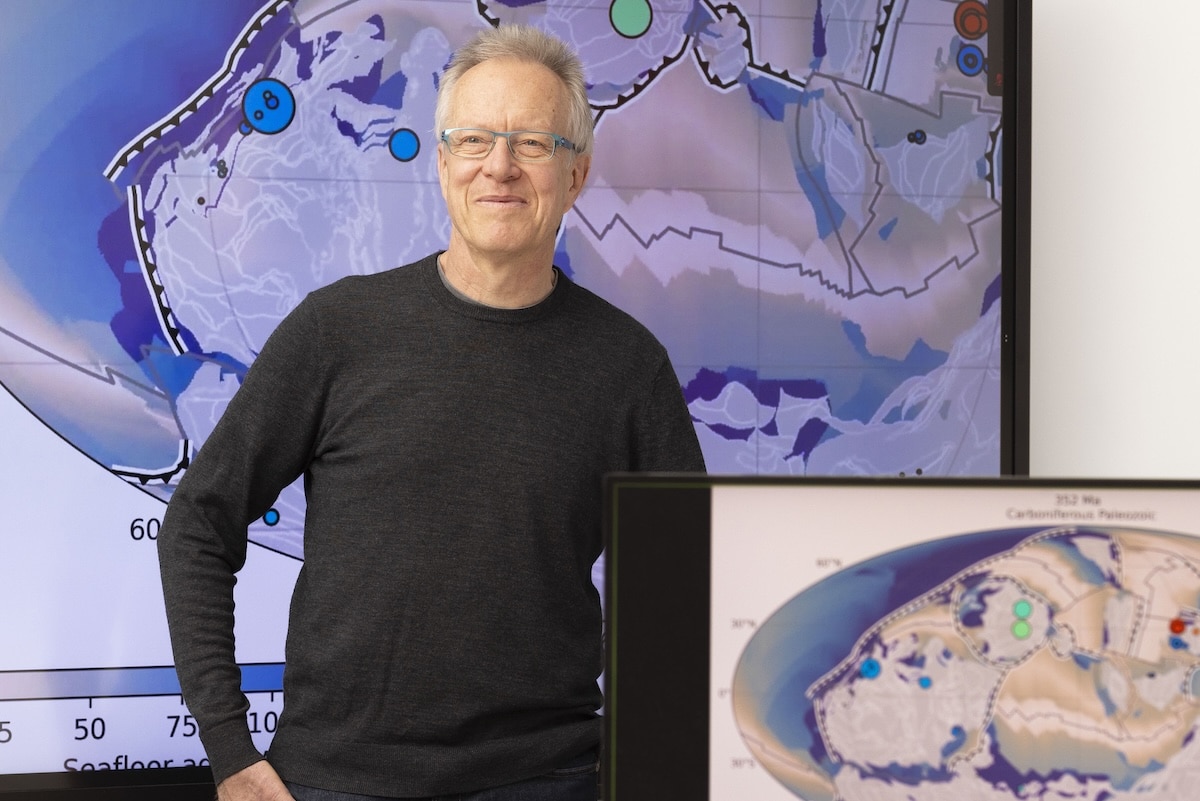
    New University of Sydney modelling of 3D plate tectonics and deep Earth flow fields explains why some ancient continental margins host large sedimentary copper systems while others with similar stratigraphy are barren. Led by Professor Dietmar Müller’s EarthByte Group and published in Nature Communications, the work links copper endowment to long-lived mantle upwellings, crustal thinning patterns and basin-scale fluid pathways rather than local geology alone. For explorers, the framework offers a way to rank frontier basins and re-evaluate “failed” provinces using geodynamic criteria.

    Technical Brief

    • Framework is applicable to other basin-hosted metals where large-scale fluid focusing is critical.
    • Approach provides a screening layer for regional targeting, to be refined by conventional geological and geophysical datasets.

    Our Take

    The University of Sydney is emerging as a recurring source of mineral prospectivity tools in our coverage, with this copper work sitting alongside its vanadium resource mapping that combines soil geochemistry and machine‑learning to re‑interpret legacy datasets for Australian explorers.

    For Australian copper and critical‑minerals strategists, a refined understanding of deposit distribution from groups such as EarthByte can feed directly into national critical‑minerals mapping and funding priorities, potentially steering attention towards under‑explored tectonic domains rather than just brownfields extensions.

    Geotechnical Software for Modern Teams

    Centralise site data, logs, and lab results with GEODB-io, CMRR-io, and HYDROGEO-io.

    No credit card required.

    • Save and export unlimited calculations
    • Advanced data visualisation
    • Generate professional PDF reports
    • Cloud storage for all your projects

    Prepared by collating external sources, AI-assisted tools, and Geomechanics.io’s proprietary mining database, then reviewed for technical accuracy & edited by our geotechnical team.

    Related Articles

    Cemex and sensmore’s Rüdersdorf quarry: AI haulage lessons for mine planners
    Mining
    about 2 hours ago

    Cemex and sensmore’s Rüdersdorf quarry: AI haulage lessons for mine planners

    Cemex and Berlin-based startup sensmore are digitising operations at the 770-year-old Rüdersdorf limestone quarry in Germany using AI-based loading and haulage optimisation. On-board edge devices and radar sensors on wheel loaders and haul trucks feed real-time data into sensmore’s optimisation engine, which recommends bucket fill levels, truck–loader pairing and haul speeds. Early results show reduced idle times and more consistent crusher feed, signalling practical pathways to retrofit AI-driven dispatch and loading control into existing European quarry fleets without full autonomy.

    Mining
    about 2 hours ago

    Multotec spirals at Thaba JV: modular gravity circuit lessons for plant designers

    Multotec has supplied a customised suite of high-performance spiral concentrators to the Thaba JV chromite and PGM project in South Africa’s Limpopo province, providing an integrated gravity separation circuit tailored to the ore’s specific mineralogy. The solution is engineered to boost chromite and PGM recovery while tightening product grade control, with spiral configurations selected to allow rapid reconfiguration between different feed conditions and product specs. For plant designers and metallurgists, the key point is the emphasis on modular, flexible spiral layouts to sustain long-term performance as ore characteristics change.

    Mining
    about 2 hours ago

    Antofagasta copper ramp-up to 2030: design and risk notes for mine engineers

    Antofagasta plans to lift copper output by 30% by 2030, Executive Chairman and CEO Iván Arriagada told delegates at the World Mining Congress 2026, positioning the Chilean producer to meet surging critical minerals demand from the energy transition. The growth will come from brownfield expansions across its existing operations rather than new greenfield projects, implying higher stripping ratios, additional concentrator capacity and incremental tailings and water management upgrades. For engineers, the strategy signals sustained demand for large-scale pit optimisation, process debottlenecking and infrastructure life-extension work in northern Chile.

    Related Industries & Products

    Mining

    Geotechnical software solutions for mining operations including CMRR analysis, hydrogeological testing, and data management.

    CMRR-io

    Streamline coal mine roof stability assessments with our cloud-based CMRR software featuring automated calculations, multi-scenario analysis, and collaborative workflows.

    HYDROGEO-io

    Comprehensive hydrogeological testing platform for managing, analysing, and reporting on packer tests, lugeon values, and hydraulic conductivity assessments.

    GEODB-io

    Centralised geotechnical data management solution for storing, accessing, and analysing all your site investigation and material testing data.

    AllGeotechnicalMiningInfrastructureMaterialsHazardsEnvironmentalSoftwarePolicy