Geomechanics, Streamlined.
© 2026 Geomechanics.io. All rights reserved.
G Mining Ventures has lifted 2026 total cash cost guidance at the Tocantinzinho gold mine in Brazil to US$836–$965/oz and AISC to US$1,330–$1,544/oz, about 12% higher, driven by labour inflation, a stronger Brazilian real (5.15 vs 5.55 BRL/US$) and higher assumed gold prices (US$4,300/oz vs US$4,000/oz) increasing royalties. Second-quarter output from Tocantinzinho reached 36,845 oz, with cash costs at US$1,046/oz and AISC at US$1,690/oz, while G Mining reaffirmed 2026 production of 160,000–190,000 oz. Construction of the Oko West project in Guyana is 28% complete with US$423 million spent of a US$973 million capex, targeting first gold in late 2027 and, with Oko-Ghanie, potential life-of-mine production above 500,000 oz/year.
Pan American Silver returned a record $300 million to shareholders in Q2 2026, including $224 million in buybacks and $76 million in dividends, after revenue rose 38% year-on-year to $1.1 billion on strong silver output of 6.5 million oz from La Colorada and Juanicipio. Adjusted earnings of $308 million ($0.73/share) missed consensus as gold production slipped to 165,900 oz and gold AISC climbed to $1,984/oz, above the $1,918/oz forecast. The company kept 2026 guidance at 25–27 million oz silver (AISC $15.75–$18.25/oz) and 700,000–750,000 oz gold (AISC $1,700–$1,850/oz), but now expects gold volumes at the low end and costs at the high end.
Northern Star Resources has rejected Elliott Investment Management’s bid to install six new directors, including former Anglo American CEO Mark Cutifani, arguing the move would undermine proper governance and duplicate strategic and operational reviews already under way. Elliott, which has built a A$1 billion stake equal to 5.6% of the company, wants at least three nominees appointed immediately to oversee incoming CEO Suresh Vadnagra and a comprehensive business review. The clash centres on board composition and audit and risk oversight, with Northern Star instead appointing former BHP director Terry Bowen as independent non-executive and audit and risk chair.
Newmont has agreed to spend US$30 million to earn up to 75% of Headwater Gold’s 28 km² Jupiter epithermal gold project in Nye County, Nevada, marking their third earn-in deal after Spring Peak and Lodestar. The structure includes US$2.5 million in the first two years, US$10 million within four years for 51%, a further US$20 million over three years for 65%, and a prefeasibility study on at least 1.5 million oz gold equivalent for 75%, plus a 2% NSR royalty to Headwater. Jupiter covers a 5-by-8-km altered volcanic zone with historical drilling of 9.1 m at 1.1 g/t Au from 112.8 m and surface samples up to 3.1 g/t Au, with new mapping, sampling and geophysics planned ahead of drilling.
Vale’s Base Metals unit is accelerating a coarse particle flotation (CPF) expansion at the Salobo copper-gold mine in Carajás, lifting plant throughput by 6 Mt to 42 Mt per year and adding about 30,000 tpa of copper plus 15,000 oz of gold byproduct, with first production now targeted for H1 2028. The CPF circuit will strip waste earlier in the flowsheet to cut grinding load, raise metallurgical recoveries and reduce specific energy and water consumption compared with conventional processing. Capital cost has been trimmed to about $215 million, with Wheaton Precious Metals contributing $40 million under a revised streaming deal, leaving Vale’s net outlay near $175 million and an expected after-tax IRR above 50%.
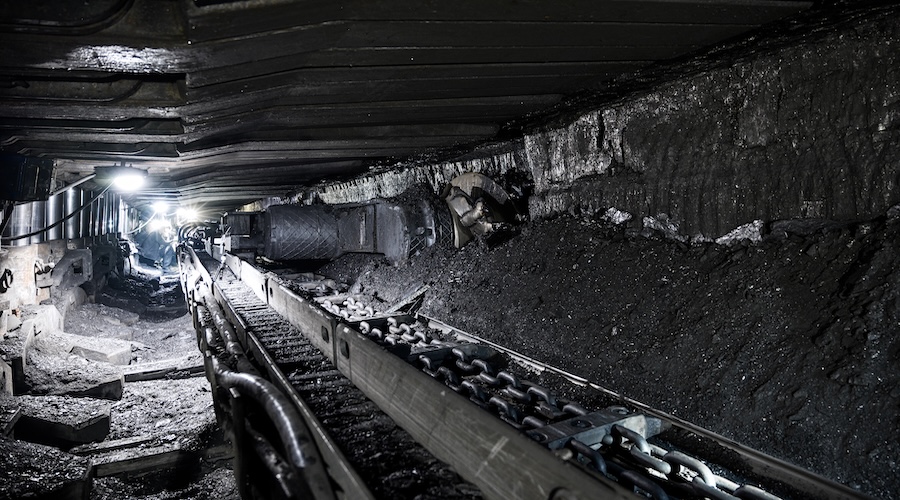
Proposed global coal mining capacity rose 11% in 2025, driven mainly by India where the project pipeline doubled as the government targets 1.15 billion tonnes of coal production in 2025–26 to cover peak power demand and energy security. In contrast, commissioning of new coal capacity fell almost 40%, with China’s additions down 44% amid tighter mine approvals and safety rules, and Australia’s new capacity plunging 96% as export demand weakens. Around 70% of proposed mines remain at pre-permit or construction stage, leaving significant scope for cancellations before capital is sunk into potentially uneconomic long-life assets.
Nuclea Energy has agreed to acquire Moltex Energy’s advanced nuclear technology assets, including the Stable Salt Reactor–Wasteburner (SSR‑W) molten salt fast reactor and the Waste To Stable Salt (WATSS) spent fuel recycling process, developed with over C$96 million in Canadian and US funding. The deal adds 80 granted patents across nine families and nine pending patents in fuel recycling, plus design work that has already completed Phase 1 of the Canadian Nuclear Safety Commission Vendor Design Review. Nuclea plans to integrate these reactor and fuel‑cycle technologies with its Morpheus lead‑cooled, factory‑built micro‑modular reactor platform.
Steadright Critical Minerals has secured a mining licence for its TitanBeach titanium project in Morocco, covering an approved core area of roughly 4 km by 4 km (about 16 km²) within a wider 192 km² tenure. 2025 exploration identified ilmenite, titanomagnetite, magnetite, leucoxene and rutile-bearing sands with Fe₂O₃ grades up to 79.5% and TiO₂ up to 14.9%. The licence, issued via NSM Capital Sarl in which Steadright holds 76.5%, is described as unusually large for Morocco and positions the project for detailed resource drilling and process testwork on heavy mineral sands.
Mining’s 50 largest listed companies have added $206 billion in market value over the past two weeks, outpacing the year‑to‑date performance of the US “Magnificent 7” tech stocks. The combined valuation of the top miners, however, still sits at roughly one‑tenth of big tech’s aggregate capitalisation, underlining how cheaply large‑scale copper, iron ore, coal and battery‑metal producers continue to trade relative to growth equities. For project developers and contractors, stronger balance sheets at majors signal more room for capex on new pits, tailings expansions and processing upgrades.
The first Volvo R70 rigid hauler in Europe has entered service at SHF Steinbruchbetriebe’s Bettenfeld limestone quarry in Germany, after being built at Volvo CE’s Motherwell facility in Scotland. The R70, a 65–70 t class rigid truck positioned above Volvo’s articulated hauler range, is being deployed on overburden and limestone haulage on fixed quarry routes rather than flexible pit layouts. Its introduction signals growing European uptake of higher-payload rigid haulers for short, repetitive quarry cycles where road design, ramp geometry and loading tool match can be tightly optimised.
EACON has started autonomous night-shift haulage at the Havana Pit in Western Australia, extending its June 2026 achievement of autonomous day operations with Thiess and Norton Gold Fields, owned by Zijin Mining Group. The system currently controls a fleet of six Komatsu HD1500 rigid trucks, moving ore and waste without on-board operators under low-light conditions. Night deployment will test perception, localisation and traffic-control algorithms in reduced visibility, providing data on tyre wear, fuel burn and productivity for potential scale-up across the pit.
Sandvik has secured orders from Lucara Botswana, a subsidiary of Lucara Diamond Corp, to supply a 15-unit underground mining fleet of drills and loaders, together with parts, rock tools and service support, for the Karowe diamond mine’s transition to underground operations in Botswana. The package is backed by Sandvik Financial Services, giving Lucara structured equipment financing alongside the technology supply. For geotechnical and mining teams, the deal signals long-term mechanised development at Karowe, with OEM-supported maintenance likely to influence availability targets and lifecycle cost assumptions.
NMMC is expanding its high-capacity drill rig fleet at the Muruntau gold mine in Uzbekistan, adding modern units such as Epiroc’s electric Pit Viper rigs to support the next phase of pit development. The electric, large-diameter blasthole rigs are geared to longer benches and higher penetration rates, enabling tighter drill patterns and more consistent fragmentation for the massive open pit. For mine planners and geotechnical teams, the shift to electric, high-precision rigs affects slope design assumptions, blast-induced vibration control and power infrastructure planning across the pit.
Vale Base Metals is fast-tracking a Coarse Particle Flotation (CPF) project using the Eriez HydroFloat® process at its Salobo Copper Complex in Brazil to lift throughput and copper recovery on coarser grind sizes. The CPF circuit, installed as a brownfield upgrade to the existing concentrator, is expected to deliver a material increase in processing and production capacity with what Vale describes as “exceptional” project economics. For plant designers and metallurgists, the move signals growing confidence in HydroFloat-scale CPF as a retrofit option for large copper concentrators.
Sedgman, part of CIMIC Group and ACS Group’s global critical minerals platform, is advancing the expansion of Sayona and Piedmont Lithium’s North American Lithium (NAL) operation in Québec through an ongoing feasibility study and a newly awarded detailed design mandate. The work follows updated scoping and prefeasibility studies for the NAL spodumene concentrator and associated processing facilities, targeting higher throughput and improved lithium recovery. For engineers, the key shift is from concept-level options to executable design, locking in flowsheet, plant layout and infrastructure requirements for the next growth phase.
South32’s Hermosa zinc-manganese-silver project in Arizona has selected Glencore Technology’s Jameson Concentrator for its processing plant, leveraging the compact Jameson Cell-based flowsheet to cut footprint and energy use while supporting higher automation. The modular, small-footprint design is intended to simplify layout and maintenance in the underground-linked plant and reduce structural steel and concrete demand. For process engineers, the choice signals a push towards fine grinding and high-intensity flotation to maximise metal recovery while tightening water and tailings management.
NioCorp will deploy the Railveyor™ automated rail-based haulage system as the core ore movement and electric underground haulage solution in its Elk Creek critical minerals project in Nebraska, integrating it into a new twin-ramp orebody access layout detailed in its 2026 feasibility study. The Railveyor installation is intended to replace conventional diesel truck haulage over the main ramp profile, cutting ventilation demand and enabling a fully electrified materials handling chain from stopes to surface. For mine planners and geotechnical teams, the twin-ramp plus Railveyor configuration drives ramp geometry, power distribution design and ground support around continuous conveyor‑like haul paths.
Australian and New South Wales governments have struck a long-term power agreement with Tomago Aluminium, securing electricity supply for Australia’s largest aluminium smelter near Newcastle and giving Rio Tinto and other owners cost certainty. The deal is framed around “reliable, internationally competitive power” pricing to keep the 24/7, high-load operation viable, protecting hundreds of megawatts of continuous demand that underpins grid stability in the Hunter region. For process engineers and power planners, the arrangement reduces curtailment risk and supports ongoing investment in potline maintenance and modernisation.
Globe 24-7, P&C Recruiting and HR, and 3Pillars Asia Pacific have merged to form a single recruitment and HR consulting provider focused on the global mining sector, combining direct candidate search, recruitment process outsourcing (RPO) and strategic HR advisory. The new group will operate across Asia Pacific, North and South America, Africa and Europe, targeting technical, operational and executive roles from pit to port. For mine owners and contractors, the move centralises sourcing for scarce skills in areas such as underground operations, processing plants and major project delivery.
Specialist broker Credeq is promoting unsecured guarantee capacity as an alternative to traditional bank guarantees and cash-backed performance bonds that can cap contractors’ ability to bid for large road and civil packages. By arranging surety bonds through non-bank insurers, contractors can secure performance security without tying up working capital or fixed assets, freeing bank facilities for plant, materials and project delivery. The approach targets mid-tier contractors facing bonding limits on multi-year D&C or alliance contracts, where aggregate security requirements can otherwise stall growth.
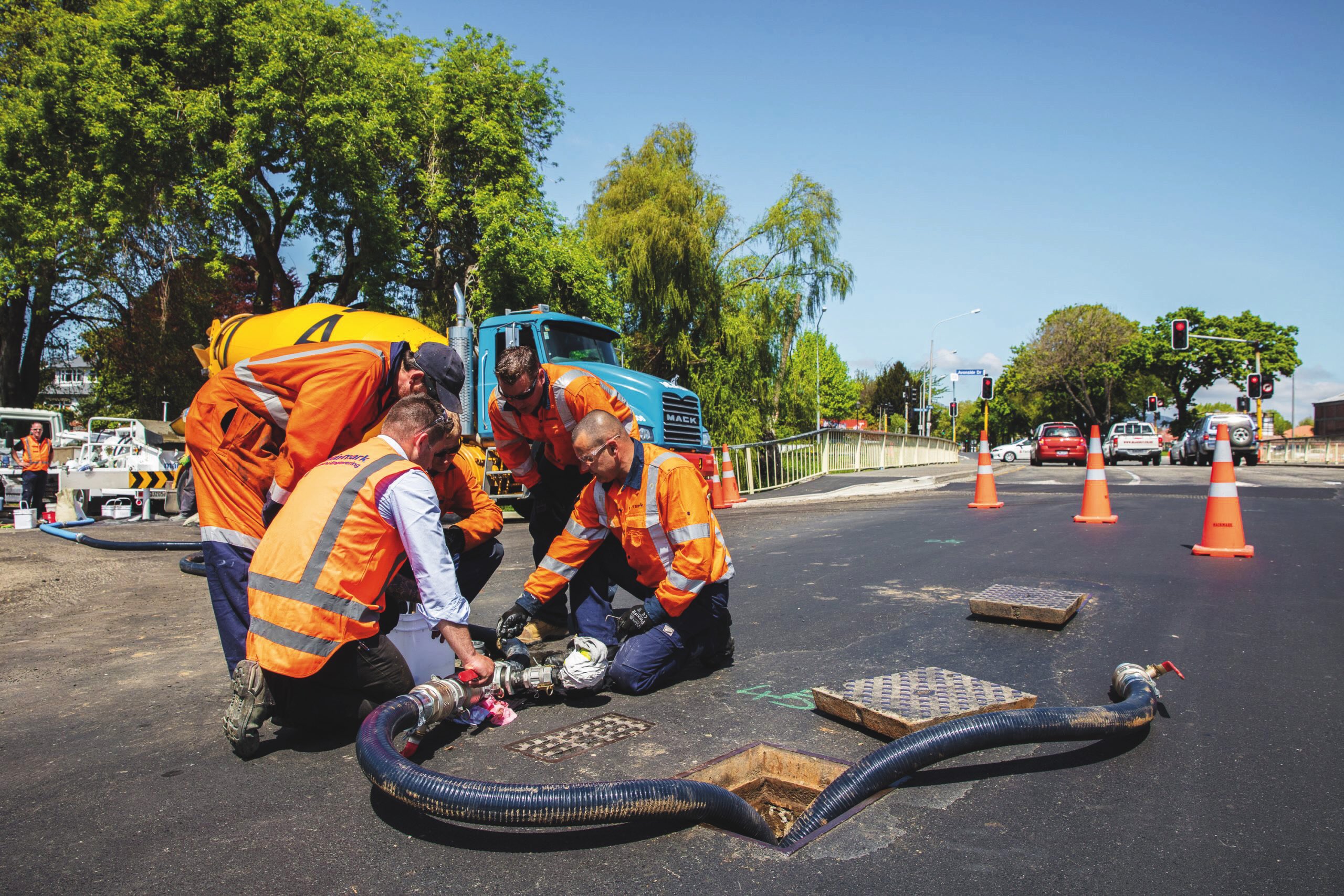
Mainmark is urging Australian road authorities to prioritise early pavement rehabilitation over full reconstruction as freight loads increase and severe weather accelerates rutting, cracking and subgrade failure. Chief Growth Officer Amy Williams and Group Technical and Innovation Manager Theo Hnat point to targeted ground improvement and resin injection techniques to re-level slabs, re-establish bearing capacity and seal voids without full-depth excavation. The approach aims to keep existing pavements in service longer, reduce lane-closure durations and defer high‑capex rebuilds across stressed freight corridors.
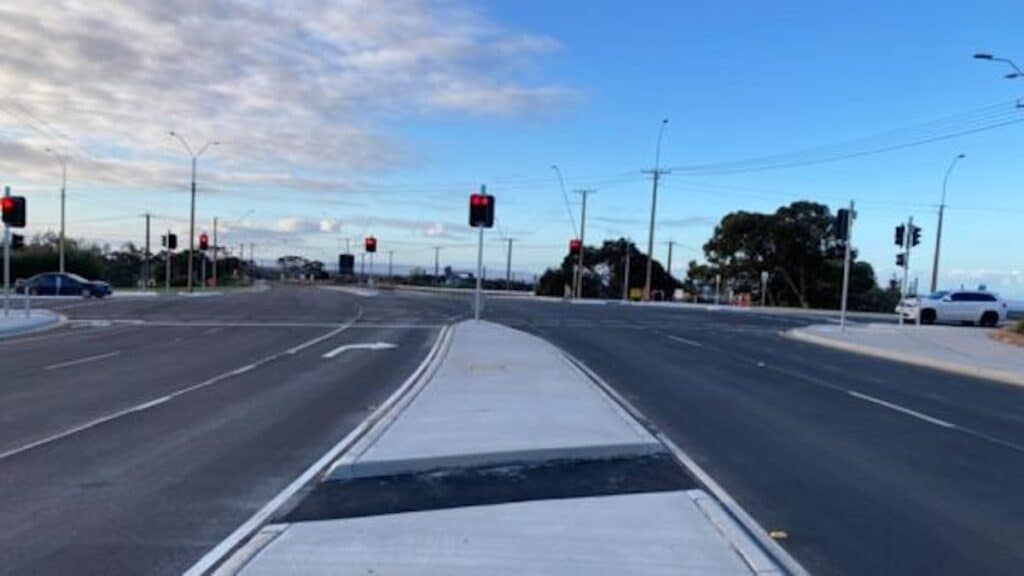
A $6.7 million upgrade of the Lincoln Highway–McBryde Terrace signalised intersection in Whyalla, South Australia, is now complete, improving a key freight and tourist link that carries about 7000 vehicles per day between the city’s industrial precinct and the Eyre Peninsula corridor. Works by the SA Department for Infrastructure and Transport focused on regional road safety and smoother traffic flow, with geometric reconfiguration and new pavement expected to better accommodate heavy vehicle turning movements. For civil designers, the project signals continued investment in freight pinch-point remediation on constrained urban arterials.
Australia’s largest aluminium smelter, the Tomago plant in the Hunter region, has secured operations to 2038 under a $2.5 billion support package from the Federal and New South Wales governments. Majority-owned by Rio Tinto, Tomago produces up to 590,000 t of aluminium per year, accounting for almost 40 per cent of Australia’s primary aluminium output and drawing roughly 10 per cent of NSW’s electricity. The deal stabilises long-term baseload demand for the state grid and preserves a key domestic offtake for bauxite and alumina producers.
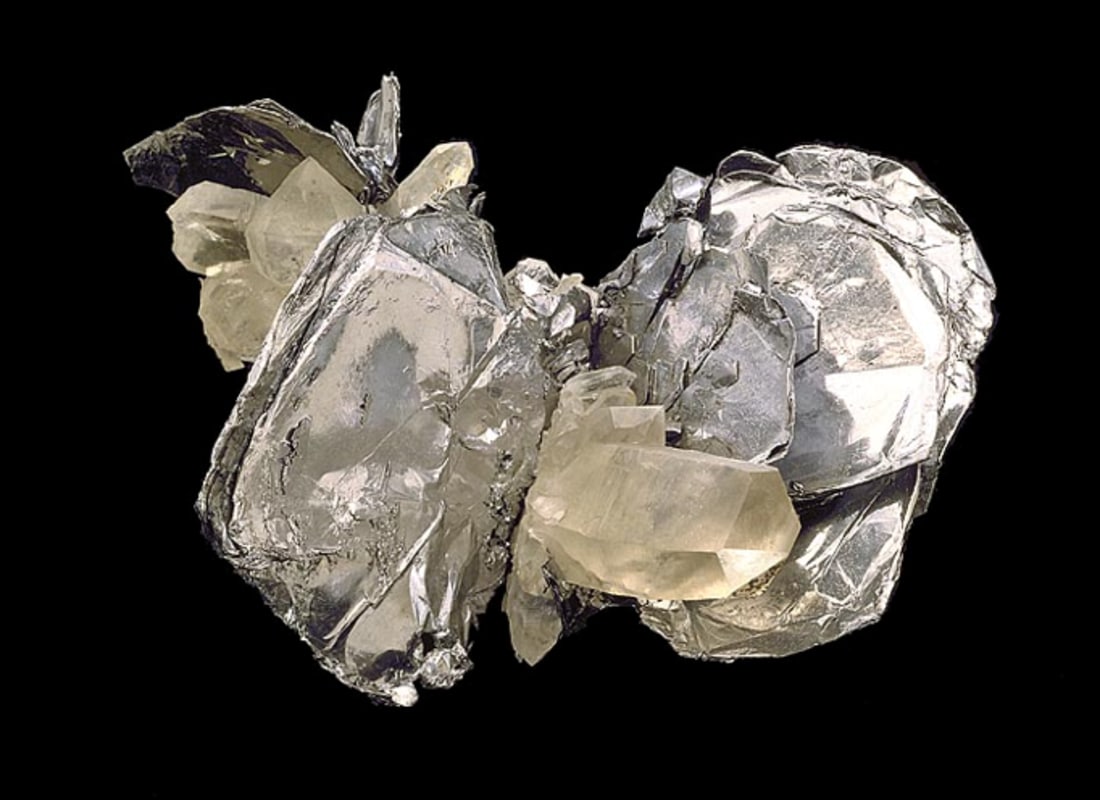
The NSW Economic Rock and Mineral Collection, comprising more than 28,000 catalogued rocks, minerals, ores and meteorites spanning over 150 years of mining, has been added to the New South Wales State Heritage Register. Principally sourced from exploration drilling, mine sites and field mapping across the state’s major orebodies, the collection preserves physical records of historical grades, alteration styles and deposit types. Heritage listing secures long‑term curation, keeping these specimens available for geometallurgical studies, resource re‑evaluation and baseline comparisons for new exploration models.