SRK Consulting paste article: sensor-based sorting and fill design notes for engineers
Reviewed by Tom Sullivan

First reported on Australian Centre for Geomechanics – News
30 Second Briefing
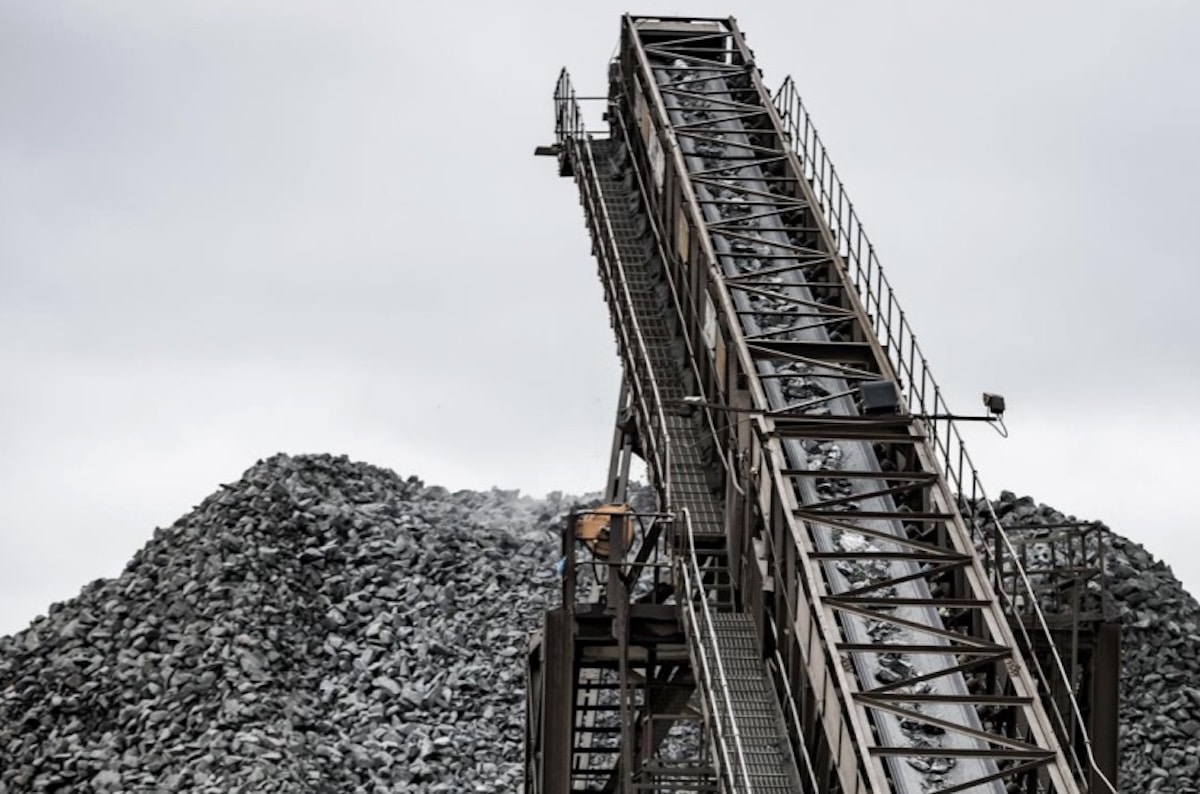
Coupling sensor-based ore sorting with commingled tailings and mine rockfill is presented as a way to turn coarse, low-grade crushed waste into a geotechnically useful product rather than a pure disposal cost. X-ray transmissive (XRT) and other multi-sensor sorters can reject up to ~40% of plant feed as coarse waste, which, when mixed with dewatered, non-segregating tailings at 2–6:1 rock-to-tailings ratios, improves shear strength, reduces oxygen ingress, and uses waste-rock voids for tailings storage. Because typical plant feed does not generate enough coarse waste for these ratios, the authors point to sorting marginal or low-grade stockpiles to supply additional rock while scavenging residual high-grade material.
Technical Brief
- Commingling is defined as physically mixing waste rock with dewatered, non-segregating tailings in one footprint.
- Non-segregating behaviour requires tailings dewatered so fines do not hydraulically separate from coarse fractions.
- Typical commingling design targets 2–6 parts waste rock to 1 part dry tailings by weight.
- Conveyor-based systems exploit kinetic and potential energy of transport to mix rock and tailings streams.
- Highly saturated tailings within the rock matrix reduce oxygen permeability, improving waste rock geochemical stability.
- Low-moisture, high-shear-strength waste rock skeleton improves overall shear strength and stability of tailings deposits.
- Co-disposal is distinguished from commingling as mere co-placement of rock and tailings without controlled mixing.
Our Take
SRK Consulting also appears in our coverage as a resource estimator (e.g. the Fostung tungsten project) and as a digital tools vendor (HiveMap), so this paste and commingled-waste work reinforces its positioning across both front-end characterisation and back-end tailings solutions.
The 2–6:1 waste-rock-to-tailings ratios and 40% waste fractions discussed here align with ore-sorting case studies in our database where operators aim to convert more waste into structural or backfill material, signalling that paste and filtered tailings design is increasingly being integrated with early-stage sorting strategies.
Prepared by collating external sources, AI-assisted tools, and Geomechanics.io’s proprietary mining database, then reviewed for technical accuracy & edited by our geotechnical team.
Related Articles

Related Industries & Products
Mining
Geotechnical software solutions for mining operations including CMRR analysis, hydrogeological testing, and data management.
CMRR-io
Streamline coal mine roof stability assessments with our cloud-based CMRR software featuring automated calculations, multi-scenario analysis, and collaborative workflows.
HYDROGEO-io
Comprehensive hydrogeological testing platform for managing, analysing, and reporting on packer tests, lugeon values, and hydraulic conductivity assessments.
GEODB-io
Centralised geotechnical data management solution for storing, accessing, and analysing all your site investigation and material testing data.