Iran war and nuclear build‑out: uranium market signals for mine planners
Reviewed by Tom Sullivan
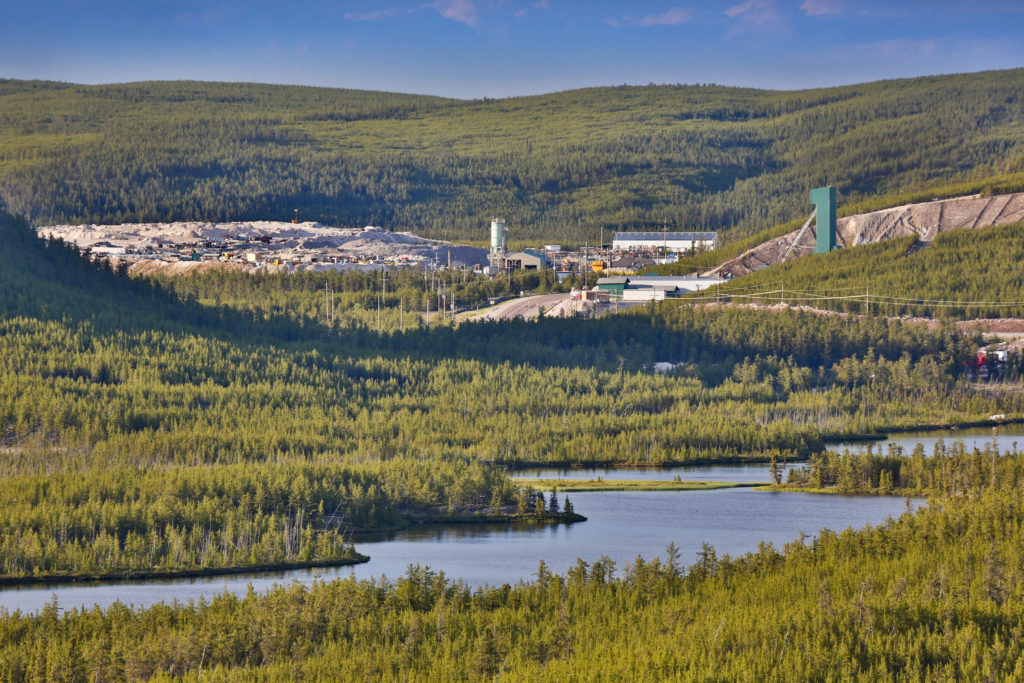
First reported on MINING.com
30 Second Briefing
War in Iran and a May 2025 US executive order to quadruple nuclear capacity to about 400 GW by 2050 are fuelling expectations of a new wave of reactor construction, with uranium demand already exceeding mine output by 50–60 million lb. per year. Cameco, which produces about 15% of global uranium from assets including the McArthur River high‑grade mine and owns 49% of Westinghouse Electric, has signed a nine‑year, ~22‑million‑lb. uranium supply deal with India worth an estimated US$1.9 billion from 2027–2035. Spot uranium is trading near US$86/lb., term prices around US$90/lb., and utilities are beginning to accept three‑digit pricing as long‑term uncovered requirements through 2045 widen.
Technical Brief
- Cameco currently has about 30% of its installed mine capacity deliberately kept idle.
- McArthur River in Saskatchewan is described as the world’s largest high‑grade uranium mine.
- Kazatomprom supplies roughly 20% of global uranium and co‑owns the Inkai joint venture with Cameco.
- India operates 24 reactors with ~8 GW capacity and targets 100 GW nuclear by 2047.
- New Delhi has selected six Westinghouse AP1000 units as part of its expansion programme.
- US regulators have granted a 20‑year licence extension to both Diablo Canyon pressurised water reactors.
- Cameco estimates uncovered utility requirements at about 3.1 million lb. U₃O₈ through 2045, the largest historical gap.
Our Take
Cameco’s projected 10.5 million lb this year from the Inkai joint venture in Kazakhstan sits against new Kazakh subsoil rules highlighted in our March 2026 coverage that tilt future uranium JVs towards Kazatomprom, suggesting Western utilities may lean more heavily on legacy assets and long‑term contracts rather than new greenfield Kazakh supply.
Within our uranium‑tagged coverage, Cameco and Kazatomprom consistently appear as the only producers with double‑digit shares of global supply, so any acceleration in reactor build‑out in regions like Asia or the Middle East is likely to reinforce their pricing power unless idle capacity (such as Cameco’s 30% idled mine capacity) is brought back on line quickly and reliably.
Prepared by collating external sources, AI-assisted tools, and Geomechanics.io’s proprietary mining database, then reviewed for technical accuracy & edited by our geotechnical team.
Related Articles

Related Industries & Products
Mining
Geotechnical software solutions for mining operations including CMRR analysis, hydrogeological testing, and data management.
Construction
Quality control software for construction companies with material testing, batch tracking, and compliance management.
CMRR-io
Streamline coal mine roof stability assessments with our cloud-based CMRR software featuring automated calculations, multi-scenario analysis, and collaborative workflows.
HYDROGEO-io
Comprehensive hydrogeological testing platform for managing, analysing, and reporting on packer tests, lugeon values, and hydraulic conductivity assessments.
GEODB-io
Centralised geotechnical data management solution for storing, accessing, and analysing all your site investigation and material testing data.