Geomechanics, Streamlined.
© 2026 Geomechanics.io. All rights reserved.
Stantec has acquired Sydney-headquartered environmental consultancy Niche and its wholly owned subsidiary Ausecology, expanding its environmental and approvals capability across Australia. Niche brings specialist services in ecology, biodiversity assessment and environmental impact studies for transport, energy and resources projects, complementing Stantec’s existing design and engineering portfolio. The deal signals stronger in-house capacity for early-stage constraints mapping, permitting support and ecological monitoring on major linear infrastructure and mining-related developments in sensitive habitats.
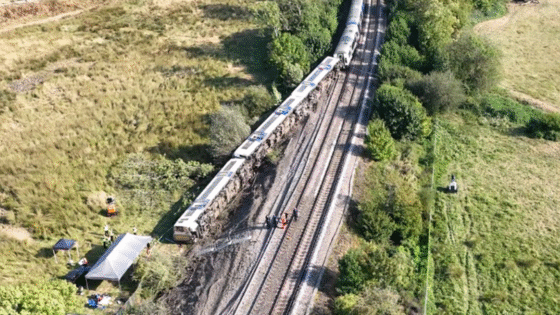
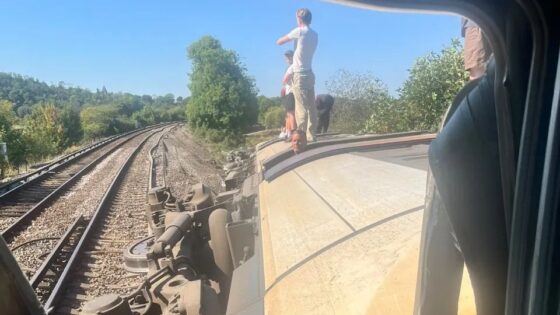
A preliminary Rail Accident Investigation Branch report into last week’s Lewes train derailment confirms the inquiry is still examining whether high rail temperatures and associated track behaviour contributed to the incident. Investigators are assessing rail stress management, track geometry and maintenance records on the affected section, alongside train speed, wheel–rail interaction and signalling data. For infrastructure engineers, the case will be closely watched for any implications for hot-weather rail stressing regimes, continuous welded rail design margins and inspection protocols during heat events.
Two derailments within 24 hours at Lewes and Wickford are “very unusual” events and do not mean Britain’s railway is at a “tipping point”, according to DfT rail minister Lord Peter Hendy. He pointed to Network Rail’s ongoing asset renewals and climate resilience work, including targeted track renewals and drainage upgrades, as the primary defence against failures on ageing infrastructure. For engineers, the incidents reinforce scrutiny on track condition monitoring, earthwork stability and water management under more frequent extreme weather.
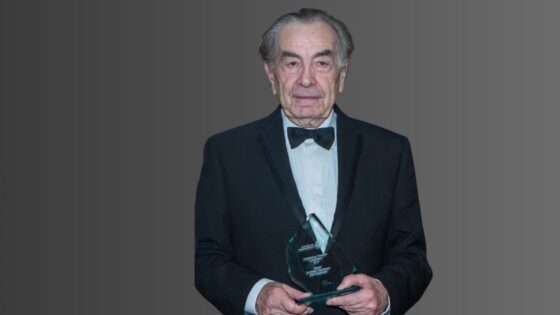
Wilem Frischmann, the structural engineer behind London’s 34-storey Centre Point tower, has died aged 95, prompting tributes from across the UK engineering community. As former chairman of Pell Frischmann, he led designs for several landmark concrete and steel-framed buildings that pushed high-rise construction techniques in central London from the 1960s onwards. His work on early tall-building cores, lateral stability systems and complex urban foundations is widely credited with influencing subsequent high-rise practice in the capital.
Caterpillar dealer Barloworld Zambia has delivered a Cat 995 ultraclass wheel loader, the largest in Caterpillar’s wheel loader line, to Barrick’s Lumwana copper mine in north-western Zambia. The machine is expected to work in primary loading of large haul trucks in the open pit, supporting high-tonnage copper ore movement under Barrick’s ongoing expansion plans at Lumwana. For mine planners and maintenance teams, the addition signals further standardisation on large Cat loading fleets and associated parts, service, and operator training regimes.
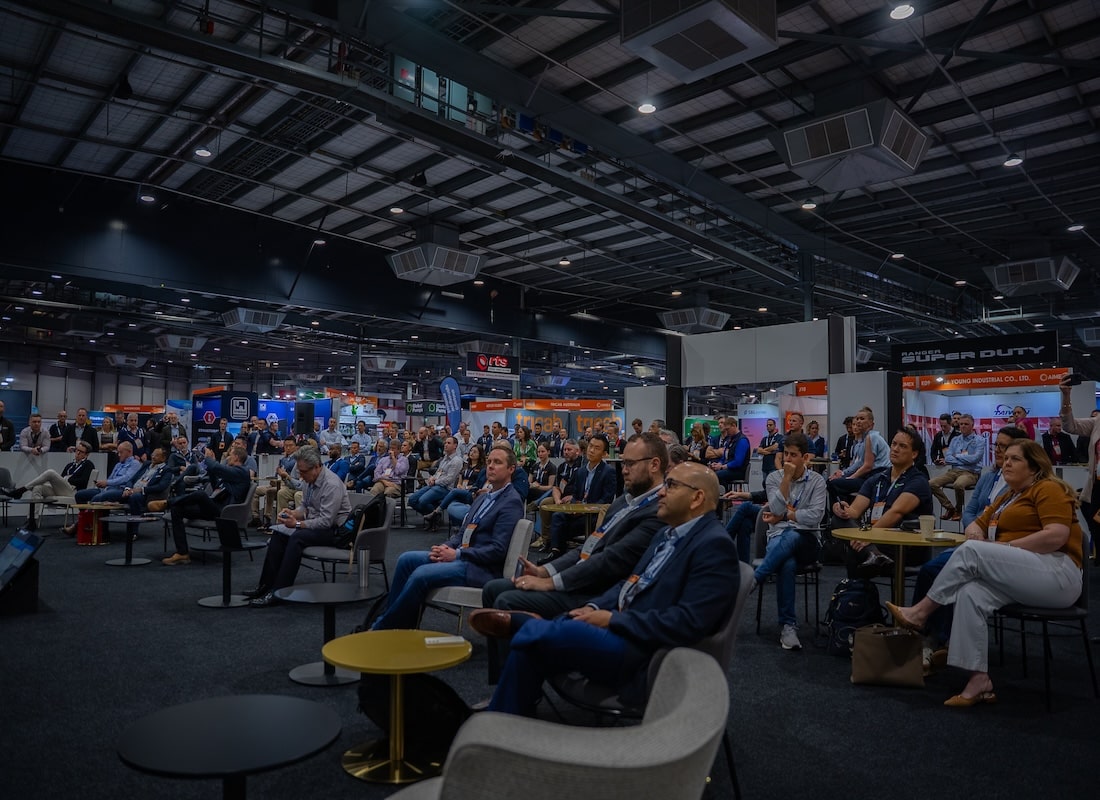
Asia-Pacific’s International Mining Exhibition (AIMEX) 2027 is returning to Adelaide Showground on 28–30 September 2027, with exhibitors already locking in floor space and sponsorship packages as the event’s next phase takes shape. Organisers are positioning the show as a deal-focused platform for OEMs, technology vendors and contractors to demonstrate equipment, digital systems and processing solutions directly to mine operators and project owners. For suppliers of haulage fleets, fixed plant, automation and decarbonisation technologies, early commitment secures prime stand locations and meeting space for investment and offtake discussions.
Minerals Council of Australia’s Victorian division is urging the State Government to rethink proposed fee hikes that would lift exploration licence charges by 40 per cent and work plan fees by 400 per cent. The council argues the changes, tied to exploration licences and renewals, would deter greenfields drilling and early-stage geoscience in a state already seen as high-cost and regulatory-heavy. For explorers, the move could shift budgets interstate, delay drilling campaigns, and reduce appetite for deep or technically complex targets.
Record iron ore shipments of 201.3Mt from Fortescue’s Pilbara operations in FY26 drove a nine per cent rise in revenue to $US17 billion, supported by higher earnings and stronger free cash flow. The result comes as Fortescue continues heavy investment in its Western Australian mining hubs, rail network and port capacity to sustain volumes above 200Mtpa. For mine planners and contractors, the numbers signal ongoing demand for large-scale pit development, overburden movement and materials handling upgrades across the Pilbara assets.
Yancoal has reported record first-half attributable saleable coal production of 19.8Mt, up 5 per cent on 1H 2025’s 18.9Mt, and says the run-rate puts it on track for a new full-year output record across its NSW and Queensland thermal and metallurgical coal operations. Stronger operational performance and higher realised coal prices were partly offset by increased unit costs driven by labour, explosives and overburden removal. For mine planners and contractors, the figures signal sustained high stripping ratios and continued demand for drill-and-blast, haulage and CHPP throughput optimisation into 2027.
Whitehaven Coal has posted record FY26 managed production of 40.1 million tonnes of saleable coal while coal prices fell 27 per cent and the Australian dollar strengthened 6 per cent against the US dollar. Underlying NPAT came in at $227 million and underlying EBITDA at $702 million, supported by a 9 per cent reduction in unit operating costs to $106 per tonne. For mine planners and operators, the result signals continued high utilisation of existing longwall and open-cut fleets despite weaker thermal and metallurgical coal markets.
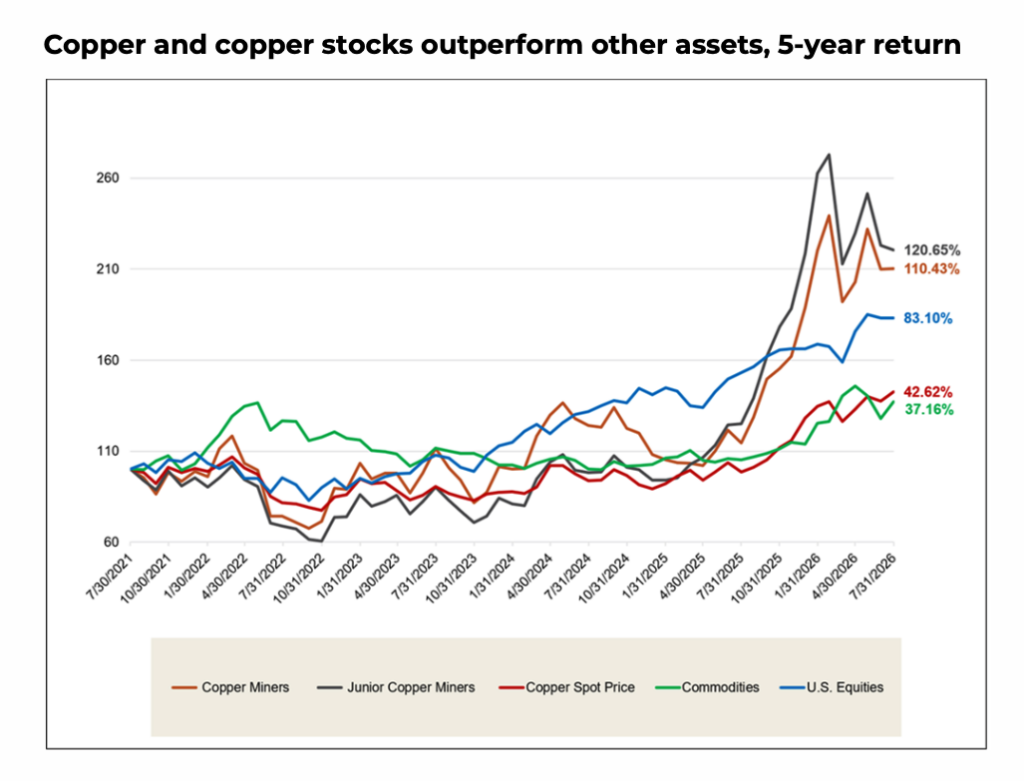
Copper’s roughly 50% price surge over the past year to about $14,545 per tonne signals a structural squeeze as mine underperformance, collapsing treatment charges and tariff-driven trade distortions collide with rising demand from power grids, AI data centres and defence systems, Sprott analyst Jacob White says. Spot TC/RCs have flipped from more than $90 per tonne in late 2023 to below minus $150, with Antofagasta and BHP increasingly pricing concentrate off spot indexes as smelters bid aggressively despite negative terms, supported by sulphuric acid and precious metal by-product revenues. Chile’s downgraded 2026 output outlook, persistent disruptions at Grasberg and Kamoa-Kakula, and US proposals for 15–30% Section 232 tariffs on refined copper, plus a separate 50% levy on semis, point to prolonged tightness and unusually strong margins for pure-play copper miners.
Sunrise Energy Metals has secured a US$400 million conditional loan from the US Department of Defense to develop the Syerston scandium project in New South Wales and build associated scandium metal refining capacity in the United States. The laterite deposit hosts 45.9 million measured and indicated tonnes grading 414 ppm scandium (19,007 tonnes contained), with a revised capex of A$450–475 million to support a planned tripling of output to 180 tonnes per year. Once in production, targeted around 2028, Syerston aims to supply 60 tonnes per year into a current 40–70 tonne global market, directly addressing US dependence on Chinese scandium for fuel cells, semiconductors and defence alloys.
Gold and silver prices spiked after the US Treasury said it would at least double liquidity-support buybacks of 10- to 30-year Treasuries from a tentative US$14 billion between 9 September and 4 November, driving spot gold to about US$4,484/oz and silver to roughly US$65.44/oz. The dollar index fell 0.78% as 10-year and 30-year yields dropped 1.27% and 1.84% respectively, cutting the opportunity cost of holding non-yielding bullion. Gold equities leveraged the move, with the VanEck Gold Miners ETF up 8.8%, Agnico Eagle 8.85% and Barrick 7.66%.
Empire Metals’ Pitfield project in Western Australia now carries an 8.16 billion tonne titanium resource at 4.3% TiO₂, including 374 million measured tonnes at 5.8% TiO₂ and a total 349 million tonnes contained TiO₂ across the Thomas and Cosgrove deposits, sending LON: EEE shares up over 13% to 51.9 pence. The company has demonstrated a conventional flowsheet producing 99% pure TiO₂ from a near-surface, higher-grade weathered zone, targeting pigment and metal feedstock markets. Existing rail links to ports serving Asia, the US, Europe and Saudi Arabia support future mine planning and economic studies.
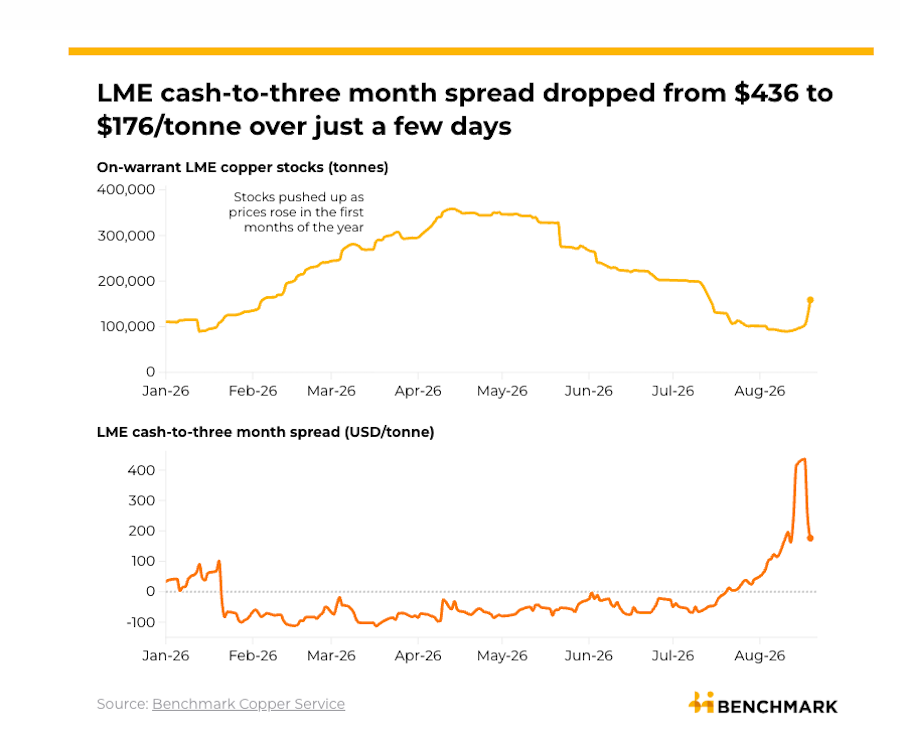
Copper inventories on the London Metal Exchange have jumped more than 50% in three days, with on-warrant stocks up 63,000 tonnes across Asia, the US and Europe, sharply easing a steep cash-to-three-month backwardation that had reached nearly $550 per tonne. The cash-to-three-month spread has already compressed from $436 to about $176 per tonne, while three-month copper has slipped to $13,885 per tonne, down almost $300 since Monday. Benchmark’s Albert Mackenzie links the volatility to US tariff uncertainty, which is pulling large copper volumes into the US and creating regional supply distortions.
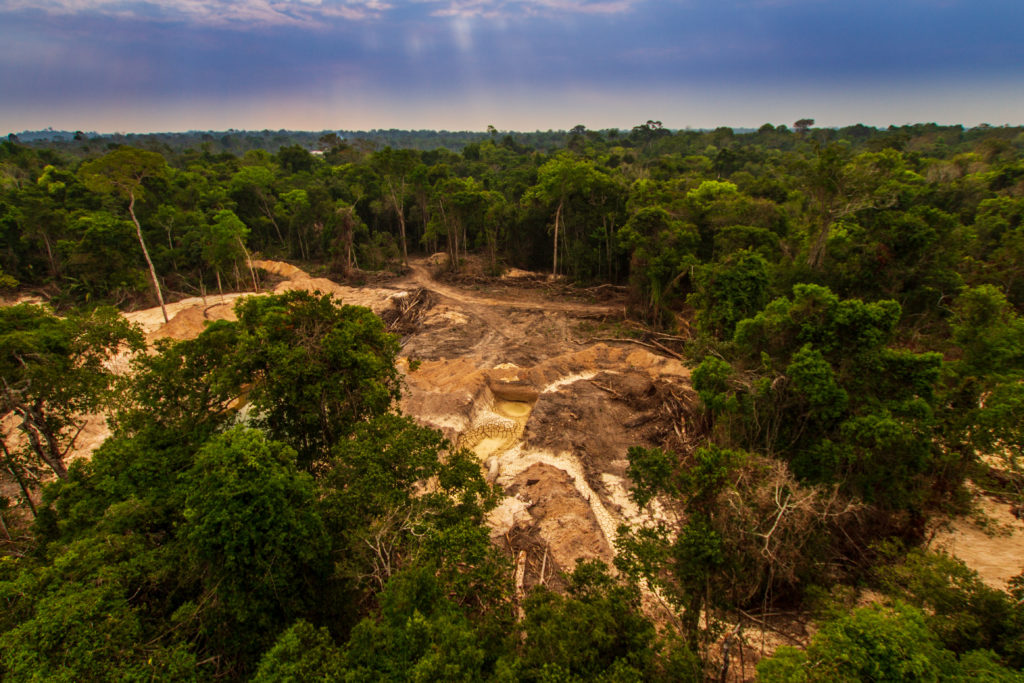
Brazil’s Supreme Court has upheld Justice Flávio Dino’s March 2025 ruling allowing the Cinta Larga to conduct legal mineral exploration and mining on four territories in Rondônia and Mato Grosso under a temporary framework while Congress has 24 months to pass national Indigenous mining legislation. The interim rules cap mining footprints at 1% of each territory, require prior community consultation plus environmental, Congressional and National Mining Agency approvals, and give Indigenous groups preference as operators. Where third parties mine, Cinta Larga communities must receive 50% of the value otherwise owed to state and federal governments, directed to safety, environmental recovery, health, education and sustainable production.
Operations at Endeavour Silver’s Terronera silver-gold mine in Jalisco, Mexico remain suspended as an ejido community blockade over road maintenance, medical and communications services, water access and financial support enters a second week. The stoppage hits Terronera less than a year after commercial production began on 1 October 2025, disrupting a Q3 ramp-up at a mine that processed 175,729 tonnes for 582,043 oz silver in Q2 2026 at cash costs of $5.07/oz and had just started commissioning its LNG plant in June. Endeavour is negotiating with ejido leaders, has threatened legal action, and has given no restart timeline.
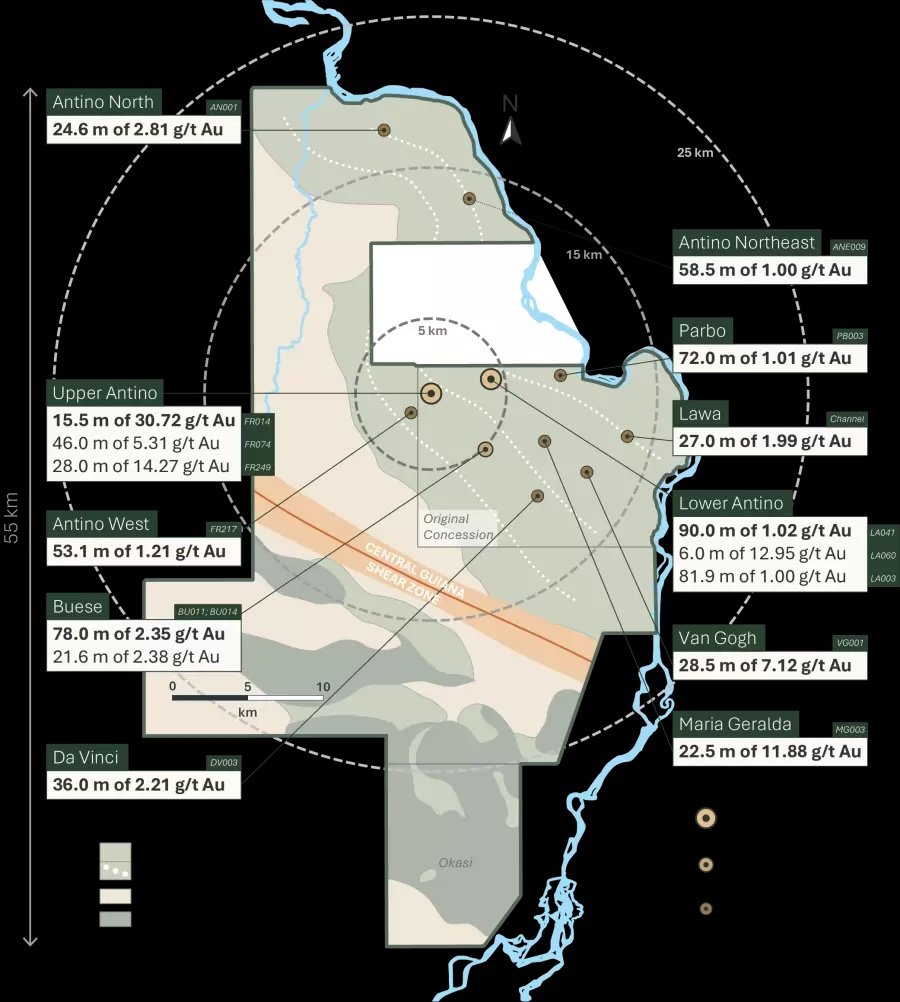
Gold Fields is investing US$55.7 million to lift its stake in Founders Metals to just under 20%, funding Founders’ US$17 million cash payment and up to US$21 million in milestones to buy out Nana Resources’ 30% of Lawa Gold, which controls the 1,024 sq. km Antino project in Suriname. The deal gives Founders a royalty-free 100% interest in Antino, where a fully funded 70,000 m drill programme is under way but no initial resource has yet been published. Milestone payments to Nana are tied to a 3 Moz resource, permitting, construction, and first production from a >2,000 t/d plant, plus cumulative output above 600,000 oz.
Omai Gold Mines’ namesake project in central Guyana has been valued at US$4 billion NPV (5% discount) in a new PEA, assuming US$3,600/oz gold, against US$1.42 billion in initial capex, a 24% IRR and 4.1-year payback for 6.3 million oz over an 18-year mine life. The project, 165 km south of Georgetown, hosts 38.1 Mt indicated at 2.04 g/t and 106.6 Mt inferred at 1.59 g/t across the Wenot open pit and Gilt underground deposits, with five rigs currently drilling Wenot. Analysts at National Bank of Canada flag Omai as an “emerging M&A target”, though Omai’s C$2-billion market cap contrasts with the PEA’s US$556-million after-tax NPV at US$1,950/oz from April 2024, which covered only Wenot.
Ramaco Resources has signed a non-binding MOU with Indium Corporation to negotiate supply of gallium and germanium from the Brook mine rare earth and critical-mineral project near Sheridan, Wyoming, described by Ramaco as the nation’s largest unconventional REE and critical-mineral deposit hosted in coal and carbonaceous ore. Brook is the first new US rare earth and critical-mineral mine in over 70 years, with full-scale mining and construction of a pilot processing facility for vertically integrated commercial oxide production already under way. Indium Corporation, a Clinton, New York-based refiner and solder manufacturer supplying the semiconductor and electronics sectors, would channel Brook gallium and germanium into domestic and allied advanced manufacturing supply chains.
Byrnecut has ordered 20 Sandvik underground drills, loaders and trucks plus five raiseboring systems to expand contract mining operations in Australia, Canada, West Africa and Southern Africa. The package includes four Sandvik DD422i development drills and four Toro LH621i loaders fitted with AutoMine for autonomous tramming, alongside additional haulage units and raiseborers to standardise its fleet. The move signals continued uptake of OEM automation platforms in contractor fleets, with implications for mine development cycle times, equipment utilisation and labour deployment underground.
Metso is expanding its South American service footprint with new investments in local service centres and repair capability located close to major copper and iron ore belts. The OEM is bundling on-site maintenance, component refurbishment and lifecycle services to lift uptime and throughput on its crushers, mills and screening equipment. For mine operators, the move signals greater access to OEM spares, faster turnaround on critical repairs and more scope for performance-based service contracts across the region.
Maaden and Aramco have signed a shareholders’ agreement to create a joint venture focused on mineral exploration and hard‑rock mining across Saudi Arabia. The JV will combine Maaden’s multi‑commodity mining portfolio with Aramco’s capital strength and subsurface data capabilities to target new resources beyond the kingdom’s existing gold, phosphate and bauxite operations. For geotechnical and mine planning teams, the move signals a likely ramp‑up in greenfield drilling, resource definition and associated infrastructure development in under‑explored terrains.
Fortescue has produced first hot metal using its electric smelting process at the Green Metal Project pilot plant at Christmas Creek in Western Australia, marking initial proof-of-concept for Australian “green iron” production. The pilot is designed to test electric smelting of iron ore fines on site rather than exporting raw ore, creating a potential pathway to decarbonise downstream ironmaking traditionally reliant on coal-fired blast furnaces. For mine planners and process engineers, the move signals growing interest in integrating beneficiation, electrified smelting and renewable power directly at large Pilbara operations.