Dalton Quarry biodiversity bank: BNG design and land-take notes for project teams
Reviewed by Tom Sullivan
First reported on New Civil Engineer
30 Second Briefing
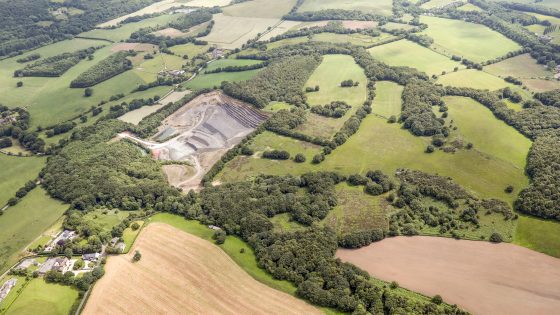
A former Ibstock extraction site, Dalton Quarry, is being converted by Green Earth Developments Group into a biodiversity “bank” of engineered habitats to generate tradable biodiversity net gain (BNG) units for UK infrastructure schemes. The project will create a mosaic of habitat types on previously worked quarry land, allowing developers to purchase pre-accredited BNG units rather than delivering all ecological uplift within constrained project footprints. For civil and geotechnical teams, this model could influence land-take, earthworks design and long-term aftercare obligations on major road, rail and housing projects.
Technical Brief
- Dalton Quarry is a former Ibstock clay extraction site now being repurposed by Green Earth Developments Group.
- The scheme is structured so BNG units are generated off-site and then sold to third-party developers.
- Quarry voids and benches provide varied topography for creating multiple habitat types within a single land parcel.
- Legacy quarry access and haul roads can be reused for habitat construction, monitoring and maintenance logistics.
Our Take
Ibstock appears only sporadically in our Environmental coverage, and its mention here alongside a biodiversity bank contrasts with the more traditional plant-and-equipment focus seen in the 2026 BJD Crushers/Ibstock Concrete piece, signalling a diversification of how legacy quarry assets are being managed post-extraction.
Turning Dalton Quarry into a biodiversity bank positions Ibstock and Green Earth Developments Group within the small subset of our 21 Environmental stories where former extraction sites are repurposed to unlock planning headroom for other infrastructure, which can give operators leverage in negotiations with local authorities on net-gain obligations.
For quarry and brick operators in the UK, a biodiversity bank model at a site like Dalton Quarry may create a template for monetising exhausted pits through habitat credits, rather than relying solely on low-value after-uses such as landfill or informal recreation.
Prepared by collating external sources, AI-assisted tools, and Geomechanics.io’s proprietary mining database, then reviewed for technical accuracy & edited by our geotechnical team.
Related Articles



Related Industries & Products
Construction
Quality control software for construction companies with material testing, batch tracking, and compliance management.
Mining
Geotechnical software solutions for mining operations including CMRR analysis, hydrogeological testing, and data management.
QCDB-io
Comprehensive quality control database for manufacturing, tunnelling, and civil construction with UCS testing, PSD analysis, and grout mix design management.