San Lorenzo Chile gold assays: porphyry potential and drilling cues for mine planners
Reviewed by Tom Sullivan
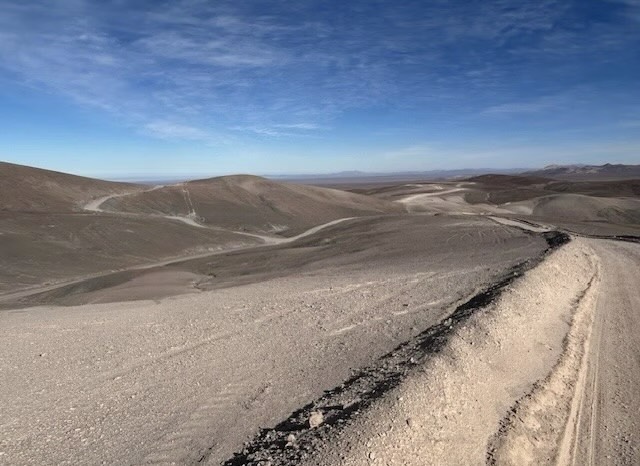
First reported on MINING.com
30 Second Briefing
San Lorenzo Gold’s Salvadora project in Chile’s Atacama region returned strong gold intercepts at the Arco de Oro target, with hole SAL-10-25 cutting 102 m at 1.33 g/t Au from 153 m (including 13 m at 2.21 g/t), and nearby SAL-09-25 yielding 59 m at 1.07 g/t Au from 238 m (including 11 m at 3.78 g/t). Exploration VP Terence Walker interprets the results as the upper levels of a gold‑rich porphyry Cu‑Au system, open in all directions and warranting immediate follow‑up drilling. The 90+ sq. km Salvadora property lies about 15 km from Codelco’s El Salvador mine, and a C$20 million March placement is funding ongoing step‑out drilling across five porphyry and epithermal targets.
Technical Brief
- Salvadora covers >90 sq. km in Chile’s Atacama region, indicating district-scale porphyry potential.
- The property lies ~15 km from Codelco’s long-producing El Salvador copper mine, leveraging existing mining infrastructure.
- Regional access includes established roads, grid power and nearby mining services, reducing greenfield development logistics risk.
- Salvadora hosts five defined porphyry and epithermal targets, including Arco de Oro and Cerro Blanco.
- Earlier Cerro Blanco drilling produced broad gold intercepts sufficient to underpin investor financing in March.
- San Lorenzo raised ~C$20 million via private placement to fund step-out and infill drilling across Salvadora.
- The company expanded its land position by 29 sq. km near Cerro Blanco through three claim purchases and an option on Rubi.
- Geological setting is reported as analogous to other Andean porphyry systems in Chile, supporting large-tonnage Cu-Au targeting.
- Assays from additional Arco de Oro holes are pending while drilling continues to test mineralised extensions in all directions.
Our Take
With Salvadora sitting just 15 km from Codelco’s El Salvador copper mine in the Atacama, any future development by San Lorenzo Gold will likely have to navigate a permitting environment that Chile’s government is actively trying to streamline, as flagged in our recent coverage of efforts to cut mining permit times by 30%.
In our database of 1,215 mining stories, most Chile items linked to Codelco focus on large-scale copper infrastructure and fleet modernisation (e.g. Chuquicamata and Radomiro Tomic), so a junior like San Lorenzo Gold posting strong gold intercepts in the same broader district signals ongoing exploration upside around established copper camps rather than just brownfield expansion.
The more than 90 sq. km Salvadora property and the additional 29 sq. km near Cerro Blanco give San Lorenzo Gold a land position that is unusually large for a junior with a C$455 million market cap, which could support both gold and copper targeting in a region where majors like Codelco are already investing heavily in long-life assets.
Prepared by collating external sources, AI-assisted tools, and Geomechanics.io’s proprietary mining database, then reviewed for technical accuracy & edited by our geotechnical team.
Related Articles

Related Industries & Products
Mining
Geotechnical software solutions for mining operations including CMRR analysis, hydrogeological testing, and data management.
Construction
Quality control software for construction companies with material testing, batch tracking, and compliance management.
CMRR-io
Streamline coal mine roof stability assessments with our cloud-based CMRR software featuring automated calculations, multi-scenario analysis, and collaborative workflows.
HYDROGEO-io
Comprehensive hydrogeological testing platform for managing, analysing, and reporting on packer tests, lugeon values, and hydraulic conductivity assessments.
GEODB-io
Centralised geotechnical data management solution for storing, accessing, and analysing all your site investigation and material testing data.