Pick Everard–University of Birmingham: sustainability framework notes for project teams
Reviewed by Tom Sullivan
First reported on New Civil Engineer
30 Second Briefing
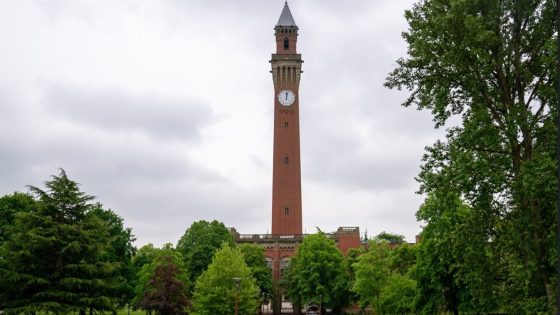
The University of Birmingham has appointed multi-disciplinary consultancy Pick Everard to its sustainability advisor framework, supporting a campus ranked in the world’s top 50 for commitment to tackling climate change challenges. The framework is expected to guide low‑carbon design, retrofit and whole‑life performance strategies across the university’s estate, influencing materials selection, embodied carbon assessment and energy‑efficient building services. For civil and infrastructure teams, this signals more stringent sustainability criteria on future UoB projects, with closer scrutiny of carbon, resource use and climate resilience in design and procurement.
Technical Brief
- Appointment places Pick Everard within a formal sustainability advisory framework rather than ad‑hoc commissions.
- Framework is structured as a co‑partnering arrangement, implying shared decision‑making with other consultants.
- Advisory scope is expected to span both new‑build and existing campus infrastructure, complicating phasing and access planning.
- Civil and structural packages will likely require early carbon optioneering alongside conventional cost and programme appraisals.
- Drainage, flood resilience and surface water management designs are expected to be scrutinised for climate‑change allowances.
- Materials specifications for pavements, retaining structures and utilities corridors will face tighter embodied‑carbon justification.
Our Take
The University of Birmingham already features in our infrastructure coverage via the £21m fit-out of the Birmingham Centre for Anatomy, Surgical & Clinical Skills, signalling a sustained capital programme where consultants like Pick Everard can plug into a broader campus pipeline rather than a one-off commission.
Being ranked in the world’s top 50 for climate change commitment gives the University of Birmingham leverage to demand higher sustainability performance from its supply chain, so Pick Everard is likely to face stronger requirements around embodied carbon, whole-life performance and verification than on a typical UK university framework.
Within our 831 Infrastructure stories tagged for Sustainability and Projects, universities such as Birmingham increasingly act as anchor clients for low-carbon demonstrator buildings, which can later be used by consultants and contractors as reference projects when bidding for municipal or healthcare work with similar net-zero goals.
Prepared by collating external sources, AI-assisted tools, and Geomechanics.io’s proprietary mining database, then reviewed for technical accuracy & edited by our geotechnical team.
Related Articles


Related Industries & Products
Construction
Quality control software for construction companies with material testing, batch tracking, and compliance management.
Mining
Geotechnical software solutions for mining operations including CMRR analysis, hydrogeological testing, and data management.
CMRR-io
Streamline coal mine roof stability assessments with our cloud-based CMRR software featuring automated calculations, multi-scenario analysis, and collaborative workflows.
HYDROGEO-io
Comprehensive hydrogeological testing platform for managing, analysing, and reporting on packer tests, lugeon values, and hydraulic conductivity assessments.
GEODB-io
Centralised geotechnical data management solution for storing, accessing, and analysing all your site investigation and material testing data.