Geomechanics, Streamlined.
© 2026 Geomechanics.io. All rights reserved.
Sir Robert McAlpine has reported a 33% cut in carbon emissions over its 2020–2025 strategy period, with 98% of waste diverted from landfill, 92% of electricity on renewable tariffs and 45% of concrete specified as lower embodied carbon mixes against a 30% target. The contractor baselined Scope 1–3 emissions, introduced project carbon benchmarking, rolled out Carbon Literacy training and became the first Tier 1 to secure PAS 2080 certification across its entire business. At 1 Broadgate, a large-scale materials passport enabled tracking and reuse of 27% of materials, diverting over 13,000 tonnes of non-hazardous demolition waste from landfill.
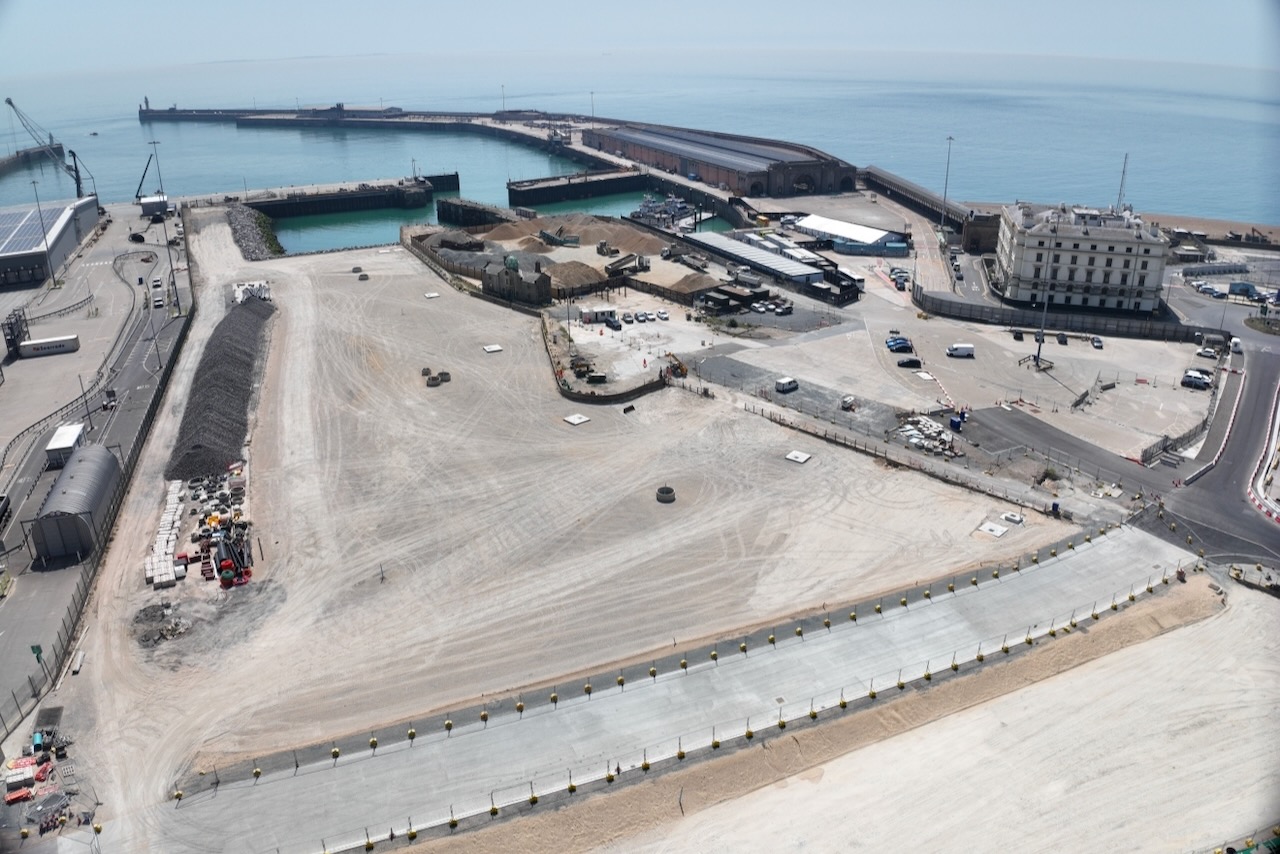
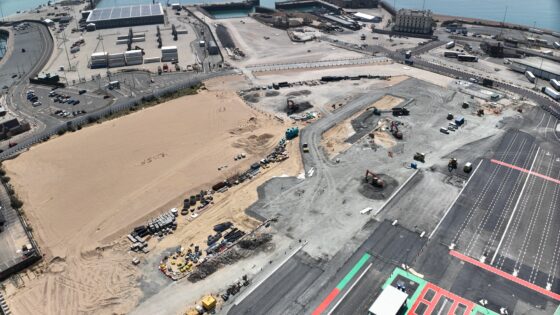
A McLaughlin & Harvey–Boskalis Westminster joint venture has completed the £53m Dover Western Docks Revival Stage 3B, reclaiming 10 hectares of new port land within the Wick Channel, Tidal Basin marinas and Granville Dock. The works placed nearly 900,000m³ of infill to raise the dock bed to about 0.5m below existing quay levels, following demolition of structures including the North Pier and Ferry Jetty and removal of all marina pontoons and gangways. New utilities, internal roads, substantial drainage and a complex stormwater pumping station were installed to service the reclaimed platform.
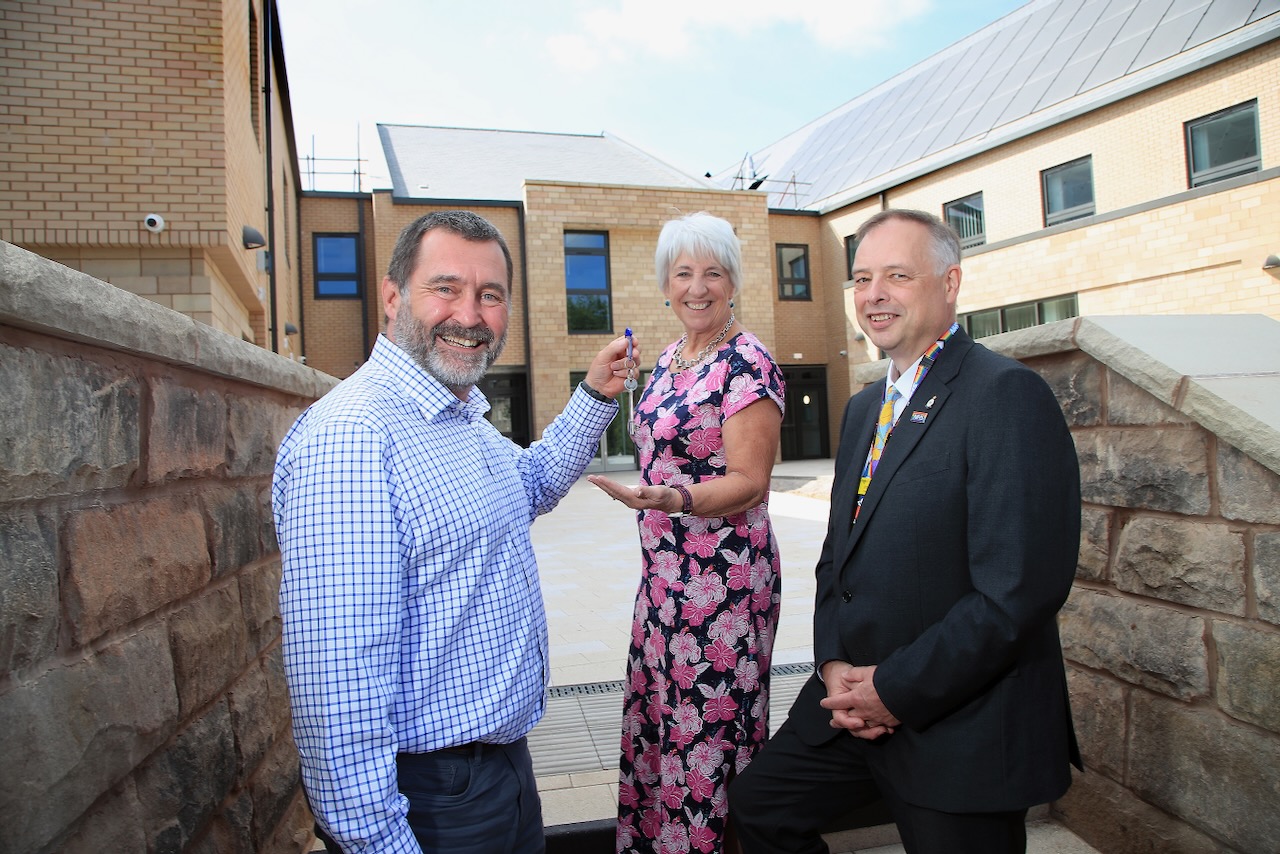
Henry Brothers has completed a £15.2m community health centre in Belper for Derbyshire Community Health Services NHS Foundation Trust, replacing the former Belper Clinic on the Babington Hospital site and consolidating all existing outpatient and clinical services. The Race Cottam Associates-designed hub provides 15 consulting rooms, six treatment rooms and a health education group room, supporting services from community nursing and phlebotomy to physiotherapy and podiatry. Built to BREEAM standards, it incorporates photovoltaic roof panels, certified timber and reuse of locally sourced recycled materials from demolished buildings.
Network Rail will renew overhead line equipment and associated structures on the Weaver line between Bethnal Green and Cheshunt/Enfield Town over two consecutive September weekends, targeting ageing electrification assets on this intensively used commuter corridor. Works are expected to focus on replacing life-expired masts, wiring and structural components to improve electrical clearances and resilience under higher service frequencies. Engineers should anticipate temporary possession constraints, altered access arrangements and close coordination with London Overground operations during the short blockade windows.
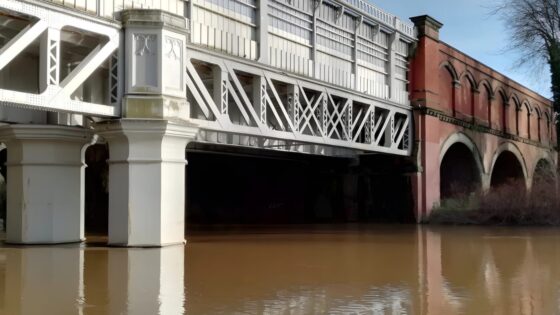
Computational fluid dynamics (CFD) modelling is being rolled out across Network Rail’s bridge portfolio to refine scour risk assessments and cut unnecessary physical interventions. By simulating site-specific hydraulics around piers and abutments under multiple flood scenarios, engineers can better define foundation exposure, armour stone extents and required toe depths instead of relying on conservative empirical envelopes. The approach is enabling more targeted scour protection schemes, reducing over-design and construction spend while supporting compliance with flood resilience and asset management requirements.
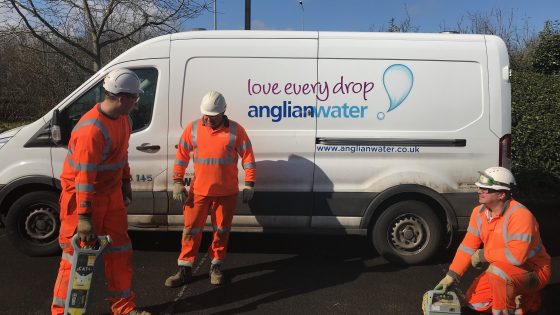
Anglian Water has renewed 145km of potable water mains in the first year of its £348M AMP8 programme, its largest mains renewal effort in more than two decades. The work targets ageing distribution mains across the East of England, where historic leakage rates and ground movement in shrink–swell clays have driven frequent bursts. Delivery teams are expected to rely heavily on sliplining and pipe bursting to minimise open-cut excavation, with implications for trench support design, service crossings and reinstatement in constrained urban corridors.
Engineers on the latest Engineers Collective podcast debate whether the UK’s ageing infrastructure—much of it Victorian-era water, sewer and rail assets—can withstand more frequent extreme rainfall and heatwaves driven by climate change. Discussion centres on retrofitting existing embankments, culverts and combined sewers for higher design storms, versus wholesale replacement, and how to prioritise limited capital under AMP8 and similar funding cycles. Speakers also examine the implications for asset condition monitoring, geotechnical resilience of slopes and earthworks, and updating design standards beyond historic return-period assumptions.
VolkerRail has completed a 22-day engineering blockade on the main route into central London, allowing Charing Cross and Waterloo East stations to reopen to passenger services. The intensive possession enabled track, signalling and railway systems works to be carried out without live traffic, compressing what would normally be multiple weekend closures into a single continuous window. The programme’s completion restores a key commuter corridor, with asset condition and reliability improvements likely to reduce future unplanned possessions and maintenance interventions.
LKAB has started laying the foundation for a new sorting plant at its Malmberget iron ore mine in Gällivare, a key step to secure long-term operations as existing processing infrastructure ages. The plant is designed to stabilise production and increase throughput while incorporating circuits to handle apatite-rich streams for downstream recovery of rare earth elements and phosphorus. For process and plant engineers, this signals future flowsheet changes around apatite separation, tailings management, and integration of critical-mineral by-product lines into an established iron ore operation.
Tungsten West has secured up to £71 million from the UK Government’s National Wealth Fund to complete the financing package for restarting production at the Hemerdon tungsten and tin mine in Devon. The state-backed funding, structured alongside existing debt and equity arrangements, is intended to move Hemerdon from care and maintenance back into commercial output, targeting one of Europe’s largest tungsten resources. For geotechnical and processing teams, the restart will revive a large open-pit operation with complex ore characterisation, tailings management and plant optimisation requirements.
Thames Water is deploying AI analytics, satellite imagery and more than 75,000 acoustic loggers across its buried distribution network to pinpoint leaks as prolonged heat and low rainfall increase mains failure risk. The system combines continuous acoustic monitoring on cast iron and plastic pipes with remote sensing of soil moisture anomalies to prioritise repair crews and reduce non‑revenue water. For civil and water engineers, this signals wider adoption of large‑scale sensor arrays and data fusion to manage ageing pressurised pipework under climate‑driven stress.
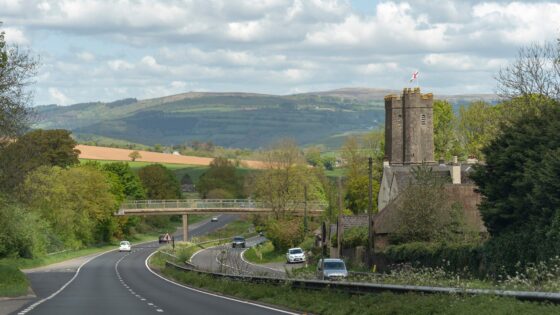
More than £10M of National Highways works will start next month on the A38 in Devon, targeting a series of upgrades over the coming months on this key dual carriageway between Exeter and Plymouth. Although detailed scope is not yet published, schemes of this scale on the A38 typically include resurfacing high‑skid‑risk sections, renewing safety barriers and drainage, and strengthening structures at junctions and overbridges. Contractors and designers should expect night-time possessions, lane closures and tight work windows to maintain strategic traffic flows.
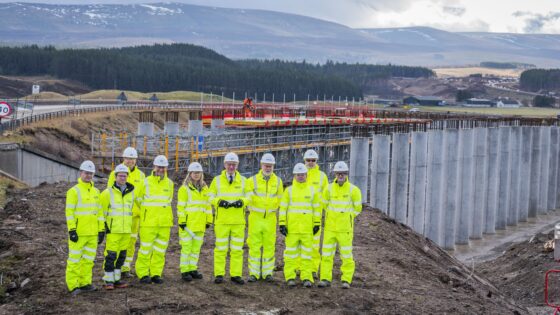
Value engineering on the A9 Tomatin to Moy dualling scheme between Inverness and Perth has driven major redesigns to cut cost, embodied carbon and programme length while maintaining DMRB standards. Key changes reportedly include rationalising structures on the 9.6km section, optimising earthworks and rock cut profiles, and revising drainage and pavement build-ups to reduce imported aggregates and asphalt tonnage. For geotechnical and civil teams, the work shows how early contractor involvement and iterative optioneering can materially reshape alignment, structures strategy and material quantities on trunk road upgrades.
A joint venture between McLaughlin & Harvey and Boskalis Westminster has completed the £53M Dover Western Docks Revival (DWDR) Stage 3B works at the Port of Dover, finalising the latest phase of the port’s western expansion. The marine-focused package follows earlier DWDR stages that created new berths and quay walls to handle larger Ro-Ro and cargo vessels, reshaping the harbour basin and associated land reclamation. Completion signals full handover of upgraded dock infrastructure, with implications for future quay strengthening, pavement design and heavy freight yard layouts as traffic volumes grow.
Polish billionaire Michał Sołowow’s group SGE is proposing a financing structure to deploy 14 small modular reactors in the UK, signalling a privately led route to expand nuclear capacity beyond Hinkley Point C and Sizewell C. The plan centres on multiple identical SMR units, which could simplify civil works, standardise nuclear island design and compress construction schedules compared with bespoke gigawatt-scale plants. For UK infrastructure contractors and geotechnical specialists, a fleet build-out of 14 sites or units would mean repeatable foundation, seismic qualification and cooling-water interface designs, with bankability hinging on predictable capex and delivery risk.
Scape has issued the Tender Notice for its next-generation Construction Works and Services Framework, valued at £8bn over a four-year term for public sector building and infrastructure projects across the UK. The framework will appoint multiple principal contractors to deliver new-build, refurbishment and civil engineering works under standardised NEC-based contracts, with call-off projects expected to range from small capital schemes to major programmes. Bidders will need to evidence carbon reduction strategies and social value delivery, which will directly influence scoring alongside cost and programme capability.
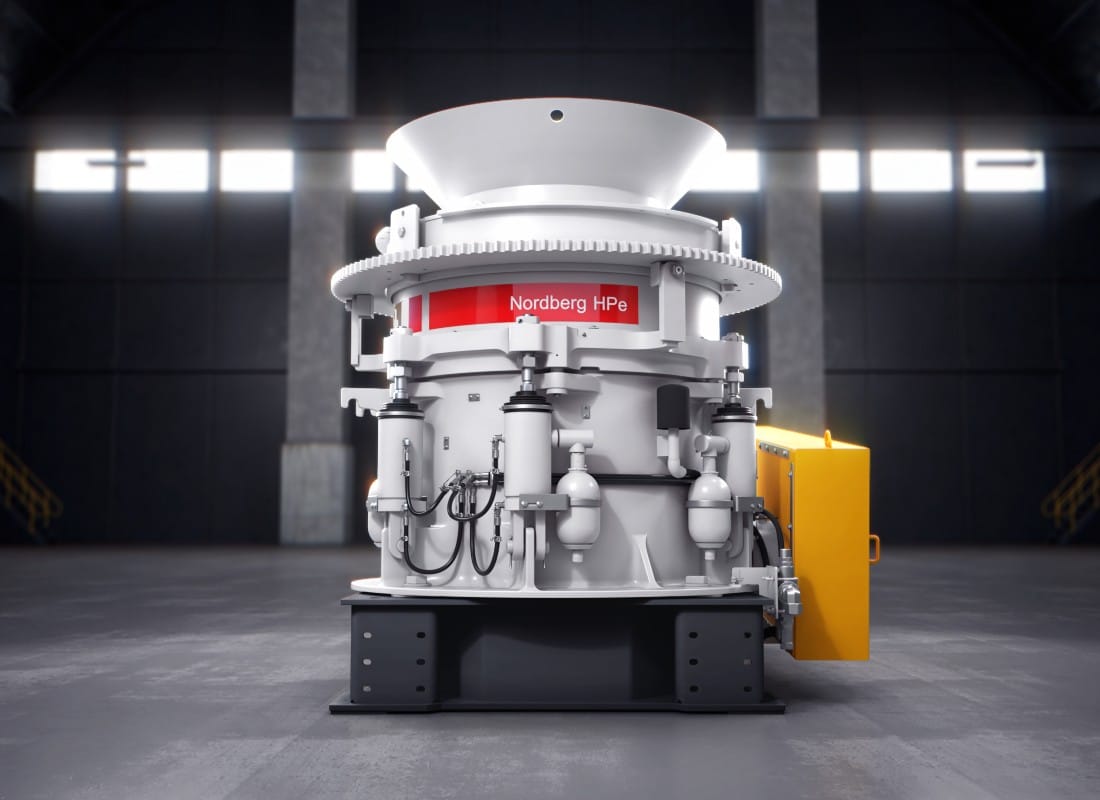
Metso has secured orders from GR Engineering Services to supply key mineral processing equipment for Develop Global’s Yitirrti copper‑zinc‑silver project (formerly Sulphur Springs) in Western Australia, with the contract booked in Metso’s Minerals segment Q2 2026 order intake. The package is expected to cover core concentrator technology such as crushing and grinding circuits and downstream flotation for high‑grade sulphide ore. For engineers, this signals imminent detailed design and equipment selection, locking in Metso process flowsheets and interfaces for GR Engineering’s EPC delivery.
Waratah Minerals has extended the Consols gold system at its Spur project in New South Wales by 75m to the east and down-plunge, while identifying a new shallow high-grade zone. Step-out hole SPD074 intersected 12.7m at 1.35g/t gold from 44m downhole, defining a near-surface target with open extensions. For mine planners and geotechnical teams, the shallow geometry and incremental strike extension suggest potential for low-strip open-pit designs and simplified access for infill drilling and geotechnical characterisation.
Horizon Gold has confirmed an 800m southern extension to gold mineralisation at the Howards deposit within its 100 per cent-owned Gum Creek gold project in Western Australia’s Mid West. The zone was defined by reverse circulation drilling on 100m-spaced lines, with gold intersected in every hole, materially expanding the known strike length. Results support a stronger resource growth case at Howards, with implications for updated pit shells, mine scheduling and potential scale-up of processing capacity at Gum Creek.
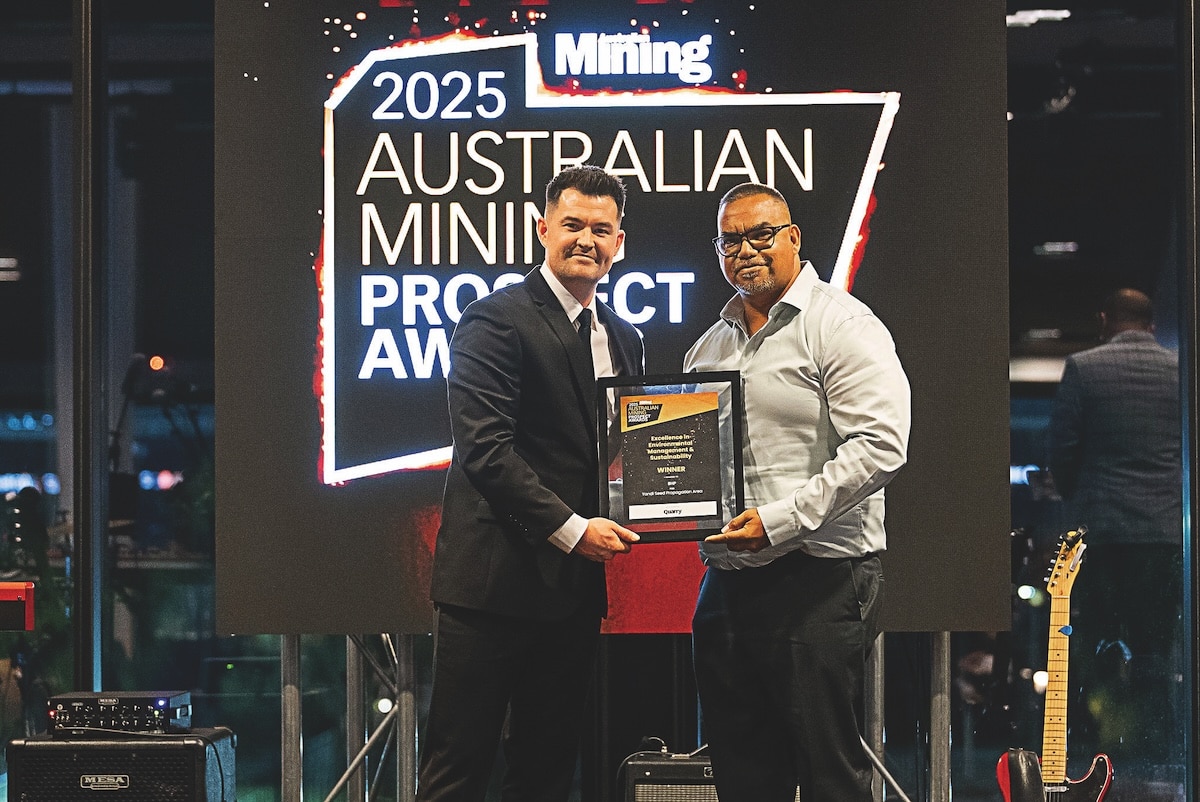
Tickets are now on sale for the 2026 Australian Mining Prospect Awards gala dinner, to be held on 16 September 2026 at Fraser’s Kings Park in Perth. The event will bring together mining professionals, contractors, OEMs and executives from across Australia to recognise finalists across multiple operational, innovation and ESG-focused award categories. Attendance offers operators, engineers and suppliers a concentrated networking opportunity with project decision-makers ahead of 2027 investment and tender cycles.
Copper for September delivery on Comex hit a record $6.7270/lb (about $14,830/t), trading at a near 4% premium of roughly $550/t over LME three‑month prices as US tariff threats pull metal into American warehouses and drain availability elsewhere. Comex inventories have climbed for 46 consecutive days to a record 675,185 t, with 65,400 t recently earmarked to leave LME sheds, overturning CRU’s forecast 639,000 t 2026 global surplus into a de facto balanced or deficit market. Southern Copper’s market value has surged to about $183 billion, overtaking Rio Tinto’s sub‑$180 billion despite Rio’s far larger revenues, while Zijin warns flooding at Kamoa‑Kakula could cut its attributable mined copper by up to 57,000 t this year.
Tungsten West has secured up to $97 million (£71 million) in equity and debt from the UK’s National Wealth Fund to restart full production at the Hemerdon tungsten‑tin mine in Devon, with the NWF entitled to nominate one non‑executive director to the board. Hemerdon, a historic World War I and II tungsten supplier, has already produced test concentrates this month and aims to restart commercial output in 2026, creating about 350 direct jobs. Tungsten West is also negotiating offtake with a major downstream tungsten refiner, and its shares jumped 17% to 50.25 pence, valuing the company at about £627 million.
Fortescue has suspended an unnamed senior executive over sexual assault allegations, appointing law firm MinterEllison to run an independent investigation with findings to be reviewed by a board subcommittee. The move comes a week after the company initially kept the executive at work and against a backdrop of a class action alleging Fortescue failed to protect female workers from harassment and discrimination at remote Western Australian sites. The miner previously settled a dispute with state authorities in late 2023 by committing A$1.4 million to industry-wide workplace behaviour initiatives.
Atomic Eagle has secured a new Mining Convention with Niger’s military government for the Madaouela uranium project, regaining a 60% stake (40% state) in a deposit previously scoped for a 19-year mine life, 50.8 million lb U3O8 output and US$343 million initial capex. The deal ends international arbitration launched by GoviEx in 2024 and requires Atomic Eagle within two years to update the feasibility study, convert the 96.9 million lb at 1,275 ppm “foreign” resource to JORC, and complete ESIA and financing. The settlement, alongside Tsumco’s award of the former Somaïr area, also improves perceived sovereign risk for Global Atomic’s 1,000 t/d Dasa underground project, designed for 68.1 million lb U3O8 over 23 years.