Geomechanics.io

  • Free Tools
Sign UpLog In

Geomechanics.io

Geomechanics, Streamlined.

© 2026 Geomechanics.io. All rights reserved.

Geomechanics.io

CMRR-ioGEODB-ioHYDROGEO-ioQCDB-ioFree Tools & CalculatorsBlogLatest Industry News

Industries

MiningConstructionTunnelling

Company

Terms of UsePrivacy PolicyLinkedIn
    Sustainability
    Projects
    Standard/Guideline

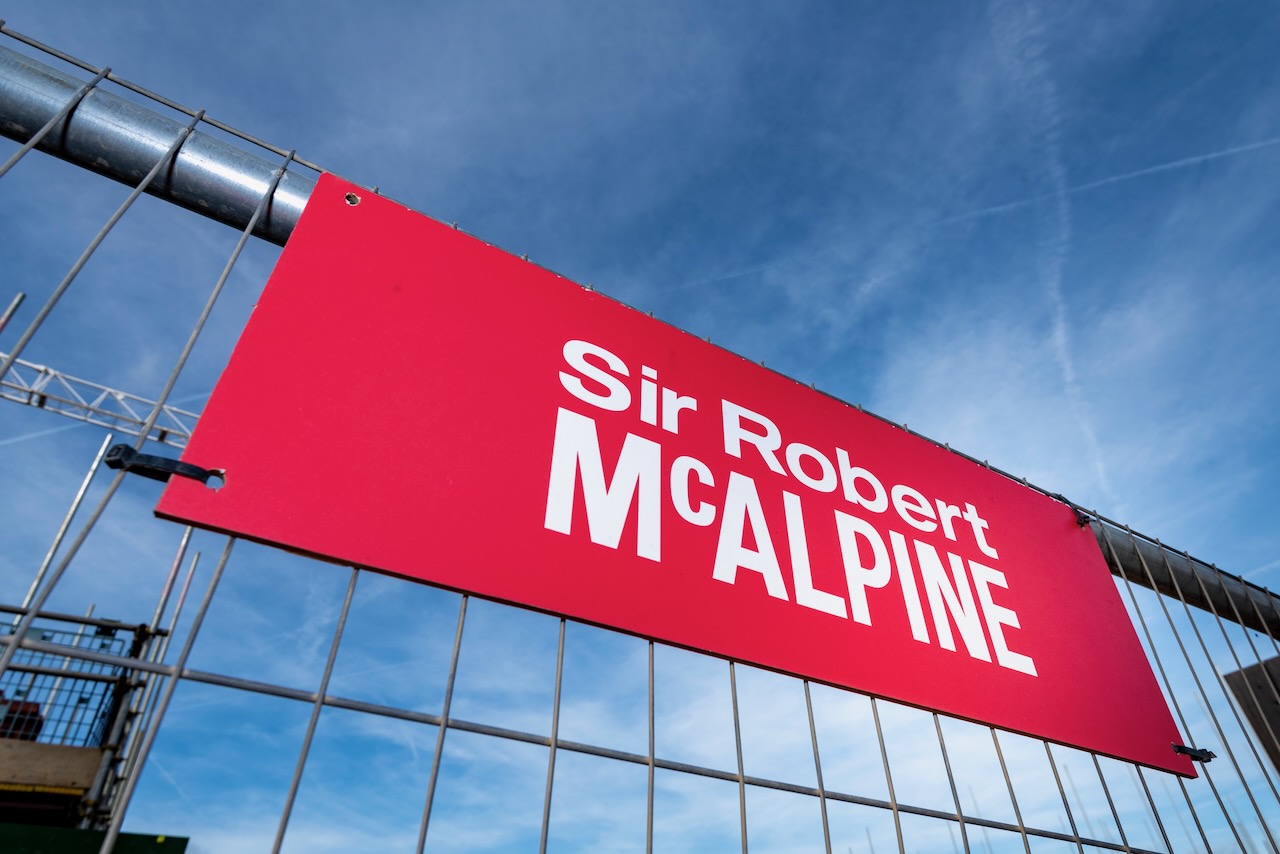
    Sir Robert McAlpine’s 33% carbon cut: PAS 2080 lessons for project teams

    August 26, 2026|

    Reviewed by Tom Sullivan

    Sir Robert McAlpine’s 33% carbon cut: PAS 2080 lessons for project teams

    First reported on The Construction Index

    30 Second Briefing

    Sir Robert McAlpine has reported a 33% cut in carbon emissions over its 2020–2025 strategy period, with 98% of waste diverted from landfill, 92% of electricity on renewable tariffs and 45% of concrete specified as lower embodied carbon mixes against a 30% target. The contractor baselined Scope 1–3 emissions, introduced project carbon benchmarking, rolled out Carbon Literacy training and became the first Tier 1 to secure PAS 2080 certification across its entire business. At 1 Broadgate, a large-scale materials passport enabled tracking and reuse of 27% of materials, diverting over 13,000 tonnes of non-hazardous demolition waste from landfill.

    Technical Brief

    • PAS 2080 certification covers Sir Robert McAlpine’s entire Tier 1 contracting business, not project-by-project.
    • Certification assures systems to predict, manage and report whole-life carbon across full project lifecycles.
    • Carbon Minimum Standards were developed in-house to set consistent project-level performance baselines and requirements.
    • Carbon benchmarking was introduced portfolio-wide, enabling cross-project comparison of design and construction emissions performance.
    • Carbon Literacy training was rolled out to staff, embedding carbon awareness into day-to-day design and procurement decisions.
    • Waste management shifted from retrospective measurement to prevention using digital tools, BIM models and materials data.
    • At 1 Broadgate, a large-scale materials passport was implemented to tag, track and catalogue components for future reuse.
    • New “Sustainable Engineering Excellence” strategy explicitly targets earlier-stage decision-making on carbon, circularity and social impact with clients and supply chains.

    Our Take

    Sir Robert McAlpine’s quantified performance on lower-embodied-carbon concrete and landfill diversion gives it a strong reference case for public-sector work, including its Integrated Health Projects JV roles under the NHS Hospital 2.0 and New Hospital Programme frameworks, where PAS 2080-style carbon evidence is increasingly scrutinised in bid evaluations.

    With 1 Broadgate used as a demonstrator for reclaimed materials, SRM is building a portfolio of large, complex UK schemes (from HS2’s Chiltern tunnel via Align JV to the British Museum’s low‑carbon energy centre involvement) that can support whole‑life carbon benchmarking across very different asset types.

    Within our 935 Infrastructure stories, relatively few UK contractors report detailed metrics such as renewable-tariff electricity share and embodied-carbon concrete uptake, so SRM’s disclosure positions it towards the more data‑mature end of sustainability reporting among Tier 1s in our coverage.

    Geotechnical Software for Modern Teams

    Centralise site data, logs, and lab results with GEODB-io, CMRR-io, and HYDROGEO-io.

    No credit card required.

    • Save and export unlimited calculations
    • Advanced data visualisation
    • Generate professional PDF reports
    • Cloud storage for all your projects

    Prepared by collating external sources, AI-assisted tools, and Geomechanics.io’s proprietary mining database, then reviewed for technical accuracy & edited by our geotechnical team.

    Related Articles

    Strabag’s Pfaffensteig Tunnel contract: design and delivery notes for rail engineers
    Infrastructure
    4 months ago

    Strabag’s Pfaffensteig Tunnel contract: design and delivery notes for rail engineers

    Strabag and Group company Züblin have secured the design-and-build structural works for the ABS Gäubahn Nord/Pfaffensteig Tunnel in south-west Germany, centred on an 11km twin-bore rail tunnel linking Stuttgart Airport station directly to the Gäubahn line towards Switzerland. About 9.8km will be driven by two TBMs, with conventional tunnelling for the A8 motorway undercrossing and airport connection, plus a 240m cut-and-cover section, retaining structures, railway underpasses and a grade-separated crossing. A 3km surface section will be upgraded and partially realigned for 200km/h operation, delivered under an integrated project delivery model with Ed. Züblin, Wayss & Freytag and Strabag AG sharing tunnelling, structural and earthworks packages.

    National Grid TBM under the Thames: tunnelling design and risk notes for engineers
    Infrastructure
    6 months ago

    National Grid TBM under the Thames: tunnelling design and risk notes for engineers

    A 271.5‑tonne Herrenknecht Mixshield TBM, Caroline, has started driving a 2.2km electricity cable tunnel with a 4m internal diameter beneath the River Thames in Essex for National Grid’s Grain to Tilbury project, delivered by the Ferrovial BEMO joint venture. The drive will pass through variable Thames estuary ground conditions between 35m‑deep launch and reception shafts of 15m and 12m diameter, with tunnelling continuing into 2026 and overall scheme completion targeted for 2029. The new tunnel will replace the 1969 Thames Cable Tunnel and carry new high‑voltage circuits between Grain and Tilbury substations.

    Panama Canal Mixshield undercrossing: design and tunnelling lessons for engineers
    Infrastructure
    7 months ago

    Panama Canal Mixshield undercrossing: design and tunnelling lessons for engineers

    A 13.46m diameter Herrenknecht Mixshield TBM has broken through into the future Balboa station on Panama Metro Line 3 after completing the first-ever TBM undercrossing of the Panama Canal at depths exceeding 60m below sea level. The 5,600kW, 26,616kNm machine, fitted with an accessible cutterhead and more than 4,500 sensors linked via the Herrenknecht.Connected platform, has achieved peak advance of 150 segment rings (about 300m) per month through mixed sandstone, tuff, breccias and basalt. Around 1.5km of the 4.5km twin-track tunnel remains to final breakthrough.

    Related Industries & Products

    Construction

    Quality control software for construction companies with material testing, batch tracking, and compliance management.

    Mining

    Geotechnical software solutions for mining operations including CMRR analysis, hydrogeological testing, and data management.

    QCDB-io

    Comprehensive quality control database for manufacturing, tunnelling, and civil construction with UCS testing, PSD analysis, and grout mix design management.

    AllGeotechnicalInfrastructureHazardsEnvironmental