McLaughlin & Harvey–Boskalis Dover revival: reclamation and drainage notes for engineers
Reviewed by Joe Ashwell
First reported on The Construction Index
30 Second Briefing
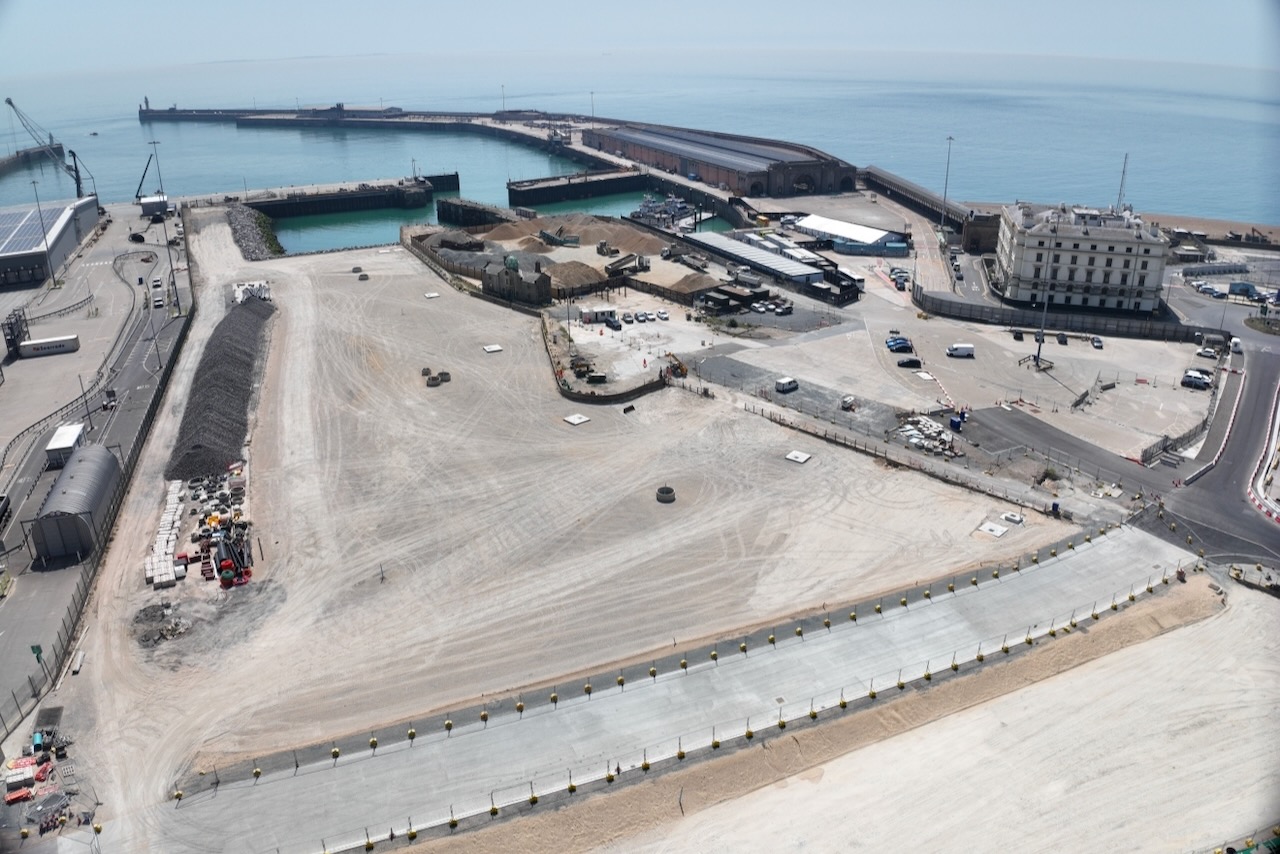
A McLaughlin & Harvey–Boskalis Westminster joint venture has completed the £53m Dover Western Docks Revival Stage 3B, reclaiming 10 hectares of new port land within the Wick Channel, Tidal Basin marinas and Granville Dock. The works placed nearly 900,000m³ of infill to raise the dock bed to about 0.5m below existing quay levels, following demolition of structures including the North Pier and Ferry Jetty and removal of all marina pontoons and gangways. New utilities, internal roads, substantial drainage and a complex stormwater pumping station were installed to service the reclaimed platform.
Technical Brief
- Stage 3B works were executed under a McLaughlin & Harvey–Boskalis Westminster joint venture contract structure.
- McLaughlin & Harvey acted as principal contractor, taking CDM lead and overall construction coordination responsibilities.
- All Tidal Basin and Granville Dock marina pontoons, gangways and associated M&E equipment were decommissioned and removed.
- New utility corridors were laid across the reclaimed footprint, integrating power, communications and water services for future port operations.
- Drainage design incorporated large-diameter pipework and outfalls feeding into a dedicated stormwater pumping station.
- Similar brownfield dock infill schemes can leverage existing quay walls as retaining structures, reducing new marine wall construction.
Our Take
In our infrastructure database, McLaughlin & Harvey’s recent wins – from the £100m Rolls-Royce air combat facility to MOD-backed heavy engineering works at Sheffield Forgemasters – indicate the contractor is positioning itself as a go‑to for technically complex, high‑spec UK projects, with the Port of Dover scheme reinforcing that profile on the marine side.
Creating 10 ha of new port land at the Port of Dover via reclamation places this job at the larger end of UK marine civils in our coverage, suggesting the Wick Channel and Tidal Basin interfaces will be a useful reference case for future brownfield port upgrades constrained by existing quay geometry.
The dock bed being raised to within about half a metre of the existing quay wall level signals a deliberate move towards shallower, more uniformly graded basins, which in comparable UK port projects has reduced long‑term dredging liabilities and improved operational resilience during storm events.
Prepared by collating external sources, AI-assisted tools, and Geomechanics.io’s proprietary mining database, then reviewed for technical accuracy & edited by our geotechnical team.
Related Articles


Related Industries & Products
Construction
Quality control software for construction companies with material testing, batch tracking, and compliance management.
Mining
Geotechnical software solutions for mining operations including CMRR analysis, hydrogeological testing, and data management.
QCDB-io
Comprehensive quality control database for manufacturing, tunnelling, and civil construction with UCS testing, PSD analysis, and grout mix design management.