Thames Water leak detection rollout: AI and 75,000 sensors explained for engineers
Reviewed by Tom Sullivan
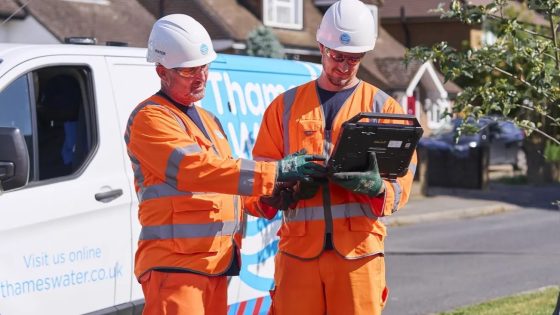
First reported on New Civil Engineer
30 Second Briefing
Thames Water is deploying AI analytics, satellite imagery and more than 75,000 acoustic loggers across its buried distribution network to pinpoint leaks as prolonged heat and low rainfall increase mains failure risk. The system combines continuous acoustic monitoring on cast iron and plastic pipes with remote sensing of soil moisture anomalies to prioritise repair crews and reduce non‑revenue water. For civil and water engineers, this signals wider adoption of large‑scale sensor arrays and data fusion to manage ageing pressurised pipework under climate‑driven stress.
Technical Brief
- Deployment focuses on buried distribution mains where ground access is constrained and traditional leak detection is slow.
- Acoustic loggers are permanently installed, enabling 24/7 monitoring rather than periodic survey sweeps.
- Sensors are applied on both legacy cast iron and newer plastic pipes, capturing differing acoustic signatures.
- Satellite data are used to detect soil moisture anomalies over wide areas without additional ground instrumentation.
- AI tools fuse acoustic and satellite datasets to rank leak likelihood, guiding safe dispatch of repair crews.
- Earlier leak identification reduces risk of sudden main bursts, ground washout and third-party damage.
Our Take
Thames Water’s deployment of 75,000 acoustic sensors for leak detection sits alongside its proposed £7bn White Horse Reservoir scheme, signalling that regulators and funders will likely judge it on both demand-side efficiency and new-supply megaprojects in the South East drought context.
In our database of 938 Infrastructure stories, Thames Water appears frequently in pieces tagged for Safety and Sustainability, and the parallel £227m sewer rehabilitation framework suggests the utility is being pushed to modernise buried assets at scale rather than rely on piecemeal repairs.
The combination of AI-led leak detection and major civils contracts such as Galliford Try’s £47.5M Camberley STW upgrade provides a technical counter-narrative to MPs’ calls for special administration, giving Thames Water evidence of active asset management despite its heavily scrutinised debt position.
Prepared by collating external sources, AI-assisted tools, and Geomechanics.io’s proprietary mining database, then reviewed for technical accuracy & edited by our geotechnical team.
Related Articles


Related Industries & Products
Construction
Quality control software for construction companies with material testing, batch tracking, and compliance management.
Mining
Geotechnical software solutions for mining operations including CMRR analysis, hydrogeological testing, and data management.
CMRR-io
Streamline coal mine roof stability assessments with our cloud-based CMRR software featuring automated calculations, multi-scenario analysis, and collaborative workflows.
HYDROGEO-io
Comprehensive hydrogeological testing platform for managing, analysing, and reporting on packer tests, lugeon values, and hydraulic conductivity assessments.
GEODB-io
Centralised geotechnical data management solution for storing, accessing, and analysing all your site investigation and material testing data.