A9 Tomatin to Moy value engineering: design and material lessons for road teams
Reviewed by Joe Ashwell
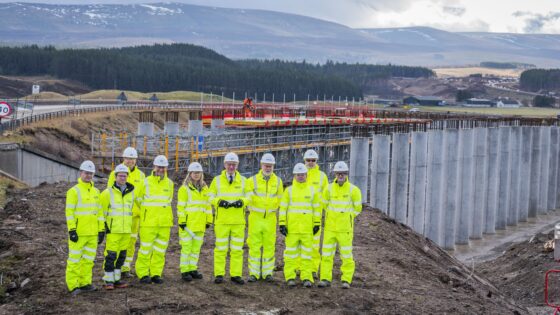
First reported on New Civil Engineer
30 Second Briefing
Value engineering on the A9 Tomatin to Moy dualling scheme between Inverness and Perth has driven major redesigns to cut cost, embodied carbon and programme length while maintaining DMRB standards. Key changes reportedly include rationalising structures on the 9.6km section, optimising earthworks and rock cut profiles, and revising drainage and pavement build-ups to reduce imported aggregates and asphalt tonnage. For geotechnical and civil teams, the work shows how early contractor involvement and iterative optioneering can materially reshape alignment, structures strategy and material quantities on trunk road upgrades.
Technical Brief
- Existing single-carriageway geometry constrains horizontal and vertical realignment options, limiting departure from current corridor.
- Multiple watercourses and peat-rich areas require careful balancing of cut–fill with drainage and habitat protection.
- Tie-ins to previously dualled A9 sections impose fixed chainages and cross-section standards, reducing geometric flexibility.
- Winter construction constraints on this high-altitude stretch influence programme phasing and temporary traffic management.
- Interfaces with local access roads and farm tracks necessitate several grade-separated junctions and accommodation works.
Our Take
New Civil Engineer’s recent webinar coverage on BIM, common data environments and asset data handover suggests that any value engineering on the A9 Tomatin to Moy project that alters structures or pavement build-ups will need tight digital change control to avoid widening the ‘data handover gap’ at close-out.
Prepared by collating external sources, AI-assisted tools, and Geomechanics.io’s proprietary mining database, then reviewed for technical accuracy & edited by our geotechnical team.


