Geomechanics, Streamlined.
© 2026 Geomechanics.io. All rights reserved.
A $357 billion surge in August pushed the combined market value of the world’s 50 largest mining companies back above $2.5 trillion, despite gold now trading roughly $1,000 per ounce below February levels. The rebound, the strongest monthly gain on record for the cohort, comes after earlier pressure from weaker precious metals pricing and signals renewed investor appetite for large-cap miners. For project developers and contractors, the stronger balance sheets at the top end may support new capex cycles in bulk commodities and battery metals.
Normet has opened a new Technology Center in Pirkkala, Finland, dedicated to research, development and testing of advanced underground mining technologies. The facility will act as a central hub for autonomy, robotics and mining-specific software development, supporting projects such as automated concrete spraying, mechanised scaling and digital fleet management. For mine operators and contractors, the centre signals faster deployment of field-tested solutions for harsh underground conditions, with a focus on improving safety-critical tasks and reducing manual exposure at the face.
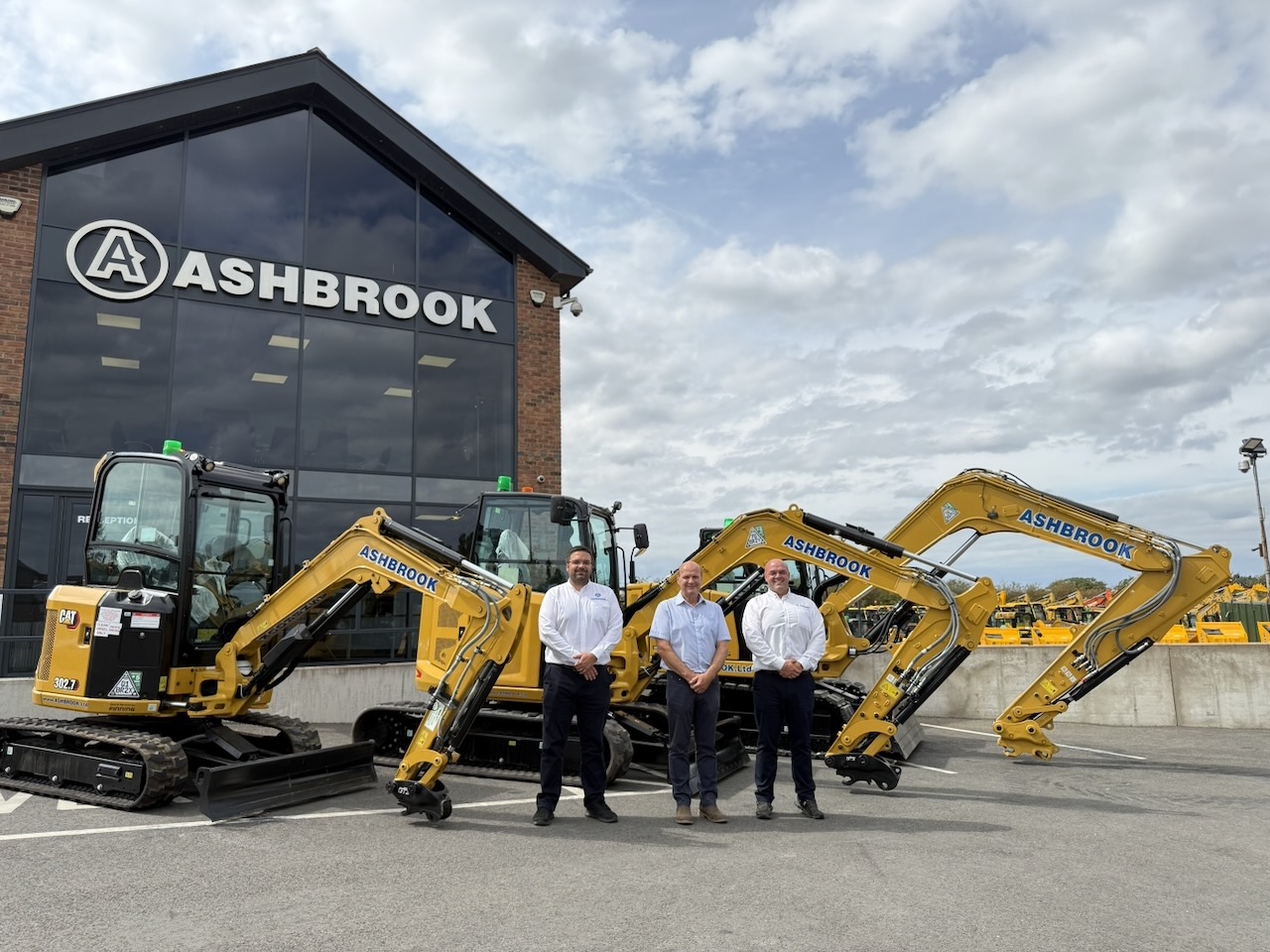
Ashbrook Plant Hire has taken delivery of its 1,600th Caterpillar machine, a Cat 308 excavator, as part of a £8m, 166‑unit order placed with dealer Finning. The package includes Cat 302.7 and Cat 305 mini-excavators specified with air conditioning and hydraulic quick hitches, targeting faster cycle times and reduced operator fatigue on housing and infrastructure sites. Finning is stationing field service engineers full time at Ashbrook’s two depots, signalling a push for higher availability across the expanding UK project pipeline.
Sales by value at UK builders’ merchants slipped 1.2% year-on-year in Q2 2026, with prices up 5.8% and volumes down 6.6%, as Heavy Building Materials fell 2.6% and Renewables & Water Saving dropped 3.8% while Services grew 7.3%. June like-for-like volumes were down 10.0% with prices up 8.4%, despite an extra trading day lifting unadjusted value sales by 2.2%. ONS data show overall construction output up just 0.3% quarter-on-quarter and 2.0% below Q2 2025, while NHBC new home registrations fell 4.0%, signalling persistent housebuilding weakness.
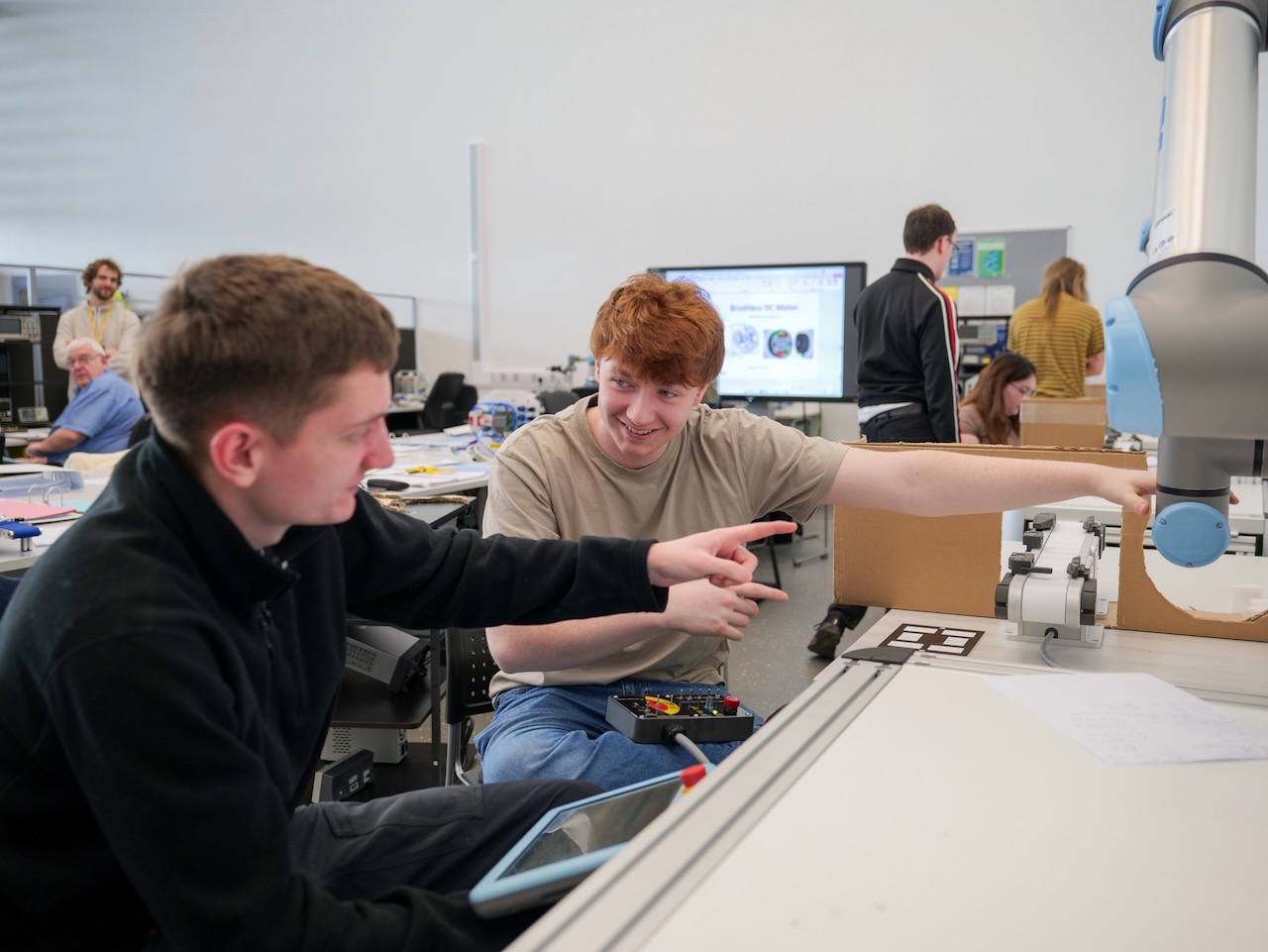
The Engineering Construction Industry Training Board has awarded £250,000 to the Cumbria Robotics Operations Skills Centre (CROSS), due to open later this year, to develop robotics skills for nuclear and clean energy projects. CROSS will train technicians and engineers in operating and maintaining remote and automated systems for tasks such as inspection, decommissioning and hazardous-environment interventions on nuclear sites. For civil and nuclear contractors in Cumbria’s cluster, the centre signals a pipeline of staff familiar with robotic tooling, remote handling and digital control interfaces.
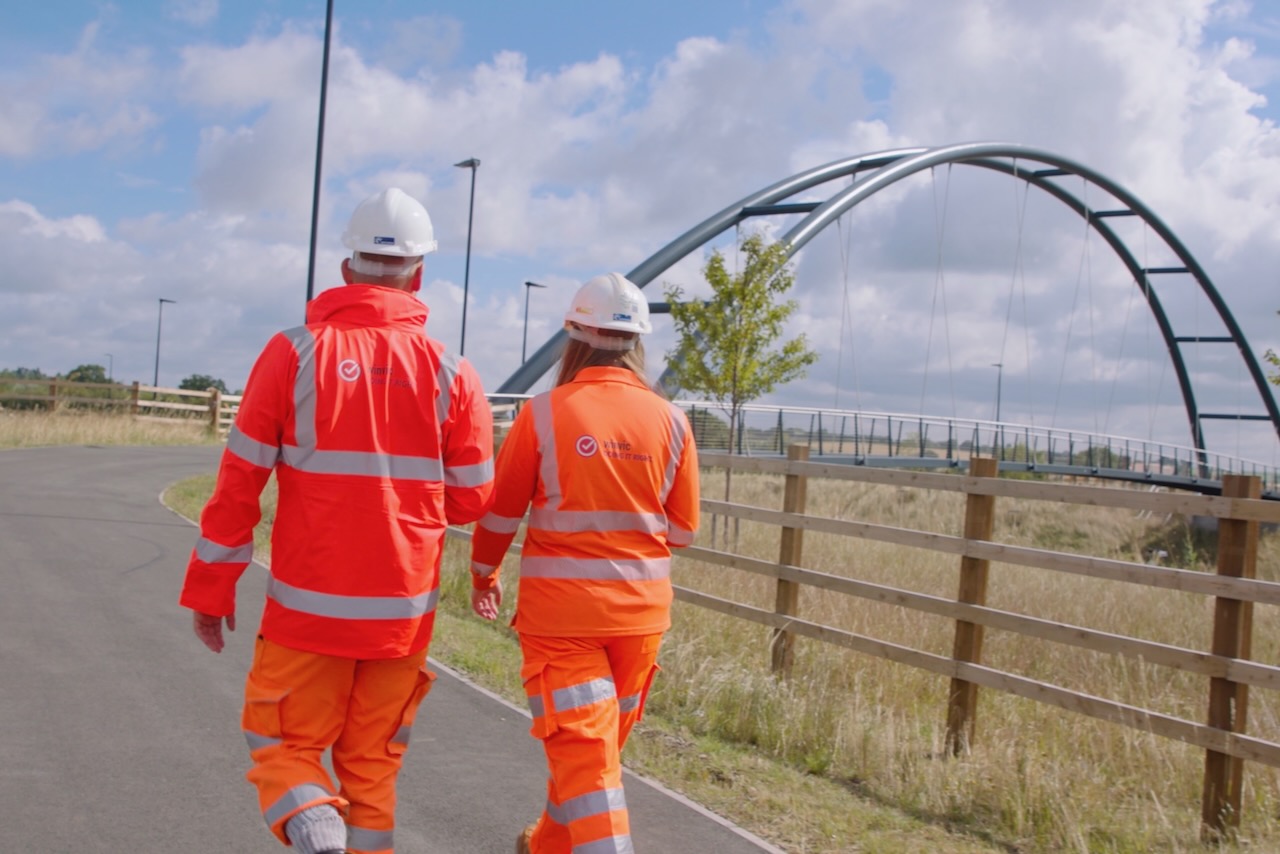
Winvic Construction has been appointed design-and-build contractor, with Mott MacDonald as designer, to protect the 1970s Witton-le-Wear bridge carrying the A68 over the River Wear, where an upstream gravel bank has shifted the channel, causing bank erosion, localised undercutting and damage to the paved apron at the southern pier. The scheme will develop options for structural repairs and scour protection to the southern embankment extending upstream, with the northern pier and embankment also under assessment. Final solutions will follow detailed river modelling, durability assessments and cost analysis by Durham County Council and its consultants.
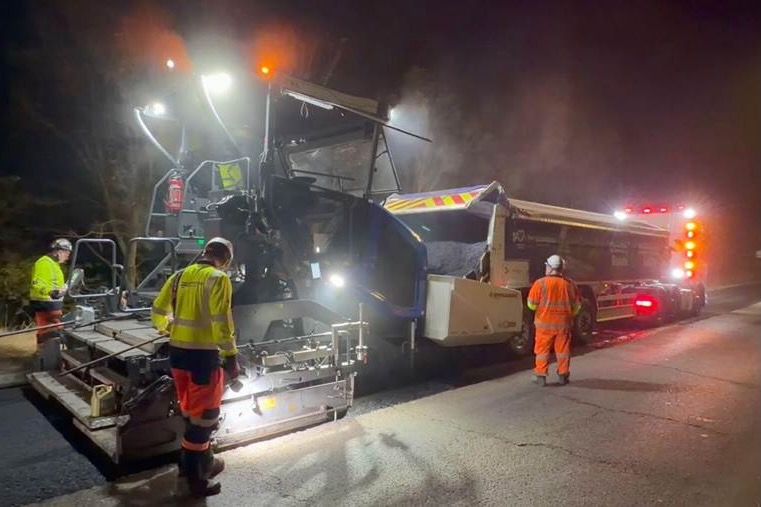
Eurovia Surfacing has trialled a fully electric Dynapac SD25 80C e paver on the A128 near Brentwood for Essex Highways, laying 240.32 tonnes of asphalt overnight without intermediate charging and finishing with 57% battery capacity remaining. The 294 kWh machine, driven by five electric motors delivering up to 235 kW, placed 139.58 tonnes of AC 20 HDM Binder Course 40/60 Tempera warm-mix and 100.74 tonnes of Fibrovia 10 Surface Course PMB 68 PSV between 22:05 and 01:08. Eurovia’s MD Paul Goosey said commercial viability will hinge on charging infrastructure, utilisation and whole-life cost despite clear operational and emissions advantages.
Mace Construct has completed the 68,000 sq ft 30 Duke Street St James’s scheme for GPE using a steel frame made from 78% recycled sections, largely reclaimed from other GPE assets, cutting embodied carbon by 744 tonnes. The fully electric office and retail building also incorporates Hydro CIRCAL 100R aluminium and ORAÉ glass, both with 100% recycled content, in what is claimed as the UK’s largest commercial steel reuse project. Portland stone, marble, raised access flooring and the original French Railways House mosaic were retained in situ, reducing demolition waste and new material demand.
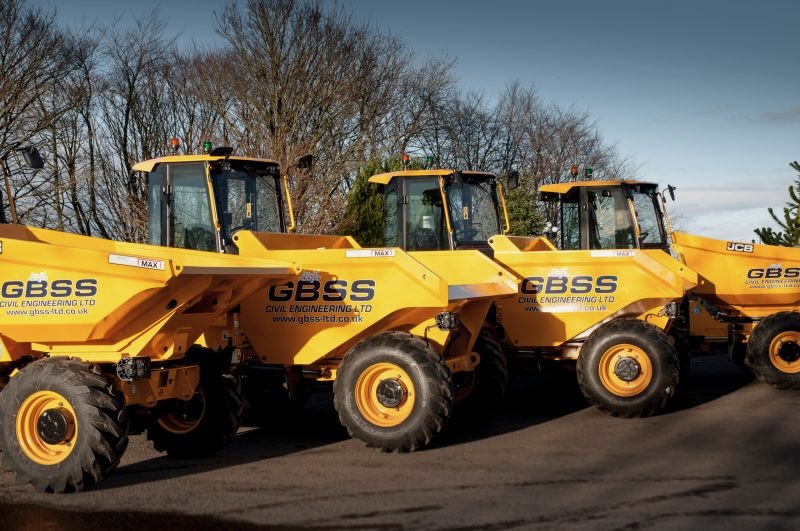
Falkirk-based civil engineers GBSS will support Robertson Construction in delivering the Lock 16 Centre of Excellence for Canals and Traditional Skills in Scotland, a specialist hub being developed by Scottish Canals and Historic Environment Scotland. The project will focus on canal infrastructure and heritage construction techniques, providing a dedicated facility for training in lock structures, masonry, and traditional materials. For engineers, the centre signals future demand for skills in canal asset inspection, repair methodologies, and conservation-grade materials specification.
Western Australian explorers Corazon Mining, Javelin Minerals and Neometals are accelerating drilling across gold and copper targets, with Corazon defining a sizeable conceptual sulphide target around the historic Chalice nickel–copper–PGE mine near Leinster. Javelin is planning first-pass drilling on two previously untested magnetic anomalies interpreted as potential iron-oxide copper–gold (IOCG) systems, while also following up shallow high-grade gold intercepts at its Eastern Goldfields tenements. Neometals is advancing resource growth and deeper drilling on its Mt Edwards nickel–cobalt project, signalling continued appetite for base and precious metal discoveries in mature belts.
BHP chief commercial officer Ragnar “Rag” Udd has been appointed president and chief executive officer of Albemarle Corporation, one of the world’s largest lithium producers, effective 1 February 2027. Udd, who leaves BHP at the end of January 2027 after more than 25 years in operational and commercial roles across iron ore, base metals and coal, will steer Albemarle’s global brine and hard‑rock lithium portfolio. His appointment signals continuity of large‑scale mining discipline in Albemarle’s project pipeline, contract strategy and downstream conversion investments.
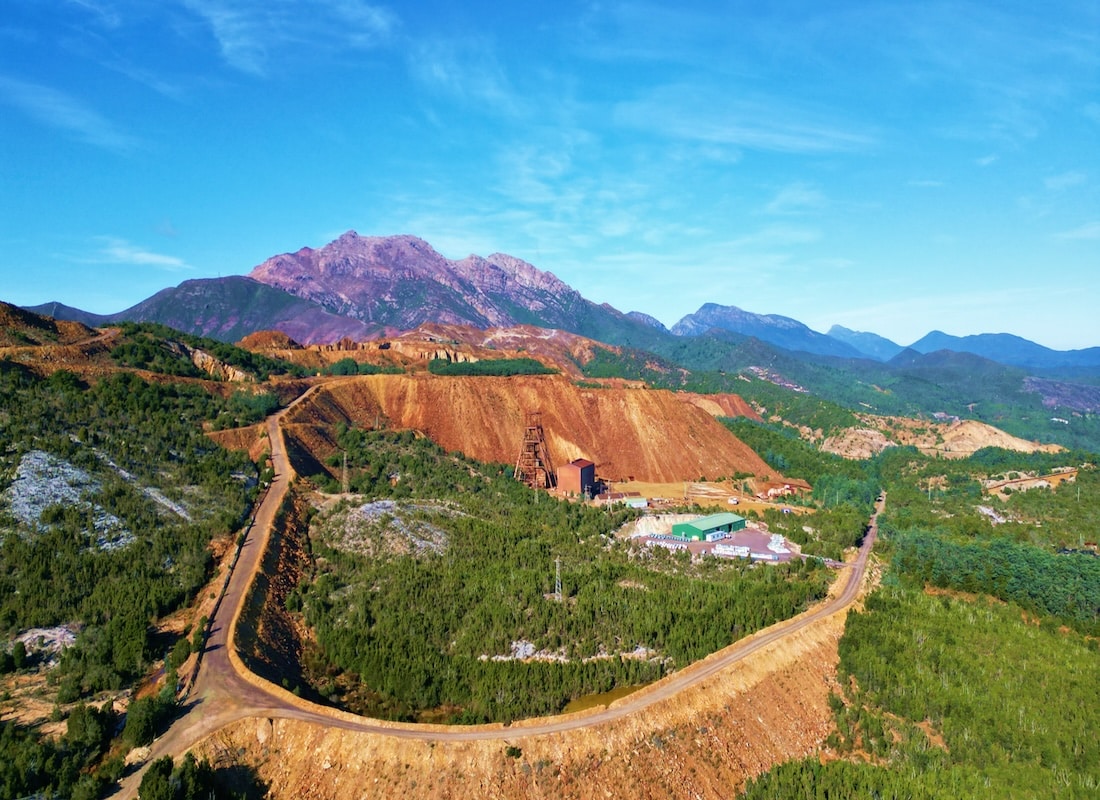
The Mt Lyell copper–gold mine on Tasmania’s west coast has secured key approvals to restart after nearly 10 years in care and maintenance, with operator Sibanye-Stillwater planning to bring the historic underground operation back into production. The brownfields restart is expected to generate about 300 local jobs and re-establish Mt Lyell as a significant sulphide copper–gold producer in Australia. For geotechnical and mining teams, the approval signals renewed demand for underground rehabilitation, ground support upgrades and modernised tailings and water management on a legacy site.
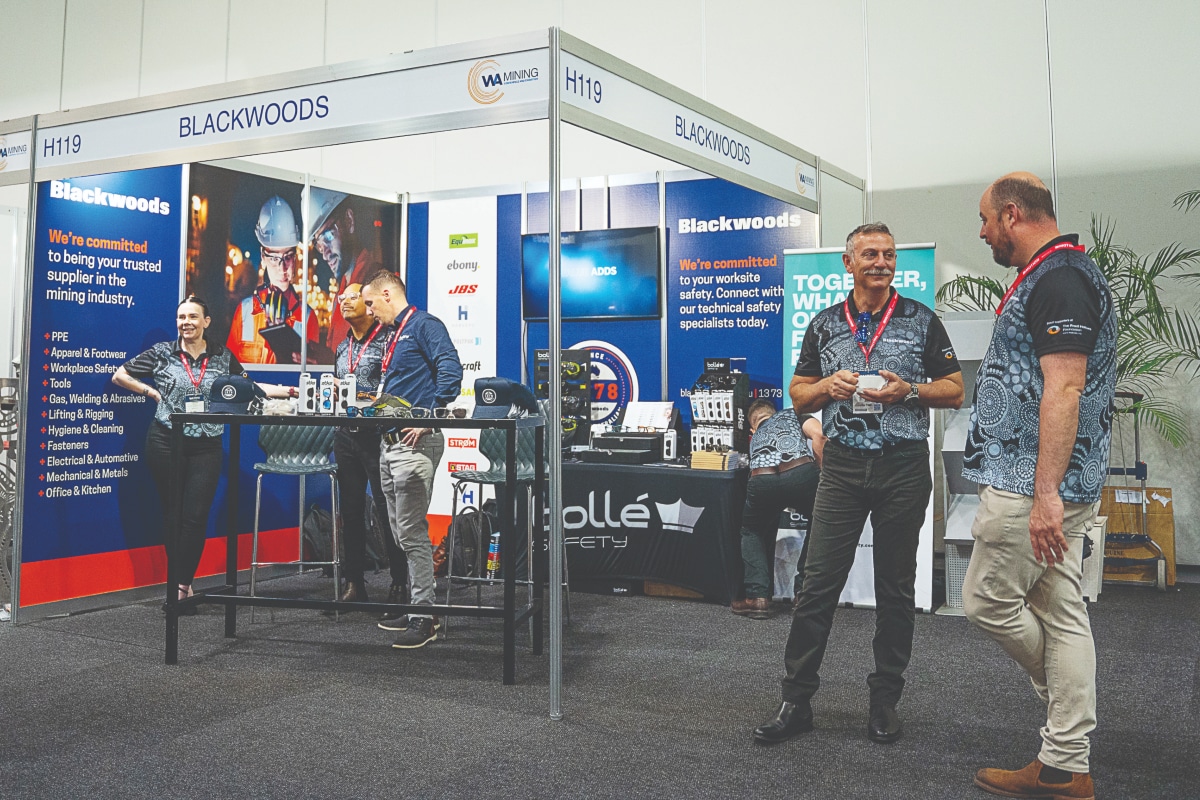
Suppliers of haulage equipment, process control systems and specialist services are set to dominate the WA Mining Conference and Exhibition at the Perth Convention and Exhibition Centre in October. Exhibitors will range from safety technology providers and conveyor specialists to drill and blast contractors, showcasing gear such as collision-avoidance systems, condition-monitoring sensors and high-capacity belt cleaners on the show floor. For site engineers and maintenance teams, the event offers direct access to OEMs and service firms critical to uptime, cost control and compliance on Western Australian operations.
Workday has launched Workday AI Research, a dedicated technical team to develop reliable, auditable AI models for enterprise HR, finance, and IT workflows used by mining and resources companies. The group will publish methods and evaluation frameworks for areas such as bias detection in workforce analytics, explainable decision support for rostering and payroll, and efficiency gains in large-scale ERP data processing. For mine operators, this signals more rigorous, research-backed AI tools embedded in core systems that govern labour planning, contractor management, and compliance reporting.
Tunnel Boring Machine Aayushi has arrived in Clarinda, Victoria, to drive part of the Suburban Rail Loop East section between Cheltenham and Box Hill, Melbourne’s first orbital rail line. The TBM will excavate twin tunnels for the SRL East leg, a key stage in creating grade-separated, underground rail capacity that bypasses the CBD. For geotechnical and civil teams, the drive will involve managing variable Melbourne basin soils and groundwater while controlling settlement beneath existing suburban infrastructure.
Victoria’s $194 million Ison Road project in Werribee has opened to traffic three months early, creating a new connection from the Wyndham growth area to the Princes Freeway. Delivered through a federal–state–local funding partnership, the link is designed to relieve pressure on existing north–south arterials and shorten commuter access to key employment and service centres. For civil and transport engineers, the early opening signals that major earthworks, pavement construction and interface works with the freeway were completed ahead of programme despite growth-corridor traffic and staging constraints.
The UK’s 100 leading construction firms are showing incremental strengthening despite geopolitical instability and sustained inflation in materials and labour costs. Larger contractors are absorbing price pressures through scale and stronger balance sheets, while smaller subcontractors and specialist suppliers further down the supply chain are struggling to remain viable. The widening resilience gap raises execution risk on major infrastructure and building projects, with potential for subcontractor failures, programme delays and tighter prequalification and payment practices.
Mace Consult has been appointed by Luton Rising to deliver programme, project, cost and commercial management services for the planned growth of London Luton Airport, signalling a move into detailed definition of future airside and landside works. The commission will shape phasing, constructability and budget control for runway, terminal and surface access upgrades in a highly constrained operational environment. Geotechnical and civil teams should expect strong emphasis on buildability around existing assets, night-time possessions and tight cost benchmarking for major earthworks and pavement rehabilitation.
ABB has secured a contract to supply medium- and low-voltage switchgear to LKAB’s new iron ore sorting plant at Malmberget in northern Sweden, a key element of the miner’s long-term upgrade of the operation. The electrification package will form the backbone of power distribution for the facility, supporting continuous, high-availability sorting circuits in sub-Arctic conditions. For engineers, the deal signals ongoing investment in robust, centralised electrical infrastructure rather than piecemeal retrofits at one of Europe’s largest underground iron ore complexes.
EACON Mining Technology’s autonomous haulage system has now been deployed on more than 1,500 battery-electric mining trucks, making battery-electric the largest single powertrain in its driverless fleet. As of early September 2026, battery-electric units account for about 42% of all EACON autonomous trucks, compared with 41% diesel hybrid-electric and 16% methanol hybrid. The shift implies growing demand for high‑capacity charging infrastructure, battery thermal management, and software tuned to different powertrain response characteristics in mixed autonomous fleets.
Hexagon has launched a next-generation Vehicle Intervention System (VIS) for surface mines, extending its existing collision avoidance platform with autonomous braking and throttle control to prevent incidents before impact. The EMESRT-aligned system intervenes directly on haul trucks and other heavy mobile equipment in high-risk scenarios such as edge-approach, overspeed on ramps and potential vehicle-to-vehicle collisions. For mine operators, this shifts collision management from operator alerts to automated control actions, tightening controls around pit edges, dump points and congested loading areas.
Epiroc is extending its Deep Automation system so autonomous underground haul trucks can also operate on surface haul roads using 3D LiDAR for localisation, mapping and obstacle detection instead of relying on GPS. The upgrade allows trucks to transition directly from stope loading to surface tipping points in a single autonomous cycle, removing manual handover at portals and ramps. For mine planners and engineers, this enables integrated underground–surface haulage designs and demands tighter control of surface road geometry, berms and traffic segregation for sensor reliability.
RZOLV Technologies has signed a strategic memorandum of understanding with Novamera to combine Novamera’s Surgical Mining™ directional drilling and imaging platform with RZOLV’s proprietary, water-based, non-cyanide hydrometallurgical process. The partners aim to create a mine-to-metal pathway that rapidly accesses narrow-vein or complex mineralisation while preserving head grade and minimising waste rock extraction. For engineers, the key interest is whether in-situ or near-surface leaching coupled with precise borehole extraction can cut development metres, tailings volumes and permitting constraints for small, high-grade deposits.
IntelliSense.io has secured a major growth investment from Scottish Equity Partners (SEP), with strategic capital from Mitsubishi Corporation and Hitachi Construction Machinery, to scale its industrial decision intelligence platform for mining and minerals processing. The AI-native system is already deployed on unit operations such as grinding, flotation and thickening, using real-time sensor data and digital twins to optimise throughput, energy use and reagent consumption. Backing from OEMs like HCM signals tighter integration of IntelliSense.io’s optimisation tools with autonomous haulage fleets and smart plant control systems across new geographies.