BHP climate delays in Pilbara: haul truck limits and project risks for engineers
Reviewed by Tom Sullivan
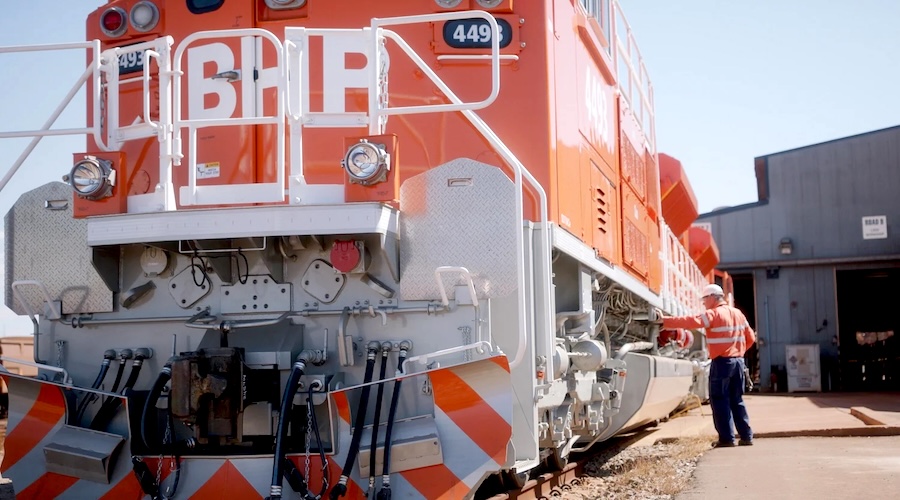
First reported on MINING.com
30 Second Briefing
BHP has defended delaying major Pilbara decarbonisation projects, including a board-approved $400 million solar-and-battery installation at Jimblebar and a wider $1.3 billion renewable power plan linked to electric haul trucks and rail, citing the lack of commercially viable 240‑tonne battery-electric haul trucks at fleet scale. The miner says it has already cut Scope 1 and 2 emissions 36% from 2020 to June 2025, largely by sourcing 70% of its electricity from renewables, and is trialling two battery-electric trucks plus four battery-electric locomotives. This stance contrasts with Rio Tinto and Fortescue’s more aggressive electrification timelines, despite similar technical and cost constraints on heavy mobile equipment.
Technical Brief
- BHP explicitly cites absence of commercially viable 240‑tonne battery-electric haul trucks at fleet scale.
- Leaked internal documents indicate the $400 million Jimblebar solar-and-battery project was halted in 2023.
- The wider Pilbara renewable power and electrified haul/rail package is valued at about $1.3 billion.
- BHP’s Scope 1 and 2 targets remain ≥30% reduction by 2030 (2020 baseline) and net zero by 2050.
- Emissions reduction to June 2025 is attributed mainly to sourcing roughly 70% of electricity from renewables.
- Two battery-electric haul trucks are currently on trial in the Pilbara under operational mining conditions.
- Rio Tinto and Fortescue are pursuing faster electrification despite similar technical and cost constraints on heavy fleets.
Our Take
The paused $400 million Jimblebar solar‑and‑battery project and wider $1.3 billion Pilbara renewables plan sit awkwardly alongside BHP’s recent push to maximise copper output at Escondida and Olympic Dam, signalling capital is being prioritised towards brownfield copper growth rather than deep decarbonisation of Australian iron ore operations.
In our database of 1182 Mining stories, BHP appears unusually often at the intersection of ‘Projects’ and ‘Sustainability’, and the same week’s coverage of its Olympic Dam critical minerals obligations under a revised indenture indicates regulators are starting to hard‑wire climate and transition‑metal expectations into BHP’s project approvals and operating licences.
Prepared by collating external sources, AI-assisted tools, and Geomechanics.io’s proprietary mining database, then reviewed for technical accuracy & edited by our geotechnical team.
Related Articles

Related Industries & Products
Mining
Geotechnical software solutions for mining operations including CMRR analysis, hydrogeological testing, and data management.
CMRR-io
Streamline coal mine roof stability assessments with our cloud-based CMRR software featuring automated calculations, multi-scenario analysis, and collaborative workflows.
HYDROGEO-io
Comprehensive hydrogeological testing platform for managing, analysing, and reporting on packer tests, lugeon values, and hydraulic conductivity assessments.
GEODB-io
Centralised geotechnical data management solution for storing, accessing, and analysing all your site investigation and material testing data.