Geomechanics, Streamlined.
© 2026 Geomechanics.io. All rights reserved.
The BNG Federation accuses the UK government of breaking its promise to set a clear timetable for applying biodiversity net gain (BNG) rules to nationally significant infrastructure projects (NSIPs), leaving major schemes in a “regulatory vacuum”. Developers of large highways, energy and rail projects currently lack certainty on when and how the statutory 10% BNG requirement will apply, complicating land acquisition, habitat design and long-term management plans. The federation warns that without a defined start date and guidance, DCO applications and environmental impact assessments risk delay and redesign.
Copper wire theft from light poles is costing municipalities, DOTs and utilities millions of dollars in repairs while leaving roadways, car parks and pedestrian routes without critical lighting and grounding. Thieves typically access handholes, cut energised conductors and pull out long runs of bare or insulated copper, exploiting poorly secured pole bases, unmonitored corridors and predictable maintenance patterns. Recommended countermeasures include using tamper‑resistant handhole covers, non-metallic or copper‑clad aluminium conductors, continuous grounding loops, real-time circuit monitoring and targeted CCTV or patrols on high-risk corridors.
MAXAM Tire has added a 45/65R45 size to its MS406 E4/L4 off-the-road tyre line, targeting heavy loader applications in mining and large quarry operations. The MS406 design uses a deep tread pattern and reinforced casing to handle high load cycles and abrasive conditions, aiming to extend service life and reduce unplanned downtime on large wheel loaders. For mine operators, the new size broadens fitment options on 45-inch rims, supporting tyre standardisation across mixed fleets and tighter cost-per-hour control.
Pilot Crushtec will use the Hillhead 2026 show (23–25 June, UK, c.20,000 visitors expected) to launch its latest-generation TwisterTrac VS350E Stage V mobile crusher and push for an expanded European dealer network. The VS350E, a track-mounted vertical shaft impact unit, is configured for quarrying, construction and recycling applications where EU Stage V emissions compliance is now mandatory. Stronger distribution in Europe signals more local support and parts availability for high-spec mobile crushing fleets on both greenfield and brownfield sites.
Revival Gold’s 2025 drilling at the past-producing Mercur gold project in Utah returned one of its strongest South Mercur intercepts to date, with hole RMC25-031 cutting 74 m at 2.8 g/t Au from 91 m downhole, including 13 m at 8 g/t from 13 m depth, and RMC25-032 intersecting 84 m at 1.1 g/t from 14 m. The company, which now owns 100% of Mercur after buying Barrick’s remaining stake, is advancing a heap leach operation based on a PEA outlining US$208 million capex for a 10-year, 95,000 oz/y mine. A 16,000 m follow-up drilling and engineering programme will feed into a pre-feasibility study targeted for Q1 2027, ahead of a potential construction decision in 2028 and first production in 2029.
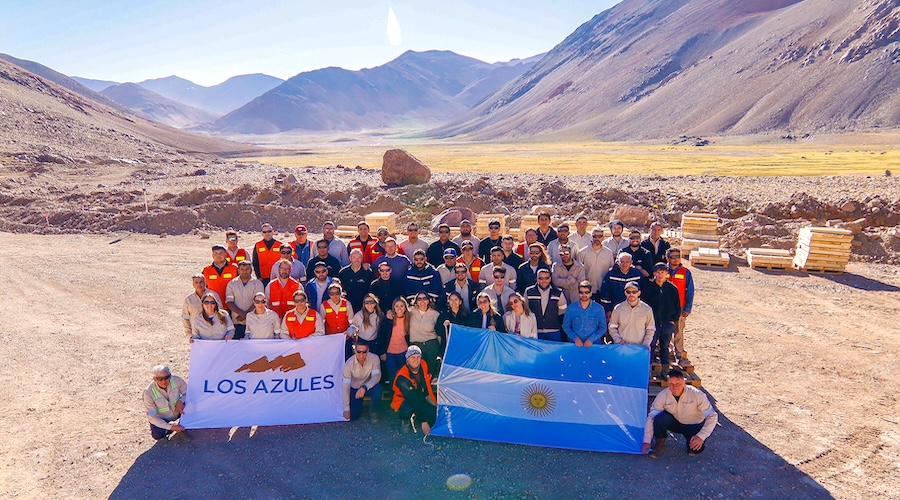
McEwen Copper is seeking about $4 billion in financing, including export-credit support from agencies such as the US Export-Import Bank and the US International Development Finance Corp., to build the Los Azules copper project in Argentina. The feasibility-stage operation targets copper cathode production, not concentrate, with planned output of 205,000 tonnes per year for the first five years, then averaging 148,000 tonnes over a projected 22-year mine life, extendable to 33 years. Backers include Stellantis and Rio Tinto’s Nuton, with a $300 million IPO and first production by 2030 under consideration.
Greenland’s government has issued a draft decision not to renew Energy Transition Minerals’ Kvanefjeld exploration licence, effectively blocking development of the planned mine–concentrator–refinery rare earths complex under the 2021 Uranium Act that bans uranium prospecting, exploration and exploitation. ETM argues the move is inconsistent with previous licence extensions granted after the Act and during ongoing legal challenges, warning it may deter critical minerals investment in Greenland amid US‑EU efforts to diversify away from Chinese supply. Despite securing Spanish foreign direct investment approval for acquiring the Penouta tin‑tantalum mine, ETM’s shares fell 7.4% to A$0.050, halving year‑to‑date.
Allied Critical Metals’ Borralha project in northern Portugal has intersected over 200 metres of visible tungsten mineralisation at the new Venise breccia target, 400 metres from the Santa Helena breccia complex, sending its shares up 8% to C$1.88 and valuing the company at C$317 million. A March PEA for Santa Helena alone, based on 13 Mt at 0.21% WO₃ (measured and indicated) and 7 Mt at 0.18% WO₃ (inferred), outlines an 11‑year mine producing 1,708 t/y WO₃ with an after-tax NPV of C$473 million and 49% IRR. Venise, defined within a 20,000‑metre drill programme and historically mapped but never systematically tested, was excluded from the PEA and is now central to plans to grow a district-scale tungsten system designated a strategic national project by idD Portugal Defence.
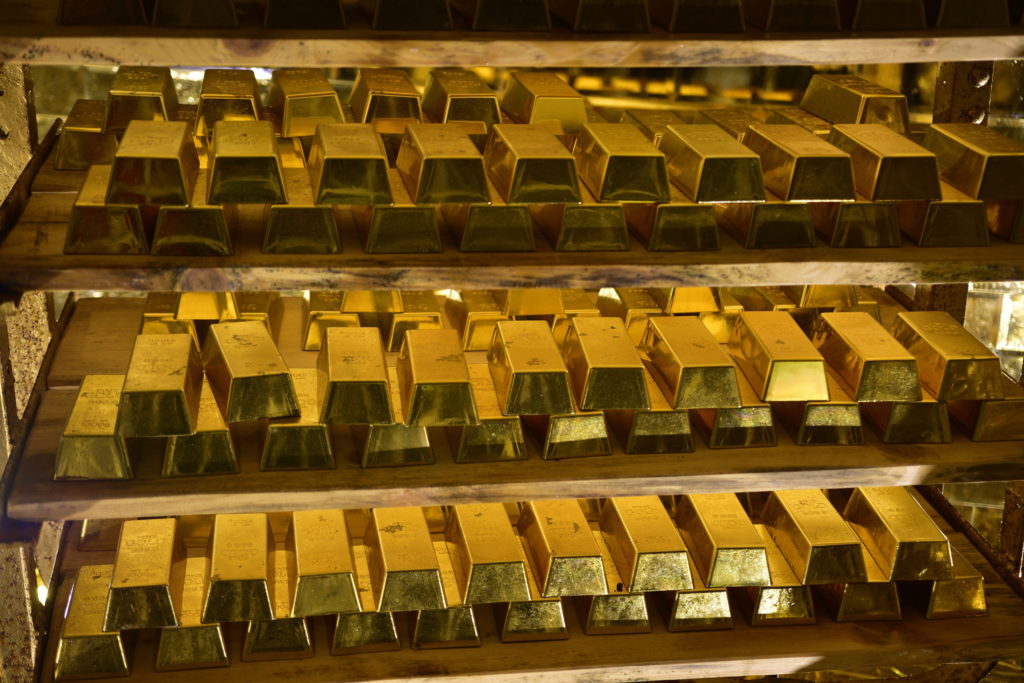
BRICS+ central banks now hold about 6,000 tonnes of gold, or 17.4% of global reserves, up from 11.2% in 2019, with Russia (2,336 tonnes), China (2,298 tonnes) and India (880 tonnes) the largest holders. Annual official-sector gold buying has averaged roughly 1,000 tonnes over the past four years, doubling after 2022 sanctions on Russia, and BRICS+ countries accounted for more than half of purchases between 2020 and 2024. The report flags Saudi Arabia as a potential “wild card”, noting that a shift to a 5% gold allocation could alone match projected total central bank demand for 2026.
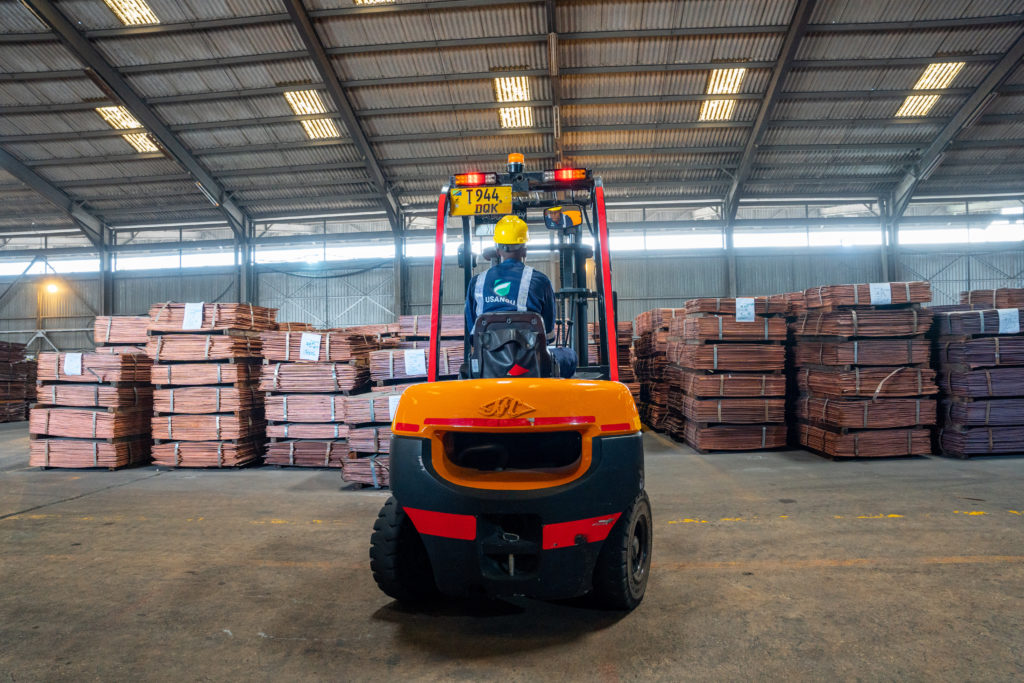
Copper’s early-2026 rally above $14,500/t has fully reversed, with prices now around $12,000/t and down 2.5% year-to-date after the Iran war and Strait of Hormuz disruptions pushed energy costs higher and clouded global growth. Goldman Sachs, led by analyst Aurelia Waltham, has cut its 2026 base-case copper target to $12,650/t from $12,850/t, versus an estimated “fair value” of about $11,100/t, and warns of a “severely adverse” downside scenario if the strait stays blocked. For project modellers and mine planners, the bank’s note signals weaker near-term demand assumptions and greater price risk around expansion and hedging decisions.
Codelco and Chinese OEM SANY have completed a 680 km round-trip pilot of a 100% electric haul truck carrying 27 t of copper concentrate between the Radomiro Tomic Division and Angamos Port in northern Chile. The test ran across the Atacama Desert, exposing the vehicle to long-distance, high-temperature, low-humidity operating conditions typical of bulk copper logistics from mine to port. Results will inform future fleet decarbonisation strategies for long-haul mine-port corridors, including charging infrastructure siting and duty-cycle planning.
Core Lithium has awarded NRW Pty Ltd a circa A$50 million surface mining services contract for open-pit mining at the Grants deposit within the wholly owned Finniss Lithium Operation in Australia’s Northern Territory. The package covers all key activities required to deliver ore from the Grants pit, including drill-and-blast, load-and-haul, and associated mine services for the spodumene-bearing pegmatite. For geotechnical and mine planners, the award signals continued development of Finniss as a conventional truck-and-shovel open pit rather than an early shift to underground methods.
Atoms, the “physical AI” company founded by former Uber CEO Travis Kalanick, has completed its acquisition of autonomous haulage specialist Pronto, which now becomes the core technology engine of the new Atoms Mining division. The unit is one of three Atoms business lines focused on digitising physical operations using purpose-built, intelligent machines, signalling deeper integration of Pronto’s retrofit autonomy stacks and perception systems into mine fleets. For mine operators, this points to accelerated deployment of OEM-agnostic autonomy and data-rich fleet control across brownfield truck and equipment platforms.
St George Mining has signed an MoU with Boston Metal to trial molten oxide electrolysis (MOE) for niobium production at St George’s 100%-owned Araxá niobium-rare earths project in Minas Gerais, Brazil. The joint project will test MOE’s ability to improve niobium recovery and processing efficiency compared with conventional pyrometallurgical and hydrometallurgical routes. For mine developers and metallurgists, the trial will indicate whether MOE can offer a lower-emission, potentially lower-cost flowsheet option for future niobium and REE concentrate processing at Araxá-scale deposits.
Minerals Council of Australia has been confirmed as Endorsing Partner for the Global Resources Innovation Expo (GRX26), positioning the event as a ‘by industry, for industry’ platform for Australia’s mining and METS sector. The MCA, the peak body for major iron ore, coal, gold, copper and critical minerals producers, will use the partnership to promote technology-led productivity, decarbonisation and skills development. For engineers and suppliers, GRX26 now offers a more direct channel to operators and policy influencers shaping mine automation, electrification and processing innovation in Australia.
Sandvik has launched the DD423i automated twin-boom development drill rig, built on the DD422i platform but engineered for higher drilling accuracy, automation readiness and data integration in underground hard-rock mines. The rig is designed for multi-face development with intelligent drilling controls, compatibility with Sandvik’s AutoMine and OptiMine systems, and upgraded onboard diagnostics to reduce unplanned downtime. For mine engineers, the DD423i targets tighter drill-and-blast control, improved overbreak management and more consistent advance per blast in high-cost development headings.
Specialised Roading Equipment (SRE) is leveraging expanded after-sales and field support to accelerate uptake of its purpose-built road construction and maintenance plant in Australia, building on its New Zealand manufacturing base. The company is pairing its high-spec spray seal and binder application units with locally based technicians, parts stocking and remote diagnostics to minimise downtime on council and contractor fleets. For asset owners, the stronger service presence reduces lifecycle risk on specialist surfacing equipment that often operates in remote or constrained roadwork environments.
Akuna Drive link road has opened in Melbourne’s west, providing a new connection between Newport and Williamstown as part of works to remove two level crossings at Maddox Road and Champion Road on the Altona Loop. The project grade-separates rail from vehicles, cyclists and pedestrians, eliminating boom-gate delays and reducing collision risk on this busy suburban corridor. For civil and transport engineers, the scheme signals further reconfiguration of local traffic patterns and future opportunities for intersection upgrades and active transport links around the new alignment.
Kier has begun a £700m highways and infrastructure service contract with Norfolk County Council, covering maintenance and improvement of 9,836km of roads over up to 14 years. Scope includes resurfacing, surface dressing, planned maintenance, drainage upgrades, bridge and structures works, plus cyclical operations such as grass cutting and drainage cleansing, with more than 100 staff TUPE-transferring from the previous provider. The deal extends Kier’s long-term local authority highways portfolio, which already includes Birmingham, Shropshire, Somerset and North and West Northamptonshire.
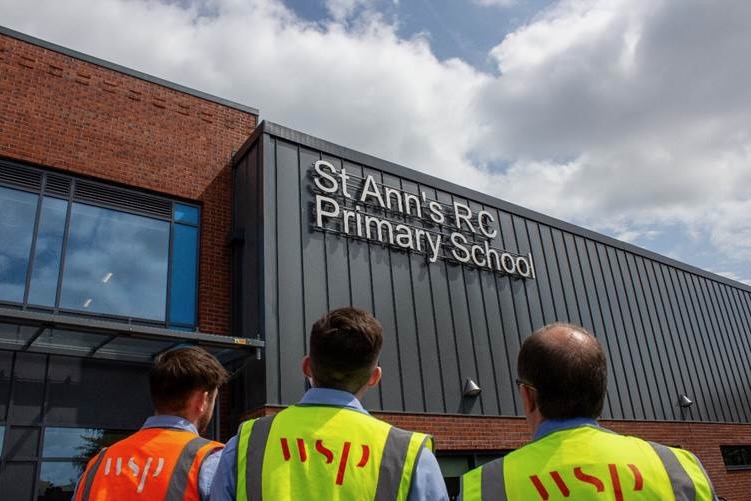
WSP has secured a place on the Department for Education’s Technical Advisory Services 2025 framework, supporting delivery of the DfE capital programme for four years alongside the £15.4bn Construction Framework 25 and the Education Estates Strategy. Scope covers project, cost and commercial management, feasibility design input, detailed technical reviews, surveys, contract administration, health and safety, and construction quality monitoring. For consultants and contractors on DfE schools and colleges, this signals continued emphasis on robust front‑end feasibility, compliance and quality assurance across new-build and refurbishment portfolios.
Turner & Townsend has completed its acquisition of Johannesburg-based Profica and appointed Profica founder and former CEO Tim White as regional managing director for Africa. The deal expands Turner & Townsend’s project and programme management capability across commercial real estate, mixed-use and industrial developments in key African markets, building on Profica’s track record in multi-storey office towers and retail centres. Clients can expect integrated cost, schedule and risk management services delivered through a combined team with on-the-ground presence in South Africa and other sub-Saharan countries.
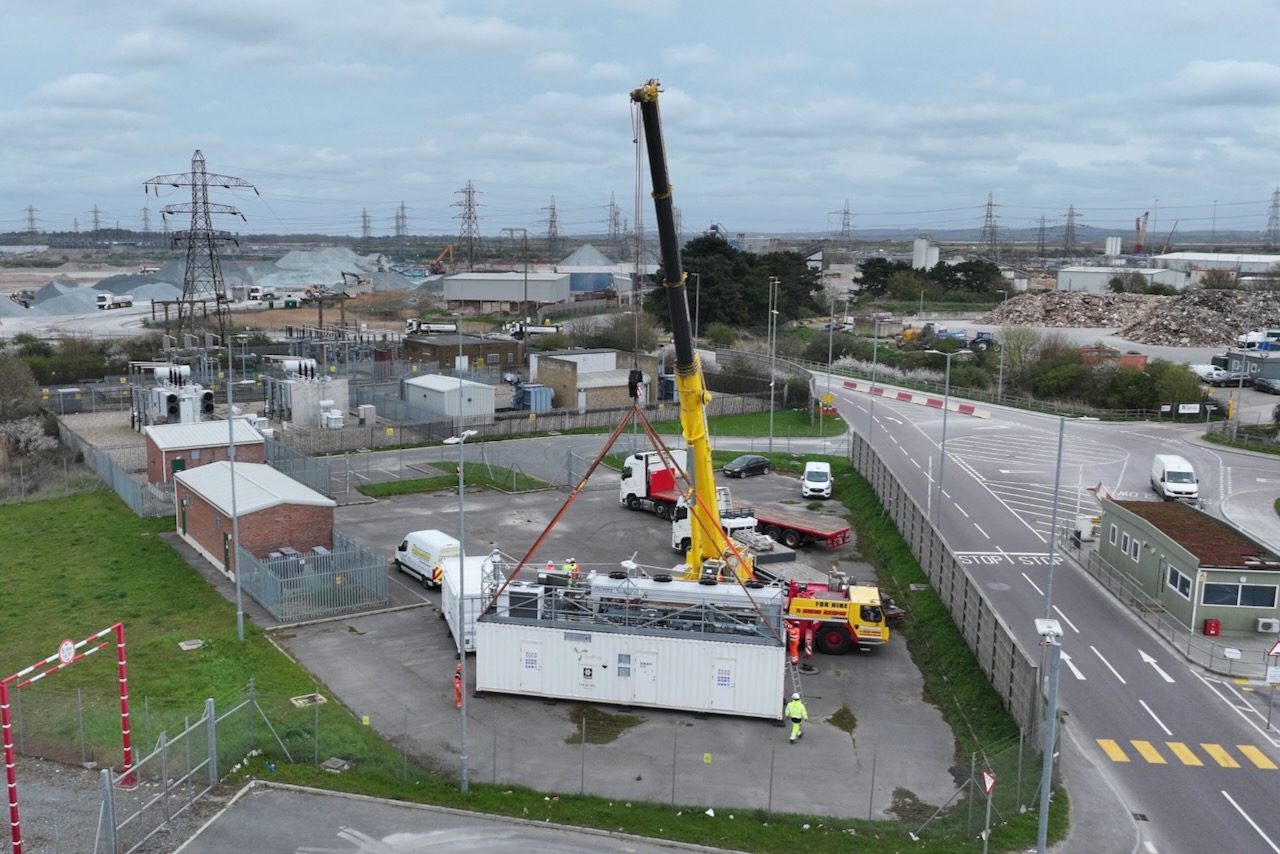
GeoPura is partnering with Forth Ports’ Port of Tilbury to install a 1MW green hydrogen production facility supplying port equipment and heavy plant. The low‑carbon hydrogen will fuel construction activities on National Highways’ Lower Thames Crossing, reducing diesel use for high‑duty cycles such as piling rigs, cranes and haul trucks. For contractors and port engineers, the project signals growing scope to deploy hydrogen for non‑road mobile machinery on major UK infrastructure schemes and in quayside operations.
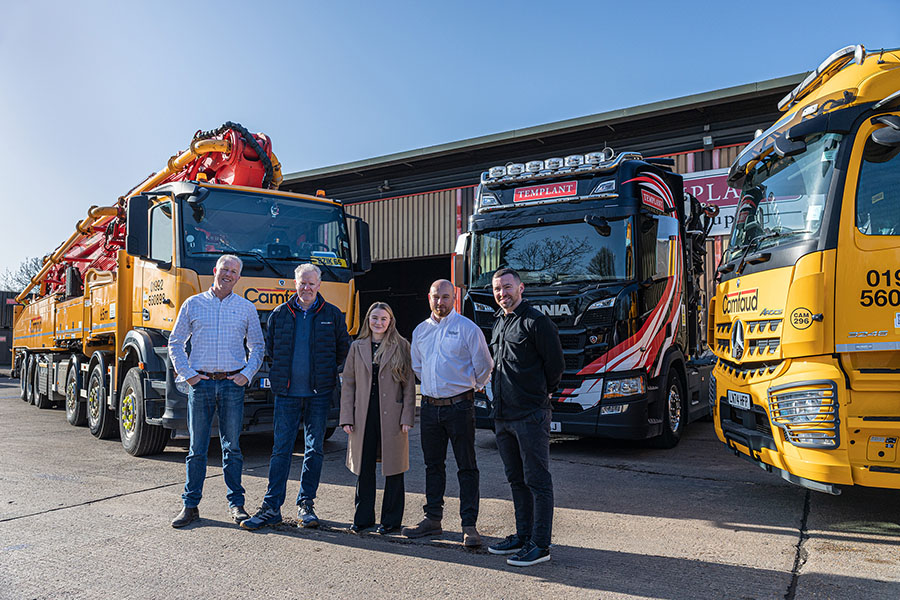
Essex-based temporary power specialist Templant, which operates a rental fleet of more than 250 generators from 20 kVA to 1250 kVA plus battery energy storage systems and load banks, has been acquired by Camfaud Group, the UK’s largest concrete pumping company and part of Concrete Pumping Holdings (NASDAQ: BBCP). Templant will use Camfaud’s existing depots to build a multi-depot, 24/7 national network, adding service vans and HGVs to cut response times for planned and emergency power on major infrastructure and utility projects. Backed by over 35 engineers, electricians and drivers, the business plans a major expansion of Stage V generators and BESS to meet lower-emission requirements from Tier 1 contractors and utilities.
The Green Heat Network Fund will accept Welsh applications from Round 12, backed by an extra £195m per year in UK capital funding to 2030 under the Warm Homes Plan, with both public and private heat network owners eligible. Existing schemes such as Cardiff’s low carbon networks funded under the Heat Networks Investment Project and the Heat Network Efficiency Scheme will sit alongside GHNF support for new build, expansion and decarbonisation projects. Technical opportunities flagged include community-led ambient temperature networks for off-gas-grid housing and mine water heat schemes identified in the Wales Mine Water Heat Opportunity Map.