Geomechanics.io

  • Free Tools
Sign UpLog In

Geomechanics.io

Geomechanics, Streamlined.

© 2026 Geomechanics.io. All rights reserved.

Geomechanics.io

CMRR-ioGEODB-ioHYDROGEO-ioQCDB-ioFree Tools & CalculatorsBlogLatest Industry News

Industries

MiningConstructionTunnelling

Company

Terms of UsePrivacy PolicyLinkedIn
    AllGeotechnicalMiningInfrastructureMaterialsHazardsEnvironmentalSoftwarePolicy
    Projects

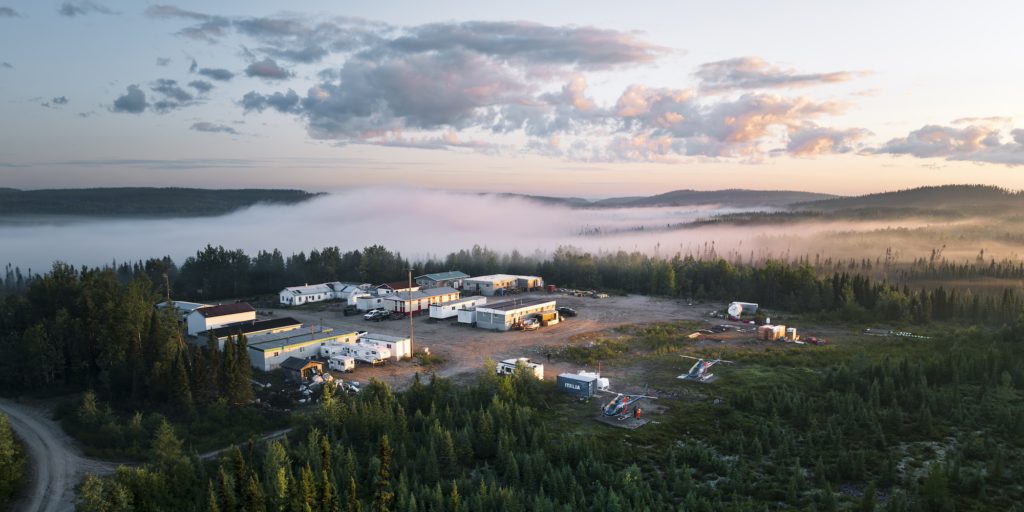
    Q2 Metals’ Cisco lithium project: remote sensing insights for mine planners

    November 24, 2025|

    Reviewed by Joe Ashwell

    Q2 Metals’ Cisco lithium project: remote sensing insights for mine planners

    First reported on MINING.com

    30 Second Briefing

    Cisco’s lithium discovery in the Eeyou Istchee James Bay region has been named a finalist for the Association de l’exploration minière du Québec’s Discovery of the Year Award after Q2 Metals expanded mineralised zones using space-based remote sensing. The junior explorer has been integrating satellite spectral data with ground mapping and drilling to refine pegmatite targets across the Cisco property. For geologists and mine planners, the recognition signals growing confidence in the scale and continuity of the lithium-bearing pegmatites and supports further resource-definition drilling.

    Technical Brief

    • Space-based spectral imagery is being used to distinguish lithium-bearing pegmatites from barren granitoids at Cisco.
    • Remote sensing outputs are directly overlaid on detailed geological mapping to refine individual pegmatite dyke geometries.
    • Satellite data are guiding step-out drilling rather than simple infill, optimising metre allocation along interpreted trends.
    • Integration of spectral anomalies with structural mapping is improving prediction of pegmatite continuity between sparse outcrops.
    • Data fusion workflows allow rapid updating of drill targets as new core and surface assays are received.

    Our Take

    Lithium features in only a handful of keyword-matched pieces in our database, so Q2 Metals’ Cisco lithium project in Québec sits in a relatively small peer group compared with the more common gold and base metals projects in recent coverage.

    Among the 25 Mining stories and 81 Projects-tagged pieces, Québec appears frequently as a jurisdiction where early-stage lithium work can move quickly from geophysics to drilling, which suggests Cisco could benefit from a comparatively well-understood permitting and exploration support environment.

    Use of advanced ‘space exploration’ style techniques at a lithium project in Québec aligns with a pattern in our coverage where hard-to-map pegmatite systems are increasingly being targeted with non-traditional remote sensing, potentially lowering discovery costs for juniors like Q2 Metals.

    Geotechnical Software for Modern Teams

    Centralise site data, logs, and lab results with GEODB-io, CMRR-io, and HYDROGEO-io.

    No credit card required.

    • Save and export unlimited calculations
    • Advanced data visualisation
    • Generate professional PDF reports
    • Cloud storage for all your projects

    Prepared by collating external sources, AI-assisted tools, and Geomechanics.io’s proprietary mining database, then reviewed for technical accuracy & edited by our geotechnical team.

    Related Articles
    Meta and Sprott in nuclear revival: demand signals and risks for uranium projects
    Mining
    about 1 hour ago

    Meta and Sprott in nuclear revival: demand signals and risks for uranium projects

    Meta has signed nuclear power deals with Vistra, TerraPower and Oklo for up to 6.6 GW of capacity by 2035 to run its US data centres and the Prometheus AI supercluster in Ohio, adding to a 20‑year, 1.12 GW offtake from Constellation’s Clinton plant. In parallel, the Sprott Physical Uranium Trust has bought 300,000 lb of U₃O₈ in a week, lifting holdings to about 75.2 million lb worth US$6.17 billion, as spot prices hover around US$82/lb. For miners and project developers, this combination of long‑term nuclear PPAs and aggressive physical uranium accumulation signals firmer demand visibility despite persistent SMR cost and schedule risk.

    Mining
    about 12 hours ago

    Derrick Experience Center: fine screening test gains and risks for plant engineers

    Derrick Corporation has opened its Derrick Experience Center (DEX Center) in January 2026 to mark its 75th anniversary, creating a dedicated test hub for advanced fine screening technology. The “first-of-its-kind” facility is designed for current and prospective customers to run full-scale trials on Derrick high-frequency screens and Polyweb® urethane panels under controlled conditions, rather than relying solely on on-site pilots. The centre is intended to shorten test campaigns, de-risk screen selection, and optimise cut size and throughput for fine coal, iron ore, base metals and industrial minerals circuits.

    University of Arizona mine waste project: key processing insights for engineers
    Mining
    1 day ago

    University of Arizona mine waste project: key processing insights for engineers

    A $3.6 million Arbor-funded University of Arizona Tailings Center project, led by mining engineer Dr Isabel Barton, is evaluating whether 17.5 billion tons of historic copper tailings in Arizona—growing by ~100 million tonnes per year—can be reprocessed to recover critical minerals and reduce environmental risk. The team is combining statewide and UAV-based remote sensing, industry tailings datasets, drilling and surface sampling, mineralogical characterisation and techno-economic analysis using magnetic separation and basic leaching. Early work has identified unexpected mineral occurrences, including arsenic, zinc and possibly tungsten, which could justify flowsheet changes to keep these elements out of future tailings.

    Related Industries & Products

    Mining

    Geotechnical software solutions for mining operations including CMRR analysis, hydrogeological testing, and data management.

    CMRR-io

    Streamline coal mine roof stability assessments with our cloud-based CMRR software featuring automated calculations, multi-scenario analysis, and collaborative workflows.

    HYDROGEO-io

    Comprehensive hydrogeological testing platform for managing, analysing, and reporting on packer tests, lugeon values, and hydraulic conductivity assessments.

    GEODB-io

    Centralised geotechnical data management solution for storing, accessing, and analysing all your site investigation and material testing data.