Geomechanics, Streamlined.
© 2026 Geomechanics.io. All rights reserved.
Weir’s Heavy Bay Foundry in Gqeberha, Eastern Cape is undergoing a major expansion to serve as a central manufacturing hub in the company’s global supply chain for large high-performance cast components. The upgraded facility will supply castings for Weir’s heavy-duty slurry pumps, screening equipment and crushers, consolidating production that was previously spread across multiple sites. For mining OEM and project engineers, the move signals increased casting capacity and shorter lead times for critical wear parts and process equipment.
Orica Digital Solutions has launched a next-generation GroundProbe geotechnical monitoring platform aimed at mine slope stability, combining “future-ready” hardware with new software workflows for faster, higher-confidence decisions. The system is designed for quick, low-touch deployment and intuitive, risk-based monitoring workflows so small geotechnical teams can manage continuous radar or laser-based surveillance with less manual intervention. Orica is pitching the upgrade at operations needing rapid setup and streamlined data interpretation to support day-to-day geotechnical risk management around highwalls, tailings and pit ramps.
First Quantum Minerals has received formal approval from the Government of Panama to remove, process and export stockpiled ore at the 85 Mt/y Cobre Panamá copper complex, limited to material mined before the November 2023 suspension. The campaign will draw down existing ROM and crushed ore stockpiles to reduce geotechnical and environmental risks from long-term surface storage, including potential slope instability and contact water management issues. Processing will use the existing concentrator and tailings facilities under previously permitted operating parameters.
Perenti’s underground mining arm Barminco has secured a A$180 million extension to its alliance-style contract with Regis Resources at the Duketon Operations in Western Australia’s Goldfields, building on the three-year agreement first announced on 2 April 2024. The extension keeps Barminco in place for additional years of underground development and production services, locking in fleet, workforce and ground support planning across multiple Duketon orebodies. Contractors and suppliers can expect continued demand for underground drilling, blasting, ventilation, and backfill consumables tied to Regis’ ongoing gold production strategy.
AngloGold Ashanti has deployed a Normet Utimec LF 600 Transmixer SD battery-electric concrete mixer at its Cuiabá underground gold mine in Brazil, claimed as the first electric concrete mixer operating in the country. The SmartDrive unit will undergo an 18‑month trial, targeting reduced diesel use and lower heat and exhaust loads in confined headings. For geotechnical and shotcrete operations, the trial will test whether battery haul and mixing cycles can maintain required concrete quality and placement rates without compromising ventilation design.
CEA has expanded its national footprint from five metropolitan branches to seven sites, adding new regional facilities in Mackay and Rockhampton to distribute heavy equipment into Queensland’s mining, civil and road construction markets. From these hubs, CEA now supplies a broad SANY portfolio – including excavators, wheel loaders and compaction equipment – alongside other OEM lines for quarrying, materials handling and infrastructure works. The denser service network should shorten maintenance response times and parts supply chains for contractors operating large fleets on remote haul roads and highway projects.
The Hunter Region’s M1 Pacific Motorway extension to Raymond Terrace is now scheduled to open in late 2026, more than a year ahead of the original programme, after acceleration enabled by completion of the Heatherbrae Bypass. The project, described as one of the region’s largest infrastructure undertakings, extends the existing M1 corridor north of Newcastle, creating a continuous high‑speed link that bypasses current congestion pinch points. Early opening will shift heavy vehicle traffic off local roads sooner, affecting pavement design life assumptions, maintenance planning and freight logistics across the Hunter network.
£3.5bn of Government Commercial Agency contracts have been awarded for defence, nuclear, general infrastructure, flood risk and asset management works, rising to £4.2bn including VAT. The framework covers global infrastructure delivery rather than UK-only schemes, but the contracting authorities have not disclosed the successful suppliers or lot allocations. Lack of visibility on contractor line-up and scope detail makes it harder for tier 2–3 specialists and consultants to position for upcoming packages in defence and nuclear civils, flood alleviation schemes and long-term asset management programmes.
Industrialising delivery of small modular reactors (SMRs) is being pushed as critical if the UK is to convert its renewed nuclear ambitions into a scalable, low‑carbon baseload fleet. Proponents argue for factory‑fabricated reactor modules, standardised civil works and repeatable balance‑of‑plant designs, rather than bespoke, site‑specific construction seen on gigawatt‑scale projects like Hinkley Point C. For civil and geotechnical engineers, this points to highly standardised nuclear island foundations, modular containment structures and logistics‑driven site layouts that can be replicated rapidly across multiple locations.
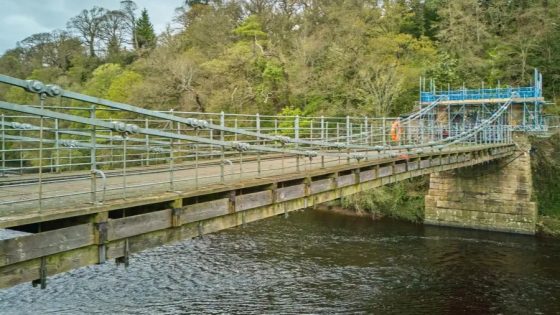
Restoration of a 200-year-old suspension bridge by VolkerLaser is explored in a new Engineers Collective podcast episode, focusing on the structural and materials challenges of upgrading historic ironwork and timber elements to modern loading and durability expectations. The discussion covers techniques such as sympathetic strengthening of hangers and deck connections, corrosion management on original metalwork, and careful staging of works to maintain stability. Engineers gain insight into balancing heritage constraints with current design codes, inspection regimes and long-term maintenance planning for ageing suspension structures.
Engineers have launched the Association for Consultancy and Engineering’s Delivering Infrastructure 2050 manifesto, calling for long-term reform of Welsh transport, energy and water networks ahead of the 7 May Senedd elections. The document presses for a stable 25-year infrastructure pipeline, faster planning and consenting for major schemes, and clearer funding models for projects such as strategic road upgrades and grid reinforcement. For geotechnical and civil practitioners, the proposals signal potential continuity of workload but also tighter scrutiny on whole-life carbon, asset resilience and value-based procurement.
A £56M infrastructure programme by SP Electricity North West has started to replace 47km of overhead power lines along Cumbria’s West Coast, targeting ageing assets on key rural and coastal corridors. Works will involve new poles, conductors and associated foundations, with construction teams needing to manage soft ground, exposed coastal conditions and live-network constraints. For civil and geotechnical contractors, the scheme signals upcoming demand for access track upgrades, temporary works, and foundation design suited to high wind loads and variable ground conditions.
Perenti has secured a further extension to its underground mining services contract with Regis Resources at the Duketon gold operations in Western Australia, reinforcing a long-running contractor–owner relationship on the multi-mine complex. The deal keeps Barminco, Perenti’s underground division, in place for core services such as jumbo development, production drilling, load-and-haul and ground support across Duketon’s underground orebodies. Continuity of a single contractor on a mature site like Duketon typically allows tighter control of unit costs, ground control practices and equipment maintenance strategies.
Ramelius Resources has kept its FY26 production guidance of 260,000–300,000 ounces of gold despite a cyclone, higher diesel prices and operational disruptions affecting its March quarter output. Weather-related access issues and fuel cost inflation have raised unit mining and haulage costs at its Western Australian open pits, pressuring margins and short-term strip ratios. Maintaining guidance signals continued confidence in ore reserve quality and mill performance, but leaves limited buffer for further weather or supply-chain shocks in upcoming quarters.
Bellevue Gold has reported record underlying free cash flow for the March 2026 quarter at its Bellevue operation in Western Australia, driven by higher head grades and stronger mill performance as the project moves through ramp-up. The underground mine, targeting more than 200,000oz per annum at nameplate, is increasing stoping tonnage from the Armand and Deacon lodes while continuing development of new high-grade panels. Management is prioritising accelerated decline advance and ventilation upgrades to support higher ore production rates and sustain the improved grade profile.
Townsville’s Cleveland Bay Purification Plant is being upgraded to supply up to 15 megalitres per day of industrial-grade recycled water to the Sun Metals zinc refinery and the adjacent Lansdown Eco-Industrial Precinct, freeing higher-quality potable supplies for Townsville’s 200,000-plus residents. The $274.2 million project includes new pipelines, storage and treatment assets designed for heavy industrial users, underpinning planned critical minerals processing and battery materials facilities in the city’s south. For engineers, the scheme reduces water security risk for future hydrometallurgical and chemical plants in a region already constrained by variable rainfall.
Regis Resources has added $198 million in cash and bullion in the latest quarter, taking its liquidity buffer to around $1 billion as higher output from its Duketon operations and Tropicana joint venture feeds through to the balance sheet. Management is prioritising debt reduction and disciplined capital allocation over major new acquisitions, while continuing brownfields drilling around Garden Well and Rosemont to extend open-pit and underground mine lives. The stronger balance sheet gives Regis more flexibility to fund cutbacks, waste stripping and potential plant upgrades without stressing project cashflows.
MAX Power Mining has drilled the Bracken Well, completed a high‑resolution 3D seismic survey over the Lawson Discovery and the wider 15‑19 discovery area, and identified a Lawson “look‑a‑like” target 12 km southwest using legacy 2D seismic, materially enlarging its natural hydrogen footprint along Saskatchewan’s 475‑km Genesis Trend. Core desorption tests from Cambrian Basal sands above the Basement Complex hydrogen zone returned helium up to 8.7% (average 4.4%), leveraging historically high helium prices. Backed by a C$20.5 million raise, MAX Power plans a Lawson follow‑up well, Bracken completion and further seismic across Genesis and Grasslands, with Bell Canada’s proposed mega data centre nearby adding potential baseload demand.
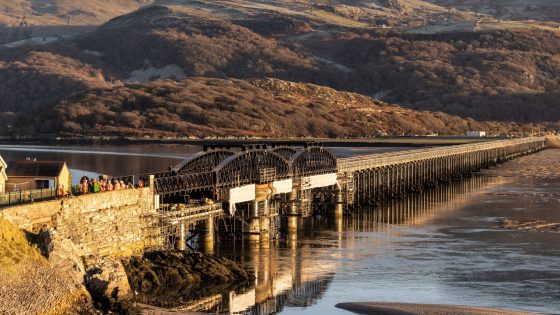
Structural health monitoring (SHM) systems are turning bridges into continuously instrumented assets, using strain gauges, accelerometers and temperature sensors to capture how every vehicle load, thermal cycle and wind gust affects structural behaviour. By tracking modal frequencies, deflections and crack development in real time, SHM can distinguish normal seasonal movement from damage-related anomalies, enabling targeted inspections and load management rather than blanket restrictions. For geotechnical and civil engineers, long-term datasets from SHM are starting to inform more accurate fatigue life predictions, bearing replacement timing and expansion joint detailing.
Anglian Water has launched a £1.6bn infrastructure programme starting this month, centred on large-scale water main replacements, new storm storage tanks and upgrades to existing assets across its eastern England network. The package targets reduced leakage and burst frequency on ageing trunk mains and increased stormwater attenuation capacity to cut combined sewer overflows during intense rainfall. For civil and geotechnical teams, the works imply extensive trenching in urban corridors, complex traffic management, and foundation design for new tanks sized for more frequent extreme storm events.
A new open framework agreement has been launched to deliver up to £15M of construction and refurbishment works for the University of Wales Trinity Saint David Group and Pembrokeshire College in Haverfordwest. The framework is expected to cover multiple campuses and building types, enabling packages such as teaching block upgrades, specialist labs and workshop fit-outs to be let without separate full procurements. Contractors and consultants will be watching for lots that may include structural remodelling, M&E replacement and fabric improvements aligned with current Welsh education estate standards.
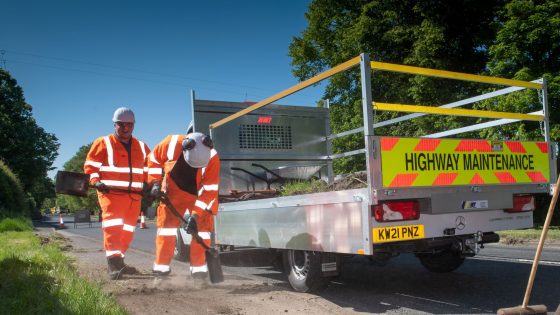
NY Highways has awarded places on a £25M civil engineering framework to deliver road, parking and footpath maintenance and construction across the North Yorkshire highway network. The multi-year arrangement will cover schemes such as carriageway reconstruction, localised pavement repairs, drainage upgrades and minor structures works, providing a pre-procured supply chain for the unitary authority’s routine and planned works. Contractors can expect dispersed, small-to-medium packages rather than single mega-projects, with emphasis on rapid mobilisation, traffic management capability and familiarity with local ground conditions.
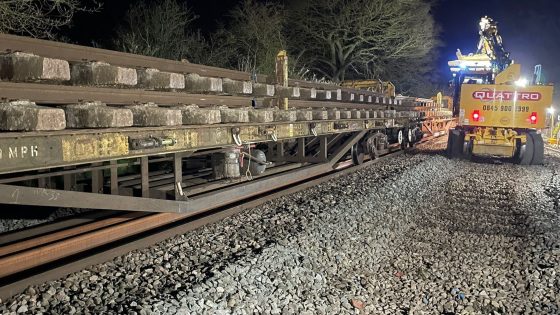
Engineers restored rail services through Somerset after completing Easter bank holiday works at East Somerset Junction, between Westbury and Taunton, several hours ahead of schedule. Teams replaced life-expired rail, sleepers and ballast on this key junction, working within a tight multi-day possession to minimise disruption on the route. The renewal improves track geometry, drainage and bearing capacity at the junction, reducing future maintenance interventions and supporting higher reliability for passenger and freight operations.
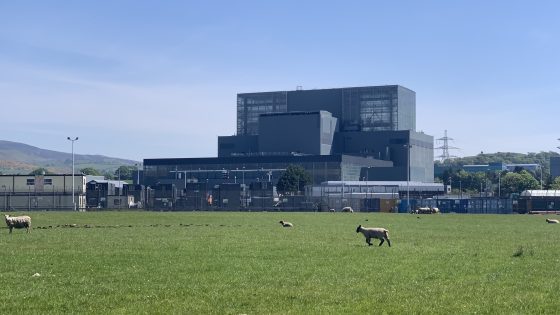
Hunterston B in North Ayrshire has become the first advanced gas-cooled reactor (AGR) nuclear power station to transfer from EDF to direct UK Government ownership as it moves into the full decommissioning phase. The twin-reactor AGR plant, which ceased generation in 2022 after more than four decades of operation, will now be managed through the Nuclear Decommissioning Authority’s framework. For civil and geotechnical contractors, the shift signals upcoming packages for reactor dismantling, large reinforced concrete demolition, waste encapsulation structures and long-term coastal site management.