Geomechanics, Streamlined.
© 2026 Geomechanics.io. All rights reserved.
Volvo Penta is targeting underground mining with diesel engines that now hold over 30% share across key segments such as mine power generation and material handling, despite competition from Deutz, Caterpillar/Perkins, Cummins and MTU. The company is supplying compact, high-torque industrial engines tailored for low-profile loaders, underground trucks and jumbo drill rigs, focusing on fuel efficiency and long service intervals to cut ventilation load and maintenance downtime. For mine operators, the main levers are reduced ventilation power demand, simplified fleet standardisation and support for gradual transition towards hybrid and electric drivetrains.
First Quantum Minerals’ Q1 2026 net loss widened to $196 million as copper output at its Sentinel and Kansanshi mines in Zambia slipped to 45,252 tonnes and 45,345 tonnes respectively on lower grades and recoveries, despite improved throughput. The miner warned that higher fuel and input costs could lift cash costs by about $0.25/lb (circa 11%), even as it leans on in-house smelter capacity to reduce exposure to tight sulphuric acid markets. Full-year copper guidance was raised to 405,000–475,000 tonnes, driven by planned processing of stockpiled ore at Cobre Panamá and rehiring about 1,000 workers ahead of a potential restart.
Gold fell for a third straight session on Wednesday, with spot prices down 1.3% to about $4,510/oz and US futures slipping 1% below $4,600/oz, after breaking technical support around $4,650/oz ahead of the Federal Reserve’s rate decision. The pullback takes bullion back to late‑March levels, when it logged its worst monthly performance since 2008, despite a January peak near $5,600/oz and ongoing inflation pressure from the Middle East conflict and a World Bank‑projected 24% jump in 2026 energy prices. Longer term, Goldman Sachs still targets $5,400/oz by year‑end and Deutsche Bank sees potential for $8,000/oz within five years, supported by rapid central‑bank buying and de‑dollarisation.
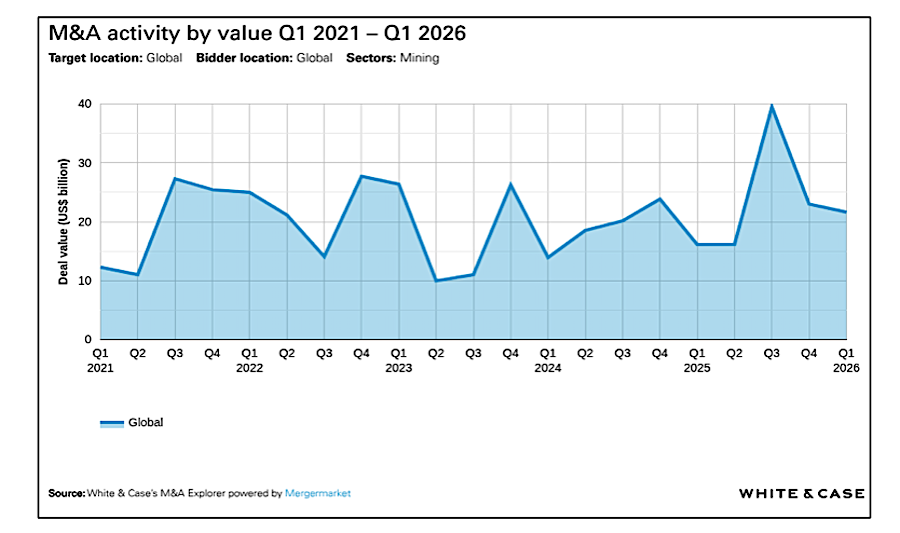
Global mining M&A reached $21.6 billion across 121 deals in Q1 2026, up 34% in value from Q1 2025 and 55% from Q1 2024, as capital pivots to critical minerals and stable jurisdictions despite the collapse of Glencore–Rio Tinto talks. White & Case’s 2026 Mining and Metals Survey reports 32% of respondents see strategic partnerships as the primary deal structure, exemplified by Serra Verde’s $565 million DFC financing and ~$2.8 billion combination with USA Rare Earth to build a mine-to-magnet rare earths chain outside Asia. Gold is flagged as the next consolidation hotspot as prices sit near record highs.
Alphamin Resources reported record quarterly EBITDA of $158 million on tin production of 5,026 tonnes and sales of 5,016 tonnes, and declared a C$0.13-per-share dividend payable on 5 June as net cash increased by $128 million. Output from the Mpama North (c.4.5% tin grade) and Mpama South (c.2% grade) mines in the DRC has lifted annual production to about 20,000 tonnes in 2025 from 12,500 tonnes in 2024. All-in sustaining costs of roughly $17,000 per tonne sit well below the $30,000–$57,000 tin price range, supported by a four-year offtake with Gerald Metals.
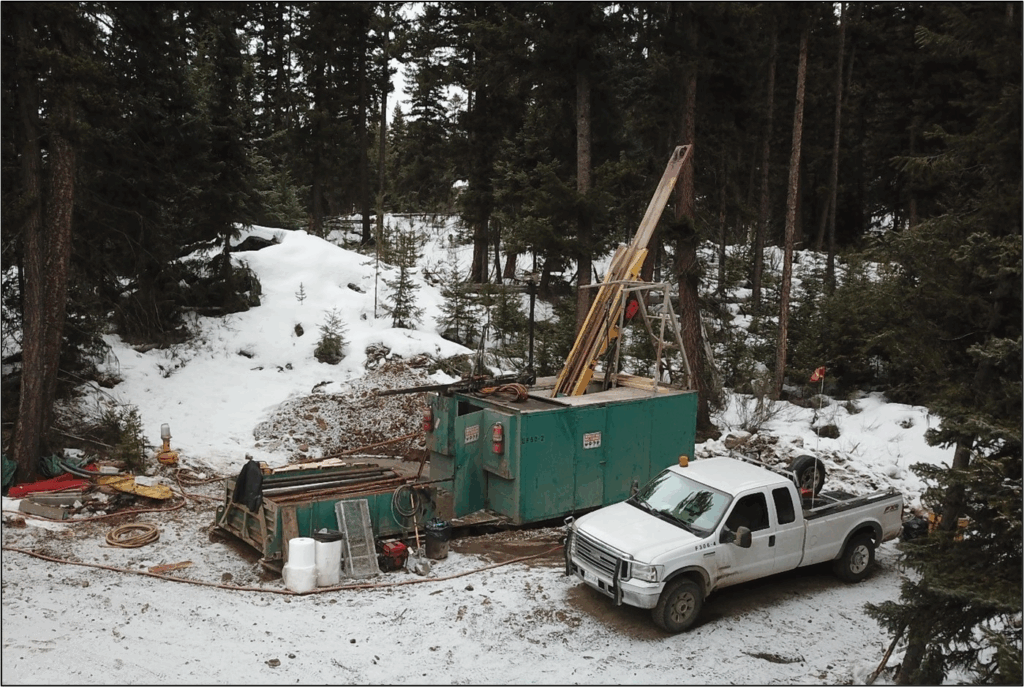
High-grade winter drilling at Trident Resources’ brownfield Contact Lake project in northern Saskatchewan returned a standout intercept of 51.8 metres grading 15.11 g/t gold from 256 metres depth, including 0.5 metres at 1,055 g/t, sending the TSXV-listed company’s shares up more than 19% to C$3.67. A second key hole, CL26032, cut 21.5 metres at 5.07 g/t from 359.5 metres, with assays pending for 15 more holes from the 13,000-metre programme. The former Cameco-operated mine previously produced ~190,000 oz at 6.16 g/t, and no initial resource timeline has yet been given.
Kodiak Copper and Teck Resources are combining their Mohave and Copper Hill Arizona porphyry projects into Kay Copper via a three-cornered amalgamation, each receiving 20 million Kay Copper shares at C$0.25 and ending with 28% ownership apiece of an expected 70.3 million-share vehicle. Kay Copper plans a TSXV listing backed by a C$4 million subscription receipt financing at C$0.25 and a C$830,000 private placement at C$0.10, leaving legacy Kay shareholders with 9% and new investors with 35%. Mohave (17 km², last drilled 2011) and Copper Hill (35 km², three mapped porphyry centres) are both drill-ready with multiple untested geochemical and geophysical targets.
China is tightening operational control over its rare earth sector with a new MIIT draft framework imposing administrative penalties for breaching mining and smelting quotas, including fines of up to five times “illegal gains”, confiscation of products and equipment, and licence revocation for output more than 30% above quota. The rules also target unauthorised separation and unreported product flows, reinforcing Beijing’s push for “total control” over a supply chain that delivers over two-thirds of global rare earth mine output and dominates refining. For non-Chinese miners and downstream manufacturers, the move signals higher geopolitical and price risk around magnet, turbine and electronics raw materials.
Ur-Energy has begun in situ recovery uranium production from Mine Unit 1 at its Shirley Basin project in Wyoming, capturing uranium-bearing solution following completion of wellfield installation, processing circuits and permitting. The project has licensed annual wellfield and toll-processing capacity of up to 2.0 million lb U₃O₈ equivalent, with 9.1 million lb U₃O₈ in Measured and Indicated resources at an average 0.22% eU₃O₈ and an anticipated nine-year mine life across three shallow units. Uranium is loaded onto ion exchange resin on site and is expected to be trucked to the Lost Creek plant for final processing, drying and packaging from this summer, pending a further regulatory inspection.
TerraPower has begun construction of its flagship Natrium plant in Kemmerer, Wyoming, after securing a US Nuclear Regulatory Commission construction permit, building a 345 MW sodium‑cooled fast reactor with an integrated molten‑salt energy storage system capable of boosting output to 500 MW. The project, part of the US Department of Energy’s Advanced Reactor Demonstration Program, will mobilise about 1,600 workers and become Wyoming’s first commercial nuclear generating station. TerraPower has also signed an agreement with Meta for up to eight Natrium plants by 2035, signalling aggressive commercial rollout.
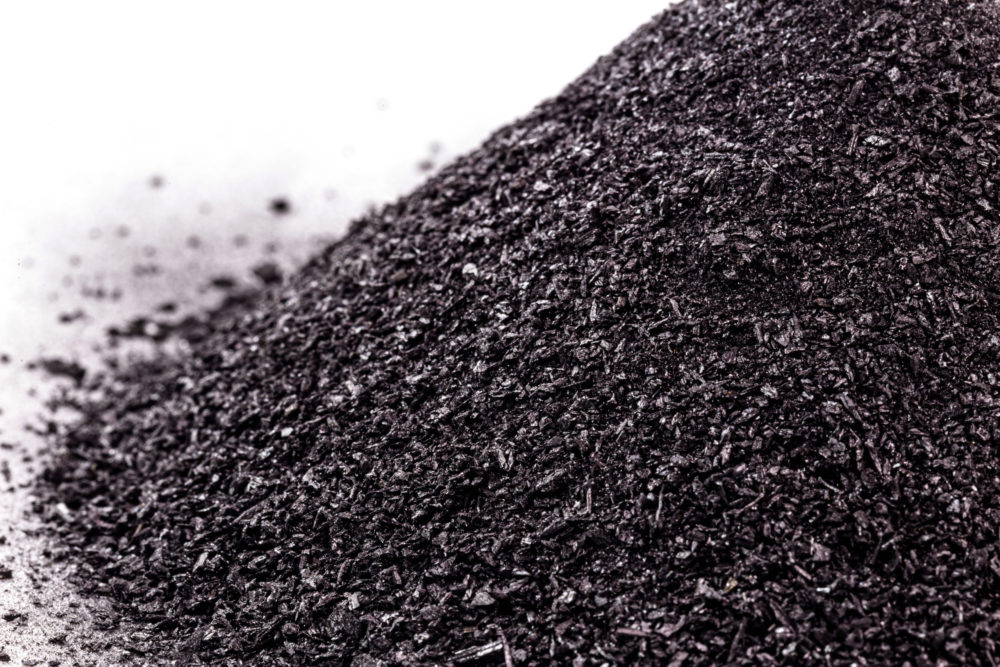
Metals Australia plans a C$2.05 billion high‑purity graphite refinery near Baie‑Comeau, Quebec, designed to process 75,000 tonnes per year of flake graphite concentrate into 51,000 tonnes of battery‑grade products over a 25‑year life, with a projected 25.6% internal rate of return and 227 permanent jobs. Feedstock will come from its Fermont project averaging 10.2% graphite, about 2.4 times higher grade than publicly reported for Nouveau Monde Graphite, and the site leverages rail‑ferry links plus a deep‑water port. The company will bypass a traditional PFS, moving directly to final feasibility while running parallel community and Indigenous engagement to meet Canada’s 2040 graphite mine and refinery targets.
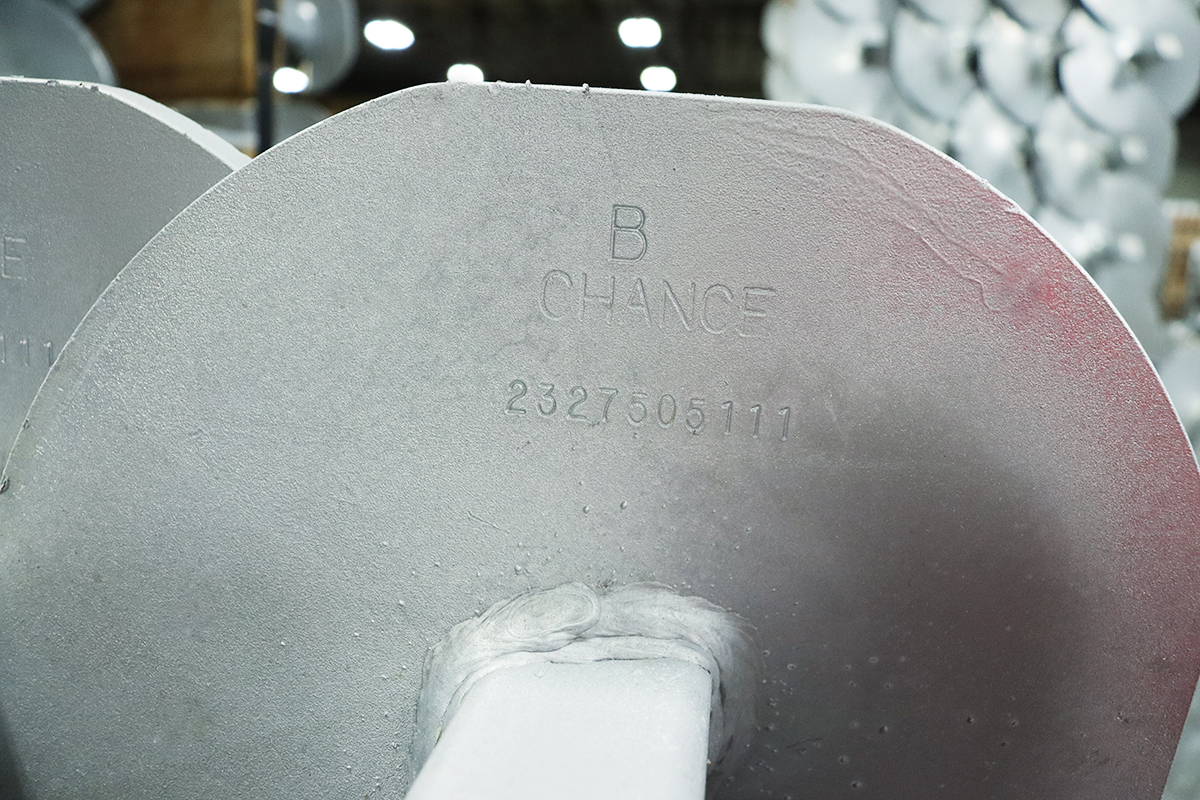
Helical piles are presented as displacement deep foundations that can be installed with small hydraulic drive heads on mini-excavators or skid steers, generating minimal spoil and vibration compared with driven piles. The FAQ addresses load capacity verification via torque correlation (e.g. kN-m per kN of capacity), corrosion protection options such as hot-dip galvanising and increased sacrificial thickness, and suitability in soft clays, fills, and below groundwater. Design is framed around ICC-ES AC358, with emphasis on tension, compression, and lateral performance for underpinning, boardwalks, and utility structures.
Australia’s ARC Training Centre for Integrated Operations for Complex Resources has released four mining technologies that have moved beyond lab validation and are ready for pilot deployment with industry partners. The tools target “next-generation, data-driven mining”, focusing on integrated operations for complex orebodies and real-time decision support across extraction and processing. Partnering companies are being sought to host site trials, with commercialisation pathways now open for each technology.
Ivanhoe Mines has completed construction of the 4 Mt/y Shaft #3 at its Platreef Mine in Limpopo, South Africa, providing a key hoisting and ventilation asset for the ultra-deep, bulk-scale PGM-nickel-copper operation. Ground has also been broken for the Phase 2 concentrator, which will expand processing capacity beyond the initial 770,000 t/y plant now under construction. Widening of Shaft #2 has commenced to increase hoisting capacity and improve access for large-scale underground mining equipment.
Hexagon’s Mining division is expanding its 2021 “Power of One” life-of-mine platform into an “Ore to Value” vision that links fleet management, drill and blast, mine planning and plant control through a single data environment. The approach centres on material flow intelligence, using connected sensors, infield apps and cloud-based analytics to track ore parcels from block model to mill and final product in near real time. For engineers, this promises tighter reconciliation, more accurate ore routing and faster feedback loops between geology, operations and processing.
Carbon Direct and Arca have formed a partnership to commercialise Arca’s “first-of-its-kind” Industrial Mineralisation (IMin) carbon dioxide removal credits, based on accelerated carbon mineralisation in mine waste. The field-scale system is designed to react CO₂ with magnesium- and calcium-rich tailings to form stable carbonates in situ, turning legacy and ongoing waste streams into long-term carbon sinks. For mine operators, this creates a potential revenue stream from CDR credits while incentivising geochemical characterisation and engineered placement of reactive waste materials.
Federal and Western Australian governments are committing $1.1 billion to new road links serving the proposed Westport container terminal and redeveloped bulk terminal at Kwinana, targeting freight access across the Western Trade Coast. The package includes a $700 million Kwinana Freeway upgrade, with Expressions of Interest already open for major works. For civil and geotechnical teams, the scale signals substantial pavement design, interchange reconfiguration and ground improvement tasks on heavily trafficked freight corridors and coastal reclaimed land.
Retrofit of Grove House in Hammersmith has been approved by the Planning Inspectorate, allowing the 6,500m² 1949 office block by Sir John Burnet Tait & Partners to be converted into a 171-room hotel. Legendre UK will lead delivery with GRID Architects, FRAME Structural Engineers, Affinity Fire Engineering, RBA Acoustics and Tetra Tech, integrating a 131-seat auditorium plus retail, office, leisure and arts spaces. The scheme retains the existing structure, aligning with a “retrofit-first” strategy to cut embodied carbon while reusing vacant office stock in an inner-city setting.
Muse has appointed Graham for pre-construction services on the Holbeche Place redevelopment in Solihull, covering plot one’s design and build of 346 build-to-rent homes in four residential blocks with ground-floor commercial and amenity space. The scheme sits on a constrained town centre site requiring demolition of an existing multi-storey car park and tight coordination with surrounding roads, neighbouring properties and live retail frontages. Demolition and enabling works are scheduled to begin in summer 2026, setting the programme framework for subsequent phases of the wider masterplan.
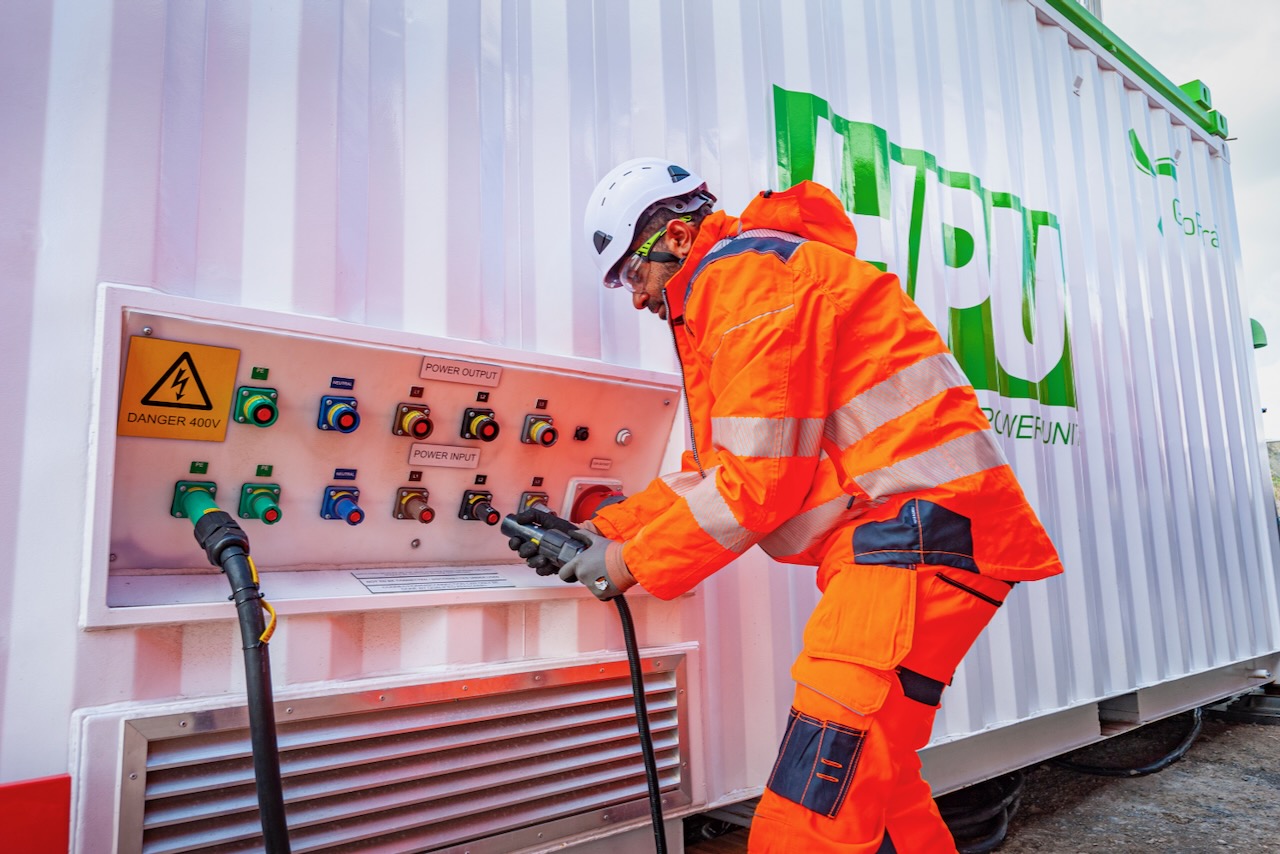
Sunbelt Rentals will offer GeoPura green hydrogen power units (HPUs) for hire across the UK as drop-in replacements for diesel generators on temporary and off-grid sites. Each HPU uses a hydrogen fuel cell to charge an integrated battery, delivering continuous, silent, zero-emission electrical power with only water and heat as by-products, and can run standalone or in parallel with grid and on-site renewables. GeoPura supplies certified low-carbon hydrogen from UK production sites via a managed logistics network, targeting contractors seeking practical low-carbon site power.
Ryden has appointed former CBRE and Turner & Townsend director Roddy Morrison as a partner, as its building consultancy and project management arm grows to around 30% of the Scottish commercial property consultancy’s business. The expansion follows a partnership with Lambert Smith Hampton that added three partners in 2025 – James Paterson, Fraser Ross and Paul Lafferty – and underpins work on projects such as Kadans Science Partner’s Health Innovation Hub and the Lucent redevelopment at 50 Bothwell Street in Glasgow. Ryden is targeting further commissions in infrastructure, utilities and renewables, supported by in-house design and cost consultancy.
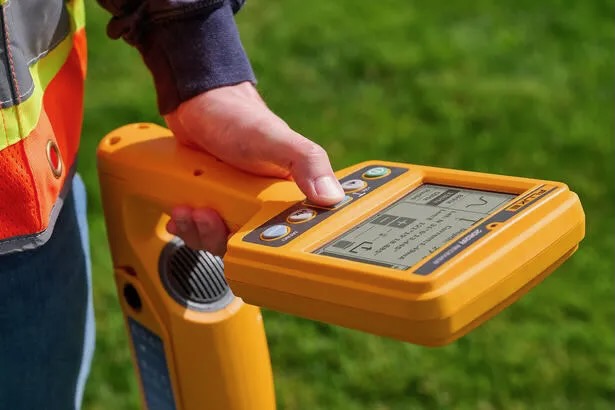
Fluke has launched the SmartTrace 2082 Series underground locator, which injects signals to trace metallic cables and pipelines down to 6 m depth while identifying ground faults, sheath faults and coating defects where conductors contact earth. The locator connects via Bluetooth to Fluke’s PointMan app, enabling real-time geolocation, mapping and documentation of buried utilities directly on a smartphone for future works planning. Fluke cites around 60,000 utility strikes per year in UK excavations, positioning SmartTrace as a tool to cut strike risk and improve pre-dig surveys.
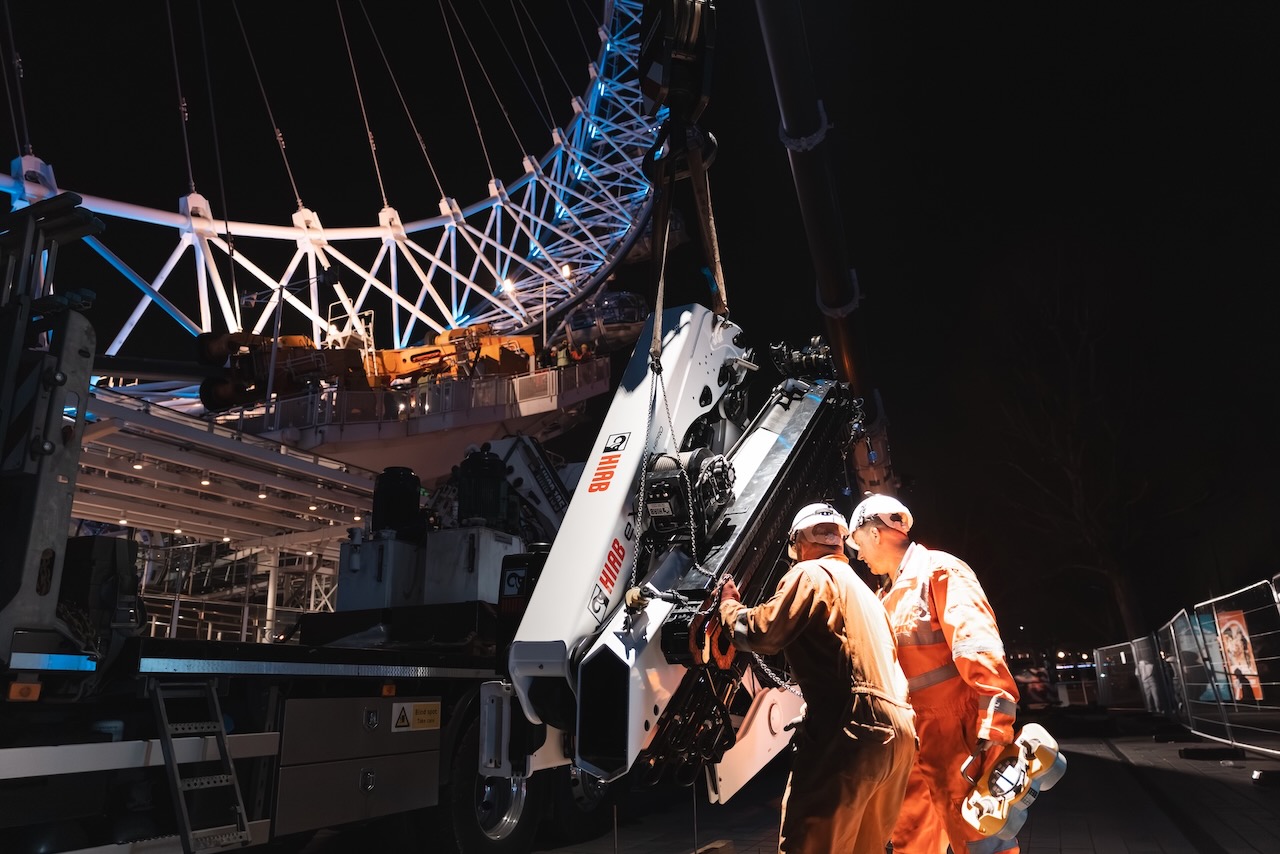
Hiab has installed two eX.232 HiPro E-5 knuckleboom cranes on pedestals on the north side of the London Eye, replacing the original 2000 units during five consecutive nights of work while the wheel stayed in operation. The year-long planned project, delivered with Nick Sampson Mechanical Engineering Services and a Liebherr mobile crane, required threading the mobile crane through the wheel’s spokes within very tight clearances while the structure was slowly rotated. Each crane is EN 280-compliant with MEWP personnel baskets, a 2‑tonne hoist, SPACEevo electro-hydraulic control with Olsbergs V200 valve, and an interlock that blocks wheel rotation unless the cranes are fully stowed.
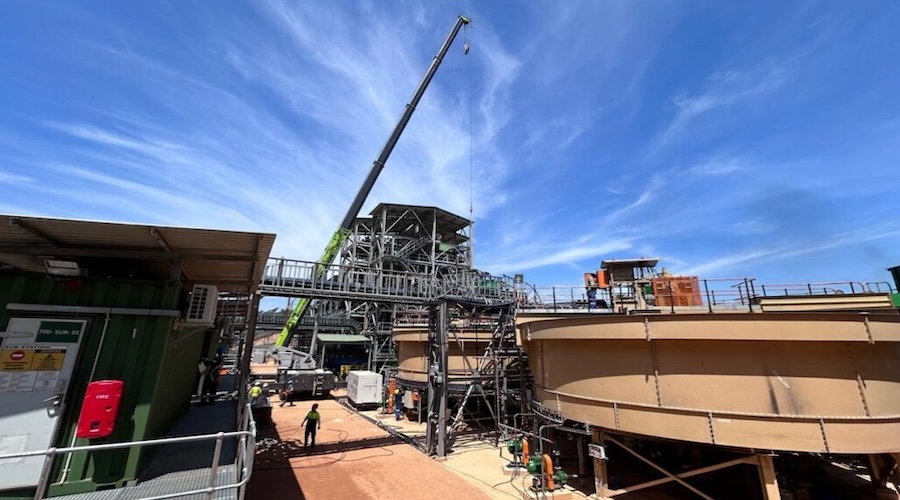
Ball mill procurement has kicked off Liontown Resources’ expansion of the Kathleen Valley lithium operation in Western Australia, with early works focused on securing long‑lead grinding equipment to lift plant throughput beyond the current nameplate. The project centres on adding a larger secondary ball mill to the existing crushing–HPGR–ball milling circuit to debottleneck comminution and support higher spodumene concentrate output. For geotechnical and civil teams, the expansion will require new mill foundations, dynamic load assessments, and potential upgrades to power, water and tailings infrastructure.