SuDS in flood risk reduction: design and planning shifts for UK project teams
Reviewed by Tom Sullivan
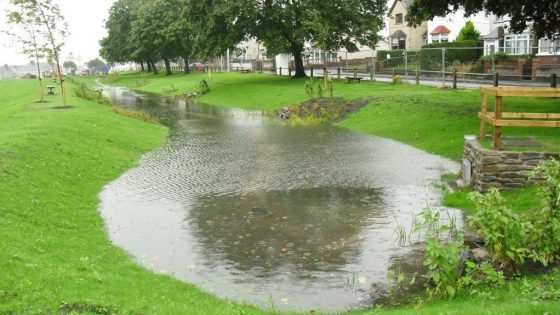
First reported on New Civil Engineer
30 Second Briefing
Updated planning guidance on flood risk and coastal change in England is tightening expectations on sustainable drainage systems (SuDS) for new developments, with ADS UK manager Stuart Crisp outlining how designers must now evidence runoff control, exceedance routing and long-term maintenance. The guidance pushes wider use of components such as attenuation tanks, permeable pavements and swales to limit post-development discharge to greenfield rates and manage surface water on site. For geotechnical and civil teams, this means earlier integration of SuDS into masterplanning, closer coordination with ground investigation, and more rigorous adoption of CIRIA SuDS Manual principles.
Technical Brief
- Updated guidance sits under England’s National Planning Policy Framework flood risk and coastal change provisions.
- It reinforces existing non-statutory SuDS standards used by lead local flood authorities for planning responses.
- ADS’ Stuart Crisp stresses SuDS must be treated as primary flood risk infrastructure, not an add-on.
- Guidance pushes explicit linkage between surface water management and site-specific flood risk assessments and hydraulic modelling.
- Local planning authorities are directed to scrutinise SuDS adoption, vesting and commuted sum arrangements much more closely.
- Safety emphasis extends to managing pluvial flood pathways to protect building access/egress during extreme events.
- There is stronger expectation that SuDS performance is robust under climate change uplift scenarios in design rainfall.
Our Take
Within the 279 Infrastructure stories in our database, the United Kingdom features heavily on drainage and flood resilience, suggesting SuDS is moving from guidance into mainstream design criteria for local authorities and major developers.
Advanced Drainage Systems (ADS) showing up in a UK-focused SuDS piece signals that proprietary systems suppliers are positioning themselves not just as product vendors but as technical partners in meeting statutory flood-risk and water-quality obligations.
With this article tagged to both Sustainability and Safety, it aligns with other safety-tagged infrastructure coverage where risk reduction (like the Western Australian Government’s road-safety funding) is increasingly framed as a lifecycle performance issue rather than a construction-phase add-on.
Prepared by collating external sources, AI-assisted tools, and Geomechanics.io’s proprietary mining database, then reviewed for technical accuracy & edited by our geotechnical team.
Related Articles


Related Industries & Products
Construction
Quality control software for construction companies with material testing, batch tracking, and compliance management.
Mining
Geotechnical software solutions for mining operations including CMRR analysis, hydrogeological testing, and data management.
QCDB-io
Comprehensive quality control database for manufacturing, tunnelling, and civil construction with UCS testing, PSD analysis, and grout mix design management.