Geomechanics, Streamlined.
© 2026 Geomechanics.io. All rights reserved.
Kent County Council has awarded Ringway a 21‑year Highways Term Maintenance Contract worth about £50m per year to manage the county’s road network. Scope covers carriageway and footway repairs, 24/7 emergency response, winter gritting operations, drainage maintenance, and inspection and upkeep of highway structures including bridges. Ringway will replace Amey, which has delivered highways services for the past 12 years, including support to major infrastructure schemes and deployment of new maintenance technologies.
Rocscience has added a Python-based scripting engine to its RS3 3D finite element software, allowing users to automate model creation, staged construction sequences, and parametric studies that previously required manual input. Engineers can now script geometry generation, material assignment, mesh refinement, and batch analyses, then extract results programmatically for hundreds of scenarios, cutting repetitive setup and post-processing time. The update targets large, complex models such as multi-stage excavations and tunnel–shaft systems where consistent workflows and rapid sensitivity checks are critical.
Carmeuse is deploying Caterpillar’s MineStar Command for hauling across its fleet of Cat 777 rigid dump trucks at the Drummond Island limestone quarry in Michigan, with implementation delivered by Caterpillar and dealer Fabick Cat. The retrofit autonomous haulage system will convert the existing 777 fleet rather than replace it, signalling growing OEM support for autonomy on mid-size quarry trucks rather than only ultra-class units. For geotechnical and quarry planners, this raises the bar on traffic management design, berm standards and interaction rules for mixed autonomous–manual operations.
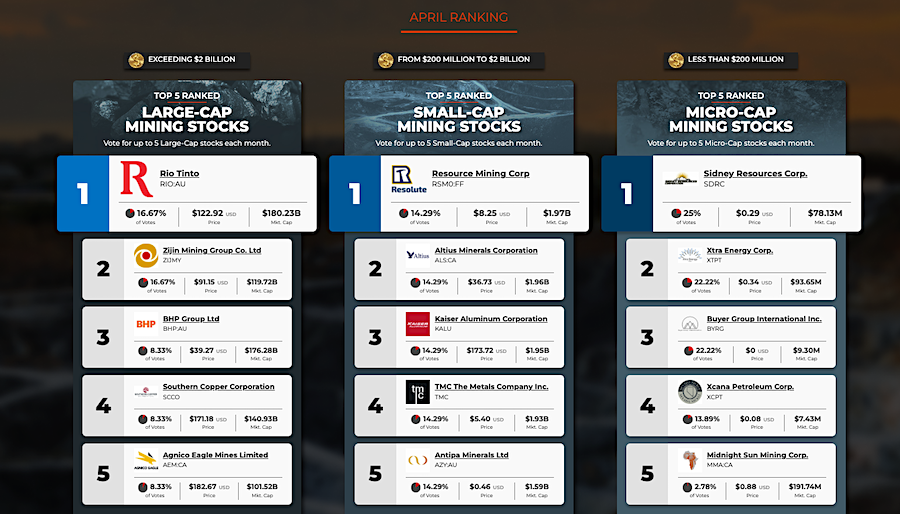
Rio Tinto topped April’s Global Mining Power Rankings large-cap category as Q1 copper output rose 9% on the underground ramp-up at Oyu Tolgoi, while Zijin Mining’s net profit jumped about 97.5% and it set a 2026–2028 dividend payout floor of 35% of earnings. Resource Minerals International led small caps with early-stage copper–molybdenum–gold targets across Tanzania, Saudi Arabia and Finland, as Altius Minerals projected Q1 royalty revenue of roughly $26.4 million versus $15 million a year earlier. Micro-cap winner Sidney Resources surged about 55% after survey work defined a district-scale hydrothermal system at its Idaho Warren District project, while The Metals Company advanced its Clarion–Clipperton Zone nodules project with a NOAA ruling that its deep-seabed mining application is fully compliant.
Wyloo Metals has hired Bank of America to sell its 60% stake in the Yangibana rare earths project in Western Australia, with non-binding bids due by the end of May, marking Andrew Forrest’s retreat from a sector he previously backed heavily. Yangibana, located over 1,000 km north of Perth, has a 17-year mine plan with an average 37% NdPr ratio, locally up to 52%, and is designed to produce about 3,400 tonnes per year of NdPr for permanent magnets. Around A$200 million has already been invested in site infrastructure, with a further A$300 million required, and potential buyers are expected to include Japanese and South Korean strategic investors, likely contingent on Australian government support.
Gold fell as much as 1.8% on Monday to just above $4,500/oz, extending a 13% slide since the start of the Middle East war as stalled US‑Iran talks and tensions around the Strait of Hormuz keep energy prices and inflation worries elevated. US gold futures traded near $4,600/oz, with markets now watching US Treasury borrowing plans, multiple Federal Reserve speeches and a dense data calendar for clearer signals on the timing of rate cuts. Despite near‑term pressure, central banks are buying at their fastest pace in over a year, with Deutsche Bank projecting up to $8,000/oz within five years.
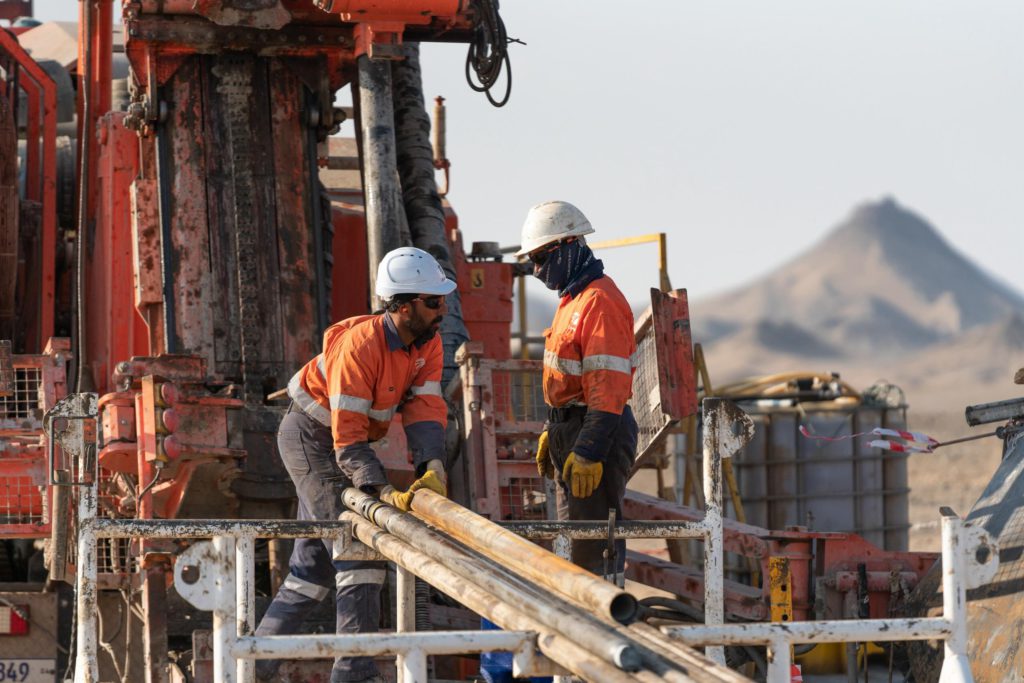
Drilling at Awalé Resources’ Odienné copper-gold project in northwest Côte d’Ivoire has defined a new near-surface gold zone at the Fremen target, with aircore hole SSAC-08 returning 17 metres at 1.9 g/t gold from 6 metres (including 9 metres at 2.3 g/t), and SSAC-07 cutting 12 metres at 2.1 g/t from 32 metres. Assays confirm mineralisation over a 1 km zone within an 8 km corridor on the Sienso permit, from a 5,210-metre, 126-hole stage-three programme. Backed by Newmont (8.9% interest, JV on adjacent targets) and Fortuna (15%), Awalé plans an initial resource in Q2, PEA in Q3 and pre-feasibility by late 2027.
Militant attacks in Pakistan’s Balochistan province, including a 31 January raid by about 500 Baloch Liberation Army fighters that killed nearly three dozen people and cut road access to Reko Diq, are forcing Barrick Mining to slow development of its $9 billion copper-gold project towards mid-2027. The two-stage mine is designed to produce 200,000 tonnes of copper concentrate and 250,000 oz. of gold annually in a $5.5 billion first phase, doubling output in a $3.5 billion second phase, from 1.5 billion tonnes of reserves grading 0.48% Cu and 0.28 g/t Au. Security instability now threatens both the project’s projected $74 billion in free cash flow over 37 years and a $1.3 billion US-Pakistan investment pact aimed at countering Chinese-backed infrastructure in Balochistan.
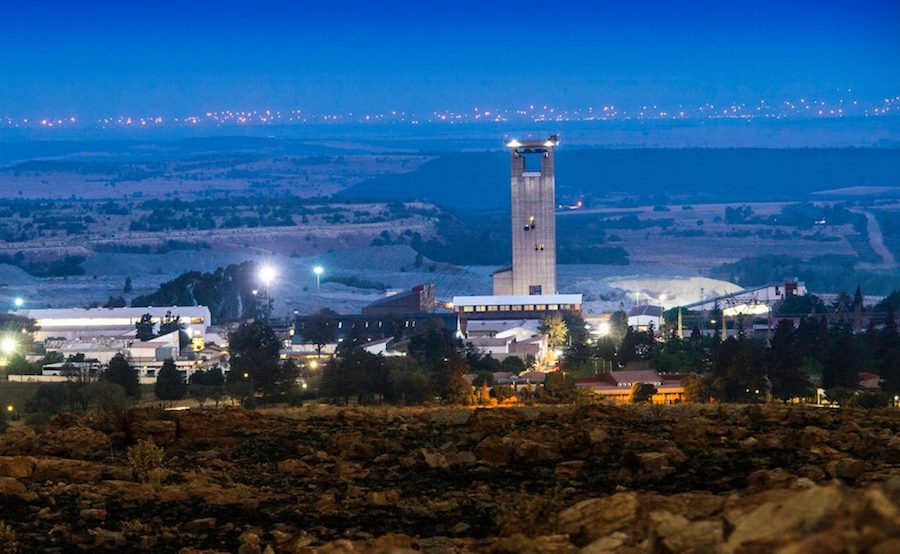
Two Sibanye-Stillwater employees were killed at the ultra-deep Kloof gold mine near Glenharvie when a platform used for routine inspection of the Kloof 8 shaft detached from the main winder conveyance and fell uncontrollably down the shaft. Shaft infrastructure reportedly remains intact, but Kloof 8 operations are suspended while a full investigation proceeds with the Department of Mineral and Petroleum Resources and organised labour notified. The incident follows fatal events in 2018 and 2021 and a 2023 entrapment of 289 workers, with Kloof contributing about 14% of Sibanye’s gold output and shares dropping over 2% to a US$8.3 billion valuation.
CIM has appointed Lucy Potter, currently general manager of technical and sustainability at Rio Tinto’s Iron & Titanium and Diamonds division, as president-elect for the 2028–29 term, following John Rhind (2026–27) and Randy Smallwood (2027–28). With more than 25 years’ experience across exploration, mineral resource stewardship, operations and technical governance at Rio Tinto and Glencore, Potter has previously served as global head of geology and mineral resources. Her mandate will centre on technical assurance, enterprise risk and sustainable production, with a strong emphasis on value-chain-wide knowledge sharing.
China’s sudden halt of sulfuric acid exports, after shipping 4.65 million tonnes in 2025 (about 40% from metal smelters), has doubled delivered acid prices to Chile since February and is squeezing heap-leach copper operations in Chile, the DRC and Zambia. Randy Allen argues that for each tonne of copper from sulfide concentrates, 3–3.5 tonnes of sulfuric acid can be generated and monetised, alongside co-products such as ferrous sulfate and iron oxides. He points to pressure oxidation and electrochemical reductive leaching as non-combustion routes to capture copper and fully valorise sulfur, cutting SO₂ emissions and acid mine drainage risks.
LG&E and Kentucky Utilities, subsidiaries of PPL Corporation, are partnering with X-energy to assess deployment of the Xe-100 small modular reactor (SMR) in Kentucky to supply baseload power for large loads such as data centres and maintain long-term grid reliability. Early feasibility work will tap the state’s new $75 million Nuclear Reactor Site Readiness Pilot Program, which can fund up to three nuclear site studies at $25 million each for permitting and licensing. The initiative signals potential future nuclear-backed power for energy-intensive industrial and mining operations in the region.
SSH Group Ltd has signed a binding agreement to acquire Elphinstone Mechanical Services (EMS), a long-established mechanical services provider to major mining operations, in a deal it expects to be immediately earnings and margin accretive. The move expands SSH’s national footprint and strengthens its ability to deliver integrated mining services under its existing operating model, particularly for large-scale mobile and fixed plant maintenance. For mine operators, the combined business signals broader single-contractor options for mechanical support, shutdowns and on-site service coverage across multiple regions.
SpectraFlow Analytics has secured an order from Conglin Group for a SpectraFlow Crossbelt Analyser at an iron ore operation in Xinjiang, Western China, extending its installed base beyond existing systems in Brazil and other major iron ore regions. The online analyser, mounted directly over the conveyor, provides continuous, real-time ore quality measurements, enabling tighter control of grade variability before the plant. For process and mine engineers, this supports more stable feed to crushers and mills, improved blending strategies and reduced reliance on periodic belt or stockpile sampling.
China’s Xiangtan Electric Manufacturing Corporation (XEMC) is reporting sustained demand for its ultra-class, fully battery-electric rigid mining trucks, positioning them alongside early deployments such as Caterpillar’s 793 XE “Early Learner” units in the US and Australia and Hitachi’s EH4000 battery trolley fleet at FQM’s Kansanshi mine. XEMC’s trucks target the >220 t payload class traditionally dominated by diesel and diesel–electric haulage. For mine planners and geotechnical teams, large-scale adoption of such full-battery fleets will drive changes in pit ventilation design, ramp power distribution, and haul road geometry around charging or swap stations.
Engineered transfer points are becoming central to plant performance as mines push higher throughput, with Weba Chute Systems’ Technical Director Dewald Tintinger warning that poorly designed chutes can disproportionately constrain material flow and equipment life. Misaligned or under-designed chutes accelerate liner wear, increase blockages and spillage, and drive up dust emissions, directly affecting conveyor availability and downstream crushers and screens. Better-controlled flow paths and impact angles at transfer points are now being used as a primary lever for debottlenecking existing plants without major capital upgrades.
Load and haul attachment specialist Schlam is expanding its global operating model by adding a wider range of mining buckets, new high-quality ground engaging tools (GET) and installation kits for truck bodies and buckets. The move consolidates all product categories – including truck trays, buckets and GET – under a strengthened global leadership team focused on international market development. For mine operators, the broader portfolio and standardised installation kits signal more options for matching tray and bucket designs to specific loading tools and material conditions.
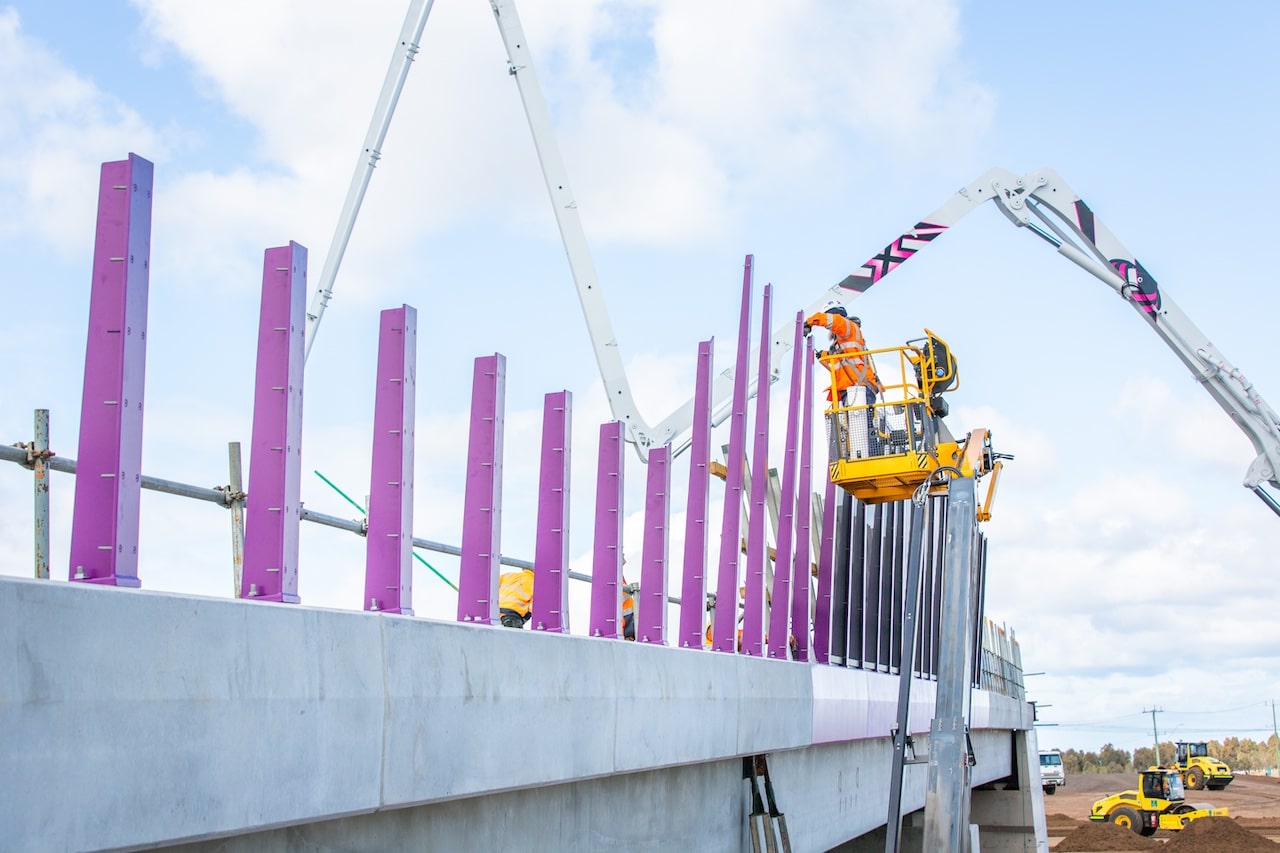
The Federal Government has allocated $48 million for safety upgrades at 60 high‑risk locations across Victoria under the 2026–27 Black Spot Program. Works will include new signalised intersections, roundabouts, safety barriers and pedestrian crossings targeted at sites with multiple serious crashes or clear crash risk. Designers and contractors can expect a focus on low‑cost, high‑impact treatments on existing carriageways, with priority given to proven crash‑reduction measures rather than major capacity expansions.
Queensland’s Department of Transport and Main Roads is fast‑tracking intersection upgrades on the Sunshine Coast, with site investigations now underway at Caloundra Road and Bellvista Road in Little Mountain to define geometry, pavement condition and underground services for a future signalised layout. The works form part of broader congestion‑reduction measures on key Bruce Highway access routes, targeting peak‑hour queuing and turning conflicts at suburban junctions. Geotechnical findings from the Caloundra investigations will drive pavement reconstruction depth, drainage design and any required ground improvement in the coastal sand profile.
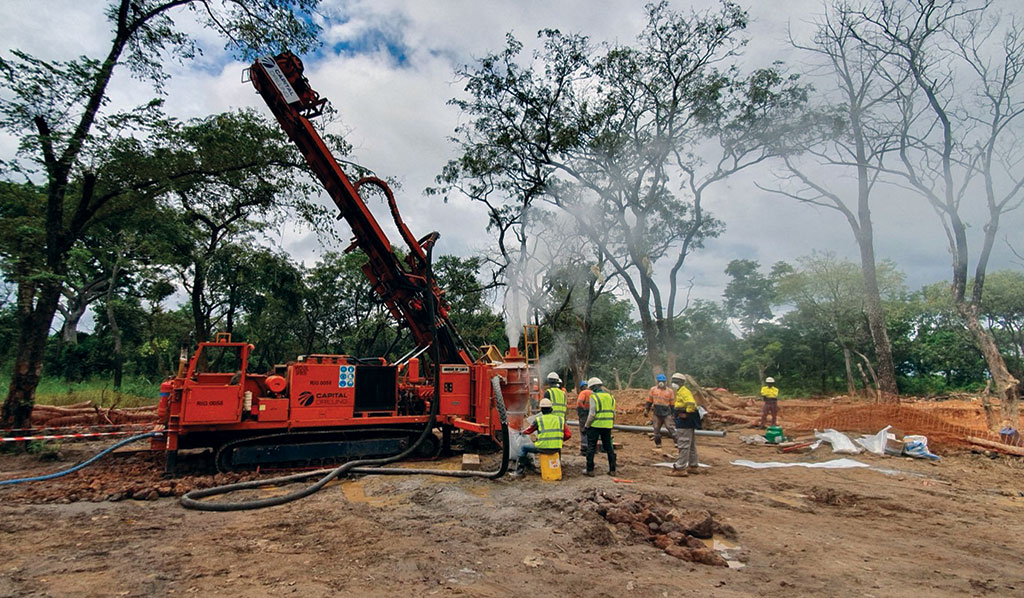
Fortescue-backed Magmatic Resources has reported high-grade copper and gold from 16 reverse circulation and diamond drill holes at its Myall joint venture in New South Wales, with multiple thick sulphide zones intersected near surface. The programme targeted extensions to previously defined porphyry-style mineralisation, with several holes stepping out along strike and down-dip from the Corvette and Kingswood prospects. Results will guide follow-up drilling to refine the geometry and continuity of the copper–gold system ahead of resource definition and potential metallurgical testwork.
Victory Metals has advanced its pre-feasibility study for the North Stanmore heavy rare earths project near Cue in Western Australia, while cutting costs by re‑scoping mine scheduling and processing options. The company is focusing on clay-hosted mineralisation with elevated dysprosium and terbium, and is assessing low-strip, free-dig mining with on-site beneficiation to produce a mixed rare earth carbonate. For geotechnical and mining teams, the shift towards shallow, soft-material extraction and simplified processing flowsheet points to lower capital intensity but places more emphasis on clay behaviour, dewatering and tailings management.
29Metals is reshaping the mine plan at its Golden Grove copper–zinc operation in Western Australia to prioritise long-term ore reserve recovery over rapid production ramp-up, after recent geotechnical and operational challenges. The company is focusing on higher-confidence stopes, deferring some deeper, more complex underground areas, and moderating near-term copper output guidance while maintaining zinc and precious metals by-product streams. For geotechnical and planning teams, the shift signals tighter stope sequencing, revised ground support strategies and more conservative assumptions on dilution and orebody continuity.
Meeka Metals is accelerating development at its Murchison gold project in Western Australia, shifting focus from open pit to higher-grade underground ore at the Turnberry and St Anne’s deposits. The company is advancing mine design and scheduling for underground stoping, targeting narrower, higher-grade lodes that support lower unit costs and longer mine life compared with the current open-pit plan. For geotechnical and mining teams, the move signals upcoming demand for detailed underground geotechnical models, ground support design, and ventilation and dewatering studies in Archaean greenstone host rocks.
Quarterly production at Australian Strategic Materials’ Dubbo rare earths and critical minerals project rose sharply in the March quarter, driven by higher-grade feed and improved plant availability at its pilot-scale metallisation and separation circuits. The company advanced engineering for its integrated zirconium, niobium, hafnium and rare earth oxide flowsheet, including optimisation of hydrometallurgical leach conditions and downstream solvent extraction stages. Across the sector, several Australian rare earths and battery metals developers reported step-outs from infill drilling and updated resource models, signalling continued momentum in project de-risking and feasibility work.