Geomechanics, Streamlined.
© 2026 Geomechanics.io. All rights reserved.
Global uranium production is mapped in a new cost spectrum that ranks U3O8 output by cash cost per pound across major producers in Africa, Australia, Canada, and Russia/Central Asia, showing that lowest-cost supply does not always coincide with traditionally “top-tier” jurisdictions. The interactive tool lets users click individual countries to see what is included in reported costs, such as mining, milling, royalties, and sustaining capital. For project evaluators and planners, it offers a quick benchmark for comparing operating cost positions against current and forecast uranium prices.
Royal Canadian Mint will begin publishing country-of-origin data by material type, including flags for mixed feed, after a New York Times probe linked about 5% of its 2024 raw gold to a Texas supplier blending US and Colombian metal from Antioquia, a region tied to the Clan del Golfo cartel. Refining of all material from that supply chain has been suspended, despite the supplier holding a valid audit naming Colombia as a source. The Mint, a London Bullion Market Association Good Delivery refiner using Bullion Genesis traceability software, had previously classified the material as “North American”, exposing gaps in current KYC and risk-based supplier reassessment cycles.
A new green hydrogen production hub at the Port of Tilbury is already fuelling construction equipment on National Highways’ Lower Thames Crossing, providing on-site low‑carbon power for major civils. JCB, GeoPura and Toyota demonstrated hydrogen-powered plant and supply-chain solutions at the port, signalling a shift from diesel generators towards electrolyser-based, containerised power units. For geotechnical and civil contractors, the project offers a live testbed for hydrogen logistics, refuelling regimes and emissions reduction on large linear infrastructure works.
Sandvik has appointed Patrick Murphy as President of its Mining business area and member of Sandvik Group Executive Management, effective 1 July 2026, succeeding Mats Eriksson, who will step down ahead of his planned 2027 retirement. Murphy currently leads Sandvik’s Rotary Drilling division, giving him direct oversight of blasthole and production drilling systems that are central to large open-pit operations. The leadership change signals continuity in Sandvik’s mining equipment strategy, particularly around drill fleet technology and service models for high-production sites.
Major UK construction and engineering firms have reshaped their senior teams at the start of the 2026/27 financial year, with multiple high‑level appointments announced across civil infrastructure and building. New leaders are expected to influence bidding and delivery strategies on large programmes, including complex highways, rail and water frameworks where NEC4 contracts, alliancing models and digital design–for–manufacture approaches are now standard. Contractors and consultants will be watching how these appointments affect risk appetite, supply chain engagement and the balance between self‑delivery and specialist subcontracting on major projects.
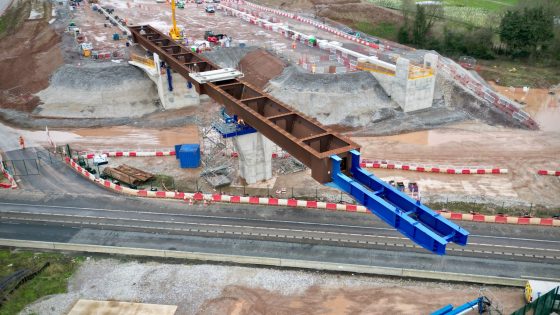
Balancing major infrastructure delivery with statutory nature recovery duties, Natural England’s chair and strategic director call for schemes to integrate biodiversity net gain and landscape-scale habitat restoration from the outset of design. They point to large transport corridors and housing allocations as opportunities to hard‑wire green infrastructure, floodplain reconnection and species-rich buffer zones into earthworks, drainage and bridge layouts rather than bolt them on at planning. For civil and geotechnical teams, this signals earlier engagement on soils, hydrology and long-term habitat management within standard design and cost models.
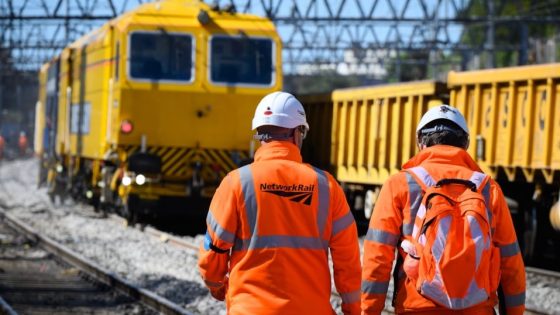
Network Rail is delivering £140.5M of works over the two May bank holiday weekends, concentrating disruptive possessions into short blockades to limit weekday impact. The programme is expected to include track renewals, signalling upgrades and structural interventions such as bridge and tunnel maintenance across multiple main lines, with heavy plant and engineering trains working around the clock. Contractors will need tight logistics for materials delivery, access planning and possession management, with geotechnical and structural inspections compressed into limited access windows.
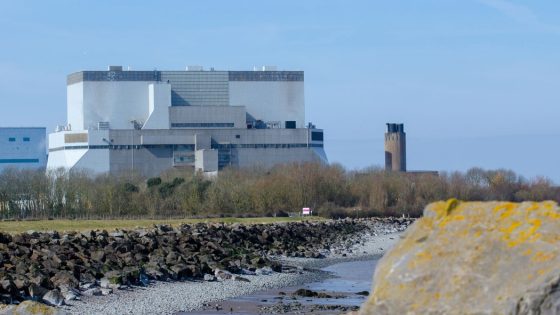
Guidance for nuclear site licensing has been updated by the Office for Nuclear Regulation for the first time since 2021, placing stronger emphasis on early, structured engagement between developers and the regulator. The refresh aligns licensing expectations with recent UK government policy on new nuclear, including large gigawatt-scale stations and small modular reactors. For civil and geotechnical teams, earlier ONR input at concept and site selection stages is likely to affect ground investigation strategies, safety case development and programme risk.
Rock & Alluvium, part of Van Elle, has installed its deepest continuous flight auger piles to date, reaching 40m, for the Bow Green development in East London. The record-depth CFA piles indicate challenging ground conditions and high load or settlement performance requirements typical of dense urban sites near the Thames. Contractors and designers may need to consider comparable pile lengths, rig capabilities and spoil management strategies for future high-rise or mixed-use schemes in similar London alluvial and made-ground profiles.
Professor Tony Ridley, who has died aged 92, was the driving force behind the Tyne and Wear Metro, one of the UK’s first modern light rail systems integrating former heavy rail corridors with new underground sections beneath Newcastle. As a past president of the Institution of Civil Engineers and a leading figure in urban transport planning, he helped set design and operational benchmarks for segregated metro alignments, interchanges and electrified suburban networks that still influence UK and international practice.
Public Accounts Committee members have challenged the Department for Transport over delivery timelines for Northern Powerhouse Rail, warning the scheme is “not something happening tomorrow” despite repeated government commitments. MPs pressed officials on when detailed route designs, safeguarding of key corridors and updated cost estimates will be published for core links such as Liverpool–Manchester and Manchester–Leeds. The scrutiny raises uncertainty for rail engineers and local authorities needing to plan station upgrades, junction remodelling and associated land acquisition along the proposed high‑speed corridors.
A new online marketplace from Expedition Engineering and Format Engineers has been launched to match surplus structural steel with bridge projects, targeting higher reuse rates in primary members such as plate girders and box sections. By cataloguing reclaimed beams with verified material certificates and dimensional data, the platform aims to let designers check section properties and Eurocode compliance before specifying reused steel. The move could cut embodied carbon in bridge decks and superstructures and push more schemes towards steel-intensive circular design.
Optimising cemented paste backfill with admixture technology, Teresa Bellver-Baca and Ignacio Aguilar-Sánchez of Sika report that water-reducing and viscosity-modifying agents can cut yield stress while increasing solids content, improving pumpability over long underground pipelines. Field trials in an underground gold mine showed fresh paste yield stress falling even as solids content rose from typical 67–80%, and uniaxial compressive strength gains at 3, 7 and 28 days for mixes with 12% cement and 0–3% admixture by cement weight. The approach targets lower binder consumption in CPB, which can account for up to three quarters of backfill cost.
Coupling sensor-based ore sorting with commingled tailings and mine rockfill is presented as a way to turn coarse, low-grade crushed waste into a geotechnically useful product rather than a pure disposal cost. X-ray transmissive (XRT) and other multi-sensor sorters can reject up to ~40% of plant feed as coarse waste, which, when mixed with dewatered, non-segregating tailings at 2–6:1 rock-to-tailings ratios, improves shear strength, reduces oxygen ingress, and uses waste-rock voids for tailings storage. Because typical plant feed does not generate enough coarse waste for these ratios, the authors point to sorting marginal or low-grade stockpiles to supply additional rock while scavenging residual high-grade material.
Optimising paste production for underground backfill, SIMEM compares three mixer configurations: a single large twin shaft paste mixer, a 2‑stage system with a twin shaft conditioning mixer plus paste mixer, and optional integration of a high‑shear colloidal mixer for binder pre‑blending. Dense, slab-forming filter press cake typically warrants a conditioning stage to normalise moisture and lump size, while more friable, variable-moisture disk filter cake may suit a single mixer. The key design trade-offs are capital cost, footprint, mechanical wear, and control over rheology, binder dispersion, and strength consistency on long paste pipelines.
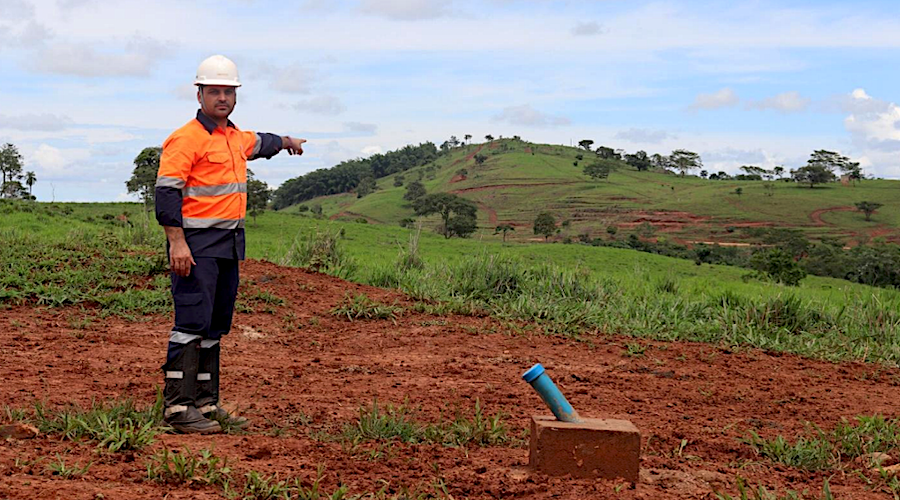
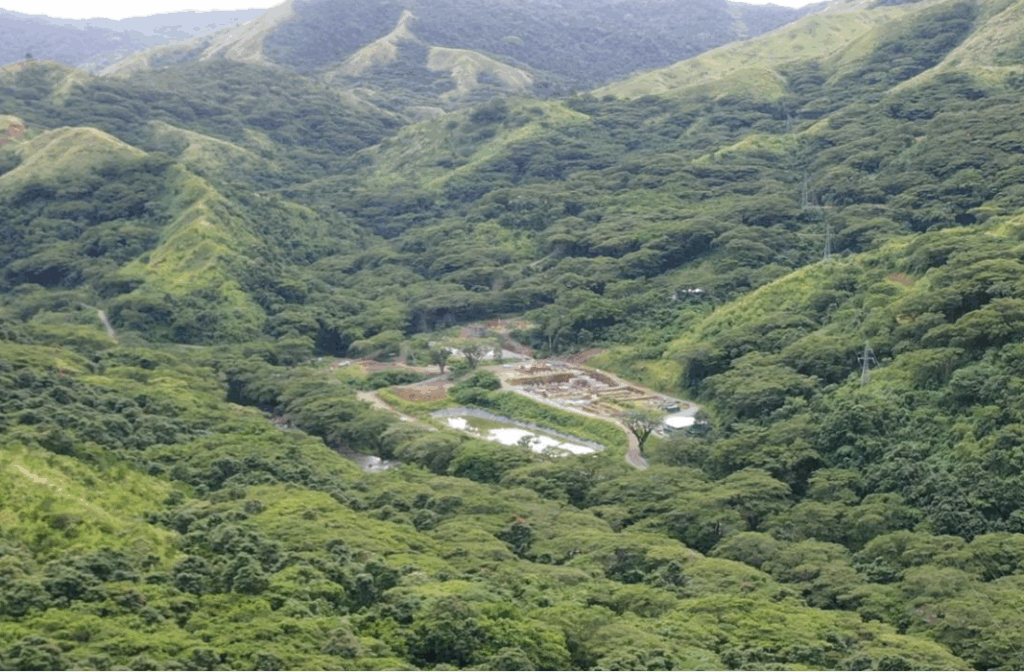
Meridian Mining has raised £25 million in its London Stock Exchange debut, issuing 2.7 million shares at 92p and closing at 94.70p, giving a market capitalisation of about C$802 million (£434 million) across its listings. The funds will advance the Cabacal gold-copper project in Mato Grosso, an advanced-stage VMS deposit with pre-feasibility work outlining a 10-year mine life, 141,000 gold-equivalent ounces per year and a post-tax IRR of about 61%. Management is targeting FTSE All-Share inclusion at the next rebalance and FTSE 250 entry within 12 months.
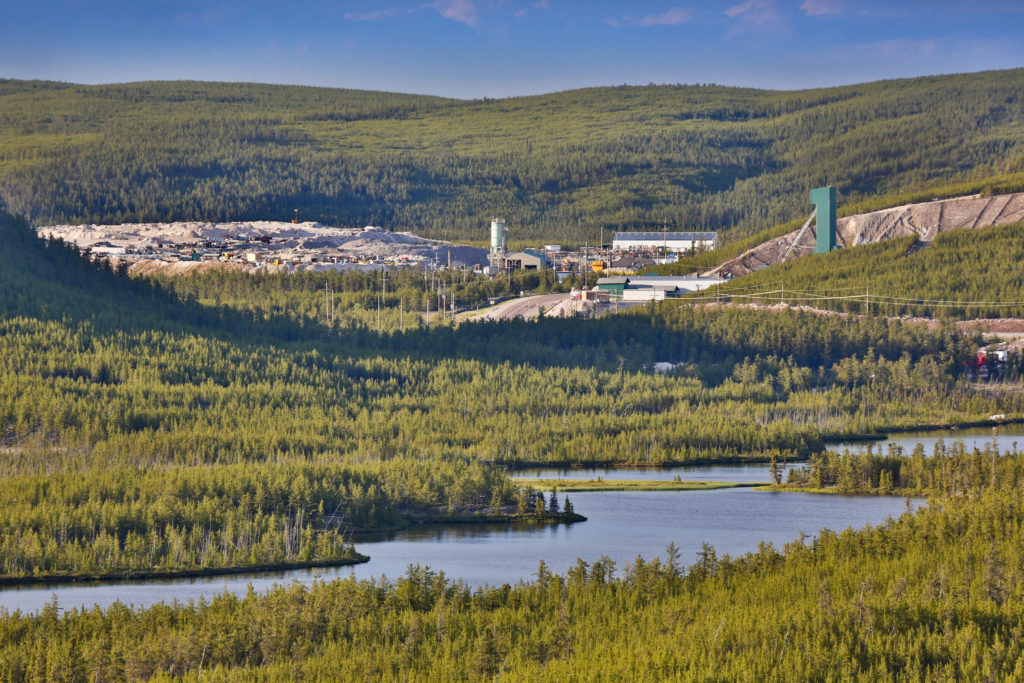
War in Iran and a May 2025 US executive order to quadruple nuclear capacity to about 400 GW by 2050 are fuelling expectations of a new wave of reactor construction, with uranium demand already exceeding mine output by 50–60 million lb. per year. Cameco, which produces about 15% of global uranium from assets including the McArthur River high‑grade mine and owns 49% of Westinghouse Electric, has signed a nine‑year, ~22‑million‑lb. uranium supply deal with India worth an estimated US$1.9 billion from 2027–2035. Spot uranium is trading near US$86/lb., term prices around US$90/lb., and utilities are beginning to accept three‑digit pricing as long‑term uncovered requirements through 2045 widen.
Lion One Metals shares fell over 30% to C$0.14 after cancelling a C$15 million private placement with Arete Capital Advisors and announcing the exit of CEO Campbell Olsen just two months into the role. The Arete deal would have issued 44.26 million units at C$0.34, each with a warrant at C$0.39, and included a master services agreement making Arete operator of the Tuvatu underground gold mine in Fiji. Tuvatu, designed for about 331,400 oz/year over five years, produced only 4,200 oz last quarter amid equipment, power and development constraints, while Lion One faces a senior loan default notice from Nebari and a shareholder move to remove directors.
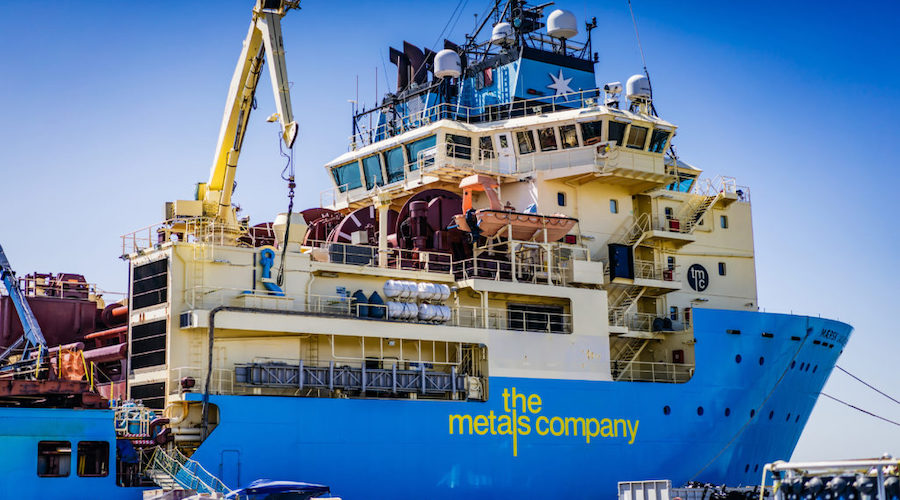
TMC’s deep-seabed mining plan in the Clarion Clipperton Zone advanced after NOAA ruled its consolidated application fully compliant, covering about 65,000 km² and an estimated 619 million tonnes of wet polymetallic nodules at depths beyond 4,000 metres. The ruling moves the project into certification, with publication in the Federal Register, a draft Environmental Impact Statement and a potential final permit decision by early 2027 under NOAA’s revised single-step framework combining exploration and commercial recovery approvals. TMC shares rose over 7% to $5.62, valuing the company at roughly $2.3 billion.
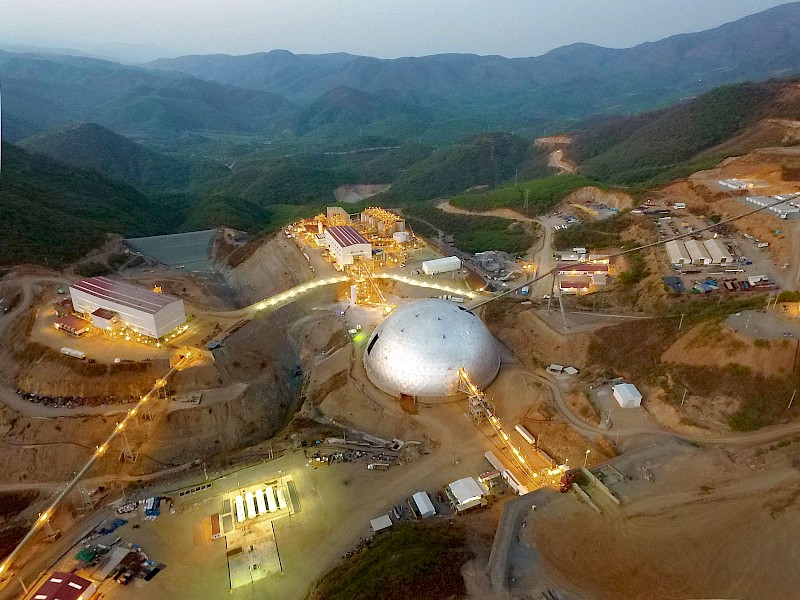
New drilling at Torex Gold Resources’ Morelos complex in Mexico has intersected high-grade zones, including 18 metres at 8.04 g/t gold, 33.9 g/t silver and 1.37% copper in hole MLLI-042 and 16 metres at 15.12 g/t gold in hole MLLI-048, both from depths around 470–565 metres. Additional intercepts such as 49 metres at 2.18 g/t gold and 95 metres at 1.5 g/t gold support continuity of mineralisation to at least 700 metres above sea level, remaining open at depth and along strike. Backed by a record US$77 million 2026 exploration budget and 148,000 metres of planned drilling, Torex aims to sustain 450,000–500,000 gold-equivalent oz. per year beyond 2030 by rapidly tying Media Luna, ELG underground and satellite deposits into existing plant infrastructure.
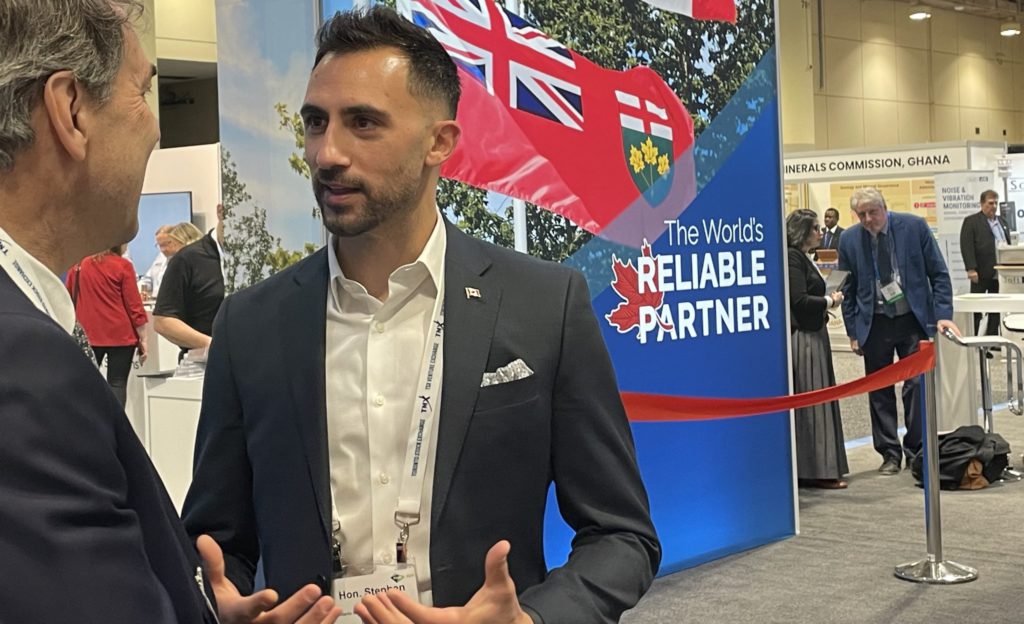
Ontario’s Progressive Conservative government plans a large legislative package this autumn to cut permitting timelines by up to half for early and advanced exploration, mine expansions and projects in its One Project, One Process stream, which already covers Frontier Lithium’s PAK, Canada Nickel’s C$2‑billion Crawford and Kinross’s Great Bear. Energy and Mines Minister Stephen Lecce is tying the reforms to a new defence-focused minerals strategy for 2027 and Toronto’s bid to host Nato’s Defence, Security and Resilience Bank. The policy push emphasises domestic processing of nickel and other critical minerals, reduced federal–provincial duplication, and faster roads and transmission to the Ring of Fire.
Canada’s new C$25‑billion Canada Strong Fund, to be deployed over three years, will act as a sovereign equity investor alongside tools like the Canada Infrastructure Bank and Export Development Canada, targeting large critical minerals, infrastructure‑adjacent and advanced manufacturing projects. Mining proponents seeking Fund backing will need “Fund‑ready” projects, with disciplined capital plans, advanced permitting, robust Indigenous engagement and transparent supply chains, and should expect tighter scrutiny of foreign ownership. A parallel Defence Industrial Strategy elevates 10 NATO‑listed defence‑critical minerals produced in Canada to security assets, favouring Canadian or allied mine‑to‑processing supply chains and execution‑ready projects over speculative plays.
Cementation Canada has secured the underground ore and waste handling system construction contract at Alamos Gold’s Island Gold Mine in Dubreuilville, Ontario, returning after completing underground development and construction work there in 2019 and 2021. The scope centres on new materials handling infrastructure to support Island Gold’s expanding underground operations, where hoisting capacity and efficient waste movement are key constraints in deep narrow-vein mining. For geotechnical and mining teams, the award signals continued capital investment in underground materials handling upgrades rather than short-term contract development.
DISA Technologies has closed a US$33 million strategic financing round led by Galvanize, with participation from BHP Ventures, to scale its mineral processing, domestic uranium remediation and resource recovery platform. CEO Greyson Buckingham positions the funding as a growth milestone for deploying DISA’s high‑impact processing solutions across critical minerals and legacy uranium sites in the United States. For miners and remediation contractors, the deal signals growing backing from majors for specialised processing technologies targeting both production and clean‑up of uranium and other critical commodities.