Martinus heavy-haul rail for Australian mining: integration lessons for project teams
Reviewed by Joe Ashwell
First reported on Australian Mining
30 Second Briefing
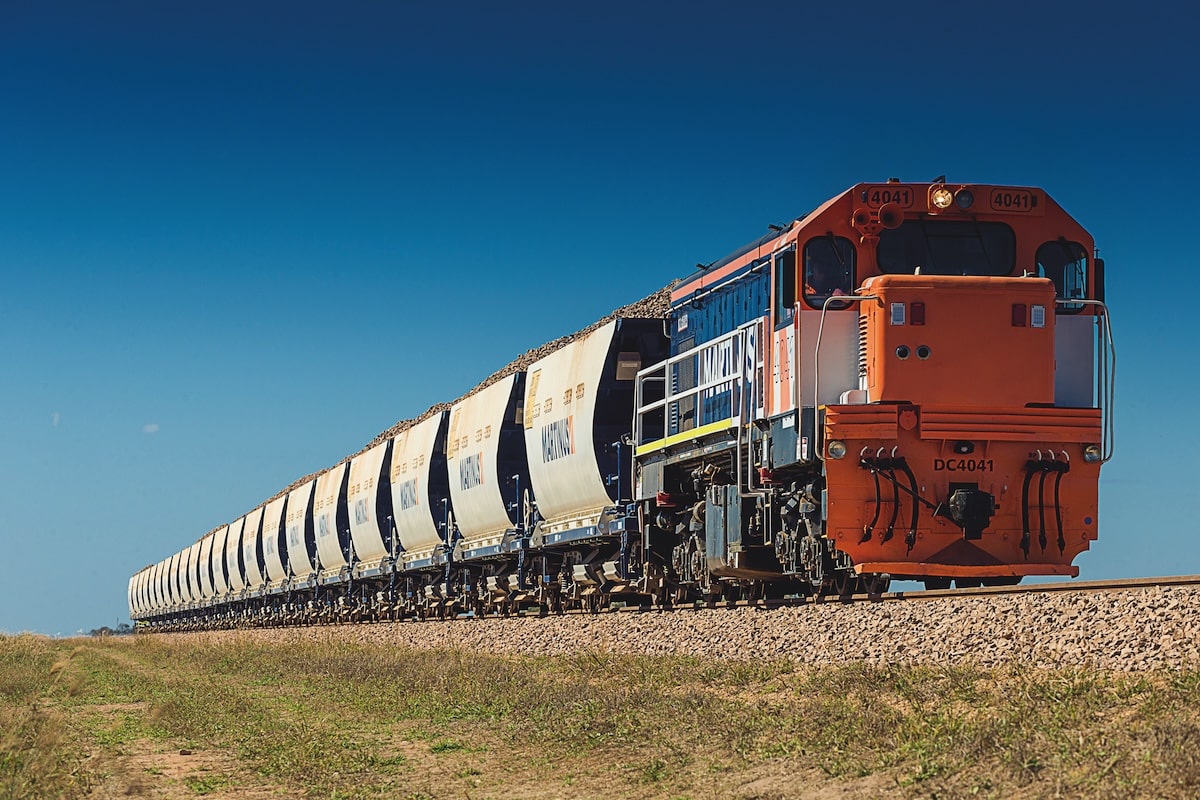
Martinus is expanding large-scale heavy-haul rail infrastructure for Australian mining, integrating track construction, signalling and overhead wiring with bulk haulage expertise for iron ore, grain and coal corridors. The contractor delivers turnkey packages including earthworks, formation, drainage, ballast, sleepers and continuous welded rail, tailored to axle loads and tonnages typical of Pilbara-style operations. For mine owners, the key shift is a single interface covering greenfield rail spurs, brownfield upgrades and logistics optimisation, reducing interface risk at the rail–port–mine supply chain nodes.
Technical Brief
- Track packages extend from subgrade improvement and formation capping through to ballast placement and rail stressing.
- Martinus self-performs bulk earthworks, drainage and formation to control geometry and settlement behaviour.
- Integrated signalling and overhead wiring design is coordinated with track alignment to minimise rework and possessions.
- Construction methodologies are adapted for remote greenfield corridors with long work trains and mobile camps.
- Brownfield upgrades are staged around live haulage windows, constraining workblocks and possession durations.
- Interfaces are managed across mine load-out, mainline junctions and port yards as a single EPC-style scope.
- Experience spans iron ore, grain and coal supply chains across multiple Australian states and climatic conditions.
- For similar heavy-haul corridors, bundling civil, track and systems scopes reduces contractual and programme interface risk.
Our Take
Rail infrastructure for iron ore, grain and coal in Australia features heavily across the 854 Infrastructure stories in our database, signalling that bottlenecks in bulk haulage are now as material to project economics as pit or plant design for many operators.
Martinus appears alongside a cluster of Australian Mining coverage on contractors taking larger EPC-style packages, which suggests this contract award may be part of a shift where rail specialists assume more integrated delivery and long-term maintenance roles rather than pure construction scopes.
Multi-commodity rail corridors that handle both grain and coal or iron ore typically face tighter ESG and community scrutiny, and related ESG-technology pieces in our coverage indicate miners and logistics providers are increasingly using real-time monitoring to demonstrate compliance on noise, dust and throughput along these lines.
Prepared by collating external sources, AI-assisted tools, and Geomechanics.io’s proprietary mining database, then reviewed for technical accuracy & edited by our geotechnical team.
Related Articles


Related Industries & Products
Mining
Geotechnical software solutions for mining operations including CMRR analysis, hydrogeological testing, and data management.
Construction
Quality control software for construction companies with material testing, batch tracking, and compliance management.
CMRR-io
Streamline coal mine roof stability assessments with our cloud-based CMRR software featuring automated calculations, multi-scenario analysis, and collaborative workflows.
HYDROGEO-io
Comprehensive hydrogeological testing platform for managing, analysing, and reporting on packer tests, lugeon values, and hydraulic conductivity assessments.
GEODB-io
Centralised geotechnical data management solution for storing, accessing, and analysing all your site investigation and material testing data.