Geomechanics, Streamlined.
© 2026 Geomechanics.io. All rights reserved.
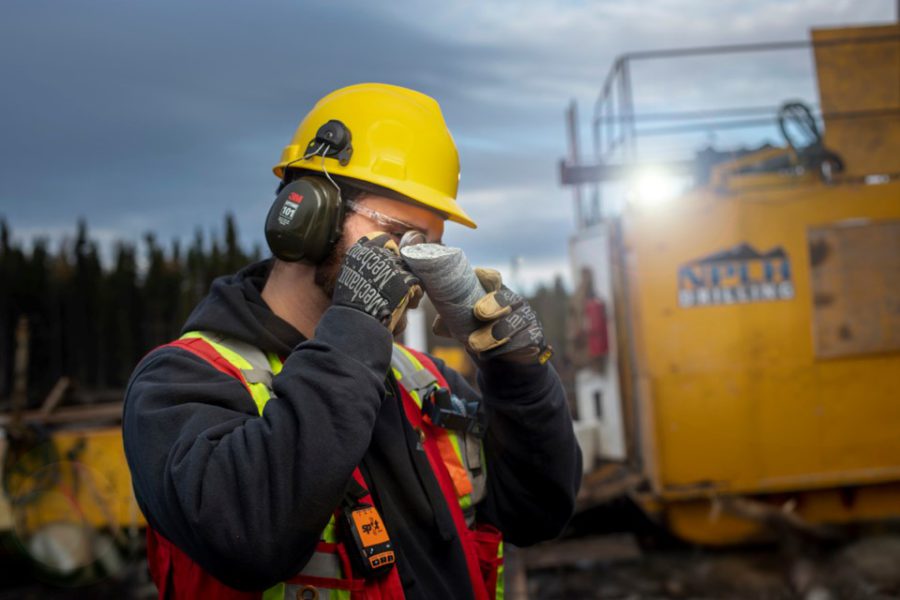
GeoRedox Corporation and Canada Nickel have signed an MOU to develop the world’s first stimulated geologic hydrogen well at the Crawford nickel sulphide project near Timmins, Ontario, using GeoRedox’s proprietary process to generate zero‑carbon hydrogen from ultramafic rock. GeoRedox will fully fund the demonstration, while Canada Nickel provides site access, core samples and technical data across the Timmins Nickel District, where it holds over 20 ultramafic‑hosted projects. If successful, the pilot could supply large‑scale carbon‑free hydrogen and exploit in situ carbon storage capacity to support a zero‑carbon industrial cluster producing nickel, chromium and cobalt.
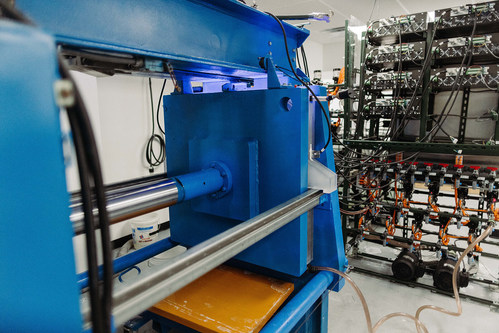
Nth Cycle has signed a joint development and licensing deal with Ionic Rare Earths (ASX: IXR) to integrate its modular electro-extraction technology into IonicRE’s rare earth recycling and refining operations, starting at the Belfast facility in Q4 2026. The partners aim to replace the conventional oxalic-acid-based precipitation step with Nth Cycle’s closed-loop, electricity-driven process to produce high-purity rare earth oxides from recycled swarf, creating a refining pathway that bypasses Chinese chemical supply. Nth Cycle’s platform, already applicable to nickel, cobalt and copper, follows a separate 10-year, $1.1 billion offtake agreement with Trafigura signed in March.
Open-pit mining has started at Core Lithium’s Grants deposit, part of the wholly owned Finniss Lithium Operation near Darwin in Australia’s Northern Territory, with initial works focused on drill-and-blast and bulk excavation. The start of pit development moves Finniss from project build into active ore extraction, enabling the company to progress towards first spodumene concentrate from the Grants open pit. Geotechnical teams will now be validating pit wall performance and blast fragmentation in local lithologies to optimise slope design and downstream processing.
Rio Tinto has reached a cumulative 8 billion tonnes of iron ore shipped from Western Australia’s Pilbara region, 60 years after its first export cargo to Japan. The milestone consignment left Cape Lambert port on 19 May 2026 aboard the bulk carrier Juno Horizon, destined for Nippon Steel Corporation. The scale and longevity of Pilbara exports underline continued demand for high-volume seaborne ore and the long-term performance of Rio Tinto’s integrated mine–rail–port infrastructure in the region.
Epiroc is rolling out a global, integrated suite of digital mine planning tools that combines its recently acquired OreInventory solution with existing platforms such as Mobilaris Mining Intelligence and Underground Manager. The consolidated offering links long‑term planning, short‑interval control and real‑time production data, aiming to give engineers a single environment for blast design, scheduling, stockpile tracking and reconciliation. For operations teams, the move signals tighter integration between fleet data, geology models and inventory management, reducing manual data handling and improving the fidelity of mine‑to‑mill planning.
Agnico Eagle Mines has approved investment in the Hope Bay project in Nunavut after a preliminary economic assessment outlined an underground mine feeding a 6,000 t/d processing plant. The 2026 study targets annual gold output of 400,000–435,000 oz, a step change from historic production at the previously operated complex. For mine planners and process engineers, the scale implies high-capacity underground materials handling, paste backfill or similar ground support strategies, and a concentrator sized for Arctic logistics and power constraints.
Decoda is expanding its haul road monitoring technology into Chile and Brazil through a partnership with TECWISE Latam, targeting large open-pit truck fleets in two of the world’s biggest mining markets. Early deployments have shown gains in truck availability, extended tyre life and higher haulage productivity by continuously assessing road condition and driving behaviour. For mine operators, the move offers a data-driven route to optimise haul road design, maintenance intervals and speed policies without major changes to existing truck fleets.
Excavation for the Hull Heat Network has exposed medieval remains dating back around 700 years, forcing design teams to coordinate trench routes and depths with on-site archaeologists. Trial pits and open-cut sections for district heating pipework in the city centre have revealed structural remains and artefacts that require recording and, in some cases, redesign of alignments. Contractors face programme and access constraints as archaeological works run in parallel with installing buried hot-water mains and associated chambers in narrow urban streets.
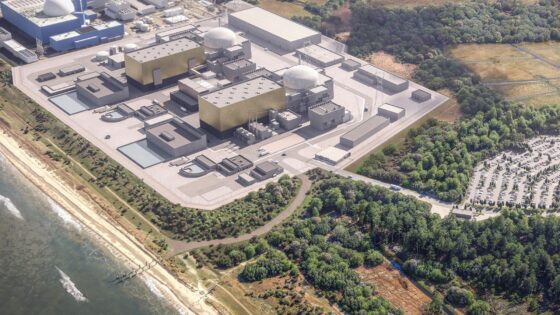
Financing for the 3.2GW Sizewell C nuclear plant has been criticised by the UK National Audit Office, which says the Regulated Asset Base (RAB) model and £700M of direct government investment place more risk on taxpayers and bill-payers than Contracts for Difference used on other low‑carbon projects. The NAO estimates consumer benefits will not exceed costs until after 2060, well beyond the station’s planned early‑2030s commissioning. For civil and nuclear contractors, the findings signal prolonged political and regulatory scrutiny of cost overruns, schedule risk and allowable returns.
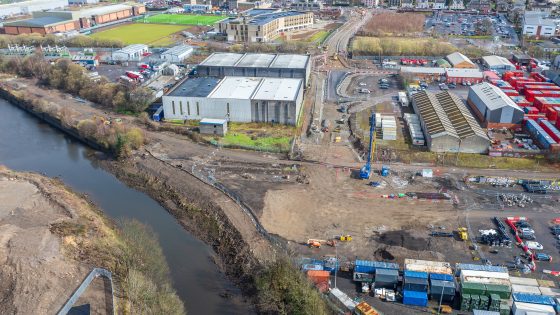
A 93m-long bridge over the White Cart Water forms the core of the Amids South transport scheme, linking an existing industrial area to Paisley town centre and Glasgow Airport. Poor ground conditions along the river corridor drove a redesign of the substructure, with foundations and pier locations adjusted to avoid weak strata and reduce settlement risk. The scheme’s experience will interest geotechnical and bridge engineers dealing with soft alluvium and variable bearing capacity on constrained urban river crossings.
Storm Dave’s 150km/h winds in Wales, more than 100 UK flood warnings over New Year 2024–25, and the July 2022 heatwave exceeding 40°C expose how current appraisal methods undervalue climate‑resilient infrastructure. The piece argues for embedding avoided‑disruption metrics such as reduced power‑outage hours, protected rail‑possession windows and safeguarded freight tonnage into business cases, rather than relying solely on upfront capex and narrow benefit–cost ratios. For geotechnical and civil designers, this means quantifying resilience benefits for assets like flood embankments, culverts and track drainage in monetary terms to secure funding.
Tayside Contracts is preparing a £20M subcontracting framework for civil engineering works and associated services across the Angus, Dundee City, and Perth & Kinross council areas. The framework will bundle a wide scope of highways, drainage, structures and public realm packages under a single procurement route, targeting commercially competitive delivery by local authority supply chains. Contractors can expect multi-year call-off opportunities for routine and small-to-medium capital works, with standardised terms likely to streamline tendering and workload planning.
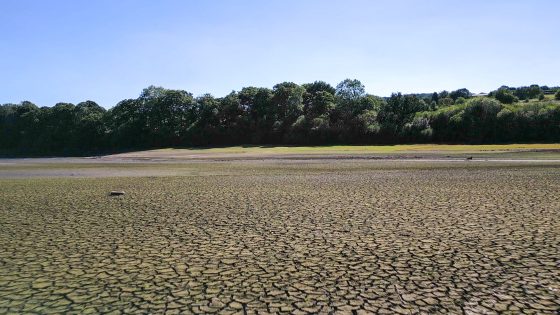
The Climate Change Committee warns that the “British way of life” faces escalating risk from heat, flooding and drought, with the Institution of Civil Engineers backing calls for rapid, large‑scale adaptation of UK infrastructure. Priority actions flagged include upgrading urban drainage and flood defences for more intense cloudbursts, retrofitting buildings for sustained 40°C heat, and securing water supply resilience against multi‑year droughts. For civil and geotechnical engineers, this signals imminent pressure to redesign assets for higher hydraulic loads, thermal stresses and soil moisture variability within the next planning cycle.
Westgold Resources is divesting its Chalice gold project in Western Australia to Corazon Mining, signalling a tighter capital focus on its core producing assets such as the Meekatharra and Bryah operations. The transaction hands Corazon a brownfields gold project in an established WA mining district with existing drilling data and historic resource work, rather than a greenfields exploration play. For geotechnical and mining teams, the deal points to continued consolidation of non-core gold assets and potential near-term re-evaluation of Chalice’s pit designs, geotech models and processing options under new ownership.
Meeka Metals has intersected further gold mineralisation at its Murchison gold project in Western Australia, with step-out drilling extending known lodes beyond the current resource envelope. The latest reverse circulation and diamond holes are targeting down-dip and along-strike extensions near existing open-pit and underground designs, aiming to convert exploration success into additional JORC-compliant ounces. Results will influence pit shell optimisation, underground access layouts and future mine scheduling across the Murchison tenement package.
South Australia booked a record $25.6 million in mining royalties for April, driven largely by BHP’s Olympic Dam copper-uranium operation and higher output from other copper assets. Premier Peter Malinauskas used the result to press for accelerated copper growth, backing BHP’s expansion ambitions at Olympic Dam and its broader SA copper portfolio. For miners and contractors, the signal is stronger state support for new copper projects and associated infrastructure, with a clear focus on fast-tracking approvals and investment while prices remain favourable.
Benz Mining has confirmed widespread tungsten mineralisation along the full 12km Glenburgh corridor in Western Australia, indicating a large-scale skarn and vein-style system associated with the region’s granitic intrusives. Early drilling and surface sampling show continuous scheelite-bearing zones over multiple kilometres, with several prospects already returning high-grade intervals suitable for hard-rock tungsten concentrate production. For geotechnical and mine planning teams, the corridor-scale continuity suggests potential for multiple open pits or a combined pit–underground layout, with significant focus needed on ground support in brittle, altered host rocks.
The Northern Territory Government is sending a trade delegation to Taiwan this week to court investment in critical minerals and energy projects, with a focus on copper, rare earths and gas. Officials are promoting the Territory’s emerging copper and rare earths prospects alongside its LNG and offshore gas assets to Taiwanese utilities, battery manufacturers and trading houses. For miners and project developers, the move signals potential new offtake, JV and project finance channels from Taiwanese industry for NT greenfield and brownfield deposits.
Wales is being positioned as a future energy powerhouse, leveraging its high tidal ranges in the Severn Estuary and extensive offshore wind resource in the Celtic Sea for large-scale low‑carbon generation. Proposals include multi‑GW floating offshore wind arrays in waters deeper than 60m, tidal lagoon concepts using rock‑armoured breakwaters, and repurposing former coal and slate sites for onshore wind, solar and grid‑scale battery storage. For civil and geotechnical engineers, this signals major demand for marine foundations, coastal structures, grid reinforcement and port upgrades to handle heavy turbine components.
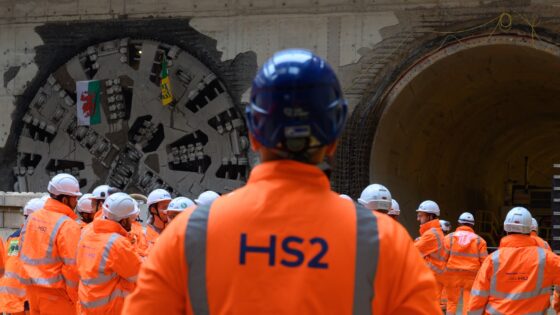
HS2 Phase 1 is now estimated by transport secretary Heidi Alexander to cost more than £100bn, with the first London–Birmingham services not expected to run for at least another 10 years. The revised outlook prolongs uncertainty for major civil works already under way, including long twin-bore tunnels, deep cuttings and high-speed viaducts designed for 360km/h operation. Contractors and designers face extended exposure to inflation, labour and materials volatility, and potential redesign or value-engineering pressure on earthworks, structures and station fit-out.
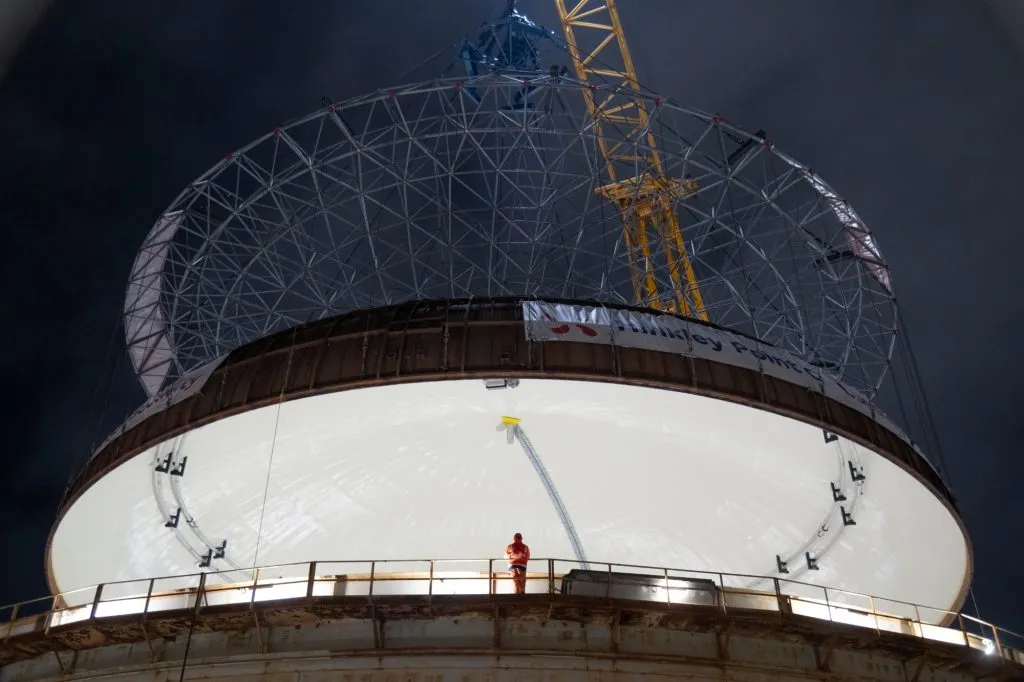
NNB Generation Company (HPC) has begun consulting on a permit variation to install additional on-site backup generation capacity at the Hinkley Point C nuclear project in Somerset. The application seeks approval from the environmental regulator to increase standby power beyond the currently consented diesel and gas turbine systems, strengthening resilience of critical safety and cooling loads during grid outages. Designers and contractors may face revised electrical, fuel storage and emissions constraints on the already congested nuclear island and balance-of-plant layouts.
Natural Resources Wales has issued a prior information notice for an £50M civil engineering and infrastructure framework to run over eight years, signalling a sustained pipeline of flood risk, river works and asset management projects. The framework is expected to bundle multiple small to medium schemes, likely including embankment upgrades, culvert replacements and coastal defence works, into long-term packages. Contractors and designers with geotechnical, hydraulic and environmental expertise will need to position early for prequalification once the full tender is released.
A rival Heathrow expansion plan proposes a third runway built in two phases, winning backing from several major airlines and aviation trade bodies against Heathrow Airport Ltd’s preferred single-phase scheme. The phased approach is pitched to cut upfront capital outlay and construction risk by spreading major airfield works and associated taxiway, apron and terminal modifications over a longer programme. For civil and geotechnical teams, this implies staged groundworks, utilities diversions and pavement construction under live-airfield constraints, with design needing to accommodate interim runway configurations and evolving air traffic patterns.
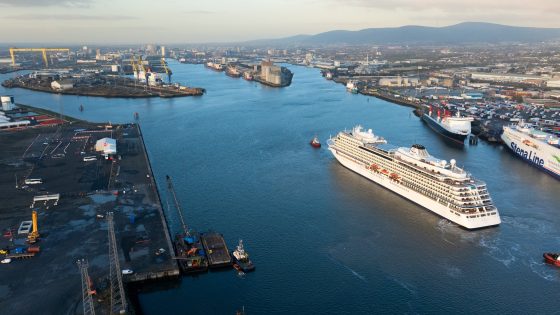
Belfast Harbour has announced a £1.3bn capital programme to upgrade port infrastructure so it remains resilient, efficient and competitive over coming decades. The plan is aimed at supporting long-term economic growth across Northern Ireland and the wider island, signalling substantial future works on quays, storage areas and marine access. Contractors and designers can expect major marine civils, ground engineering and heavy pavement packages as the authority moves to accommodate larger vessels and higher cargo throughputs.