Geomechanics, Streamlined.
© 2026 Geomechanics.io. All rights reserved.
Liebherr is rolling out its expanded MyLiebherr Performance and MyLiebherr Maintenance digital services for earthmoving and material handling fleets in Australia, the UK, Ireland, Canada and the USA, with six months’ free access. The maintenance module gives workshop managers a fleet-wide status overview with traffic light condition coding, cause-specific alerts (e.g. upcoming services, low fluid levels), machine-level service histories and geo-tracked locations to plan bundled interventions. The performance module tracks utilisation, idle hours, fuel consumption versus a global average, and weighing data, enabling group comparisons by machine type or operation to tighten scheduling and cut operating costs.
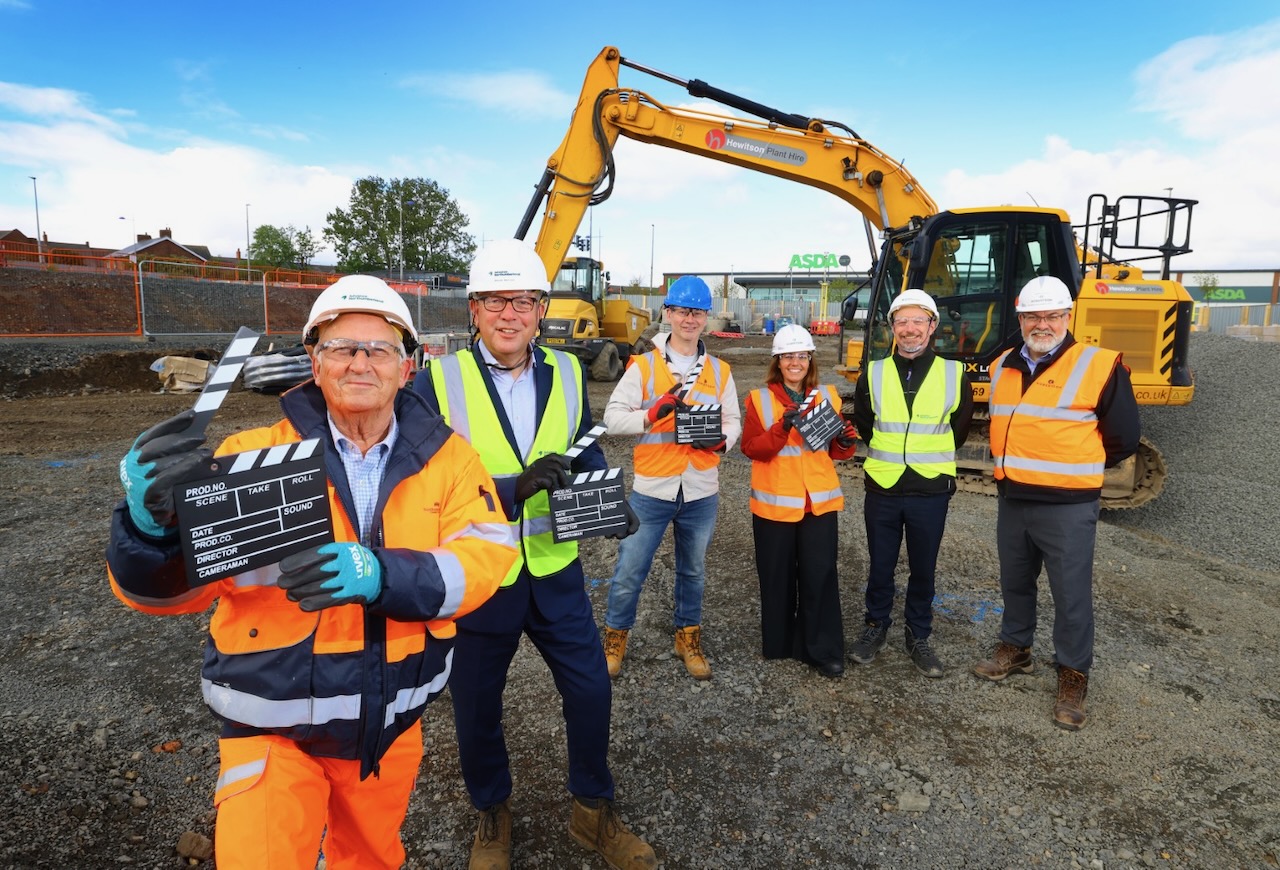
Robertson Construction North East has begun building the £16m Portland Park leisure scheme in Ashington for Advance Northumberland, delivering a five-screen REEL cinema, multiple restaurant units and family-focused entertainment space at the town’s northern gateway. Funded jointly by the UK government, Northumberland County Council and Advance Northumberland, the project forms a core element of the Regenerating Ashington Programme alongside recent transport, public realm and community facility upgrades. The development is intended to lift town-centre footfall and extend evening and weekend economic activity once operational.
Dalkia UK’s Engineering team has secured the Barrow Green Hydrogen project contract in Cumbria for Green Hydrogen Energy Company, supplying low-carbon fuel directly into Kimberly-Clark’s manufacturing operations. The green hydrogen will power production of Kleenex and Andrex paper products, displacing conventional fossil-based energy in tissue and hygiene lines. For industrial energy and infrastructure engineers, the project signals growing demand for hydrogen-ready process heat systems and associated balance-of-plant integration at existing paper mills.
Willmott Dixon has launched Willmott Dixon Developments at UKREiiF to act as a development arm targeting regeneration, residential, student accommodation and public-private partnership schemes. The business will originate and structure projects rather than only deliver them as contractor, positioning the group earlier in the value chain on complex mixed-use and estate renewal programmes. For civil and infrastructure teams, this signals more integrated design–build–finance opportunities with Willmott Dixon as a single counterparty on long-term urban regeneration frameworks.
ABAX has launched ABAX Tachograph to bring 2.5–3.5‑tonne light commercial vehicles into compliance with the EU Mobility Package’s Smart Tachograph 2 (SMT2) rules taking effect on 1 July for international transport. The system integrates LCVs and existing HGVs on a single Smart Operations platform, adding automated tachograph data downloads, violation analysis and driver data management rather than a separate standalone unit. ABAX is targeting fleets facing the 2026 full compliance deadline, aiming to simplify cross‑border operations and reduce manual admin around drivers’ hours enforcement.
Clarion has secured approval from the London Borough of Bromley for a 228-home scheme in Penge delivered at 100% social rent, up from an originally consented 35% affordable quota under the previous Latimer Hadley joint venture. The revised consent increases the proportion of family-sized units, with larger dwellings aimed at households on Bromley’s social housing waiting list and at reducing reliance on temporary accommodation. For designers and contractors, the shift to all-social tenure signals tighter cost constraints but a clear pipeline for dense, family-focused urban housing.
Munnelly Group has appointed former Heathrow and Wilson James executive Tom Emery as managing director of Weston Analytics to accelerate its technology, data and innovation strategy across construction logistics and project delivery. Emery, who has led large operational portfolios and digital transformation in aviation, transport, security and workforce operations, will build scalable digital and analytical tools to support faster operational decision-making and better use of site and programme data. CEO Paul David Munnelly said Weston Analytics is central to the group’s Target2030 plan and its role as a full project lifecycle delivery partner.
CITB has allocated £120m in 2024/25 grant funding to support 30,837 apprentices and 10,410 construction employers, including 9,258 small and micro businesses. Its Travel to Train grant covered £8.2m of travel and accommodation costs for 3,794 learners and 1,217 employers across England, Scotland and Wales, while qualification grants provided £21.7m to 22,690 learners and 3,088 employers. With CITB’s Construction Workforce Outlook projecting 2.1% annual output growth and a need for 47,000 additional workers per year to 2029, these grants directly target looming skills gaps.
Bachy Soletanche and Kilnbridge have launched UrbanCore, a joint offering that combines piled foundations, basement construction and superstructure delivery into a single integrated package for commercial and basement‑led urban schemes. The model replaces traditional separate groundworks and frame contracts by aligning design, engineering, commercial and delivery teams from pre‑construction, with collective ownership from ground to structure. UrbanCore is targeting constrained city‑centre sites with tight access, sensitive neighbouring assets and complex sequencing, aiming to reduce interface clashes, programme slippage and cost uncertainty.
Global’s Scotbuild is merging with Calder Electrical and rebranding as SB Services to provide a single contractor offering building, civil and electrical packages across commercial, industrial, energy and residential projects. The combined business will deliver multi-trade works such as structural alterations, M&E installation and maintenance, and small civils under one management structure. For clients, this could simplify procurement for projects needing coordinated electrical fit-out and construction works, particularly on complex industrial and energy sites.
HS2 is now projected to cost £87.7bn–£102.7bn with full opening between London Euston and Handsacre Junction pushed back to 2040–2043, transport secretary Heidi Alexander told parliament as the government released its latest HS2 and Lovegrove reports. The section between Birmingham Curzon Street and Old Oak Common is expected to start operations in 2036–2039, with no trains running on any part of the line before 2033. Alexander and HS2 CEO Mark Wild blamed around two thirds of the £37bn cost increase on past underestimation, inefficiency and “goldplated” bespoke high-speed train designs, now being replaced by more standard European-spec rolling stock.
Metropolitan Police say they remain on schedule to submit full Grenfell Tower fire charging files to the Crown Prosecution Service by the end of September, nearly 10 years after the 2017 disaster. The investigation has reviewed the roles of 15,000 individuals and 700 organisations, with 57 people and 20 organisations now suspected of offences including gross negligence manslaughter, misconduct in public office, fraud and health and safety breaches. Evidence gathered includes 165 million electronic files, 14,400 witness statements and over 27,000 physical exhibits such as cladding, insulation, doors and windows.
Advanced investigation methods such as cone penetration testing with pore pressure (CPTu), seismic CPT and high‑resolution pressuremeter testing are generating terabytes of geotechnical data per project, yet much of it remains locked in PDFs, spreadsheets and unstructured lab reports. Centralised, cloud-based platforms with AGS-compliant data models, API links to lab information management systems and automated validation rules are being promoted to standardise borehole, in situ and lab datasets across portfolios. For practitioners, the key gains are faster ground model iteration, more defensible design parameters and easier reuse of legacy site investigation data on brownfield schemes.
Boston Metal has raised $75 million, taking total funding above $500 million, to accelerate deployment of its Molten Oxide Electrolysis (MOE) platform for emissions-free production of steel and critical metals. The capital will be used to scale MOE cells and associated high-temperature power electronics for commercial plants in the US and other regions, moving from pilot-scale units towards industrial modules. For mining and metallurgical projects, this signals growing investor backing for alternative smelting routes that can bypass coke-based blast furnaces and potentially alter future project flowsheets.
EACON has started commissioning six Komatsu HD1500 rigid trucks retrofitted with its autonomous haulage system in the Havana Pit at Norton Gold Fields’ gold mine in Western Australia, owned by Zijin Mining. The trucks are already running fully autonomous load–haul–dump cycles in an active operating pit, integrating with live traffic and production schedules rather than a segregated test area. For mine planners and geotechnical teams, this signals growing deployment of retrofit AHS on mixed fleets, with implications for ramp design, traffic management, and berm and intersection geometry.
NCE’s inaugural Airports Conference & Awards took place on 19 May 2026, bringing together UK airport owners, designers and contractors to recognise leading airfield and terminal projects. While detailed category winners were not disclosed, the event centres on technically complex works such as runway and taxiway rehabilitation, terminal expansions with high passenger throughput, and upgrades to airfield pavements, drainage and lighting systems. For geotechnical and civil engineers, the awards signal growing peer scrutiny of constructability, whole-life performance and resilience in airport infrastructure delivery.
A new review of HS2 oversight finds the Department for Transport repeatedly missed chances to challenge scope, cost and schedule decisions on the high‑speed rail scheme, including during key authorisation stages and major budget escalations. The report points to weak use of project assurance tools, limited interrogation of cost estimates for tunnels, viaducts and station boxes, and inadequate response to early warnings on contingency erosion. For civil and geotechnical teams, this signals tighter future governance, more intrusive cost–risk reviews and closer scrutiny of ground risk allowances on large UK infrastructure.
Gem Diamonds reported quarterly revenue of $32.1 million as sales of large high-value stones from the Letšeng mine offset a 21% drop in carats sold to 16,727 and weaker sector-wide pricing. The first export sale averaged $1,501 per carat, up 17% quarter-on-quarter, with a separate parcel of ten +10.8-carat stones, including a 191.82-carat Type IIa white diamond, adding $7 million. Letšeng treated 1.33 million tonnes of ore (down 3%) and recovered 21,605 carats (up 3%), with production weighted to the lower-grade Main Pipe but still yielding two +100-carat stones.
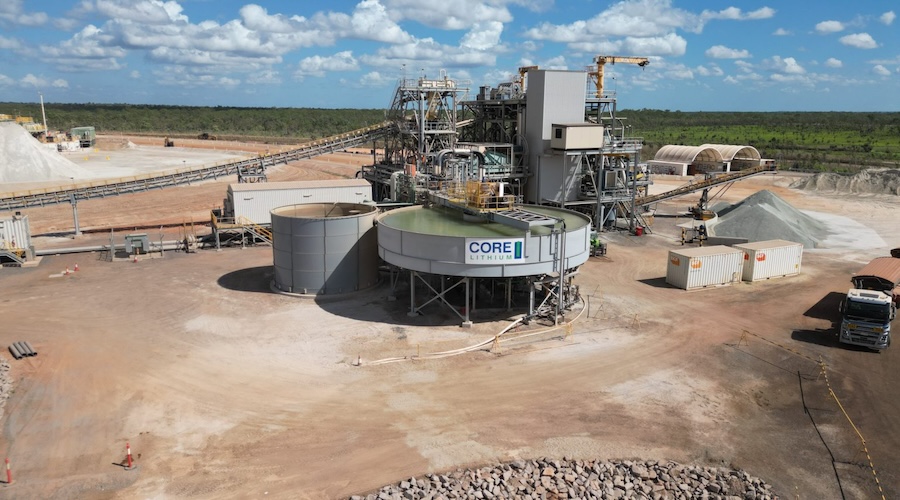
Core Lithium has restarted blasting and excavation at the Finniss hard-rock spodumene operation in Australia’s Northern Territory after securing a A$290 million funding package and benefiting from a sharp rebound in spodumene concentrate prices to their highest level in over two years. The staged restart targets first exports of spodumene concentrate in the December quarter, following Finniss being placed on care and maintenance in 2024 amid the lithium price slump that began in late 2022. The move coincides with Mineral Resources’ plan to restart the Bald Hill mine and renewed progress at Gina Rinehart–backed Andover with SQM.
The European Union is moving to create its first coordinated stockpile of critical minerals, initially targeting tungsten, rare earths, gallium and likely magnesium, germanium and graphite, with storage talks under way with the Port of Rotterdam as a central logistics hub. Ten member states, led by planning groups in Italy, France and Germany, are designing the scheme amid concerns over China’s export controls on gallium, germanium and graphite and its dominance in rare earth magnet supply, which covers about 93% of EU wind turbine permanent magnets. For miners and processors, the plan signals stronger EU-backed offtake certainty but also sharper scrutiny of permitting bottlenecks, as shown by delays at the Chvaletice manganese project despite its Strategic Project status.
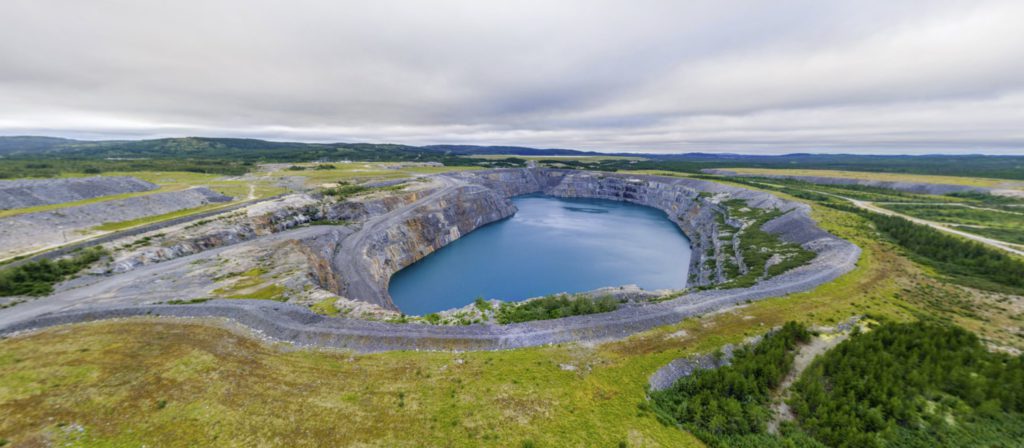
Strong assays from Troilus Mining’s West Rim zone in Quebec, including 19 metres at 2.69 g/t gold and 3.24 g/t silver from 99 metres (with 5 metres at 7.76 g/t gold), extend mineralisation outside current reserves and support a potential higher-grade satellite deposit near planned pits. All six reported holes sit close to infrastructure defined in the 2024 feasibility study, which outlines a 22-year operation producing on average 244,600 oz gold and 17.3 million lb copper annually from 380 million tonnes of probable reserves. With a post-tax NPV5 of C$1.2 billion, initial capex of C$1.4 billion and up to $2.3 billion in combined ECA-backed and syndicate debt support, analysts see Troilus as a strong takeover target as it approaches a construction decision.
Freeport Indonesia plans to restore the Grasberg complex in Papua to full output by end-2027, with CEO Tony Wenas confirming operations are back to 50% capacity and targeting 65% later this year after last September’s fatal mudslide at the Grasberg Block Cave (seven deaths) forced a force majeure shutdown. Underground mining has resumed at the Deep Mill Level Zone and Big Gossan, while wetter-than-expected ore at GBC is requiring chute modifications and new water-management infrastructure. Output is forecast at 800 million lb copper and 700,000 oz gold in 2026, rising to 1.2 billion lb and 1 million oz in 2027, with $20 billion earmarked for post-2041 investment following a permit-extension MoU.
China will impose new mining controls and security reviews on foreign investment from 15 June and require strategic mineral reserves to be stored at source for at least five years, with extensions decided by State Council reviews. The measures, announced via Xinhua, aim to accelerate construction of strategic reserve sites and tighten state control over unspecified “key” minerals. Coming days after the Trump–Xi summit, the move reinforces China’s dominance over rare earths such as yttrium, where it already controls over 60% of mined supply and almost all processing.
Agnico Eagle Mines has more than doubled its stake in Wallbridge Mining, buying about 244 million new shares in a C$22.44 million private placement at C$0.092 per share, lifting its holding to 19.62% (potentially 19.9% with warrants) alongside a matching 19.9% partially diluted stake for Waratah Capital Advisors. Wallbridge will use the C$56 million raise to fund infill drilling and a pre-feasibility study for the Fenelon gold project, which currently carries 1.75 million oz indicated and 1.65 million oz inferred, with a 2025 PEA outlining a 16-year, 107,000 oz/y operation and C$706 million NPV (5%) at 21% IRR. The 598 km² Sunday Lake deformation zone land package, on trend with Agnico’s Detour Lake mine, plus a proposed 20:1 share consolidation and rebrand to Sunday Lake Gold, signal a push towards construction-ready status.