Geomechanics, Streamlined.
© 2026 Geomechanics.io. All rights reserved.
Heathrow Airport has named the winner of its early careers innovation competition, run in collaboration with New Civil Engineer to surface practical ideas from graduates and apprentices for future airport infrastructure. The initiative targets concepts that could be integrated into major airside and landside projects, such as terminal refurbishments, pavement upgrades and baggage system overhauls, where constructability, carbon reduction and passenger flow are critical. For consultants and contractors, the scheme signals Heathrow’s interest in trialling low‑carbon materials, modular construction and digital design workflows proposed by early-career engineers.
Terrafame has started a prefeasibility study to recover scandium from process streams at its bioheap-leach nickel mine in Sotkamo, Finland, using the existing hydrometallurgical circuit as a base. If viable, the project would make Terrafame the only scandium producer in Europe, adding a critical rare earth element to its current battery-grade nickel output. For process engineers, the key questions will be scandium grades in intermediate liquors, additional solvent extraction or ion-exchange stages required, and integration without disrupting nickel and cobalt recovery.
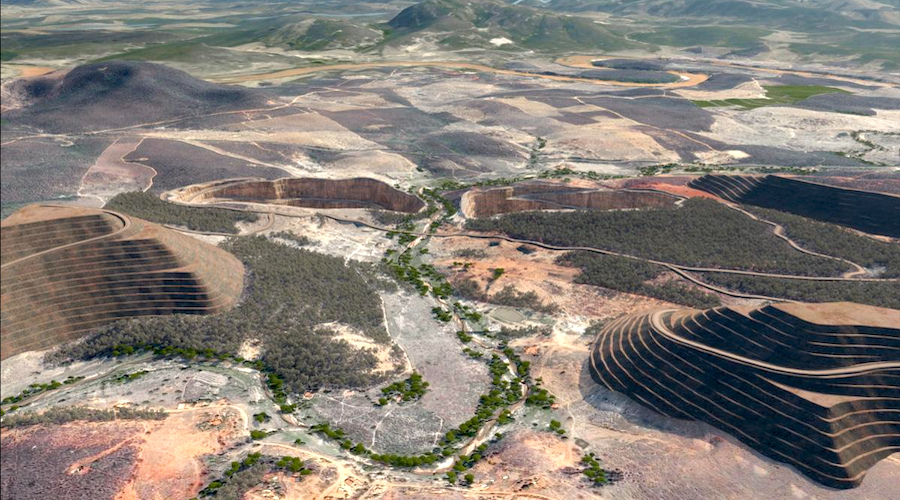
Savannah Resources has ordered the first major capital equipment for its Barroso Lithium Project in northern Portugal, Europe’s largest spodumene deposit and designated a “Strategic Project” under the European Critical Raw Materials Act. The company and its external consultants are advancing technical workstreams including mine planning, process flowsheet optimisation for spodumene concentrate, and infrastructure design to meet EU environmental and permitting requirements. Early equipment procurement signals a move towards construction readiness, with engineering decisions now locking in plant layout, power demand and tailings handling concepts.
SANY has unveiled its SKT145Ei electric unmanned wide body mining truck at the Global Mining Key Customer Summit in Xi’an, where more than 700 delegates signed equipment orders exceeding 5 billion yuan. The SKT145Ei combines a battery-electric drivetrain with autonomous haulage capability, targeting short- to medium-haul open-pit operations that currently rely on diesel wide body trucks. For mine planners and geotechnical teams, the shift to unmanned electric haulage tightens requirements on road geometry, berm design and traffic management to support consistent autonomous operation.
Cementation and Terra Nova Technologies have completed a strategic ownership transition, giving the combined group substantially increased capital backing from a major investor to support global mining projects. The restructuring is aimed at scaling Cementation’s underground mine development and shaft sinking services alongside TNT’s overland conveyor and crushing plant systems across North and South America, Africa and other key regions. For project owners, the move signals stronger balance-sheet support for large EPC and design–build contracts, potentially reducing delivery and financing risk on complex materials handling and underground works.
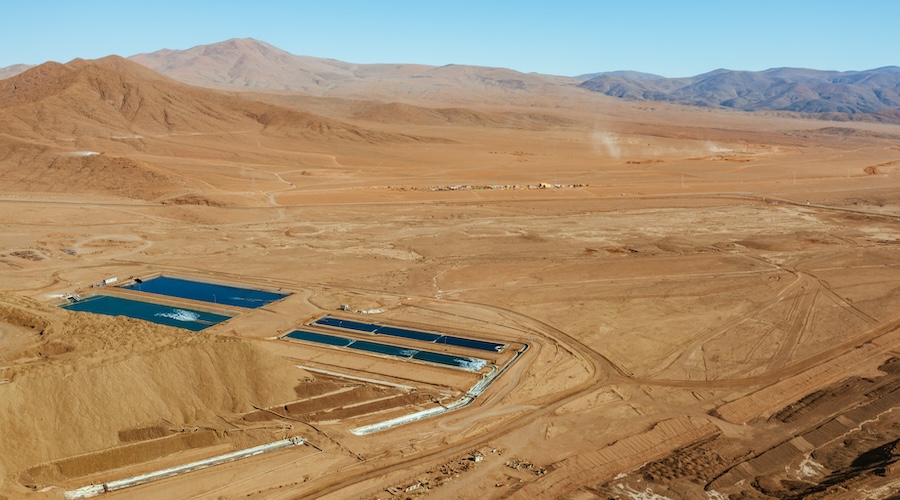
Recovering more metal from existing heap leach pads, rather than building new mines, is presented as mining’s fastest production gain amid IEA-forecast supply gaps of 30% for copper and 40% for lithium by 2035. Tom Claridge, sales manager for Mining North at Netafim North America, argues that uneven solution distribution caused by slope, rock size, line spacing and pressure inconsistencies creates persistent wet–dry zones and permanent metal loss. He points to precision irrigation systems with controlled pressure and flow, plus automated monitoring, as key to improving percolation, water use and predictability on large pads.
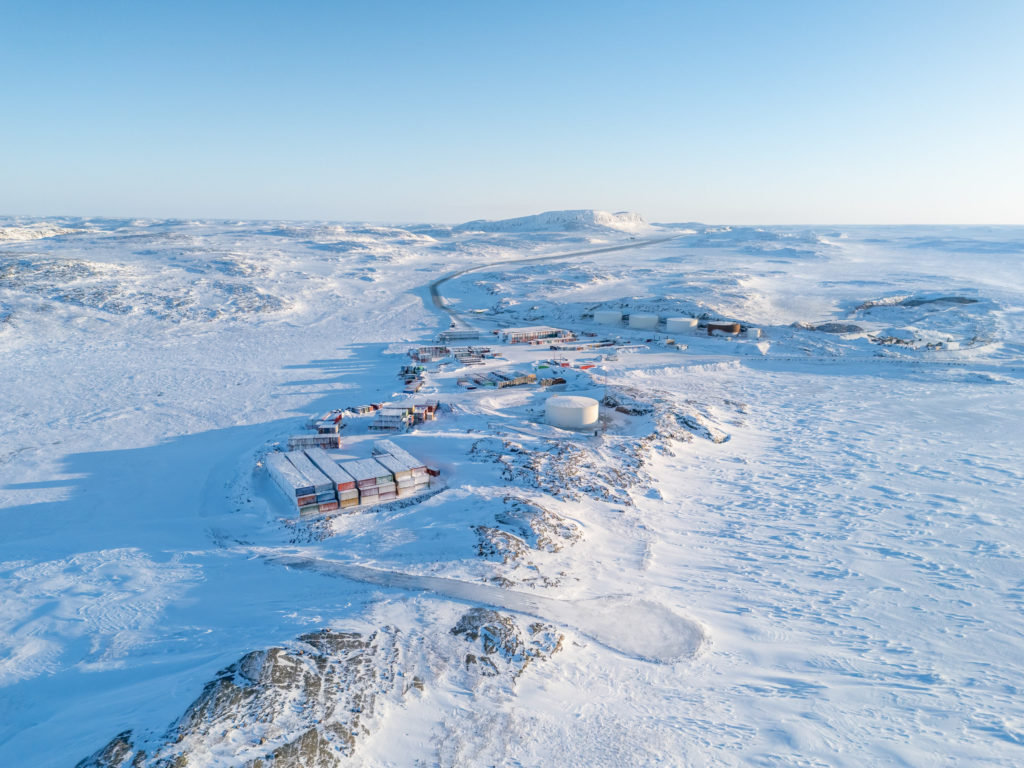
Agnico Eagle Mines has approved construction of the $2.4 billion Hope Bay underground complex in Nunavut’s Kitikmeot region, targeting first production in about four years from three long-hole stoping deposits (Doris, Madrid and Patch 7) feeding a 6,000 t/d plant. The project is scoped for 400,000–435,000 oz. gold per year over an initial 11-year life, with total cash costs of about $942/oz, AISC of $1,199/oz and sustaining capex of $1.1 billion, based on measured and indicated resources of 31.97 Mt at 5.63 g/t. Agnico has already secured key environmental permits and leases, is advancing water licence amendments, and will spend over $100 million on exploration to 2028, including conversion drilling and potential satellite development at Boston.
Sigma Lithium is appealing a 17 May ruling by a local judge in Araçuaí that could impose up to $10 million in legal collateral over alleged improper waste disposal at its Grota do Cirilo lithium operation, after the case triggered a 15% share slide to about $14.50 and a $2.6 billion market capitalisation. Brazilian labour inspectors reportedly cited continued dumping on one of three suspended waste piles and a “partial rupture” near a school in Poço Dantas, raising structural and geotechnical stability concerns. The dispute coincides with Sigma’s plan to expand Grota do Cirilo from 270,000 to 520,000 tonnes per year of lithium concentrate, signalling tighter scrutiny of waste pile design, monitoring and closure in Latin American lithium projects.
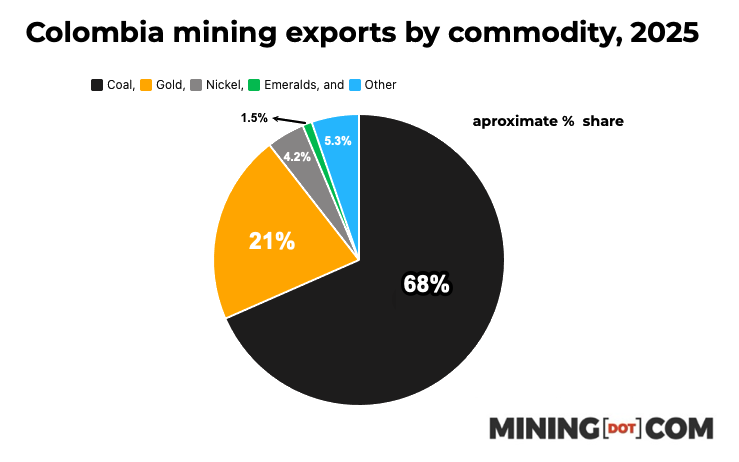
Colombia is pressing Glencore to start detailed closure and transition planning for the Cerrejón complex, a 16.8‑million‑tonne‑per‑year open‑pit coal mine with a 150 km dedicated railway and Caribbean export port whose concession runs to 2034. A GEM consultancy report warns that abrupt, politically driven curtailment could destabilise La Guajira’s coal‑dependent economy, which currently relies on more than 12,000 mine‑related jobs, about $166 million a year in royalties and roughly $86 million in local procurement. GEM proposes a “managed transition compact” with ring‑fenced closure and retraining funds, supplier‑conversion schemes, environmental assurance financing and long‑term reuse plans for rail and port infrastructure.
Westgold Resources is selling its Chalice gold project in Western Australia’s Higginsville district to Corazon Mining for A$25.7 million, comprising A$8 million cash, A$6.7 million in Corazon shares and A$11 million in milestone-linked deferred payments, leaving Westgold with a 19.9% equity stake (47.6 million shares). Chalice is a historical underground producer with nearly 650,000 oz of past output at an average 5.4 g/t, and a current JORC resource of 191,000 oz at 2.7 g/t, remaining open in multiple directions. Corazon will fund the deal via a A$16.5 million private placement of 117.9 million shares at A$0.14, shifting from multi-commodity exploration to a single-asset gold development focus.
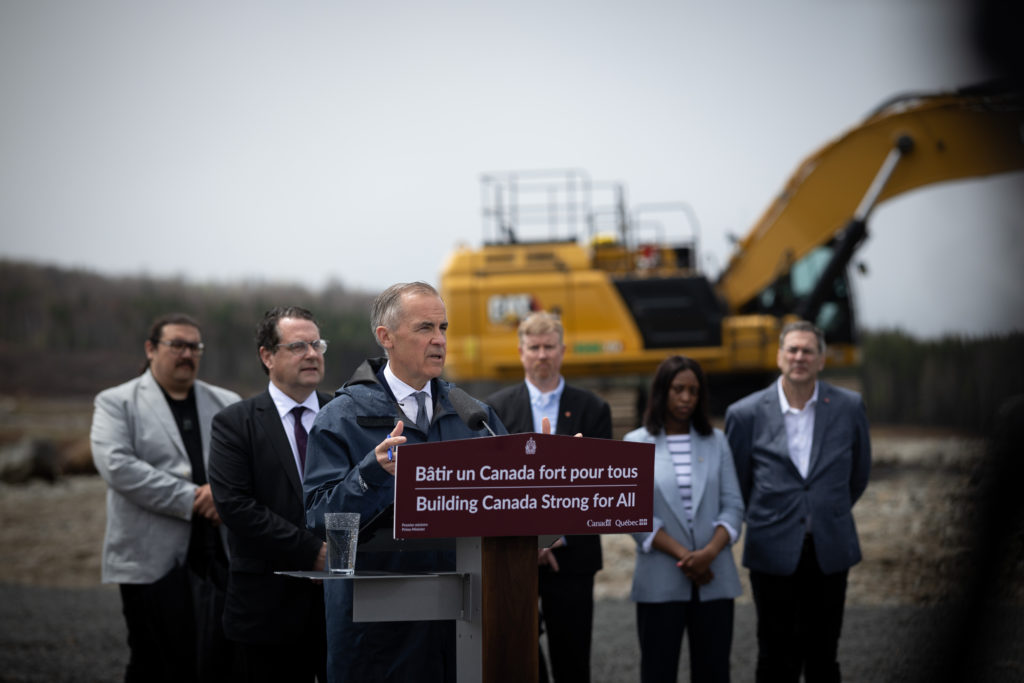
Construction has begun on Nouveau Monde Graphite’s C$2 billion Matawinie mine in Québec, fast-tracked through Canada’s Major Projects Office and designed to produce up to 106,000 tonnes of graphite per year, which would make it the largest graphite mine in the G7. Ottawa has backed the project with financing from Export Development Canada, the Canada Infrastructure Bank and the Canada Growth Fund, plus a seven-year offtake for 30,000 tonnes of concentrate annually. The mine, 120 km north of Montreal, is expected to create over 1,000 jobs and anchor an integrated graphite-to-battery materials chain with NMG’s planned Bécancour plant.
Sherritt International has reversed its plan to dissolve its Cuban mining assets, retaining its 50/50 Moa nickel-cobalt joint venture with state-owned General Nickel Company but keeping operations suspended under expanded US sanctions. The Trump executive order targeting non-US entities active in Cuba had already triggered the exit of three directors and the CFO, a share price collapse to C$0.11 and a market capitalisation of about C$81 million. Sherritt says it is assessing a preliminary “value preserving opportunity” while working with advisers and governments on a path through the sanctions.
Gold may retreat from about $4,500/oz. towards $4,000/oz. as Jeffrey Currie, former Goldman Sachs commodities chief and now Abaxx Markets executive co-chairman, stays tactically short, citing forced central bank sales such as Turkey’s roughly 120 tonnes of disposals to fund higher energy costs. Currie still targets a long-term move towards $10,000/oz., arguing that once central banks turn dovish after an energy-driven growth shock, the trade “resets”. He links this to a broader commodity super cycle driven by capex starvation and an estimated $820 billion of 2026 spending by the “Magnificent 7 plus Oracle”.
Graphite One has secured a Conneaut, Ohio site from Bessemer and Lake Erie Railroad (CN subsidiary) for its Active Anode Materials facility, gaining direct Lake Erie port access, multi-line CN rail, an on-site substation and room to scale. The staged build-out targets an initial 25,000‑tonne module, ultimately 100,000 tonnes per year of anode material, supplied by the post‑feasibility Graphite Creek deposit in Alaska with a planned 20‑year mine life and backed by up to US$2 billion in potential EXIM funding. A separate Ohio finishing and blending plant aims for Q4 2027 completion with 10,000 t/y initial capacity, split into 4,000 t energy storage, 3,000 t fast‑charging and 3,000 t high‑energy‑density graphite products for lithium‑ion batteries.
Advanced Magnet Lab has secured a US$2 million, two-year Defense Logistics Agency contract to qualify domestically produced high‑grade sintered NdFeB PM‑Wire magnets, including defence‑grade compositions such as N48SH and N35EH. The Florida firm will develop alloying, supply chain management and advanced manufacturing routes to scale permanent magnet production using its PM‑Wire process, which is designed to fit existing magnet‑making lines. AML is also progressing SmFeN, MnBi, anisotropic NdFeB and (Mischmetal‑Nd)FeB magnets, working with Phoenix Tailings, Ionic Rare Earths and Momentum to reduce critical rare earth content and improve material traceability.
Mineral Resources (MinRes) is restarting operations at its 100%-owned Bald Hill lithium mine in Western Australia after what it describes as a significant and sustained recovery in lithium prices. The restart follows several months of planning to re-establish safe operating procedures and production systems at the site, located about 50 km from Kambalda in the Eastern Goldfields. For mine planners and contractors, the move signals renewed demand for contract mining, crushing and haulage capacity tied to spodumene output in the region.
Safeguarding conveyor performance in mining and mineral processing, MATO Products sales engineer Keletso Mabula advocates comprehensive conveyor assessments focused on belt cleaners, carryback control and component wear. Proactive inspection of scraper alignment, blade tension, spillage patterns and chute loading conditions is positioned as essential to sustaining throughput and reducing unplanned stoppages on high‑tonnage overland and plant conveyors. The approach emphasises structured condition monitoring and timely maintenance interventions rather than reactive repairs once belt mistracking, excessive dust or material build-up have already escalated.
SSAB is investing SEK 3.3 billion over four years in a new quenching and tempering (Q&T) line at its Oxelösund plant to expand production of advanced wear and protection steels, including Hardox 500 Tuf and Armox grades. The Q&T line will be integrated within SSAB’s strategic capex programme and is intended to support higher volumes of ultra-high-strength plate for mining buckets, truck bodies and armour applications. For mine operators and OEMs, this signals increased availability of abrasion-resistant and ballistic-grade steels for lighter, longer-life equipment.
Victoria is investing $28.3 million from the Transport Accident Commission in five new road safety camera programmes, announced during National Road Safety Week. The package covers upgrades to fixed camera systems on the Western Ring Road and EastLink and the rollout of additional enforcement sites across the state. For road designers and traffic engineers, the spend signals continued reliance on automated enforcement infrastructure as a core control on high‑speed urban motorways and key freight corridors.
Early designs show a new elevated Spotswood Station and rail bridge replacing the Hudsons Road level crossing in Melbourne’s inner west, with opening targeted after the crossing’s removal in 2028. The project will separate road and rail for around 6600 vehicles per day currently delayed at the boom gates, reducing queuing on Hudsons Road and improving timetable reliability on the Werribee and Williamstown lines. For civil and rail engineers, key tasks will centre on bridge pier placement in a constrained urban corridor and integration with existing track geometry and signalling.
Keltbray and site owner Glasgow Chinatown Ltd plan a £160m regeneration of the 4.4‑acre Chinatown site into a mixed‑use neighbourhood aligned with the Cowcaddens District Regeneration Framework. The JV, Keltbray Chinatown Developments Ltd, with Hawkins\Brown as lead architect and CBRE as planning agent, has lodged a Proposal of Application Notice and held two public consultations attended by 127 people. The masterplan team, including SLR Consulting, Woolgar Hunter, Henderson Warnock and Hollis, is focusing on new homes, retail and leisure space, event areas and upgraded public realm connections.
Barhale has appointed Nick Curtis as northern regional director, following his progression from engineer in 2011 to regional manager in 2023, with project experience spanning utility diversions at Battersea Power Station, Crossrail infrastructure works, and pipeline, drainage and highways schemes across Yorkshire and the Midlands. Curtis replaces former northern director James Ingamells, who becomes COO, while Nathan Hutchinson steps in as framework manager to support key regional client frameworks. CEO Martin Brown says Curtis is one of five recent director promotions delivered through Barhale’s five-year succession planning strategy.
Homes England reports enabling completion of more than 40,200 homes in 2025/26, a 9% rise on 2024/25 (36,900) and equivalent to 97% of its 41,500-unit government target. It has facilitated construction starts on 42,400 homes, 11% above last year’s 38,300 and 114% of the 37,100-home target, signalling continued pressure on local infrastructure, utilities and groundworks capacity. The agency has also unlocked land for a further 61,700 homes, 115% of its 53,700-home target, shaping future demand for roads, drainage and geotechnical investigation.
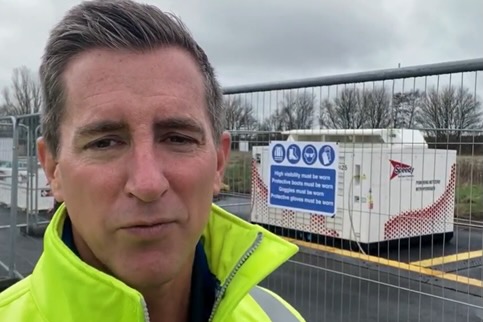
Galliford Try is powering a National Highways construction compound in Bootle entirely with a green hydrogen fuel cell generator, a first for the agency and used instead of grid power or diesel sets on the £7m A5036 Dunnings Bridge Road/Park Lane pedestrian crossing scheme. The system has supplied three site offices, welfare facilities (toilets, kitchen, drying room) and two EV charging points continuously since works began in November, with completion due by Friday 12 June. For contractors, the pilot shows a practical off‑grid option for temporary compounds where grid connections are constrained.