Geomechanics.io

  • Free Tools
Sign UpLog In

Geomechanics.io

Geomechanics, Streamlined.

© 2026 Geomechanics.io. All rights reserved.

Geomechanics.io

CMRR-ioGEODB-ioHYDROGEO-ioQCDB-ioFree Tools & CalculatorsBlogLatest Industry News

Industries

MiningConstructionTunnelling

Company

Terms of UsePrivacy PolicyLinkedIn
    Product
    Projects

    Tega DynaPrime for Australia’s SAG and ball mills: relining and wear-life notes for engineers

    June 17, 2026|

    Reviewed by Joe Ashwell

    Tega DynaPrime for Australia’s SAG and ball mills: relining and wear-life notes for engineers

    First reported on Australian Mining

    30 Second Briefing

    Tega has launched its DynaPrime combination liner system for 28–42ft SAG, AG and primary ball mills, targeting reduced downtime where lost production is measured in millions of dollars per mill. The design integrates lighter, modular components to speed relining and uses engineered wear packages tailored to impact and abrasion zones, aiming to extend liner life while maintaining charge trajectory. For operators, the key gains are faster mill re-starts and more predictable maintenance windows on large grinding circuits.

    Technical Brief

    • DynaPrime uses a combination liner layout, mixing lifter, plate and filler elements in one system.
    • Modular liner segments are dimensioned for safe handling by standard relining machines on 28–42ft shells.
    • Tega Losugen engineers customise impact- and abrasion-resistant rubber-metal composites to specific mill charge profiles.
    • The liner geometry is tuned to mill speed, filling level and ore competency, not supplied as generic sets.
    • Design intent includes minimising high-stress bolted joints, reducing localised fatigue and unplanned fastener failures.
    • Interface details are engineered to limit slurry ingress behind liners, reducing backing erosion and shell fretting.

    Our Take

    Designing liners for 28–42 ft SAG and ball mills targets the upper end of Australian comminution circuits, where incremental gains in liner life or throughput can materially affect whole-of-mine operating costs for iron ore and gold producers covered in our broader Australian Mining database.

    With Australian contractors moving into larger EPC-style packages, as noted in the 6 May 2026 item on mine services, mill-liner systems like Tega Losugen’s are increasingly specified as part of integrated performance guarantees rather than standalone consumables.

    Geotechnical Software for Modern Teams

    Centralise site data, logs, and lab results with GEODB-io, CMRR-io, and HYDROGEO-io.

    No credit card required.

    • Save and export unlimited calculations
    • Advanced data visualisation
    • Generate professional PDF reports
    • Cloud storage for all your projects

    Prepared by collating external sources, AI-assisted tools, and Geomechanics.io’s proprietary mining database, then reviewed for technical accuracy & edited by our geotechnical team.

    Related Articles
    Mining
    about 3 hours ago

    JCHX–Epiroc global cooperation: fleet standardisation insights for mine engineers

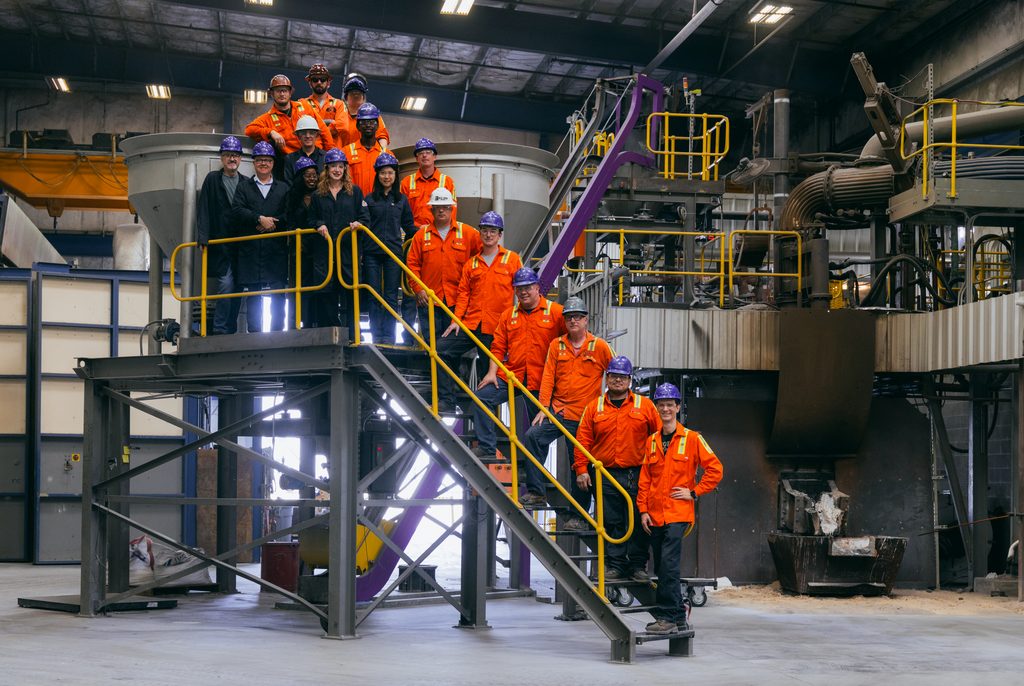
    JCHX, the Chinese global mining contractor, has signed a five-year global strategic cooperation agreement with mining equipment major Epiroc at JCHX’s Beijing headquarters on 16 June. The deal is expected to centre on Epiroc’s underground drilling, loading and haulage fleets and digital automation platforms being deployed across JCHX’s international contract mining projects. For engineers, the agreement signals closer standardisation of OEM equipment, spares and data systems across JCHX-operated mines, which could simplify fleet maintenance strategies and interoperability planning.

    Laboratory integrity and mining variability: cut‑off grade risks for project teams
    Mining
    about 3 hours ago

    Laboratory integrity and mining variability: cut‑off grade risks for project teams

    Rising commodity prices are pushing lower‑grade material back into mine plans, forcing operators to rely on tighter, more defensible assay data as projects run closer to economic cut‑off grades. With narrower margins for analytical uncertainty, small shifts in laboratory results now materially affect resource models, reserve classification and pit optimisation. This raises the stakes on lab QA/QC, sample preparation protocols and inter‑lab variability, directly influencing project viability decisions across exploration and feasibility studies.

    Mining
    about 3 hours ago

    UK Mining Conference: critical minerals, permitting and skills takeaways for engineers

    UK Mining Conference delegates in Cornwall set out how domestic resources such as Cornish lithium, Scottish barite and Welsh copper could reduce UK reliance on imported critical minerals amid volatile markets and geopolitical risk. Speakers linked subsurface datasets from the British Geological Survey with AI-driven targeting for deep exploration, and discussed permitting, ESG scrutiny and grid constraints as key barriers to new mines and processing plants. Panels also focused on skills, using school outreach, virtual reality mine tours and apprenticeships to attract young people into geoscience and mining engineering.

    Related Industries & Products

    Mining

    Geotechnical software solutions for mining operations including CMRR analysis, hydrogeological testing, and data management.

    CMRR-io

    Streamline coal mine roof stability assessments with our cloud-based CMRR software featuring automated calculations, multi-scenario analysis, and collaborative workflows.

    HYDROGEO-io

    Comprehensive hydrogeological testing platform for managing, analysing, and reporting on packer tests, lugeon values, and hydraulic conductivity assessments.

    GEODB-io

    Centralised geotechnical data management solution for storing, accessing, and analysing all your site investigation and material testing data.

    AllGeotechnicalMiningInfrastructureMaterialsHazardsEnvironmentalSoftwarePolicy