Geomechanics.io

  • Free Tools
Sign UpLog In

Geomechanics.io

Geomechanics, Streamlined.

© 2026 Geomechanics.io. All rights reserved.

Geomechanics.io

CMRR-ioGEODB-ioHYDROGEO-ioQCDB-ioFree Tools & CalculatorsBlogLatest Industry News

Industries

MiningConstructionTunnelling

Company

Terms of UsePrivacy PolicyLinkedIn
    Projects

    Rare Earths Americas’ 44.5% TREO at Shiloh: flowsheet and drilling lens for engineers

    June 17, 2026|

    Reviewed by Joe Ashwell

    Rare Earths Americas’ 44.5% TREO at Shiloh: flowsheet and drilling lens for engineers

    First reported on MINING.com

    30 Second Briefing

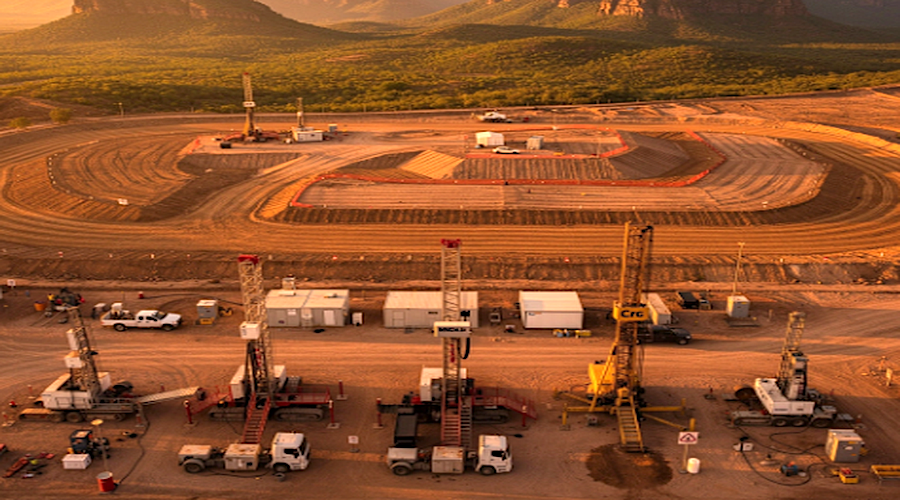
    Rare Earths Americas has reported rock chip assays up to 44.5% total rare earths oxide (TREO) from monazite-bearing sands at its Shiloh project in Georgia, with 13 surface samples collected across the Newbill and Pipeline properties. The 2026 work programme includes more than 20,000 m of sonic, direct push and diamond drilling to define continuity, scale and grade distribution, alongside drone-based radiometric surveys at the nearby Lazer Creek area, where hole 25-DPLC-015 returned 10.84% TREO from 6.1–6.77 m and 3.52% TREO from 7.35–8.63 m. For mine planners and process engineers, the coarse monazite sand style suggests potential for relatively simple mineral sands-style extraction flowsheets if continuity and tonnage are confirmed.

    Technical Brief

    • REA plans >20,000 m of sonic, direct push and diamond drilling at Shiloh in 2026.
    • Sonic and direct push methods suit unconsolidated monazite sands, improving sample recovery and stratigraphic control.
    • Drilling aims to define continuity, scale and grade distribution sufficient for future mineral resource estimation.
    • REA interprets Shiloh monazite sands as potential source rock for US coastal plain mineral sands.
    • Drone-based radiometric surveying at Lazer Creek has delineated additional along-strike REE targets beyond current drilling.
    • Hole 25-DPLC-015 at Lazer Creek intersected two discrete high-grade TREO zones between 6.1–8.63 m.
    • Alpha project in Bahia, Brazil, is more advanced, with engineering progressing towards an SK-1300 initial assessment.
    • Focus on heavy rare earths for permanent magnets and defence links project economics to strategic supply security.

    Our Take

    Rare Earths Americas’ current market capitalisation of about $341.8 million sits slightly below the $368–$439.9 million valuation range seen around its oversubscribed NYSE IPO in May 2026, suggesting that even strong TREO grades at Shiloh in Georgia are being weighed against execution and permitting risk in the US coastal plain.

    Our database shows only a handful of US- and Brazil-focused heavy rare earth items among more than a thousand Mining stories, so REA’s dual focus on the Shiloh project in Georgia and the Alpha project in Bahia positions it as one of the few listed plays explicitly trying to build a cross-hemisphere heavy rare earths pipeline.

    Geotechnical Software for Modern Teams

    Centralise site data, logs, and lab results with GEODB-io, CMRR-io, and HYDROGEO-io.

    No credit card required.

    • Save and export unlimited calculations
    • Advanced data visualisation
    • Generate professional PDF reports
    • Cloud storage for all your projects

    Prepared by collating external sources, AI-assisted tools, and Geomechanics.io’s proprietary mining database, then reviewed for technical accuracy & edited by our geotechnical team.

    Related Articles
    South32’s 61% Sierra Gorda reserve lift: life-of-mine and plant planning notes
    Mining
    about 5 hours ago

    South32’s 61% Sierra Gorda reserve lift: life-of-mine and plant planning notes

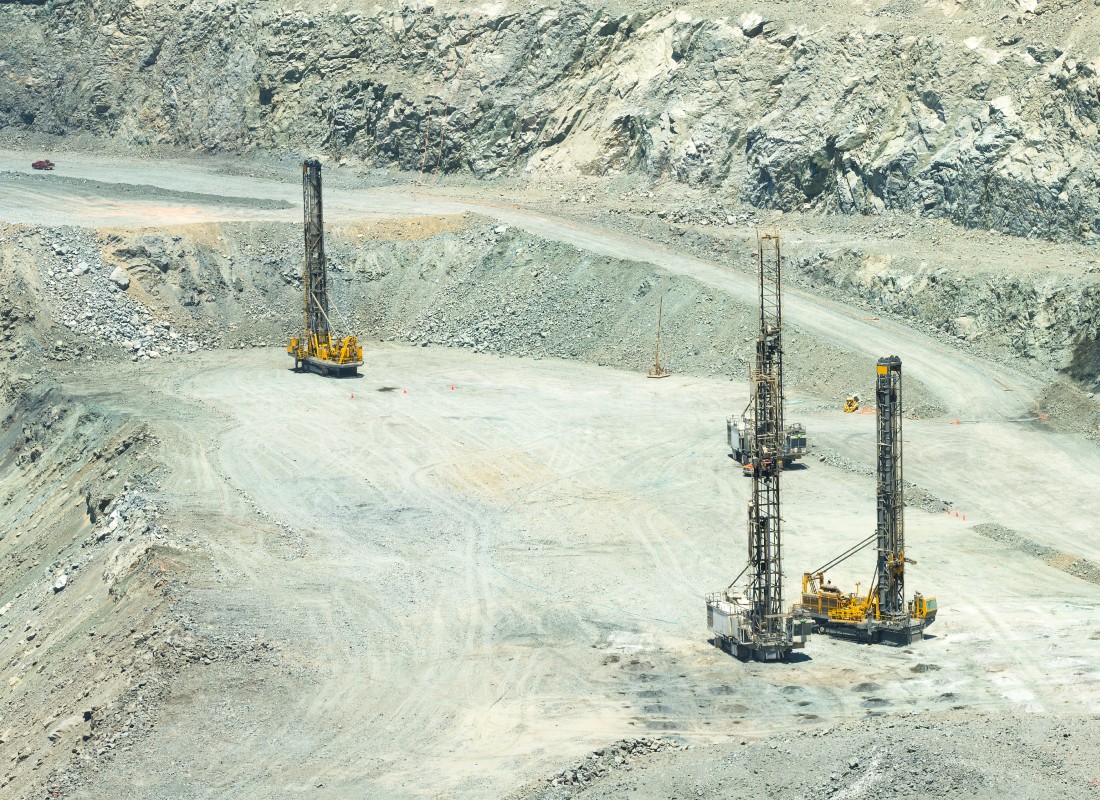
    South32 has lifted the Sierra Gorda ore reserve in Chile by 61% to 1.1 billion tonnes at 0.39% total copper, 0.016% molybdenum and 0.06 g/t gold (0.46% CuEq), extending reserve life by about five years to 2045 after 85,000 metres of infill drilling from 200 holes. The updated MRE now stands at 1.87 billion tonnes at 0.37% copper (0.44% CuEq), with the orebody remaining open at depth and additional potential at the Catabela Northeast target. A fourth grinding line, approved in July, is expected to lift copper output by roughly 30% from 2031, reinforcing long-term concentrator planning and infrastructure requirements.

    Agnico’s C$57M Radisson stake: O’Brien gold mine access and PEA lens for engineers
    Mining
    about 5 hours ago

    Agnico’s C$57M Radisson stake: O’Brien gold mine access and PEA lens for engineers

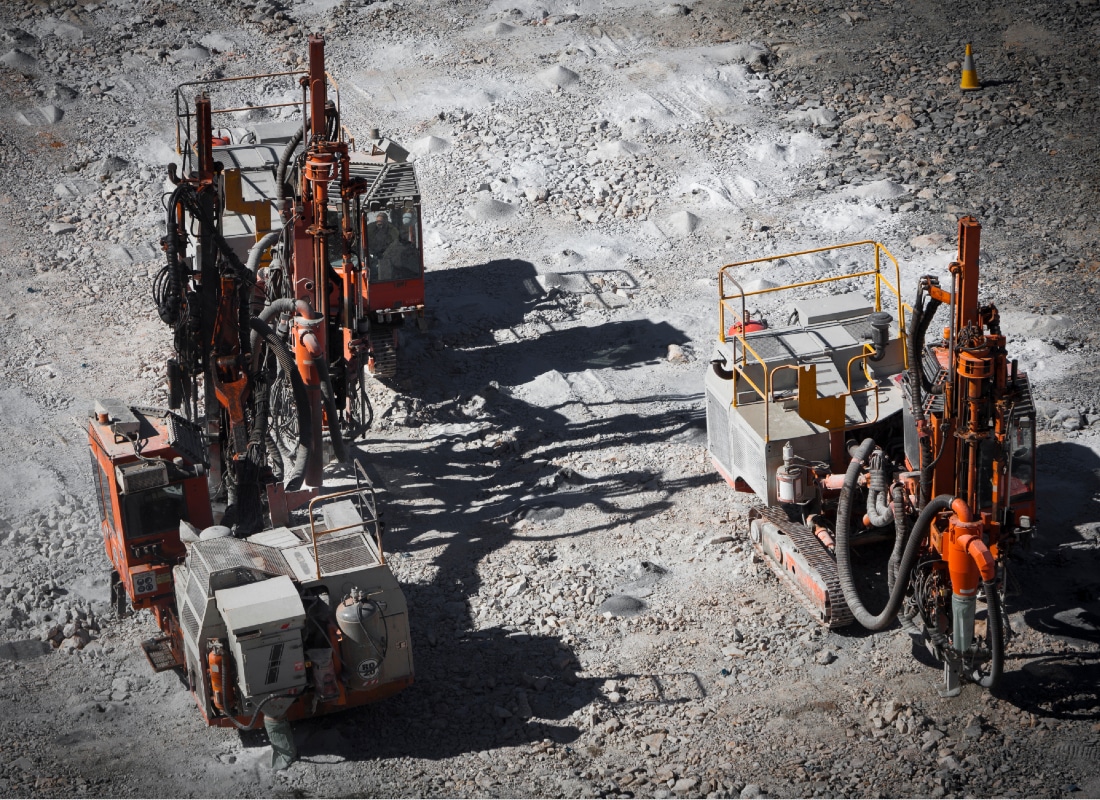
    Agnico Eagle Mines is investing C$57.2 million in Radisson Mining Resources for a 10.5%–14.9% stake to advance underground access and infrastructure at the historic O’Brien gold mine in Quebec’s Bousquet-Cadillac camp along the Larder Lake-Cadillac Break. Funding will support an access ramp, underground workings, surface facilities and water management, complementing Radisson’s fully funded 140,000-metre surface drilling and a planned 11-year underground operation with toll milling at IAMGOLD’s Doyon plant. A July 2025 PEA at US$3,300/oz gold pegs O’Brien’s after-tax NPV5 at C$871 million with a 74% IRR, underpinned by recent intercepts such as 5.1 m at 316.31 g/t from 823 m.

    Top of Mine: Costa’s AI-through-mining thesis and what it means for project teams
    Mining
    about 5 hours ago

    Top of Mine: Costa’s AI-through-mining thesis and what it means for project teams

    Otavio (Tavi) Costa, founder and CEO of Azuria Capital, argues that mining equities are currently the cheapest way to gain AI exposure, as sovereign funds and governments re-rate the sector and mid-tier producers move to secure “strategic reserves” by acquiring high-quality junior assets. He links this to a macro backdrop where global debt has returned to World War II levels but only about 3% of the US Treasury market is now backed by gold, versus roughly 50% then. With spot gold at $4,673.20/oz, Costa expects reserve depletion, weak discoveries and a “global monetary race towards gold” to drive prices substantially higher.

    Related Industries & Products

    Mining

    Geotechnical software solutions for mining operations including CMRR analysis, hydrogeological testing, and data management.

    CMRR-io

    Streamline coal mine roof stability assessments with our cloud-based CMRR software featuring automated calculations, multi-scenario analysis, and collaborative workflows.

    HYDROGEO-io

    Comprehensive hydrogeological testing platform for managing, analysing, and reporting on packer tests, lugeon values, and hydraulic conductivity assessments.

    GEODB-io

    Centralised geotechnical data management solution for storing, accessing, and analysing all your site investigation and material testing data.

    AllGeotechnicalInfrastructureHazardsEnvironmental