Network Rail £5bn Rail Systems Alliances: delivery and design notes for project teams
Reviewed by Tom Sullivan
First reported on New Civil Engineer
30 Second Briefing
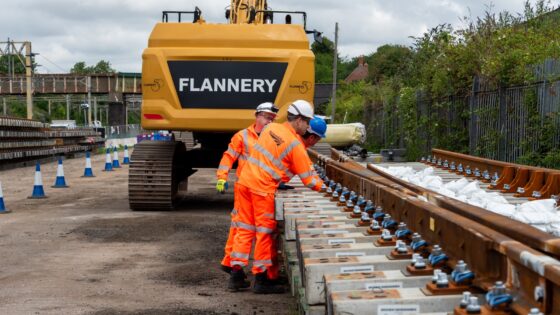
Network Rail has issued a pipeline notice for Track Focused Railway Systems Contracts worth up to £5bn to deliver track renewals, upgrades and associated rail systems works across the UK network in Control Periods 8 and 9 (2028–2039). The programme will bundle multi-disciplinary activities—track, signalling interfaces and related civil works—into long-term Rail Systems Alliances. Contractors should expect large-scale, regionally packaged frameworks with sustained volumes of plain line and S&C renewals, demanding robust possession planning and standardised design to manage whole-life asset performance.
Technical Brief
- Procurement is flagged as “Track Focused Railway Systems Contracts”, indicating track as primary discipline lead.
- Alliances are expected to integrate signalling and civils around track works rather than standalone packages.
- Long planning horizon (CP8–CP9) allows contractors to pre-invest in specialist rail plant and depots.
- Early notice enables supply chain to organise skills pipelines for permanent way, S&C and possession planning.
- Framework scale suggests standardised design catalogues and repeatable construction methodologies will be favoured.
- Commercially, alliancing implies shared pain/gain mechanisms tied to access utilisation and asset performance.
- For similar national rail owners, this signals preference for long-duration, multi-disciplinary alliancing over short-term renewals lots.
Our Take
Within our 597 Infrastructure stories, Network Rail is one of the most frequently recurring UK clients, and a multi-control-period framework like these Rail Systems Alliances typically shapes the supply chain structure for track, signalling and civils contractors for a decade or more.
Locking in alliances across CP8 and CP9 in the United Kingdom gives tier 1 and tier 2 rail contractors unusually long revenue visibility, which in past UK frameworks has underpinned investment in specialist plant, in-house design teams and digital track monitoring capability.
For UK rail projects, framework models of this scale have often been used to standardise technical specifications and delivery methods across regions, which can reduce interface risk on complex renewals and upgrades but also tends to narrow the field of smaller independent suppliers over time.
Prepared by collating external sources, AI-assisted tools, and Geomechanics.io’s proprietary mining database, then reviewed for technical accuracy & edited by our geotechnical team.
Related Articles


Related Industries & Products
Construction
Quality control software for construction companies with material testing, batch tracking, and compliance management.
Mining
Geotechnical software solutions for mining operations including CMRR analysis, hydrogeological testing, and data management.
QCDB-io
Comprehensive quality control database for manufacturing, tunnelling, and civil construction with UCS testing, PSD analysis, and grout mix design management.