Geomechanics, Streamlined.
© 2026 Geomechanics.io. All rights reserved.
Sizewell B nuclear power station in Suffolk has secured regulatory approval to extend operations by 20 years to 2055, maintaining its single 1.2GW pressurised water reactor as a key baseload asset on the UK grid. The government says the life extension will support thousands of jobs in operations, maintenance and outage contracting, while providing long-term price certainty by locking in low‑carbon generation with minimal new fuel-cycle investment. For civil and structural engineers, the decision implies continued inspection, life‑extension works and potential upgrades to primary containment, seismic resilience and cooling water systems.
Publication by the British Geological Survey of final borehole data packs and a full drilling report from the UK Geoenergy Observatory in Cheshire provides open access to high‑resolution geological, hydrogeological and geophysical logs for the Sherwood Sandstone aquifer. The dataset covers multiple cored and instrumented boreholes with continuous wireline logging, groundwater monitoring and core descriptions, giving engineers direct parameters for permeability, stratigraphy and faulting. Geotechnical, geothermal and energy‑storage designers can now calibrate numerical models, assess thermal and hydraulic behaviour, and de‑risk subsurface infrastructure in similar Triassic sandstone settings.
Barhale has secured a United Utilities contract to deliver a storm overflow reduction scheme on Micker Brook at Bramhall, Stockport, aimed at improving downstream water quality. The project will focus on upgrading combined sewer overflow infrastructure and associated network assets to cut spill frequency and volume into the watercourse. Civil and geotechnical teams can expect significant works around live sewers and constrained urban corridors, with tighter spill consents likely to drive higher storage requirements and more complex hydraulic control structures.
Leading UK construction and engineering bodies are urging the presumed new prime minister to retain the government’s recently published long-term infrastructure strategy rather than restart policy from scratch. Industry leaders want a dedicated Department for Infrastructure to coordinate major programmes across transport, energy and water, arguing that fragmented responsibilities between the Department for Transport, DESNZ and DEFRA slow delivery. For contractors, consultants and clients, policy continuity would stabilise multi‑year investment pipelines and reduce political risk on large schemes.
The House of Lords has advanced a proposed Nature’s Rights Bill that would recognise ecosystems and species as legal subjects, a move set to reshape planning, EIA and consent processes for major infrastructure. Treating rivers, wetlands and habitats as rights-bearing entities could require project promoters to evidence not only mitigation and biodiversity net gain, but also non‑degradation of an ecosystem’s “rights” over the asset life. Contractors and designers may face tighter constraints on route selection, earthworks, drainage and in‑river works, and more litigation risk from environmental NGOs acting as legal guardians.
Development consent has been granted by the Department for Energy Security and Net Zero for the One Earth Solar Farm, a nationally significant project spanning the Lincolnshire–Nottinghamshire area. The Development Consent Order approval clears the way for detailed design of grid connection infrastructure, access roads and foundations for large-scale photovoltaic arrays, with associated drainage and earthworks. Civil and geotechnical teams will now move towards discharge of requirements, ground investigation and construction planning under the nationally significant infrastructure project regime.
Applications have opened for South Australia’s latest Plan for Accelerating Exploration (PACE) Minerals program, offering co‑funding grants for drilling, geophysics and other greenfields exploration across the state. The scheme targets early‑stage work to advance prospects in copper, critical minerals and other commodities, with explorers able to offset direct exploration costs rather than tenure or corporate expenses. The Association of Mining and Exploration Companies (AMEC) has backed the move, signalling stronger state support for high‑risk drilling campaigns and geophysical surveys.
Restarting Global Battery Materials’ Kearney graphite mine in Ontario is valued at $183 million (C$260 million), with a PEA outlining an after-tax IRR of 67%, a 1.3-year payback and undiscounted after-tax cash flow of about $421 million over a 20-year life. The brownfield plan targets initial output of 23,000 t/y of ~95% carbon graphite concentrate from 2028, ramping to 50,000 t/y, drawing on 29.2 Mt indicated at 2.10% Cg and 33.8 Mt inferred at 1.90% Cg. Operating costs are projected to fall from C$31.35/t milled on diesel to C$25.50/t after grid connection.
More than 60% of known hydrothermal vent mollusc species – 125 of 201 assessed – are now classed as threatened on the IUCN Red List due to prospective deep-sea mining for copper, cobalt, zinc and polymetallic nodules. IUCN is urging a moratorium ahead of the International Seabed Authority’s 13–31 July meeting in Jamaica, citing evidence from a 3,000‑tonne nodule removal test at 4,280 m in the Clarion‑Clipperton Zone that cut macrofaunal density by 37% and species richness by 32% within two years. For project planners and ESG teams, the findings signal rising regulatory and reputational risk for vent-proximal licences, while marine protected areas like the Mariana Arc of Fire currently shield some species such as Provanna exquisita.
US-backed rare earths producers MP Materials, Energy Fuels and Phoenix Tailings, which together have secured billions of dollars in federal support including a $725 million package for Energy Fuels and $500 million for Phoenix Tailings, are selling most NdPr oxides and metals to Japan and South Korea via channels such as Sumitomo Corp. MP Materials has halted concentrate sales to China’s Shenghe Resources and plans to start supplying finished magnets to General Motors this year, while Energy Fuels is acquiring Australian Strategic Materials and German magnet maker Vacuumschmelze in a $1.9 billion deal to onshore more magnet capacity. The pattern shows upstream US mining and processing capacity is outpacing domestic NdFeB magnet manufacturing, leaving producers reliant on Asian demand until US downstream plants are built and qualified for defence and EV supply chains.
NexGold Mining is increasing 2026 drilling at the fully permitted Goldboro project in Nova Scotia by one-third to 40,000 metres after reverse circulation infill holes in the West pit, including RC-26-147 (6 metres at 12.06 g/t from 44 metres, with 1 metre at 67.41 g/t) and RC-26-102 (18 metres at 3.84 g/t from 44 metres), confirmed near-surface continuity and tenor. The 3,420-metre, 72-hole RC campaign is about 62% complete and will feed a resource update, an updated feasibility study due in Q3 and a potential construction decision this year. A 2022 study on Goldboro, now combined with the Goliath gold complex in NexGold’s portfolio, outlined ~100,000 oz/year over 11 years with a 26% after-tax IRR at a 5% discount rate, with economics likely stronger at current gold prices.
US retired general Charles Flynn warns that billions in US rare earth funding are “missing the mark”, with about 90% of mined raw material still processed overseas and roughly half the mining workforce set to reach retirement age by 2029. He argues Washington should back junior miners and service providers with staged, multi‑year commitments – for example, US$5–6 million annually over five years instead of one‑off US$25–50 million cheques – and use letters of intent tied to deposits. Flynn also proposes modular rare earth processing plants on army bases and National Guard sites near foreign trade zones to rebuild domestic mid‑stream capacity for defence-critical magnets.
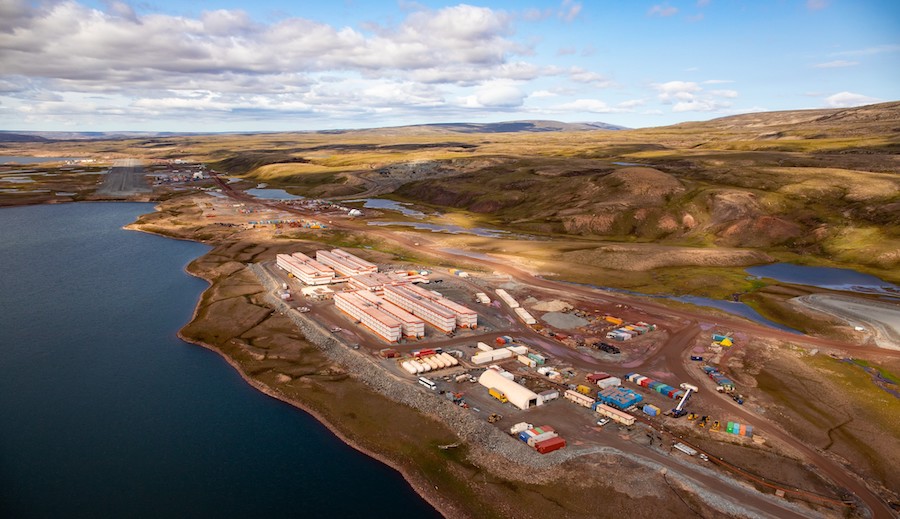
Nunavut’s devolution, scheduled for 1 April 2027, will shift land, water and resource management – including mineral claims and tenure on Crown lands – from Ottawa to Iqaluit, in a territory where mining contributed C$1.45 billion, or 35% of GDP, in 2025. Major operations such as Agnico Eagle’s Meadowbank-Amaruq and Meliadine, B2Gold’s Goose and Baffinland’s Mary River currently sit wholly or partly on Inuit Owned Lands, so royalty flows will not materially change until new Crown land mines are developed. Territorial officials are drafting “mirror” legislation to replicate federal permitting so approvals for projects and exploration programmes continue without interruption on day one.
Copper trading around $6.27/lb (just over $13,800/t) is, in Macquarie Strategy’s view, running ahead of fundamentals, with visible stocks up more than 870,000 t since early 2025 and LME inventories at eight-year highs plus an estimated 550,000 t off-exchange in the US. The bank now sees a 262,000 t surplus in 2026 and surpluses above 700,000 t/y in 2027–28, even after allowing for disruptions at Kamoa-Kakula, Grasberg and a delayed Cobre Panama restart to Q2 2027. Macquarie has lifted its 2026 price forecast to $13,165/t but expects a correction towards an $11,000/t floor by Q3 2027.
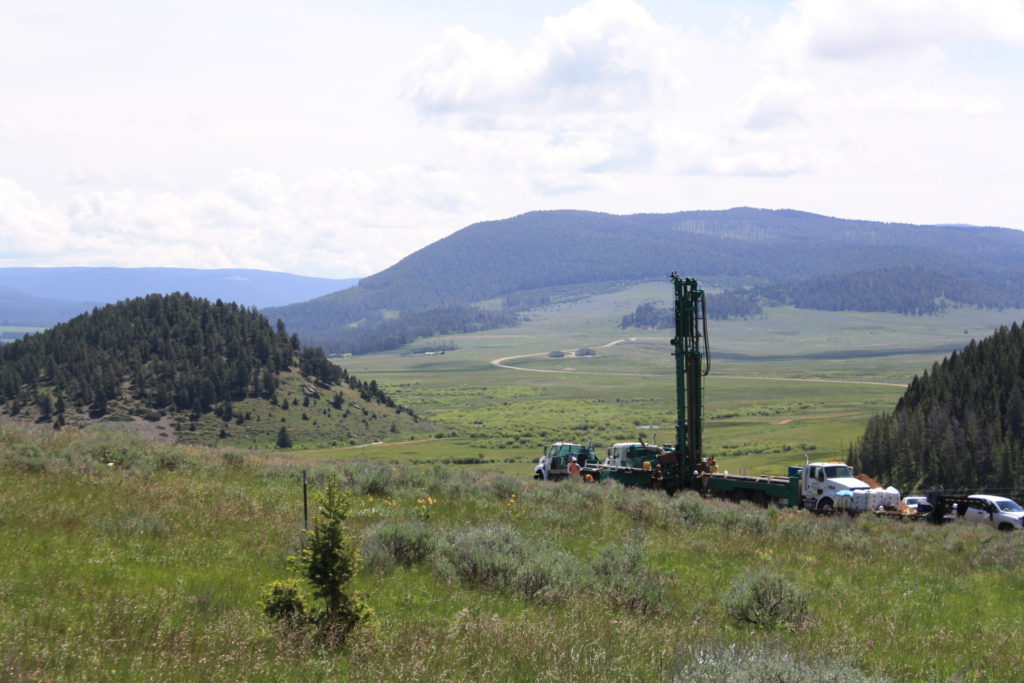
Lowry’s inclusion in Sandfire Resources America’s Black Butte copper project in Montana extends planned mine life from eight to 12 years, lifting probable reserves to 14.3 million tonnes at 2.6% copper (370,000 tonnes contained) across the Lowry and Johnny Lee deposits. The updated PFS, using mechanised long-hole stoping at Lowry to cut unit operating costs by US$2.28 to US$68.30 per tonne, projects average output of 31,000 tonnes copper per year, US$3.3 billion in revenue and US$476 million post-tax cash flow at US$4.70/lb. Copper. Despite this, after-tax NPV (8%) is only US$126 million with a 13.3% IRR on US$474 million initial capex.
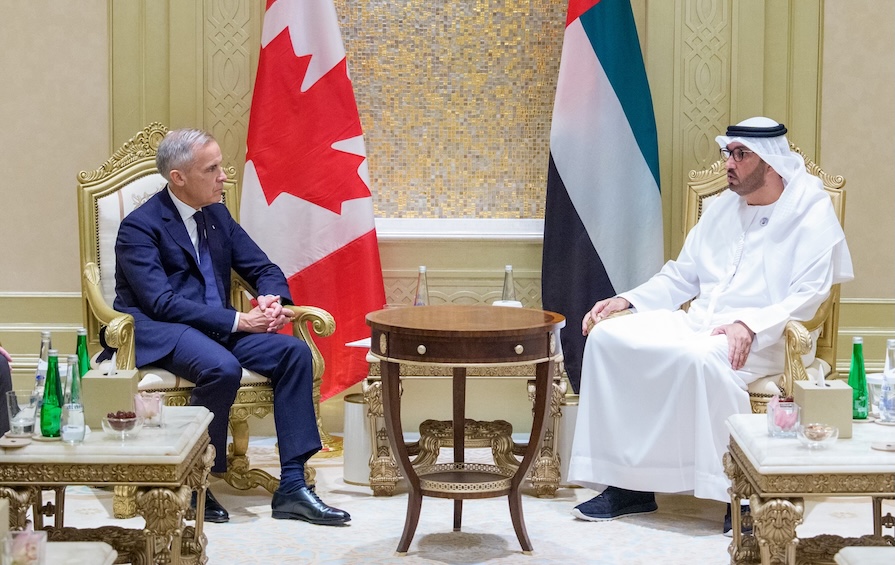
Canadian Prime Minister Mark Carney has secured more than C$1 billion in commercial agreements with Saudi Arabia, including 13 deals and MoUs spanning mining, critical minerals, LNG, hydrogen, renewable energy and carbon capture, plus plans for a foreign investment protection agreement by end-2027 and double-taxation talks. The move positions Canadian miners and energy firms to bid into Saudi Vision 2030 projects while diversifying away from US-centred trade exposure. AI firm Cohere’s strategic computing partnership with HUMAIN and BlackBerry’s work with Aramco Digital signal parallel collaboration on industrial digital infrastructure and secure operational technology.
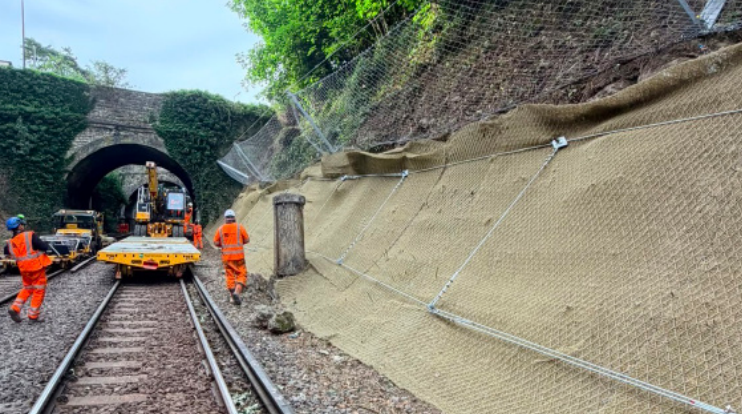
Network Rail’s remediation of the Maidstone East railway cutting in Kent shows how proactive slope management can avert disruption on steep, weathered embankments directly beside live tracks. Engineers used detailed ground investigation, slope stability analysis and remote condition monitoring to manage a high-risk cutting with limited access and constrained possessions on a busy commuter route. The project stresses early identification of deterioration, targeted drainage and vegetation control, and designing interventions that can be installed safely within short rail blockade windows.
Georgia Tech’s Geosystems group has released high‑resolution digital scans of Prof George F. Sowers’ handwritten Harvard course notes from the late 1940s, capturing original lectures by Karl Terzaghi and Arthur Casagrande on topics such as effective stress, consolidation and stability analysis. The archive, drawn from Sowers’ time as a graduate student, preserves worked examples, early design charts and problem sets that pre‑date many modern textbooks. Practitioners gain direct access to primary teaching material from the formative period of modern soil mechanics for reference, teaching and historical comparison.
Multotec is pushing higher-precision mineral separation with high-efficiency spiral concentrators and hydrocyclones, backed by manufacturing, R&D and field service operations in more than 100 countries. The company is leveraging over 20 years of Canadian site experience to optimise spiral and cyclone configurations for local orebodies, including cold-climate installations and variable feed conditions. For plant designers and metallurgists, the focus is on tighter cut points, reduced bypass and improved water balance, directly affecting recovery, tailings load and overall circuit stability.
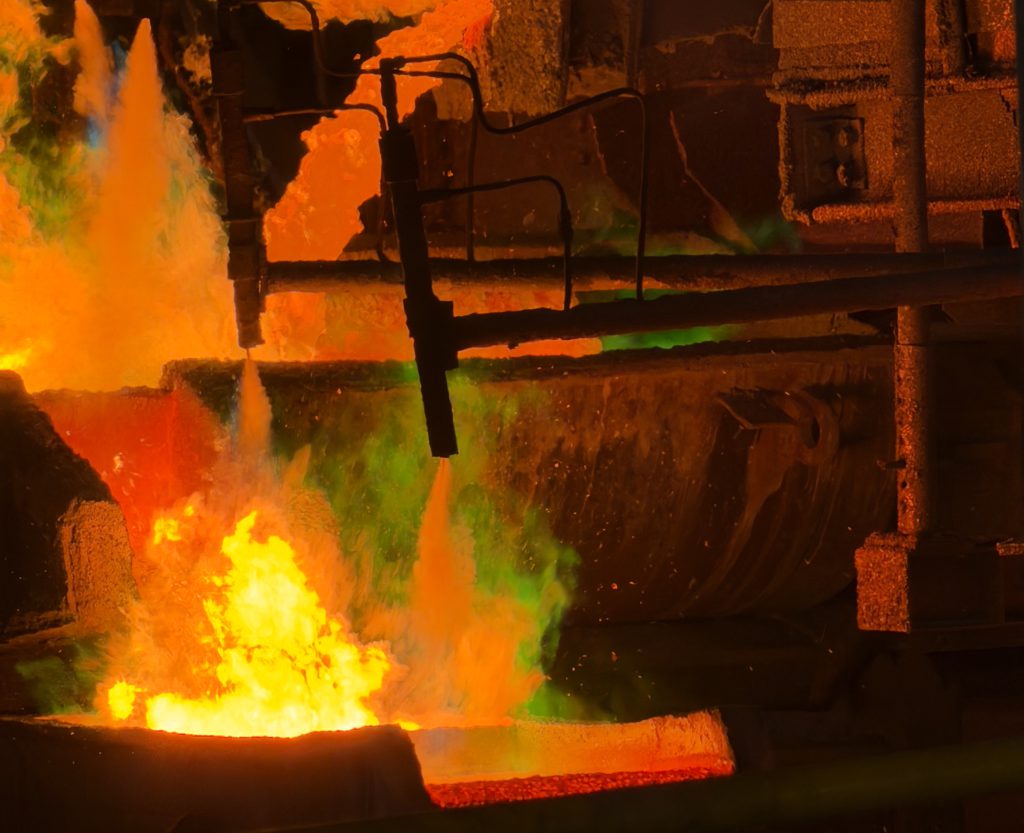
BHP has awarded China Nerin Engineering a design and supply contract for key processing facilities in the proposed Olympic Dam copper smelter and refinery expansion in South Australia. Nerin, a major Chinese metallurgical design institute, brings experience from large copper smelting complexes worldwide, including sulphide concentrate smelters and electrorefinery systems. The award signals progress towards a larger, higher-throughput smelting and refining flowsheet at Olympic Dam, with implications for furnace design, off-gas handling, and downstream electrorefining capacity.
North American Construction Group’s wholly owned subsidiary ML Northern Services has secured a five-year heavy equipment services contract with a major Canadian oil sands operator, focused on mobile fuel delivery. The scope covers ultra-class haul trucks and other large mining units, shifting fuelling from fixed bays to in-pit mobile services to cut non-productive travel and queuing. For mine operators, the move signals continued outsourcing of critical support fleets and reinforces the need to integrate fuel logistics with dispatch, haul planning and maintenance scheduling.
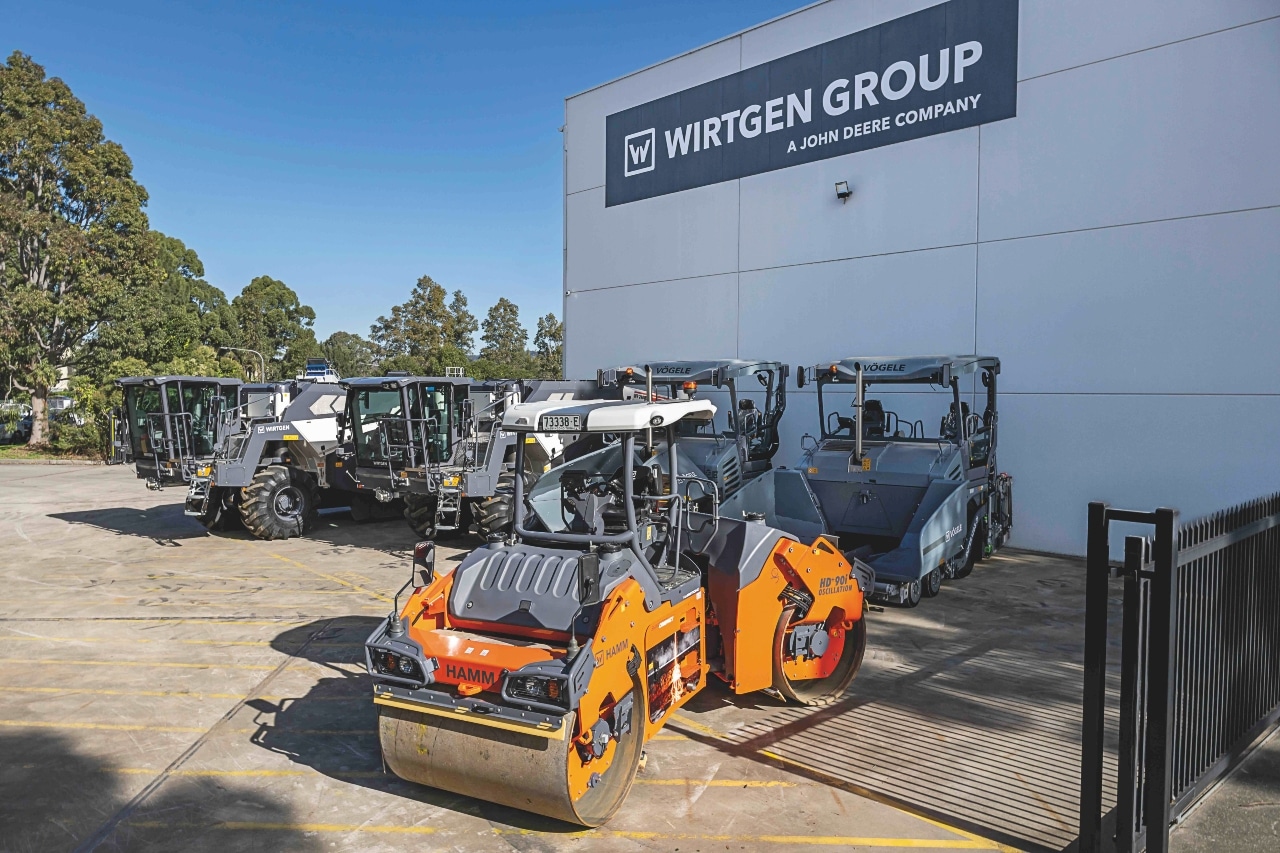
Wirtgen is expanding its road construction machinery portfolio with new compaction and paving technologies while pairing this with long-term after-market support for fleets. The company is actively adjusting machine interfaces and automation levels to balance operator control with digital assistance, responding to industry debate over automated versus human-operated systems on infrastructure projects. For contractors, the focus on lifecycle support and adaptable control systems signals continued backing for existing equipment alongside gradual adoption of more automated plant.
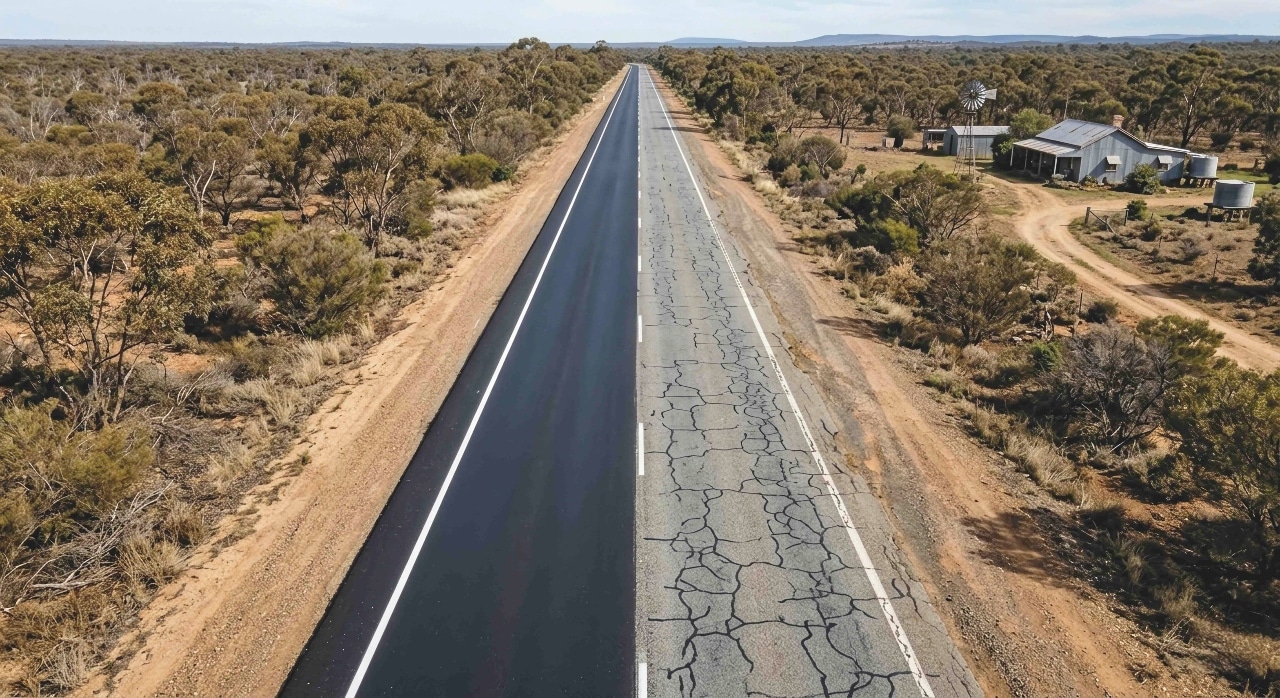
The Australian Flexible Pavement Association has released a white paper warning that Australia’s sealed road network is deteriorating faster than it is being maintained because funding has not kept pace with known pavement management solutions. The paper calls for a defined benchmark – a seven per cent annual resurfacing and rehabilitation rate – to stabilise network condition, compared with current renewal rates that sit well below this level across many jurisdictions. For asset managers and pavement designers, the benchmark provides a quantitative target to justify lifecycle-based budgets and prioritise resurfacing over reactive heavy rehabilitation.
Arafura Rare Earths’ long-serving chief financial officer Peter Sherrington will step down on 31 August after nearly 18 years, remaining until 31 October to manage a structured handover as the company moves towards construction of its Nolans rare earths project in the Northern Territory. Former BHP Nickel West president Angela Bigg will join as CFO on 13 July, bringing large-scale project and operational finance experience. The timing signals Arafura is locking in funding and cost-control leadership ahead of major EPC and procurement commitments at Nolans.