Geomechanics, Streamlined.
© 2026 Geomechanics.io. All rights reserved.
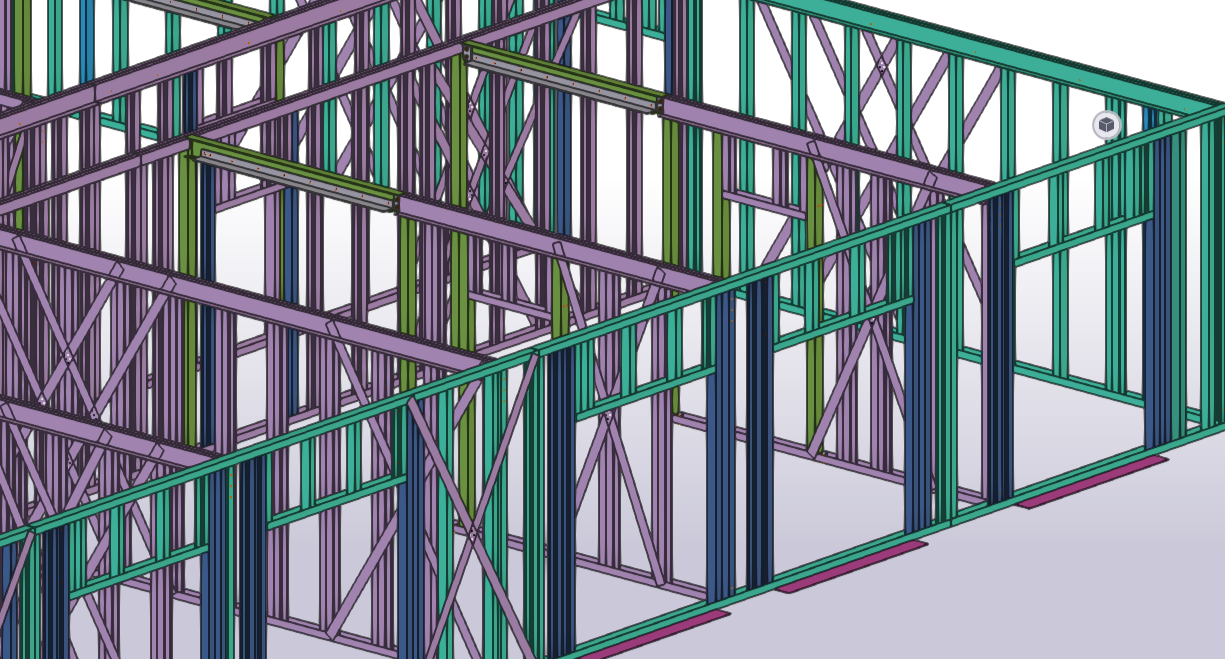
Researchers at Birmingham City University and steel specialist HadleyFRAME have automated structural checks in digital building models, cutting connection-checking time by 96% on projects with more than 18,000 joints. Two custom tools, developed under a West Midlands Advanced Construction Cluster sprint, include a parameter-driven copying utility that trims batch copy time for five connections from 15 to 12 minutes, and a model-wide scanner that flags missing or unexpected steel connections before fabrication. Tested on a five-storey modular residential scheme in Derbyshire, the system targets early detection of connection errors, directly affecting QA workflows for modern methods of construction.
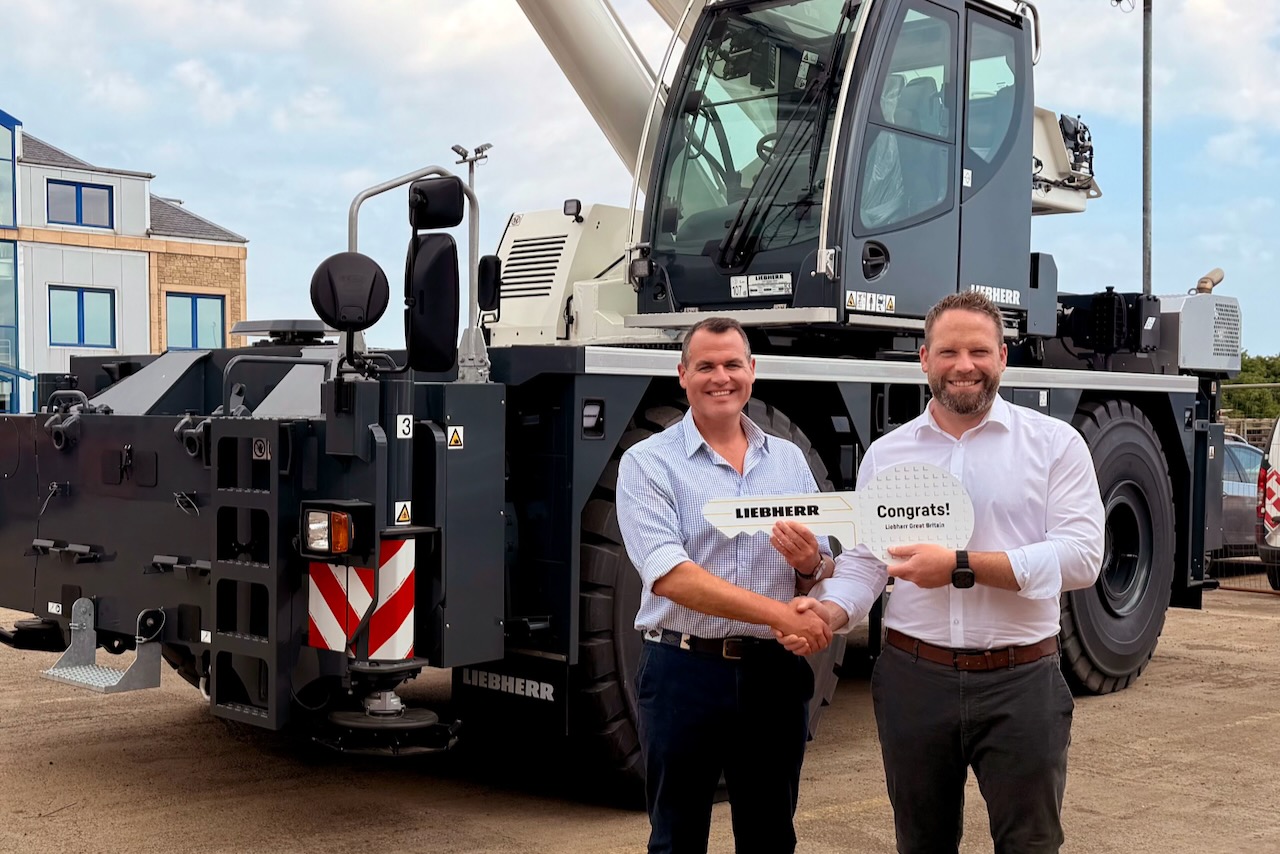
Bernard Hunter has deployed Scotland’s first 90‑tonne Liebherr LRT 1090‑2.1 rough terrain crane, ordered at ConExpo in Las Vegas, expanding its heavy-lift capability on constrained infrastructure sites. The crane’s 47m telescopic boom, 10.5–19m double swingaway fly jib with up to 40° offset, and maximum 66m hook height at 50m working radius give substantial reach for bridge, precast and plant installation work. Standard VarioBase support and an outrigger monitor integrated into the control system allow higher capacities on partial outrigger spreads, critical on tight urban and brownfield footprints.
Planning approval has been granted for 135 additional three, four and five-bedroom homes at Cameron Hall Homes’ Stoney Wood development on the Wynyard Estate near Middlesbrough, with construction of this second phase scheduled to start in August 2027 and first units due to market in autumn 2027. The phase is split into 81 plots to be built, marketed and sold by Cameron Hall Homes and 54 plots acquired by Banks Homes under a forward-sale agreement. For civil and groundworks contractors, the long lead time allows early coordination on services, drainage and estate road phasing across the enlarged masterplan.
Transport for London has appointed Arcadis to its Professional Services Framework 3 across four lots: risk and opportunity management, project and programme assurance, planning and scheduling, and procurement. Under the framework, Arcadis will support governance and delivery of complex schemes such as step-free access works, major station capacity upgrades and line modernisations, building on previous roles on the Piccadilly Line Upgrade, Northern Line Extension and Elephant & Castle Station. For contractors and designers, Arcadis’ position on multiple lots signals who will be shaping programme controls and commercial assurance on upcoming TfL renewals and enhancements.
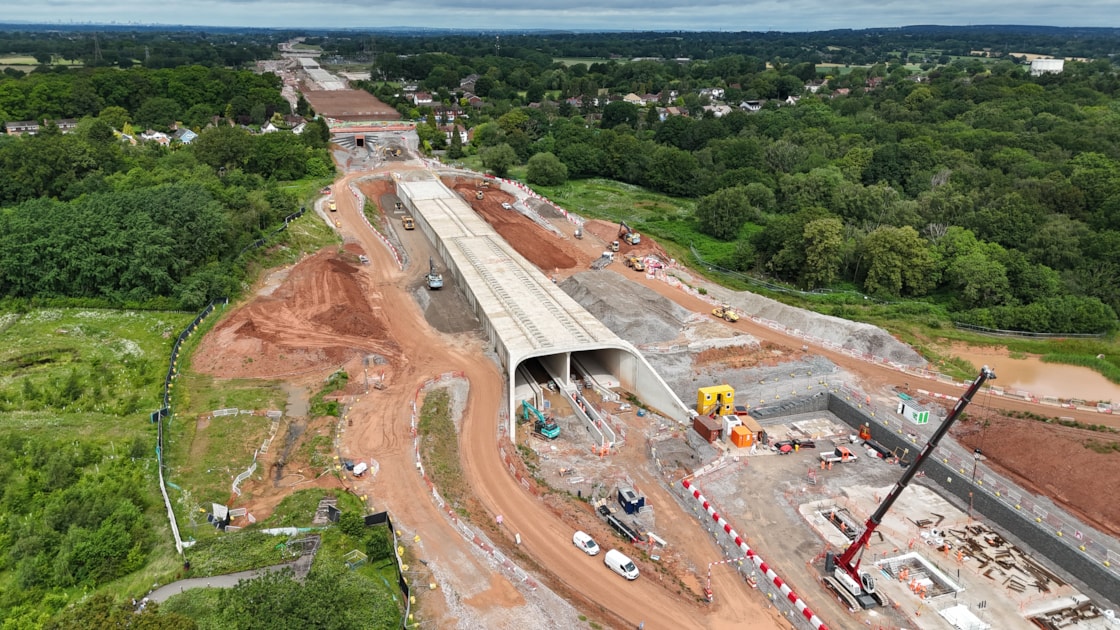
Placement of the final roof section on HS2’s Burton Green tunnel near Kenilworth marks structural completion of the 16-metre-wide twin-box tunnel designed by Mott MacDonald/SYSTRA and built by Balfour Beatty VINCI. Engineers and ecologists now move to construct a 500-metre-long green roof using excavated material for landscaping, with large-scale planting of native trees and shrubs to reconnect habitats between Black Waste Wood and Little Poors Wood. The design threads the railway through a narrow village corridor while restoring the Kenilworth Greenway and ecological connectivity above the buried structure.
Rio Tinto reported a 3 per cent year-on-year rise in first-half 2026 copper equivalent output, driven by stronger performance in its copper, iron ore, aluminium and lithium divisions. First-half copper production alone increased 31 per cent year-on-year, signalling materially higher metal volumes feeding its smelting and concentrate streams. The second quarter 2026 production update points to sustained throughput gains that will influence mine planning, concentrator utilisation and long-term contracting for copper and bulk commodities.
Alcoa has approved a final investment decision for a gallium recovery plant at its Wagerup alumina refinery near Perth, backed by the Australian, US and Japanese Governments, positioning Australia to supply about 10 per cent of global gallium demand. The project will extract gallium from Bayer-process liquor streams at an existing alumina operation, adding a critical semiconductor metal without new bauxite mining. For process and project engineers, the move signals growing value in retrofitting refineries to recover minor elements from legacy circuits.
Core Lithium has begun mining at the Grants open pit within the Finniss Lithium Operation in the Northern Territory, with the pit expected to deliver about 784,000 tonnes of lithium ore. The company remains on schedule for its first shipment of newly produced SC5 spodumene concentrate in the second quarter of 2026, signalling a move from development into early production. For geotechnical and mine planners, the ramp-up at Grants sets the reference geometry, pit wall performance and ore scheduling parameters for subsequent Finniss pits.
Austmine is urging the Australian Federal Government to ensure mining equipment, technology and services (METS) companies are explicitly eligible for the proposed Innovative Business Capital Gains Tax Concession (IBCC) due to start in July 2027. The group warns that current Treasury framing of “innovative” businesses risks favouring software and biotech while excluding METS firms developing advanced drilling systems, automation platforms and mineral processing technologies. For mining suppliers, IBCC access would materially affect capital-raising terms, R&D investment horizons and commercialisation of new equipment.
Global Lithium Resources is acquiring IGO’s Nova nickel operation in Western Australia via its subsidiary GL1 HoldCo No 3 Pty Ltd to fast‑track development of the nearby Manna lithium project and cut upfront capital. The deal gives Global Lithium access to Nova’s existing underground mine, processing plant and site infrastructure, enabling potential shared power, camp, haulage and permitting synergies rather than building greenfield facilities at Manna. For engineers, the transaction signals a shift towards hub‑and‑spoke use of established base‑metal plants to de‑risk new lithium assets.
National Highways has closed the North Bridge at M42 Junction 6 to all traffic after monitoring showed repeated breaches of its 7.5t weight restriction. The structure, which carries local traffic over one of the West Midlands’ busiest motorway junctions near Birmingham Airport and the NEC, will remain shut while engineers assess potential overstress and fatigue damage. Diversions are expected to load adjacent links and junctions, so asset managers will need to watch for knock-on pavement and structural impacts on alternative routes.
A 22km road tunnel under the Peak District is being proposed to divert heavy A628/A57 traffic out of the national park and enable reopening of the disused Woodhead TransPennine rail corridor. Promoters claim the scheme could be delivered for under £2bn by adopting Norwegian drill-and-blast and single-bore tunnelling techniques rather than UK-style twin-bore TBM construction. The concept implies long overburden sections in weak gritstone and shale, demanding robust rock support, drainage and ventilation strategies comparable to Scandinavian sub-sea and mountain tunnels.
Ofwat has imposed a £30.5M redress package on South East Water and ordered the appointment of an Independent Monitor after concluding three separate enforcement investigations into the company. The intervention follows sustained performance concerns around public water supply resilience and service levels, with the monitor to scrutinise delivery of improvement plans, leakage control and outage management. Contractors and consultants working on South East Water’s network upgrades should expect tighter regulatory oversight, more prescriptive performance reporting and closer scrutiny of asset condition and hydraulic capacity improvements.
A worker at the Sellafield nuclear decommissioning site “died suddenly” during the week commencing 6 July, prompting an immediate review by the Office for Nuclear Regulation (ONR). ONR has confirmed the death was not work-related and that there was no radiological or conventional safety incident affecting the wider site. Routine regulatory oversight of Sellafield’s legacy waste facilities, spent fuel management and construction activities continues unchanged, with no impact reported on nuclear safety cases or site operations.
An updated “higher confidence model” from the British Geological Survey refines estimates of superficial deposit thickness above Great Britain’s bedrock, giving engineers improved depth-to-rock data for foundations, earthworks and buried infrastructure. The model integrates existing BGS geological mapping with borehole records and geophysical datasets to reduce uncertainty in areas with complex drift sequences and variable till or alluvium cover. Practitioners can use the outputs to optimise preliminary ground investigation targeting, refine early-stage design assumptions and better screen geohazard susceptibility at corridor and site scale.
JH Fletcher & Co has appointed Gainwell Engineering Private Limited as its authorised distributor for India, covering its range of underground bolters, drill jumbos and scalers. The agreement targets India’s expanding underground coal and hard-rock operations, where mechanised roof bolting and face drilling are replacing manual methods in deeper, higher-stress seams. Local distribution and support from Gainwell are expected to shorten lead times for parts and service, improving availability of Fletcher equipment fleets in Indian mines.
A fleet of LiuGong DW105AE battery electric wide-body trucks has been deployed at a Conch Cement mine in south China as the company pushes towards zero‑carbon mine operations. The DW105AE trucks replace conventional diesel haul units previously supplied by LiuGong, using high‑capacity lithium battery packs and electric drivetrains to cut on-site diesel combustion and associated CO₂ emissions. For mine planners and maintenance teams, the shift implies new charging infrastructure design, revised haul‑cycle calculations around battery range, and different service regimes for electric powertrains.
Macmahon Underground Pty Ltd has secured an underground mining services contract at the Mt Marion lithium operation, 70 km south of Kalgoorlie, jointly owned by Mineral Resources and Jiangxi Ganfeng Lithium on a 50:50 basis. The scope covers underground development and production work, signalling a shift from Mt Marion’s historically open-pit focus towards a deeper, longer-life operation. Geotechnical and mine planning teams should expect new requirements around underground ground control, ventilation, and ore handling design for hard-rock lithium orebodies in the Eastern Goldfields setting.
Munich Re Specialty – Global Markets, Syndicate has launched a Lloyd’s market consortium offering Miner Rescue Insurance to fund the high, unpredictable costs of locating and rescuing miners and contractors trapped underground after catastrophic events. The cover is structured to respond specifically to complex, multi-day rescue operations, including specialist drilling, geophysical locating, temporary ground support and ventilation, and international deployment of rescue teams and equipment. For operators, the product separates rescue financing from standard property and liability policies, potentially influencing risk management, emergency planning and contractual arrangements with contractors.
BQE Water and Centerra Gold have begun preparations to restart the selenium treatment plant at the Kemess copper-gold project in northern British Columbia, originally built and briefly operated in 2020 to manage mine-impacted water. The plant is designed to remove selenium from contact water before discharge, using BQE’s specialised process technology to meet stringent provincial water quality limits. Restarting the facility signals advancing project development and will be central to permitting and long-term water management planning for any future underground or open pit operations.
Genesis Minerals’ proposed merger with Vault Minerals will create a Western Australian-focused gold producer targeting 600,000–700,000 oz/year, with 33.6 Moz in resources and 9.4 Moz in reserves, and a pro-forma market capitalisation of about A$12.6 billion. The A$5.6 billion cash-and-scrip deal, giving Vault shareholders 0.7629 Genesis shares plus A$0.475 per share and 40.2% of the combined entity, is forecast to deliver A$2 billion in synergies over 10 years, including A$715 million in avoided growth capital by processing Tower Hill ore through Vault’s King of the Hills mill. Pro-forma net cash of A$611 million, liquidity of A$1.4 billion and >A$200 million quarterly cash flow are expected to support further brownfields optimisation and portfolio review, with integration and a new corporate plan targeted by H1 2027.
Elevate Uranium is lifting its stake in Namibia’s Marenica project to 90%, securing 47.5 million lb attributable U3O8 from a 134.5-million-tonne resource grading 180 ppm and lifting its Namibian inventory to 124 million lb alongside the 76.2-million-lb Koppies deposit. The A$6.7 million deal structure combines A$1.1 million cash, A$2.2 million in shares and cancellation of A$3.4 million debt, with Xanthos Mining retaining a 10% free-carried interest. Marenica ore is feeding Elevate’s U-pgrade pilot plant, which aims to pre-reject gangue to raise feed grades and shrink leach plant and reagent requirements.
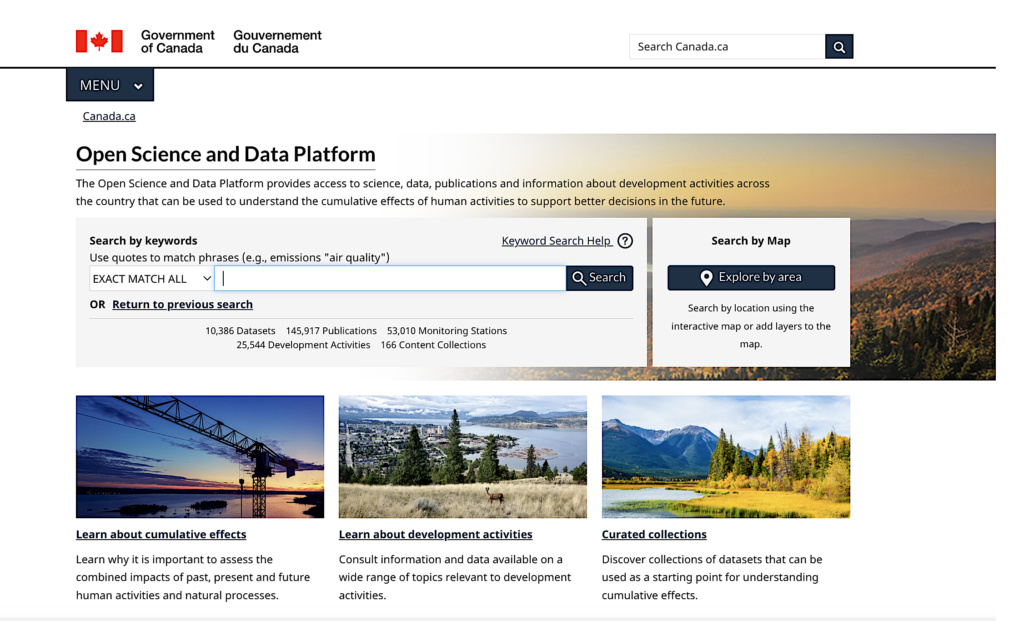
Canada’s Open Science and Data Platform (OSDP), built by Natural Resources Canada to support the federal Major Projects Office, is now central to mine permitting, aggregating geospatial science, environmental monitoring, mapping tools and regulatory records from federal, provincial and territorial sources into a single online portal. Used on Newmont’s Red Chris mine expansion in British Columbia’s Golden Triangle, the OSDP lets users layer Treaty boundaries, species-at-risk data, transmission lines, watersheds and nearby projects, with updates fed automatically via APIs rather than static uploads. NRCan reports about 200,000 unique users, 70% repeat visits, and is adding datasets by roughly 10% annually, with plans for AI-driven search and machine-readable historical assessments.
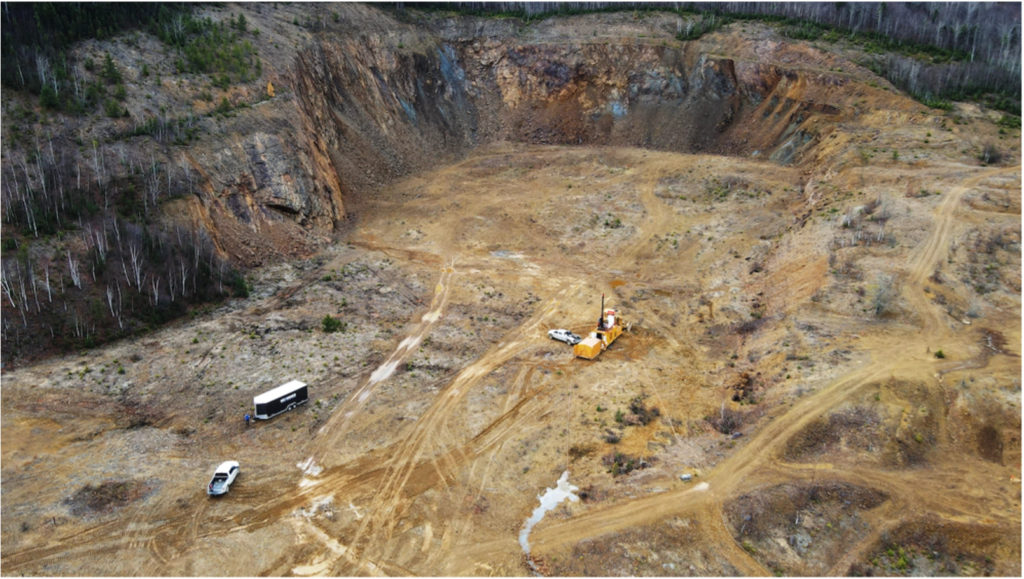
Canadian Copper has filed the Environmental Impact Assessment registration for its Murray Brook polymetallic deposit with New Brunswick’s department of environment and local government, covering a restart scenario for the Bathurst‑camp operation. The project, currently in advanced exploration with pre‑development stripping already completed and a 2013 PEA indicating more than 10 years of mine life, is one of few Canadian‑domiciled near‑term critical mineral developments with project financing in place, according to CEO Simon Quick. A government technical review committee and public consultation, including Pabineau First Nation, will now scrutinise the submission.