Geomechanics, Streamlined.
© 2026 Geomechanics.io. All rights reserved.
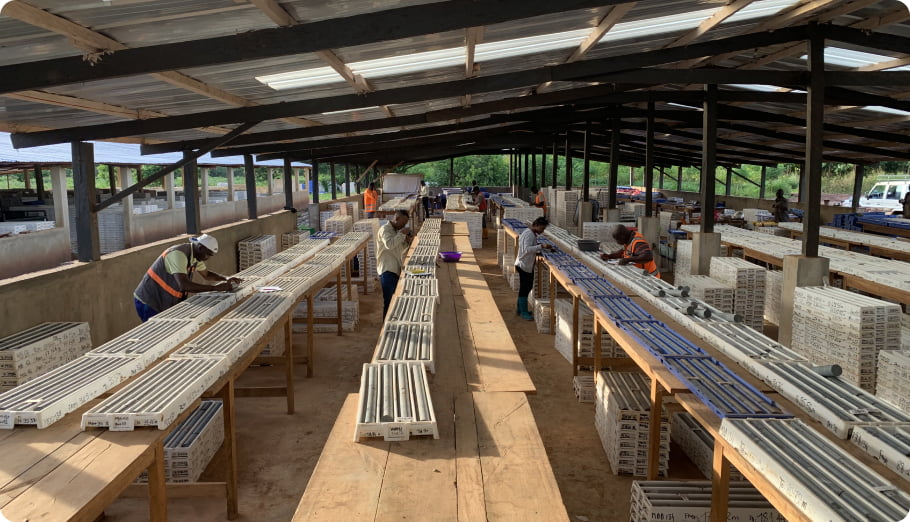
Montage Gold is positioning the Didievi project in central Côte d’Ivoire as its next development asset after a 40,000-metre drill campaign at the Blaffo Guetto deposit returned standout intercepts including 15 metres at 20.97 g/t gold from 127 metres and 27.4 metres at 8.46 g/t from 184 metres. Didievi currently hosts 12.4 million inferred tonnes at 2.5 g/t (989,000 oz) and a 60,000-metre, US$13.5 million follow-up programme is under way to extend the >1.3 km strike and update resources across 14 targets. Analysts see potential for c.200,000 oz/y production, complementing Montage’s Koné mine, which is expected to exceed 300,000 oz/y over its first eight years.
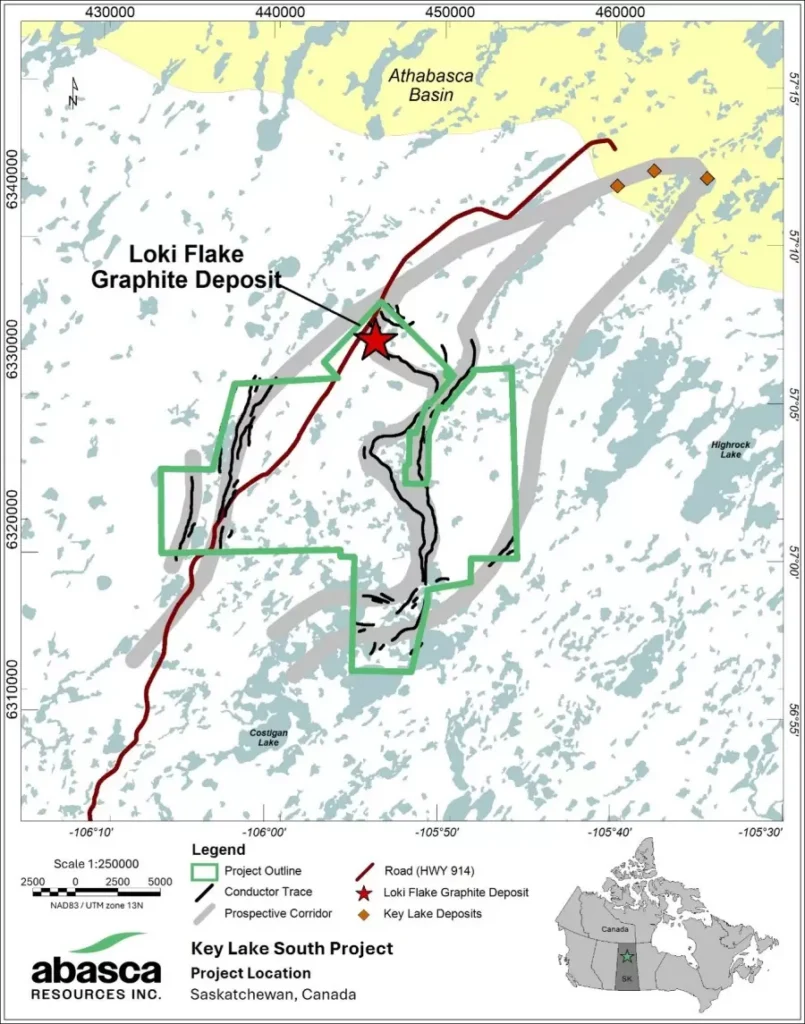
Abasca Resources has nearly doubled and upgraded the Loki flake graphite resource in northern Saskatchewan to 6.99 million indicated tonnes at 8.27% graphitic carbon (580,000 tonnes contained) plus 15.83 million inferred tonnes at 6.93% (1.1 million tonnes), ahead of a PEA for an open-pit operation near Highway 914, 15 km south of Cameco’s Key Lake mill. An aggressive schedule targets a prefeasibility study in late 2026, while parallel drilling at the nearby Thor zone returned broad intervals including 101.8 m at 4.31% Cg from 66.7 m, signalling additional along-strike potential.
SuperCritical Materials has secured an exclusive US Department of Energy licence to commercialise a Pacific Northwest National Laboratory adsorbent manufacturing process that extracts uranium from seawater using acrylic fibres treated with proprietary adsorption chemistries. The Austin-based firm gains sole rights to deploy the technology in the US before expansion to allied countries, targeting uranium dissolved in oceans estimated at 4.5 billion tonnes and aiming to co-recover other strategic minerals. The move directly targets emerging bottlenecks in uranium, HALEU and fuel-cycle infrastructure for advanced reactors.
British Columbia has issued an environmental assessment certificate for Vitreo Minerals’ $300 million Angus silica sand mine north of Prince George, clearing the way for a 20‑year operation producing up to 2 million tonnes of proppant annually. The Environmental Assessment Office found no significant adverse effects with mitigation, and requires the project to be substantially started by 2036. Construction is expected to create about 150 jobs and operations nearly 140, with formal participation from Lheidli T’enneh, McLeod Lake, Tsay Keh Dene and West Moberly First Nations in the assessment process.
Almonty Industries has extended its offtake agreement with Global Tungsten & Powders for concentrate from the Sangdong mine in South Korea from 15 to 21 years, lifting total contracted volume by 40% from 3,150,000 to 4,410,000 metric tonne units and locking in a 6.3% price uplift per MTU. The deal secures minimum deliveries of 210,000 MTU per year after ramp-up, covering about 90% of Phase I mine output and supplying GTP’s US facilities. With Chinese export curbs driving record tungsten prices, the contract provides long-duration, conflict-free feedstock into Western defence and industrial powder supply chains.
Alsym Energy and Australian mining services firm ERITY have signed a 9 GWh strategic partnership, billed as the largest sodium-ion battery agreement in global mining, to deploy BESS for microgrids, critical mineral extraction and AI-powered mobile data centres. The deal forms part of 18 GWh of Alsym’s announced deployments in two months, including 8.5 GWh with ESS and 500 MWh with Juniper Energy, with adopters such as Resource Mineral International and Volt Resources. Sodium-ion’s non-flammable, thermally stable chemistry targets diesel displacement and off-grid power resilience at remote mine sites.
Hatch and Maaden have formalised a strategic delivery owner-partnership agreement to accelerate Maaden’s next phase of mine and processing project development in Saudi Arabia. The deal follows a memorandum of understanding signed at the Future Minerals Forum in Riyadh in January 2026 and moves the relationship into long-term execution support. For engineers, this signals expanded EPCM-style involvement by Hatch across Maaden’s portfolio, likely affecting front-end studies, detailed design, and brownfield debottlenecking on major phosphate, gold, and aluminium operations.
idoba has released Version 2.0 of idoba.sim, a cloud-based simulation tool for short-term planning in underground hard rock mines that now models development advance and truck load-and-haul in a single run. Planning teams can simultaneously simulate development headings and both development and production haulage, rather than running separate models for each activity stream. The integrated workflow should improve cycle time analysis, fleet utilisation planning and identification of bottlenecks around development-ore interactions.
New Murchison Gold has reported high-grade grade-control and resource-definition drilling at its Cloudkicker deposit in Western Australia, including standout intersections such as 10m at 13.61g/t gold, with results expected to lift both grade and tonnage ahead of an updated resource estimate. The work targets an emerging orebody within the broader Murchison goldfield, where existing infrastructure and historical workings could accelerate development. For mine planners and geotechs, the tighter drill spacing and strong grades support earlier conversion of near-surface material to higher-confidence ore reserves.
Group 6 Metals has entered the underground mining phase at its Dolphin tungsten mine on King Island, Tasmania, after processing a record 77,953 tonnes of ore in the June quarter, up from 72,351 tonnes in the previous quarter. Higher-grade underground ore is scheduled to feed the processing plant later this year, following initial open-pit operations. For mine planners and metallurgists, the shift underground signals an impending change in grade control, stope design and plant tuning as the orebody transitions to deeper, likely more complex geometries.
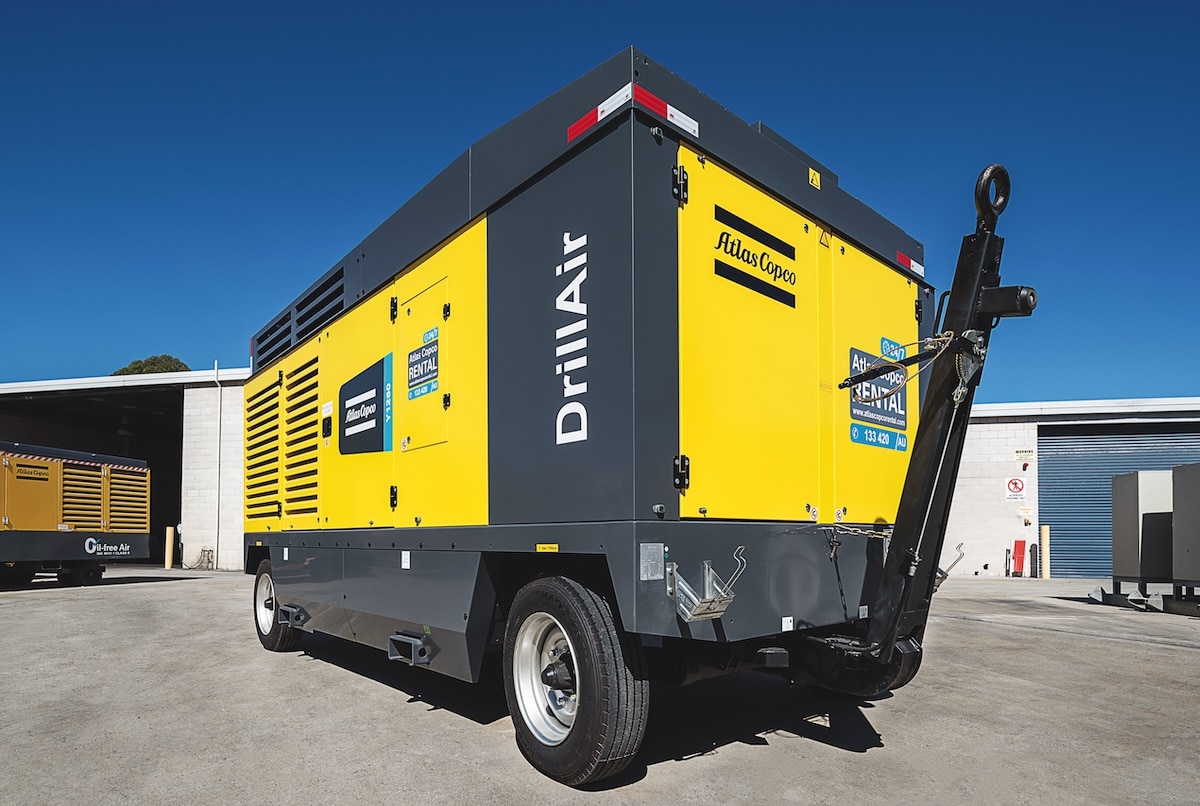
Atlas Copco is promoting a single, integrated compressed-air rental system that links pit drilling, crushing, screening and mineral processing, centred on its DrillAir Y1260 high-pressure compressor. Instead of separate, fixed compressors at each stage, mines can deploy mobile units with variable pressure and flow to power down-the-hole drilling, air knives on crushers and air-operated valves or pumps in the plant. The approach targets lower installed power, reduced redundancy and easier maintenance planning, but requires careful air-network design and control to avoid pressure drops and bottlenecks across the full circuit.
Western Australia’s new Minister for Mines, Petroleum and Exploration, Daniel Pastorelli, is being pressed by the Association of Mining and Exploration Companies (AMEC) to fast‑track key legislative and regulatory reforms following his appointment in a cabinet reshuffle replacing David Michael. AMEC is pushing for immediate clarity and streamlining around approvals and compliance settings that directly affect exploration timelines and project financing risk in WA’s hard‑rock sector. For geotechnical and mining engineers, any shift in these frameworks will influence permitting schedules, drilling campaigns and long‑lead design commitments across new and brownfield sites.
Deswik is rolling out its NOVA platform to unify open-pit mine scheduling, stockpile blending and haulage into a single planning environment, replacing the traditional mix of disconnected spreadsheets and point tools. By running mining, blending and truck fleet scenarios together, NOVA can expose crusher feed gaps, mill underutilisation and haul road bottlenecks early in the planning cycle rather than after shift start. For engineers, the integrated workflow tightens compliance to long-term plans, improves material movement visibility and reduces manual data hand-offs between geology, planning and operations.
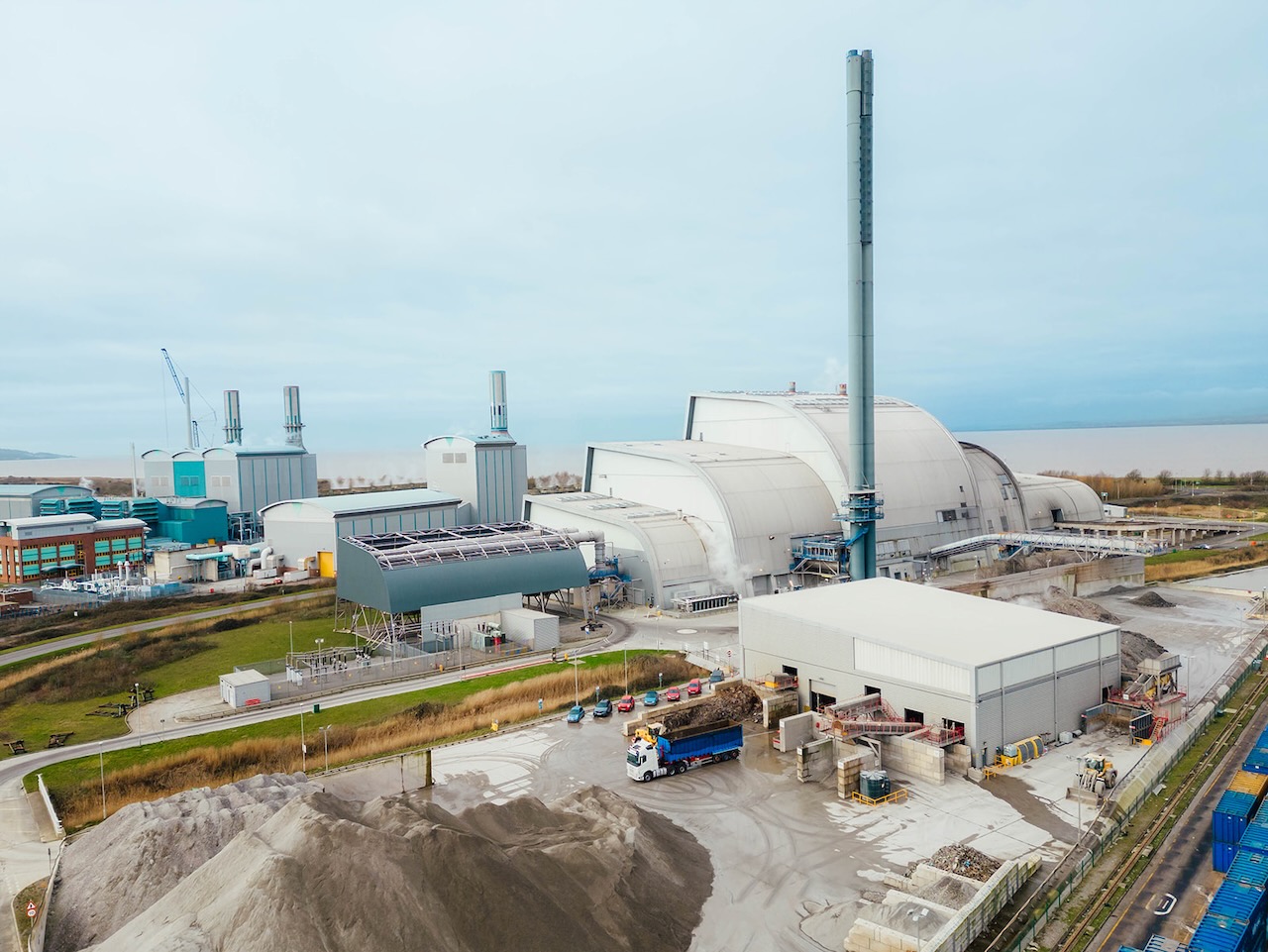
Blue Phoenix, an international producer of sustainable secondary aggregates, has signed a three‑year agreement with digital reuse platform MukAway, signalling a shift from traditional waste logistics into online materials trading. The deal will channel incinerator bottom ash and other secondary aggregates through MukAway’s marketplace, matching surplus materials from energy‑from‑waste and recycling plants with nearby construction and infrastructure projects. For contractors and geotechnical designers, this could increase availability and traceability of certified recycled aggregates, supporting specification of lower‑carbon sub‑base and fill materials where local standards permit.
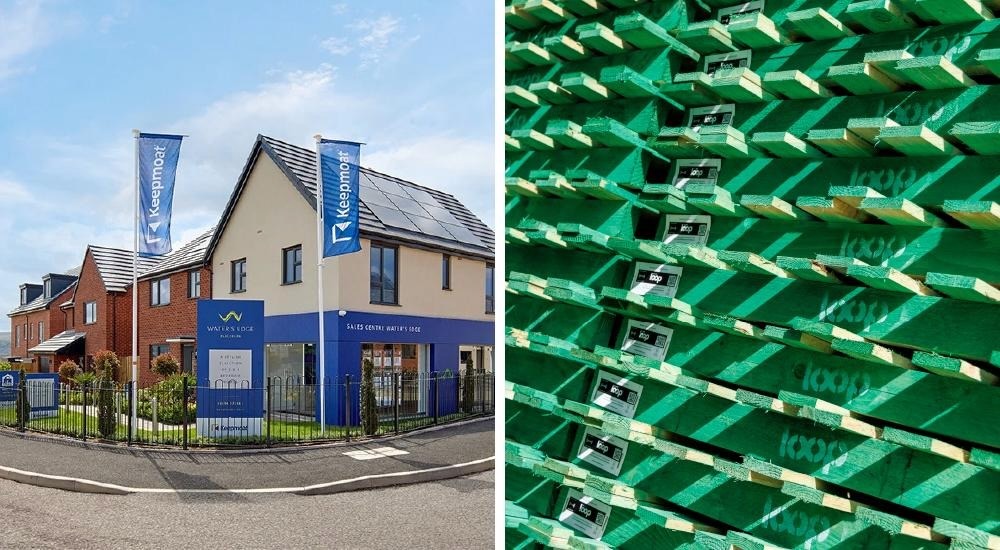
Housebuilder Keepmoat has joined circular logistics firm The Pallet Loop, rolling out reusable green LOOP pallets across its 79 live sites to cut timber pallet waste and skip disposals. The scheme uses higher quality pallets that are collected, repaired and reused, with Keepmoat receiving £2–£4 per pallet returned, depending on condition. For site managers, the move signals tighter materials handling, lower waste-handling costs and more predictable pallet flows within existing construction supply chains.
Peel Waters has submitted a £100 million planning application for a 526-home co-living scheme at Yorkhill Quay, Glasgow, designed by Anomaly Architects and to be delivered for developer Urban Pulse. The waterfront project combines residential units with integrated leisure and retail floorspace, signalling higher-density mixed-use redevelopment along the Clyde corridor. For civil and geotechnical teams, the scale and quayside location point to significant foundation, flood-resilience and public-realm works on a constrained urban riverfront site.
Taylor Wimpey has appointed former Berkeley Group executive Tom Pocock as divisional chair for London and the South East, bringing 20 years’ experience in land, planning and operations on complex mixed-use schemes. Pocock previously held several managing director roles at Berkeley, overseeing large-scale developments across the South East, and is tasked with improving capital efficiency and operational performance at Taylor Wimpey. His remit will involve close coordination with local authorities and supply-chain partners to deliver high-density housing and mixed-use projects in some of the UK’s most constrained urban markets.
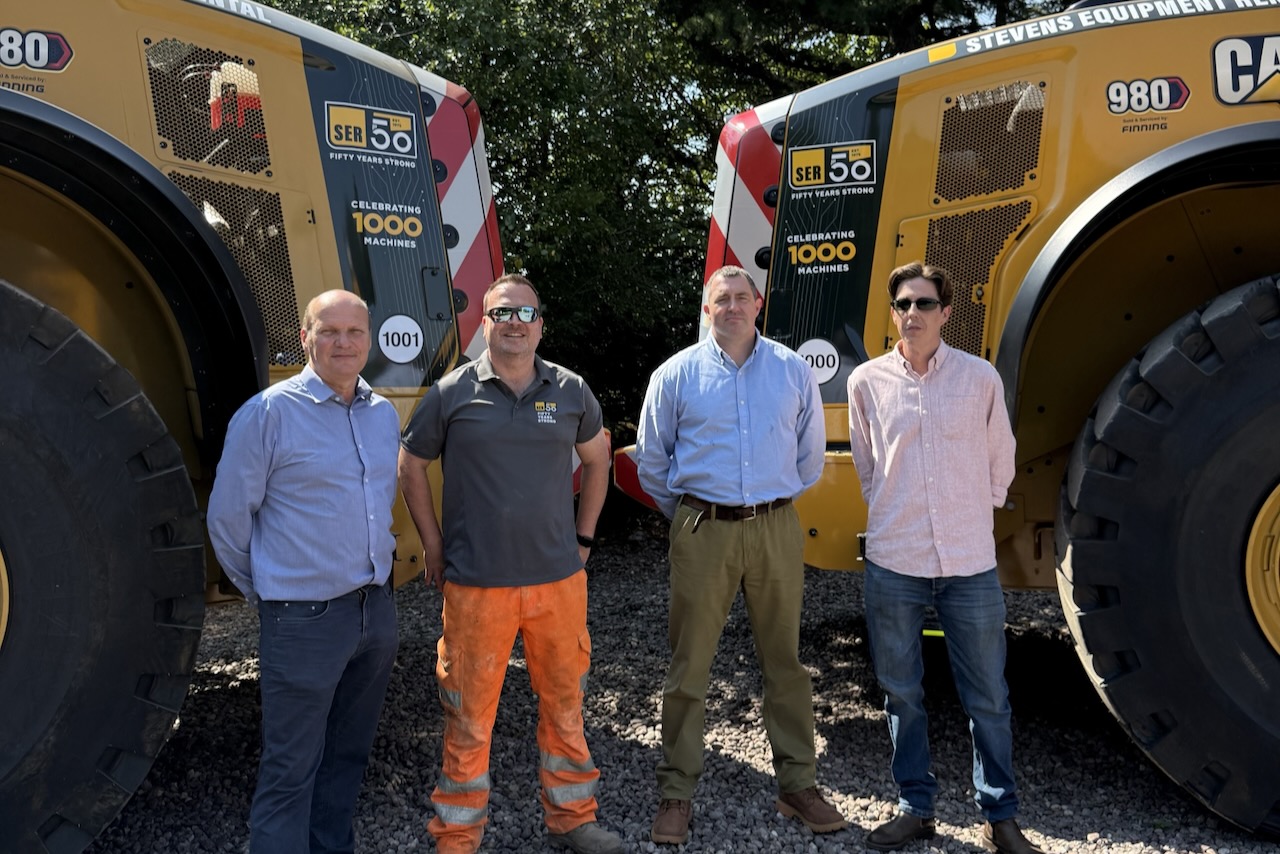
Stevens Equipment Rental has taken delivery of its 1,000th new machine, the UK’s first Cat 980 medium wheel loader (30.9 t) fitted with Caterpillar’s new AEB automatic emergency braking, supplied by Finning. The Cat Detect collision mitigation package combines an integrated sensor and smart camera to track people and obstacles, automatically applying the service brakes if the operator does not react when something enters a defined critical zone. A Motion Inhibit function also blocks gear engagement from standstill when a person or object is detected, with on-screen alerts to the operator.
Materials supplier BRCK Group reported full-year revenue to 31 March 2026 up 1.3% to £645.4m, with adjusted pre-tax profit rising 4.9% to £38.3m despite gross profit margins edging down from 19.1% to 18.9% amid price pressure and weak housebuilding. Growth was driven by an 8.8% increase in its design & install division after restructuring into two core units: distribution and design & install. The group completed the acquisition of H S Jackson & Son fencing post year-end, signalling continued diversification and capacity for further bolt-on deals.
Laing O’Rourke reported full-year pre-exceptional EBIT to 31 March 2026 up 42% to £157.7m from £111.3m, with its order book rising 45% to £17.2bn, signalling strong demand across major UK and international infrastructure programmes. The margin uplift suggests tighter project controls and improved risk pricing on complex schemes such as hospitals, rail and large-scale commercial builds, where the contractor has been pushing offsite manufacturing and DfMA. For clients and partners, the enlarged pipeline points to continued capacity for large, multi-year civils and building packages.
Timber Development UK has appointed Patrick Guest as executive chair, combining traditional board governance with a hands-on role supporting CEO Dave Hopkins and the executive team in delivering TDUK’s technical and market objectives for structural timber. Guest brings director-level experience from Arnold Laver, NTG and Saint-Gobain, while three new board directors – Simon Woods of West Fraser UK, Greg Cooper of Hybrid Structures and Greg Pickett of Taylor Maxwell – broaden representation across supply, hybrid systems and distribution. Outgoing chair Chris Sutton, who steered the merger of the Timber Trade Federation and TRADA into TDUK, departs after a challenging market period.
Thames Water has replaced more than 100km of ageing clean water mains since AMP8 began on 1 April 2025, in what it calls its largest network upgrade in 150 years. The programme targets high-leakage trunk and distribution mains across London and the Thames Valley, with works including open-cut replacement in congested urban corridors and trenchless techniques under key transport routes. For civil and geotechnical teams, early delivery at this scale signals sustained demand for deep urban excavations, live-asset crossings and traffic-sensitive construction planning through the rest of AMP8.
Major project confidence ratings in the National Infrastructure and Service Transformation Authority (Nista) portfolio should be used as an “early warning” system to intervene before cost, schedule or performance issues escalate, argues the Civil Engineering Contractors Association (Ceca). Ceca wants Nista’s traffic‑light style assessments on schemes such as HS2, major road upgrades and large flood defence programmes to trigger earlier, structured engagement with tier 1 and tier 2 contractors. For engineers, this could mean earlier design reviews, risk re‑profiling and reallocation of contingency on complex geotechnical and civils packages.
Natural Resources Wales has increased its Minor Works & River Asset Maintenance Framework from £9.5M to £13M via a contract modification, signalling additional spend on flood defence and channel maintenance across its river network. The framework typically covers works such as bank stabilisation, culvert and outfall repairs, debris and gravel clearance, and minor weir or sluice maintenance, often delivered under short possession windows and variable flow conditions. Contractors can expect a larger pipeline of small to medium packages focused on asset resilience and maintaining conveyance capacity rather than major new capital schemes.