Geomechanics, Streamlined.
© 2026 Geomechanics.io. All rights reserved.
MPs are again urging that Thames Water be placed into a special administration regime to tackle its mounting debt and long-term underinvestment in treatment works and ageing trunk mains. They argue SAR would allow ring-fenced public funding for upgrades to wastewater treatment capacity, storm overflow controls and leaking distribution pipes without servicing the current capital structure. For civil and water engineers, this signals potential acceleration of major rehabilitation programmes on sewers, treatment assets and network resilience if ownership and financing are restructured.
Entry for the NCE Tunnelling Awards has been extended to Friday 24 July, ahead of the awards ceremony on 3 December, giving project teams extra time to submit complex underground works. The event typically showcases major UK and international tunnels, including large-diameter TBM drives, sprayed concrete lining caverns, and challenging soft-ground or high-pressure interfaces. Geotechnical, structural and construction teams now have a longer window to collate monitoring data, design innovations and construction methodologies to strengthen their submissions.
Arcadis has secured places on four specialist lots of Transport for London’s Professional Services Framework 3, positioning it to advise on major transport programmes across the capital’s rail, road, active travel and station portfolios. PSF3 is TfL’s key route for procuring multidisciplinary consultancy for complex upgrades to tunnels, bridges, highways and signalling, as well as new bus priority and cycling schemes. The appointment signals continued demand for integrated civil, structural, geotechnical and systems engineering support on London’s constrained brownfield transport assets.
Boliden’s Garpenberg underground mine in Sweden is deploying Bredel peristaltic hose pumps from Watson-Marlow Fluid Technology Solutions for abrasive slurry duties in zinc, lead, silver, copper and gold ore processing, replacing conventional centrifugal units in several circuits. The hose pumps handle high solids and chemically aggressive process streams without seals or valves, reducing leakage risk and lowering water and reagent consumption. For plant engineers, the move points to lower unplanned downtime and more predictable maintenance intervals in critical dewatering and tailings-transfer applications.
Ferreyros has begun deploying Caterpillar’s new Cat AI Assistant in Peru to support fleets using the OEM’s digital ecosystem, integrating with equipment telematics and applications for machinery management, maintenance, procurement, and operations. The AI tool draws on machine health data, service histories, and parts catalogues to propose maintenance actions, optimise component ordering, and guide operators through fault codes and operating procedures. For mine operators, this could tighten planned maintenance windows, reduce unplanned downtime on large Cat haul trucks and loaders, and centralise decision-making across mixed open-pit and construction fleets.
Glencore Technology is promoting the Jameson Cell as a key enabler for AI-driven advanced process control (APC), arguing that flotation circuit hardware must be reconfigured, not just overlaid with new software. The company points to the cell’s short residence time, small footprint and consistent froth conditions as features that generate cleaner, higher-frequency data streams for machine-learning control platforms. For plant designers and metallurgists, this shifts APC discussions towards circuit layout, sensor placement and retrofit strategies around Jameson Cells to stabilise and optimise flotation performance.
Komatsu’s Chattanooga Manufacturing Operation in Tennessee has marked its 40th anniversary with the rollout of its 60,000th excavator, underlining the plant’s long-term role in supplying mining and construction fleets across North America. The facility, which produces mid- to large-class hydraulic excavators and components for global distribution, hosted employees, customers, elected officials and local stakeholders on 10 July to commemorate the milestone. For mine operators, the plant’s sustained output signals ongoing OEM support for legacy fleets and parts availability from a mature, regionally based manufacturing hub.
AECI Mining Explosives has marked 20 years of continuous operations in the Democratic Republic of the Congo at DRC Mining Week 2026 in Lubumbashi, emphasising its role as a long-term strategic partner to local copper and cobalt producers rather than a transactional explosives supplier. Over two decades the company has embedded blasting services, on-site technical support and supply-chain capability into major operations, adapting its product mix to changing pit geometries and higher stripping ratios. The anniversary signals sustained demand for integrated drill-and-blast solutions and stable emulsion supply in one of the world’s most active open-pit mining regions.
Evolution Mining has exited all gold hedging after delivering the final 18,000 ounces of a 120,000-ounce hedge at $3,284/oz in the June quarter, closing FY26 with record operating cash flow and a net cash position (cash exceeding debt). The company now has 100 per cent of future gold and copper production unhedged, fully exposed to spot prices. For mine planners and project financiers, this shifts risk to price volatility while improving upside leverage for assets such as Cowal and Ernest Henry.
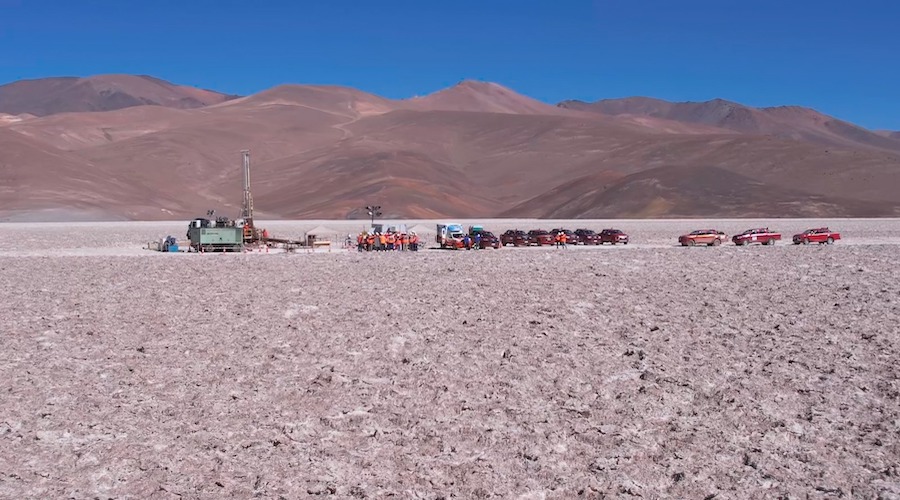
Codelco has pushed first production at the Maricunga lithium project, which hosts the world’s second-largest known lithium concentration, from 2030 to 2034, citing an eight-year remaining timeline. The project will be advanced under a 2025 partnership with Rio Tinto and an updated Special Lithium Operating Contract (CEOL), aligning it with Chile’s National Lithium Strategy and tighter state oversight. The four-year delay signals prolonged permitting, consultation and environmental approval cycles for new brine developments in Chile’s high-altitude salars.
Revival Gold’s latest reverse-circulation holes at the Mercur Carlin-type project in Utah cut shallow, potentially heap-leachable gold, including 31 metres grading 1.65 g/t from 128 metres in RM26-204 and 31 metres at 0.92 g/t from 145 metres in RM26-183 at South Mercur. The company has completed 7,400 metres in 74 holes of a planned 18,000-metre 2026 programme, targeting resource conversion and expansion below the 2025 PEA open-pit shell for a 10-year, 95,000 oz/y heap-leach operation. Prefeasibility is aimed for 2027, with site roads, facilities and drill capacity being scaled to four rigs.
Russia’s Africa Corps replacing French forces in Mali has failed to contain jihadist group JNIM, which has expelled Russian troops from Kidal and assassinated Mali’s defence minister, leaving Western miners such as Barrick operating in an increasingly unstable Sahel. Security risk analyst George McLeod says Barrick’s Loulo-Gounkoto complex near the Senegal border is currently shielded from most attacks but is preparing for insurgent movement south, relying on a local contractor, AMM, with several hundred guards. With a weakened Bamako junta and no state infrastructure support, major mines may evolve into quasi-autonomous enclaves, importing supplies via Senegal and running self-contained security and logistics.
US Treasury Secretary Scott Bessent has publicly confirmed that all US gold reserves at the Fort Knox Bullion Depository are “present and accounted for”, putting renewed focus on bullion now worth over $1 trillion at current market prices. Proponents of revaluing the reserves note that the gold is still carried on Treasury books at a much lower statutory price, arguing that an upward revaluation could bolster the federal balance sheet without any physical sales. Critics counter that even $1 trillion would cover only about one year of interest on the existing national debt, limiting any practical fiscal relief.
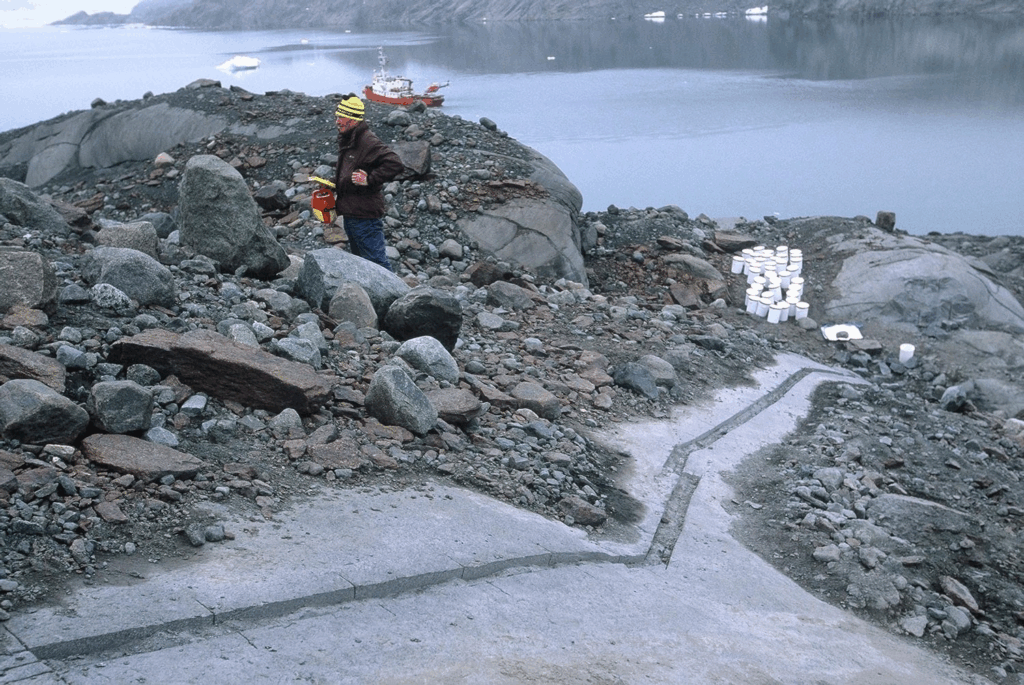
An updated S-K 1300 technical report for Greenland Mines’ Skaergaard project in southeast Greenland lifts indicated resources to 153.6 million tonnes at 1.53 g/t palladium, 0.65 g/t gold and 0.12 g/t platinum, raising contained indicated metal to 7.5 Moz Pd, 3.2 Moz Au and 0.6 Moz Pt and boosting grades by 36% versus 2022. Inferred resources now stand at 177.5 million tonnes grading 1.36 g/t Pd, 0.75 g/t Au and 0.11 g/t Pt, with contained metal up 24%, based on 42,050 m of drilling in 93 holes and a revised $84/t NSR cut-off. The reworked block model and higher long-term price deck ($3,500/oz Au, $1,725/oz Pd, $2,100/oz Pt) allow the company to advance directly to an initial economic assessment comparing an open-pit scenario on the northern plateau with underground options.
Altius Minerals is raising C$182 million via a bought-deal issue of 3 million shares at C$60.50, with an underwriters’ option for a further 450,000 shares that could lift proceeds to about C$209 million, after a 13% share price drop cut its market value to roughly C$3.2 billion. The equity raise follows a C$236-million renewables royalty deal and the C$140-million acquisition of Lithium Royalty’s 38 lithium and critical-mineral royalties, plus a move to an effective 50% interest in Great Bay Renewables, which holds royalties over nearly 9 GW of generation. For mine developers and energy projects, Altius is signalling continued appetite for long-life, high-margin royalty exposure across potash, iron ore, base metals, gold, lithium and utility-scale wind assets such as the 311 MW Coles Wind project in Illinois.
Cameco has restarted production at its Cigar Lake uranium mine in northern Saskatchewan after a two‑week shutdown triggered by sulphuric acid plant problems at Orano’s McClean Lake mill, where all Cigar Lake ore is processed. The McClean Lake mill is back online and has begun treating stockpiled Cigar Lake ore, allowing mining operations to ramp up again without changes to logistics routes. Cameco maintains its 2026 production guidance for Cigar Lake at 17.5–18.0 million lb U₃O₈ (100% basis), signalling no revision to mine planning or mill throughput assumptions.
BHP’s quarterly copper output slipped 5% to 491.9 kt, with FY26 production down to 1.95 Mt and FY27 guidance cut further to 1,650–1,800 kt as Escondida’s concentrator feed grade falls to 0.90% and Pampa Norte moves into deeper, more complex ore. The miner is pursuing a US$5 billion concentrator at Escondida to hold processing at 460,000 t/d, a potential US$1.5 billion chloride-leach restart at Cerro Colorado, and a Spence–Sierra Gorda processing MoU to counter Chilean grade decline. Copper price strength (US$6.53/lb in Q4, up 47% year-on-year) is currently offsetting weaker volumes.
Deep-sea miner Glomar Minerals is sending subsidiary UK Seabed Resources on a 75‑day expedition to the Clarion Clipperton Zone to collect geological and biological samples from its UK2 licence area, the first such sampling there in over 40 years. The two UKSR CCZ blocks, together roughly the size of Louisiana, host polymetallic nodules rich in manganese, cobalt, nickel, copper and rare earths, with UK2 flagged by historic US data as particularly prospective. Environmental datasets will be made public, while Project Infinity in the US is progressing site selection for a nodule and terrestrial cobalt processing plant across four shortlisted locations in Louisiana, North Carolina and Texas.
The U.S. National Science Foundation has awarded up to $160 million to the University of Missouri-Kansas City-led NSF Critical Materials Crossroads Engine to build a domestic ecosystem for critical metals and advanced materials used in batteries, aircraft engine components and semiconductors. The Missouri-Kansas corridor initiative, launched in 2022, brings together more than 260 partners to scale production from concentrated ore and spent materials recovered both domestically and internationally, targeting reduced reliance on foreign-controlled supply chains. Economic modelling projects about 10,000 jobs and up to $40 billion in output by 2036, with a $17 billion boost to regional GDP.
Copper demand is projected to surge over coming decades as electrification, large-scale renewables, AI workloads and hyperscale data centres drive intensive use of copper-heavy power electronics and modern grid infrastructure. Adelaide’s Copper to the World conference and exhibition will focus on this demand profile, linking new transmission build-out, electric vehicle charging networks and high-capacity data centre cabling to long-term red metal consumption. For miners and project developers, the event signals sustained interest in copper supply pipelines, processing capacity and exploration portfolios.
Epiroc has secured a large order to supply a fleet of Pit Viper 351 surface blasthole drill rigs to a major Peruvian copper mine operated by a consortium of leading Chinese investment firms and an Australia-headquartered global miner. The Pit Viper 351 units, typically configured for large-diameter production holes and high bench heights, will be deployed to support a mine expansion phase. For drill and blast engineers, the standardisation on a single large-rig platform signals higher bench productivity and tighter control of fragmentation and blast patterns.
Parliament has approved the Engineering Construction Industry Training Board’s 2026 Industrial Training Levy Order, maintaining levy rates at 0.33% of off-site payroll and 1.2% of on-site payroll, expected to raise £137.9m for 2026–28 and support an estimated additional 40,000 workers. Employers with off-site wage bills under £1m and on-site wage bills under £275,000 remain exempt but still eligible for ECITB training grants, preserving support for SMEs. The levy will be collected in 2027–29, with a separate decision on a proposed ECITB–CITB merger due later this year.
Incommunities has been appointed funding and delivery partner for Phase 1 of Bradford’s City Village development, backed by Homes England’s brownfield fund to unlock the former Oastler Shopping Centre site. Metropolitan Demolition is preparing to remove the multi-storey retail complex, clearing a constrained city-centre footprint for higher-density housing and new public realm. Early geotechnical and demolition sequencing decisions will be critical, given legacy foundations, buried services and potential contamination typical of 20th-century urban shopping precincts.
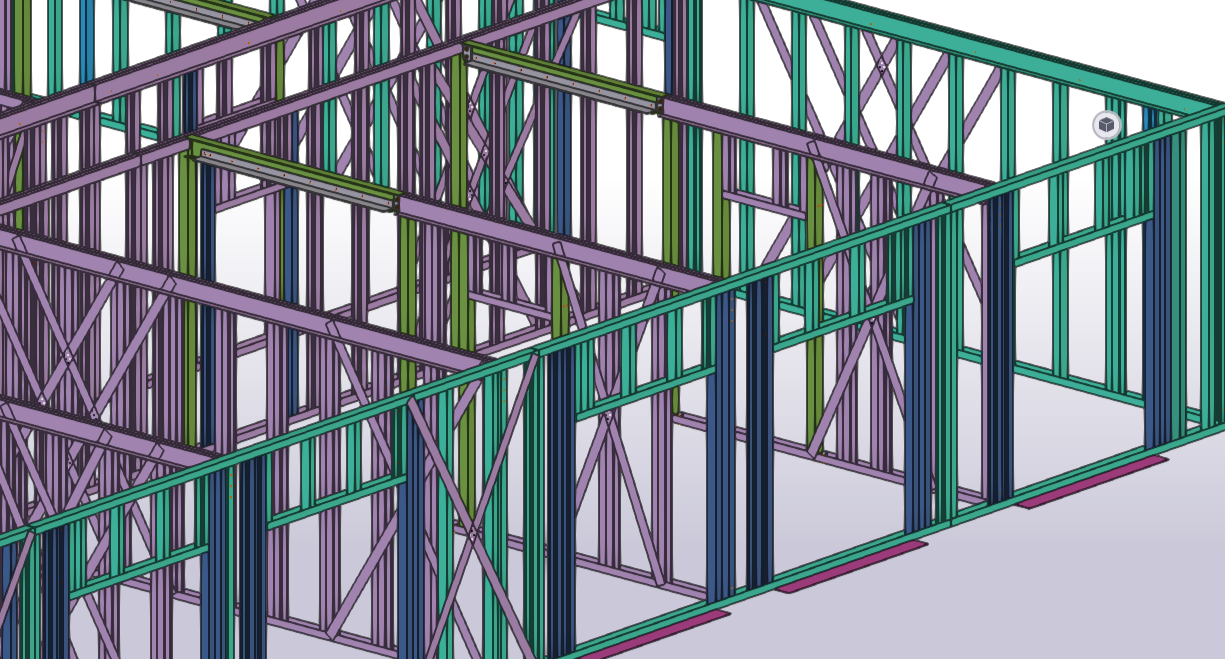
Researchers at Birmingham City University and steel specialist HadleyFRAME have automated structural checks in digital building models, cutting connection-checking time by 96% on projects with more than 18,000 joints. Two custom tools, developed under a West Midlands Advanced Construction Cluster sprint, include a parameter-driven copying utility that trims batch copy time for five connections from 15 to 12 minutes, and a model-wide scanner that flags missing or unexpected steel connections before fabrication. Tested on a five-storey modular residential scheme in Derbyshire, the system targets early detection of connection errors, directly affecting QA workflows for modern methods of construction.