Geomechanics, Streamlined.
© 2026 Geomechanics.io. All rights reserved.
50 articles tagged with Contract Award
The sixth ACT Major Projects Conference in Canberra will run over two days, bringing together the ACT Chief Minister, Deputy Chief Minister and senior figures from government, contractors and infrastructure operators to examine the territory’s pipeline of road, rail and civil works. Organised by Expotrade, the forum is positioned around upcoming major projects in the Australian Capital Territory, including urban transport and precinct-scale developments. For engineers and project managers, the event offers early visibility of future tenders, delivery models and likely staging for large public infrastructure packages.
Initial works on stage two of the $12 billion Melbourne Airport Rail will soon begin on a 7.4‑kilometre section from Albion to Keilor East, including a new Keilor East station. The line will connect directly into the Metro Tunnel and use the same high‑capacity signalling system as the Sunbury–Cranbourne/Pakenham corridor, enabling through‑running airport services. For designers and contractors, key tasks will centre on rail alignment through established suburbs, station interface works, and integration of signalling and power with existing metropolitan assets.
Tilbury Douglas has completed the new 1,209m² single-storey Peterchurch Primary School for Herefordshire Council three weeks ahead of programme, delivering it on the existing site while the old school remained fully operational. Procured via the Procure Partnerships Framework, the phased works covered temporary teaching accommodation, demolition of existing buildings, service diversions, a multi-use games area, landscaping and external works. The contractor committed 50% of supply chain spend to local firms and provided apprenticeships, a T Level placement and pupil-focused STEM and climate education activities.
Thames Water has shortlisted three joint ventures to compete for a £5.7bn main works contract to build the proposed White Horse Reservoir near Abingdon, Oxfordshire, a major new strategic storage asset for the Thames catchment. The winning consortium will be responsible for bulk earthworks, dam and embankment construction, intake and outlet structures, and large-diameter raw water and treated water pipelines. Geotechnical and civil teams will face complex foundation design on alluvial and chalk strata, reservoir safety compliance under the UK Reservoirs Act, and long-term seepage and uplift control.
Senior leadership changes across UK civil engineering this September include new appointments at several tier-one contractors and major consultants as firms gear up for HS2, Lower Thames Crossing and nuclear new build work. Key moves centre on programme delivery, digital design and MMC capability, with incoming directors tasked with de-risking complex tunnelling, major earthworks and long-span bridge packages under NEC4 contracts. For geotechnical and infrastructure specialists, the reshuffle signals strong demand for experience in ground risk management, carbon‑optimised materials and data-led asset performance.
Rio Tinto has secured continued operation of its 100 per cent‑owned Bell Bay Aluminium smelter in northern Tasmania to at least 2031 under a new power supply agreement with Hydro Tasmania backed by both the Tasmanian and Australian Governments. The deal locks in long‑term electricity for the grid‑connected smelter, which draws baseload hydro power, avoiding near‑term closure risk and associated impacts on local port, rail and transmission infrastructure. For mining and materials suppliers, the extension stabilises demand for alumina, carbon anodes and maintenance services over the rest of the decade.
Yancoal Australia has acquired an 80 per cent interest in the Kestrel underground metallurgical coal mine in Queensland’s Bowen Basin by purchasing 100 per cent of Kestrel Coal Group for an upfront US$1.85 billion cash consideration, subject to completion adjustments. The deal gives Yancoal control over a longwall operation producing premium hard coking coal linked to existing rail and port infrastructure at Gladstone. For geotechnical and mining teams, the acquisition signals continued investment in deep, high-capex underground coal with sustained demand for longwall support, strata control and ventilation expertise.
Lynas Rare Earths will acquire Meteoric Resources in an all-scrip deal valuing Meteoric at about A$1.45 billion, securing the Caldeira ionic clay rare earths project in Minas Gerais, Brazil. Caldeira is described as the largest known ionic clay rare earth oxide resource outside China, with a definitive feasibility study due in the March 2026 quarter and first production targeted for 2028. The move gives Lynas a major non-Chinese, non-hard-rock feed source for its existing cracking and separation plants in Australia and Malaysia.
The US Department of Energy has awarded $29.5 million to 17 mining technology projects across 12 National Laboratories under the CMEI “Mine of the Future” initiative, targeting underground recovery, autonomous exploration, secondary sourcing, and advanced beneficiation. Idaho National Laboratory will trial electric‑hydraulic fracturing for in‑situ extraction, Lawrence Berkeley National Laboratory will test low‑voltage lithium recovery from clay, and Oak Ridge National Laboratory is building a mobile robotics platform to map underground mines in minutes. Argonne, SLAC and Ames labs will focus on extracting copper‑nickel‑cobalt from tailings, vanadium from ageing oil and gas infrastructure, and rare earths via acoustic–magnetic fracturing with computer‑vision sorting.
Deep Sea Minerals has signed a non-binding LOI with US-based Westwin Elements to jointly evaluate domestic processing routes for Pacific polymetallic nodules containing nickel, cobalt, copper and manganese. Under the proposed framework, Deep Sea Minerals will supply representative nodule samples plus geological and geochemical data, while Westwin will run bench- and pilot-scale test work at its facilities to develop a process block flowsheet from raw nodules to intermediate and potential saleable products. The move follows NOAA deeming Deep Sea Minerals’ DSHMRA application compliant in June, a key step for exploration and test mining beyond US jurisdiction.
Texas startup Supra Elemental Recovery has secured a Phase I SBIR contract from the US Department of Defense’s Defense Logistics Agency to advance scandium recovery from North American industrial byproducts using its proprietary chemical separation platform. Spun out of the University of Texas at Austin, Supra applies peer-reviewed separation technologies directly at mining and industrial sites to selectively recover rare earth elements and other critical minerals from existing feedstocks. The project will test feasibility and scalability for high‑purity scandium production, targeting onshore resources to reduce total US reliance on imported scandium.
Epiroc has secured a large order from Sibanye-Stillwater to supply low-profile underground equipment for the Siphumelele shaft at the Rustenburg platinum operations in South Africa. The package includes low-profile loaders and utility vehicles tailored for the mine’s constrained stopes, where equipment height and manoeuvrability are critical for production and ground control. For engineers, the move signals continued investment in mechanised low-profile fleets in mature PGM orebodies, with implications for layout design, ground support access and maintenance planning in tight headings.
A joint venture of two major Australian contractors has secured a $624 million design-and-construct contract from Transport for NSW for the Elizabeth Drive Upgrade and Mamre Road Upgrade Stage Two in Western Sydney. The package covers integrated civil, structural and utility works along two arterial corridors totalling about 4.5 kilometres, supporting access to the Western Sydney Airport and surrounding industrial precincts. Geotechnical and pavement design will need to accommodate heavy freight traffic, staged construction under live traffic and complex service relocations in a rapidly urbanising corridor.
BMD Chief Executive Scott Power credits a 13‑year partnership with surety specialist Credeq with expanding BMD’s guarantee capacity beyond traditional bank bonds, allowing the contractor to preserve banking lines for working capital while bidding larger, multi-year civil packages. The arrangement has supported delivery of projects such as the New Fitzroy River Bridge in Western Australia, a major river crossing completed in 2023, and an expanding pipeline of government and private-sector road, bridge and civil works in Australia and overseas.
Catalyst Metals has reached about 2Moz of probable ore reserves across Western Australia’s Plutonic Belt, providing the reserve base to target roughly 200,000oz of gold production per year for a decade. The plan centres on doubling current output from the Plutonic underground mine and satellite open pits, with mine planning now being reworked around the larger reserve inventory. For geotechnical and mining teams, the scale signals sustained underground development, expanded stoping fronts and long-term investment in backfill, ground support and ventilation capacity.
Black Cat Syndicate has budgeted up to $35 million for exploration and resource conversion drilling in FY2027 to grow resources and extend mine lives at its Paulsens and Kal East gold operations in Western Australia. The company is targeting conversion of about 814koz of inferred resources, focusing on near-mine drilling to upgrade ounces into higher-confidence categories. For geotechs and mine planners, the spend signals continued underground and open-pit definition drilling, with potential redesign of stopes, pit shells and scheduling if significant portions of the inferred inventory are upgraded.
WSP has acquired Hulley & Kirkwood, a 122-strong UK building services consultancy founded in 1953 with seven offices and a particularly strong Scottish footprint. Hulley & Kirkwood specialises in mechanical, electrical and public health (MEP) design across healthcare, defence, commercial, education and government projects, adding established NHS and MoD-facing capability to WSP’s portfolio. The deal materially expands WSP’s regional MEP design capacity in Scotland and across the UK, consolidating multidisciplinary delivery for complex building projects.
New home planning approvals in England fell to 45,315 in Q2, the weakest quarter since 2012, with annual permissions at 214,515 – just 58% of the 370,000 units a year implied by the NPPF’s 300,000-home target. Permissions on larger sites over 10 units dropped 21% quarter-on-quarter to 39,689 homes, while approvals for private homes fell 19% over the same period and projects of three or more homes hit a record low of 1,234 in Q2. The Home Builders Federation cites weak mortgage-backed demand, rising construction costs and new taxes and levies as eroding development viability and is calling for a moratorium on further policy-driven costs.
Penshurst Construction has secured a £7m contract from Swindon Borough Council to replace around 200 obsolete council-home kitchens per year, including strip-out, preparation works and full supply-and-install. The 36‑month framework, which started in September 2026 and can be extended by a further 24 months, will move into full delivery from January 2027 after a three‑month mobilisation phase. For asset managers and contractors, the programme signals steady planned-maintenance workload and a structured kitchen lifecycle replacement model in Swindon’s social housing stock.
Costain has appointed Rohan O’Grady as managing director of the Skanska‑Costain‑Strabag (SCS) joint venture delivering HS2’s London tunnels, a multi‑billion‑pound package including twin‑bore, high‑speed rail tunnels and associated underground structures. O’Grady joins from CPB Contractors, CIMIC Group’s construction arm, bringing over 20 years’ experience on complex, large‑scale transport and infrastructure schemes in both public and private sectors. His remit centres on safe, efficient delivery of the London tunnelling works, a critical element for HS2’s capacity uplift on the UK rail network.
Sumitomo Corporation of Americas is using its Dos Amigos copper project in Chile to illustrate a strategy of entering early-stage assets alongside local partners rather than waiting for fully derisked operations. The company’s VISIONS September 2026 edition describes a focus on long-life sulphide resources and shared development of mine, concentrator and associated infrastructure with Chilean operators, instead of purely financial offtake deals. For engineers, this signals continued appetite for greenfield copper projects in Chile requiring joint design of pits, tailings storage and processing plants with Japanese technical input.
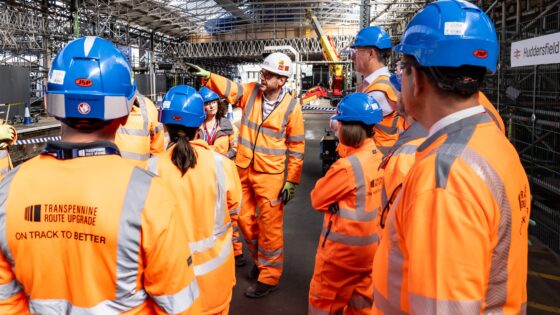
Transpennine Route Upgrade teams have used a 16-day blockade of the Huddersfield section to advance major rail works, with possessions running through to Sunday 4 October. The closure enables intensive track, signalling and civils activities that cannot be done under normal traffic, including renewal and reconfiguration of key junctions and structures on this constrained four-track corridor. For contractors and designers, the works illustrate continued reliance on extended blockades to deliver complex staging on live main lines with limited diversionary capacity.
City of York Council has let a £15.36M (ex VAT) Minor Civils Framework 2025 to five civil engineering contractors to deliver small-scale infrastructure works across the city. The framework, worth £19.3M including VAT, will cover routine highways, drainage, footway and structures maintenance, plus minor improvement schemes typically below traditional capital project thresholds. Contractors can expect a steady pipeline of short-duration packages, with emphasis on rapid mobilisation, traffic management planning and coordination with existing utilities in a dense urban network.
Washington’s post-2025 critical minerals strategy is now backing more than 180 projects with tools such as equity stakes, loans, offtake guarantees and price floors, including $7.6 billion in non-equity support for rare earth and magnet projects in the 18 months to June. The Pentagon has taken $400 million in preferred shares and a $150-million loan in MP Materials, while guaranteeing a $110/kg neodymium-praseodymium floor price and magnet offtake from a second Texas plant, and the Department of Energy has issued a $2.23-billion loan plus warrants for Lithium Americas’ Thacker Pass. A conditional $725-million loan to Energy Fuels and over two dozen mineral agreements with partners from Australia to the DRC signal a deliberate build-out of non-Chinese mining, separation and refining capacity, with CRU projecting Chinese market share erosion by 2030.
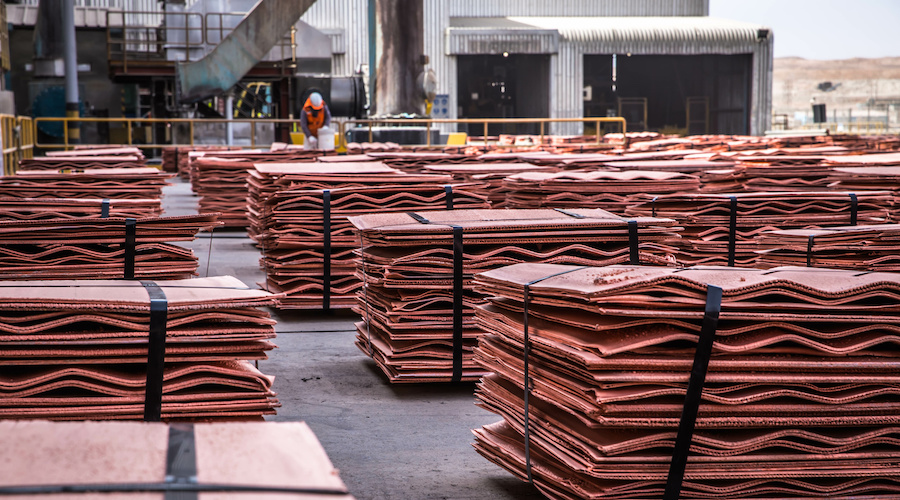
Copper held at $14,446/t on the LME on Tuesday, near this month’s $14,875 record, as workers in two unions at Antofagasta’s Centinela mine in Chile rejected a final contract offer and triggered a mediation period ahead of a possible strike. Wage talks at BHP’s Escondida, the world’s largest copper mine, have also been delayed after a fatal accident, compounding supply concerns. ICSG data show mine output running at an annualised 23 Mt in July versus refined demand of 29 Mt and supply of 28.4 Mt, with Deutsche Bank projecting prices could reach $22,000/t by Q2 2027.
Copper Intelligence and CoTec Holdings have formed a British Virgin Islands joint-venture company to process historical copper tailings across the Democratic Republic of Congo’s legacy copper districts, which have generated waste since the 1950s. CoTec will deploy its extraction technologies for rare earth and strategic materials to upgrade old tailings and redundant copper deposits, while Copper Intelligence provides regional execution capability and targets high-potential DRC assets. Projects will be advanced asset-by-asset, subject to detailed legal and technical due diligence and board approvals, with scale-up funding sought from the US International Development Finance Corporation and others.
MACA has secured a A$170 million, two-year contract extension with Emerald Resources to continue mining operations at the Okvau gold mine in Cambodia, taking the engagement through to February 2030. The scope covers full open-pit production services, including mine development, drill-and-blast, overburden stripping, ore mining and on-site mining support. For contractors and mine planners, the long-term commitment signals stable demand for production drilling, blasting consumables and fleet deployment strategies in a relatively new gold jurisdiction.
Perenti has secured more than A$200 million in new work, with drilling contracts spread across Ausdrill, DDH1 Drilling, Ranger Drilling, Swick Mining Services and Strike Drilling, covering both surface and underground exploration and resource definition programmes. Its underground mining arm AUMS has also won a new contract with Endeavour Mining at the Sabodala-Massawa Mining Complex in Senegal, extending Perenti’s footprint in West African hard-rock underground operations. The awards signal continued demand for specialist RC, diamond and production drilling capacity bundled with contract mining services.
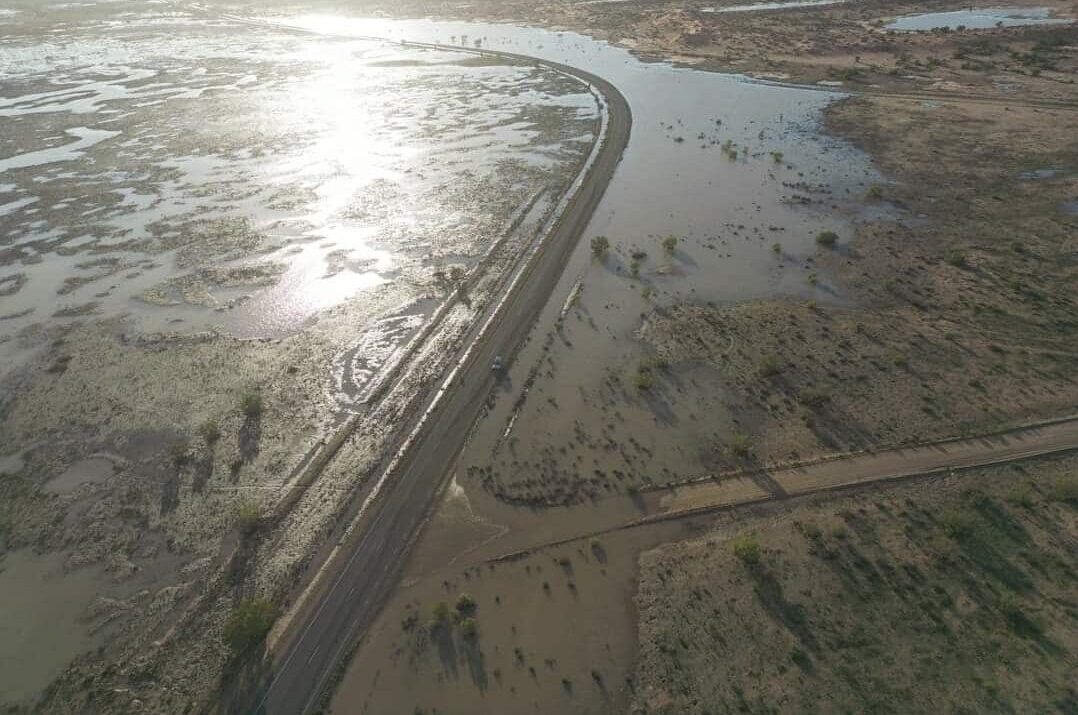
Ongoing works to fully seal the 472‑kilometre Strzelecki Track between Lyndhurst and Innamincka in outback South Australia are accelerating after completion of a major milestone on the $215 million upgrade. The formerly unsealed freight route, which suffered severe flooding and closures in 2024, is being progressively converted to an all‑weather sealed standard to support heavy vehicle access to remote communities and energy projects. For designers and contractors, key issues include pavement design for expansive clays, flood‑resilient drainage, and construction logistics over long, isolated sections.
Hot Driveways QLD is expanding from domestic asphalt driveways into small to medium civil works, delivering car parks, access roads and minor subdivisions with its own paving crews and compact plant fleet. Project Manager Lincoln Bernstein says the business targets a niche between large Tier 1 contractors and small owner-operators, taking on jobs typically in the hundreds to low thousands of square metres. The model allows councils and developers to package works such as cul-de-sacs, commercial forecourts and urban infill access lanes with tighter programming and simpler contract administration.
Completion of the first early works package under the A$500 million Central Queensland Beef Roads Program marks the start of progressive upgrades and sealing on nine key freight corridors across Central and Western Queensland. Priority routes include the Clermont–Alpha corridor and other cattle haulage links that currently rely on unsealed or substandard pavements, limiting heavy vehicle access and wet‑season reliability. For pavement and drainage designers, the program signals sustained demand for heavy‑duty rural road designs tailored to high-mass livestock and feed transport in expansive blacksoil and dispersive subgrade conditions.
Heathrow Airport’s third runway is now scheduled to open in 2039, a delay of roughly a decade on earlier expectations, with the promoter still targeting development consent by 2029 under the UK’s Development Consent Order regime. The scheme, previously costed in the tens of billions of pounds and involving major earthworks in the Colne Valley floodplain plus diversion of the M25 in a cut-and-cover tunnel, will now have to be revalidated against updated demand forecasts, carbon budgets and design standards. This extended timeline increases planning, geotechnical risk and cost uncertainty for contractors and consultants positioning for enabling works.
Tungsten Mining has secured non-binding indicative debt proposals for its Watershed tungsten project in far North Queensland, targeting gearing of up to 70 per cent and potential debt funding of about $200 million against a pre-production capital cost of $274 million. The company is now progressing lender due diligence and credit approvals, with the debt package expected to be complemented by equity and potential offtake-linked funding. For project engineers, the high gearing assumption will drive tight control of pre-strip, plant construction and ramp-up schedules to meet financier covenants.
MPs on the Public Administration and Constitutional Affairs Committee have opened an inquiry into how effectively the UK state delivers major infrastructure, with a focus on procurement models and governance. The review will examine how current contracting approaches, such as design-and-build and alliancing, affect cost overruns, programme slippage and risk transfer on large schemes like HS2 and major road upgrades. Outcomes could influence future Treasury Green Book guidance, Cabinet Office procurement rules and how client bodies structure frameworks and long-term delivery partnerships.
B2Gold has defined a new high-grade Tattuk zone at the Goose mine in Nunavut, with drillhole 26GSE750Z2 cutting 9.95 m at 10.94 g/t gold from ~1,196 m depth, 150 m down-plunge of existing Nuvuyak mineralisation, alongside infill hits of 21.23 m at 19.12 g/t at Llama and 6.9 m at 11.88 g/t at Nuvuyak. Following an April crusher fire, a new mobile plant commissioned in August is averaging >3,000 t/d, while a repaired fixed circuit with new ROM bin, apron feeder, larger jaw crusher and rock breaker is targeted to sustain 3,200 t/d from October. B2Gold is holding 2026 Goose guidance at 170,000–200,000 oz, budgeting $51 million for Back River exploration and planning stage-two upgrades to reach the 4,000 t/d design rate and extend the current ~nine-year reserve-based mine life.
US Department of War funding of $9.25 million into Strategic Minerals’ Cornwall Resources unit will push the Redmoor tungsten-copper-tin project in Cornwall through definitive feasibility within a targeted 32 months, supporting extensive infill and expansion drilling, geotechnical and metallurgical drilling, and updated Mineral Resource Estimates and reserve conversion. The non-dilutive funding, with no restrictions on future offtakes, is aimed at fast-tracking underground mine development at what is described as Europe’s highest-grade undeveloped tungsten resource. Strategic Minerals’ shares rose 14% in London, giving the company a £168.6 million market capitalisation.
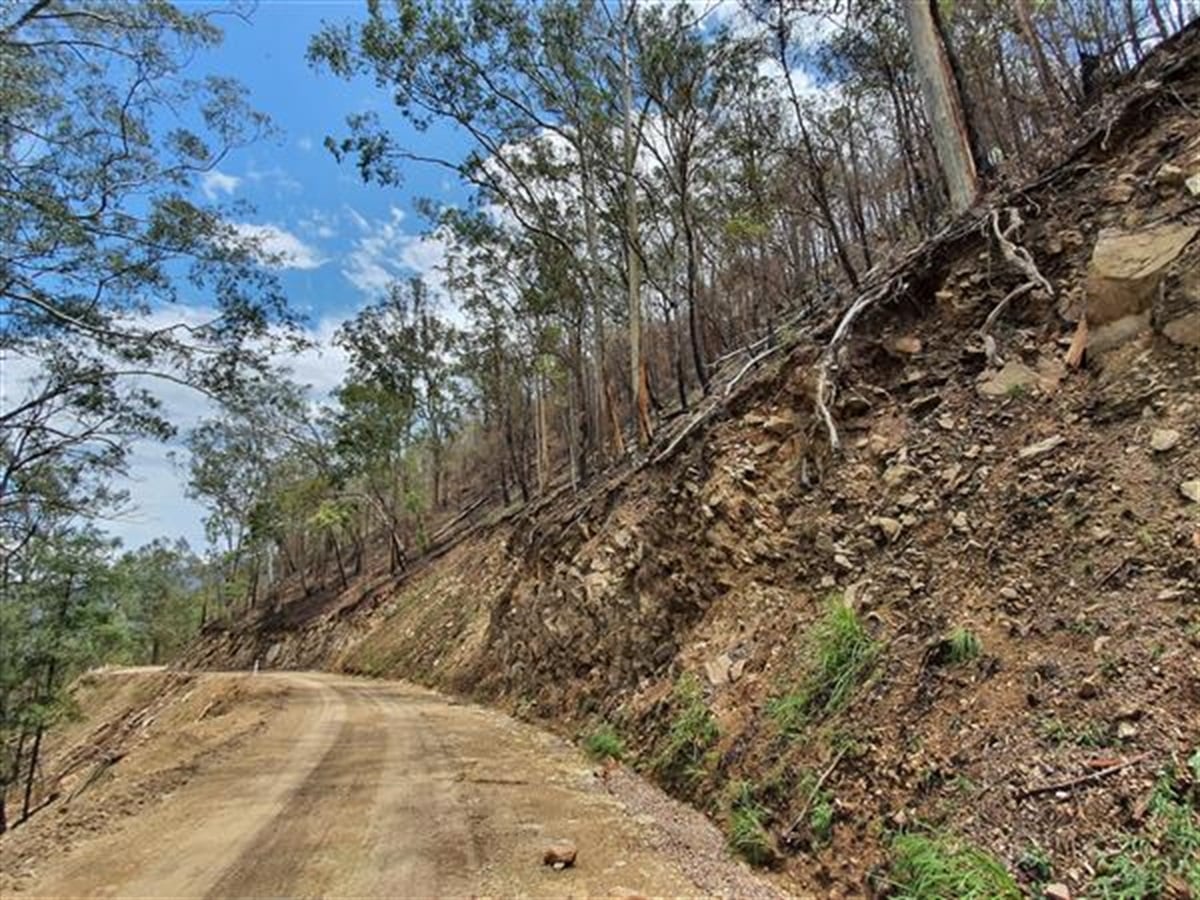
A $319 million contract has been awarded by Armidale Regional Council for the reconstruction of Kempsey–Armidale Road, the largest Essential Public Asset Restoration project yet undertaken in New South Wales. Works will focus on the Big Hill to Blackbird Flat section, where multiple landslips and slope failures have severely damaged the mountain road corridor. Geotechnical design and construction will centre on stabilising slip-prone cuttings and embankments, rebuilding pavement and drainage, and restoring reliable heavy-vehicle access between the coast and Northern Tablelands.
Cottsway Housing Association has renewed its materials supply contract with Travis Perkins Managed Services for a further seven years to 2033, covering repairs and maintenance across more than 7,000 homes in West Oxfordshire, Gloucestershire, Wiltshire and Worcestershire. Materials will continue to be supplied via a dedicated TPMS branch in Witney, a standalone facility staffed by five full-time colleagues serving Cottsway exclusively, supporting predictable lead times and stock control for routine works. Cottsway will also expand use of the TPgo Digital Suite, adopting the TPgo Order app so trades operatives can order, track and collect materials directly.
Arada has lodged its first planning applications for Thameside West with Newham Council, covering 1,500 homes in six dockside buildings as part of a £2.5bn scheme targeting at least 5,000 units on the Royal Docks brownfield site. The initial two buildings are proposed as 100% social rent, including three- and four-bedroom family units, with permeability prioritised through a network of streets, gardens, parks and shared public spaces. Ground-floor frontages to the new park are planned for cafés and restaurants, with Gensler, Arup and Planit shaping architecture, engineering and landscape design.
Fabrix and Patrizia have appointed McLaren Construction as main contractor for a new purpose-built student accommodation block with additional social housing in Walworth, south London, near Elephant & Castle station. The scheme combines PBSA and affordable units on a constrained urban site, requiring careful interface with existing utilities, adjacent buildings and high-footfall transport links. For civil and structural teams, key issues will include foundation design in dense inner-city ground conditions, construction logistics in tight streets, and acoustic and vibration control from nearby rail and road corridors.
Astral Resources has agreed to pay $9.05 million to WIN Metals to secure title and what it calls “unfettered control” over the tenure required for developing the Mandilla gold project, about 70km south of Kalgoorlie in Western Australia. The deal consolidates key mining and infrastructure ground needed for open-pit development, waste landforms and processing facilities, removing third-party tenure constraints. For project engineers, this clears a major permitting and layout risk, allowing detailed mine design, haul road alignment and tailings storage planning to proceed on a single, contiguous landholding.
Brightstar Resources has nearly doubled the mineral resource estimate at its Two Mile Hill–Shillington deposit in Western Australia to 24.6Mt at 1.8g/t for 1.45Moz of gold, as part of ongoing mining studies for the Sandstone gold project. The revised MRE, covering both the tonalite-hosted Two Mile Hill intrusion and the adjacent Shillington shear-hosted mineralisation, materially upgrades the scale of potential open pit and underground options. Geotechnical and mine design teams will now be able to re-optimise pit shells, underground stoping layouts and scheduling around the larger, higher-confidence inventory.
Tungsten Mining has mandated Jefferies Australia to secure strategic equity investors for its Watershed tungsten project in Far North Queensland, while retaining Cutfield Freeman & Co as debt adviser to structure project finance. The company is targeting a mix of strategic offtake-linked investors and conventional lenders to advance Watershed, a previously studied open-pit tungsten operation. The move signals a shift from pure debt or equity solutions towards a blended funding package, which will influence project timing, offtake terms and capital cost optimisation.
Titan International has signed a definitive agreement to sell its Italtractor ITM undercarriage business, which supplies track systems for mining and construction equipment, to Modena-based USCO SpA, owner of Australian mining equipment group Schlam. The deal, expected to close in early January 2027 subject to customary approvals, will consolidate ITM’s global undercarriage manufacturing and distribution network under USCO’s ground-engaging tools and wear parts portfolio. For mine operators and OEMs, the move signals potential changes in sourcing strategies, pricing, and product integration across track systems and truck bodies.
Associated Asphalt has completed resurfacing a 47-mile (75km) section of the M40 between Warwick and Oxford under UK Highways’ DBFO M40 contract, working alongside National Highways. The summer programme focused on carriageway renewal over this long-distance corridor, requiring tightly sequenced lane closures and night-time working to maintain traffic flow on one of the Midlands–South East strategic freight routes. For pavement and asset managers, the scheme signals ongoing long-term investment in high-volume motorway surfacing performance and lifecycle planning under DBFO arrangements.
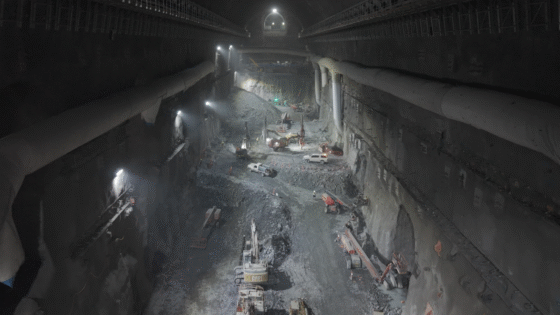
Work has begun on the underground power station for Australia’s £6bn Snowy 2.0 pumped hydro scheme, with permanent concrete pours now under way almost 1km below ground in the Snowy Mountains. Crews are preparing to install major generating equipment in the cavern complex, which will house multiple high‑capacity pump‑turbine units linking the Tantangara and Talbingo reservoirs. The phase marks a shift from excavation to heavy civil and electromechanical works, with long-duration access, ventilation and concrete logistics critical at this depth.
Balfour Beatty plans to recruit about 2,000 additional UK staff by the end of next year, taking its domestic workforce to roughly 16,000 as major infrastructure programmes accelerate. The expansion is expected to support large rail, highways and energy schemes, where labour availability is already a constraint on delivery and productivity. Contractors and consultants bidding into Balfour Beatty’s supply chain can expect increased demand for site engineers, temporary works designers and specialist subcontractors as workbanks on complex civils projects grow.
Barhale has secured a £14.6M contract from Anglian Water to build a twin pumped rising main at Alconbury Weald, Cambridgeshire, increasing wastewater network capacity for planned large-scale development on the former airfield site. The scheme will require parallel pressure pipelines, new pumping infrastructure and tie-ins to the existing foul network, with construction likely to involve trenching through mixed glacial and alluvial deposits and careful management of groundwater and settlement risk. For geotechnical and civils teams, key issues will include pipeline alignment optimisation, surge control, and long-term access for maintenance.
Via East Midlands, the highways arm of Nottinghamshire County Council, is launching early market engagement for a proposed £5M highways maintenance and civil engineering framework covering local roads and associated assets. The framework is expected to bundle routine carriageway and footway works, minor structures, drainage and associated civils into a multi-year arrangement, giving SMEs and regional contractors clearer visibility of work pipelines. Contractors should prepare capability evidence on reactive and planned maintenance, traffic management on constrained local networks, and delivery of small to medium civils packages under framework call-offs.
Two low‑carbon heat network schemes spanning seven London boroughs have secured a combined £53.1M in government funding to expand district-scale, pipe‑fed heating infrastructure. The awards back large‑diameter buried distribution mains, central energy centres and building‑level heat interface units designed to displace individual gas boilers in dense urban housing and mixed‑use stock. For civil and geotechnical teams, the projects signal substantial trenching, utility coordination and shaft works in constrained streets, with long linear workfronts and tight programmes across multiple local authorities.