Geomechanics, Streamlined.
© 2026 Geomechanics.io. All rights reserved.
Agnico Eagle Mines will invest C$14 billion in Ontario by 2030, backed by the province’s new “One Project, One Process” permitting regime that targets approvals for advanced exploration and mine development within two years. About C$2 billion is earmarked for the Detour Lake underground expansion and the Upper Beaver gold-copper project, both >C$1 billion builds, adding up to 1,600 jobs and nearly C$5 billion to GDP. Detour Lake’s underground mine is designed to extend life to 2054, while Upper Beaver is planned as a 210,000 oz/y gold and 3,600 t/y copper operation over 14 years.
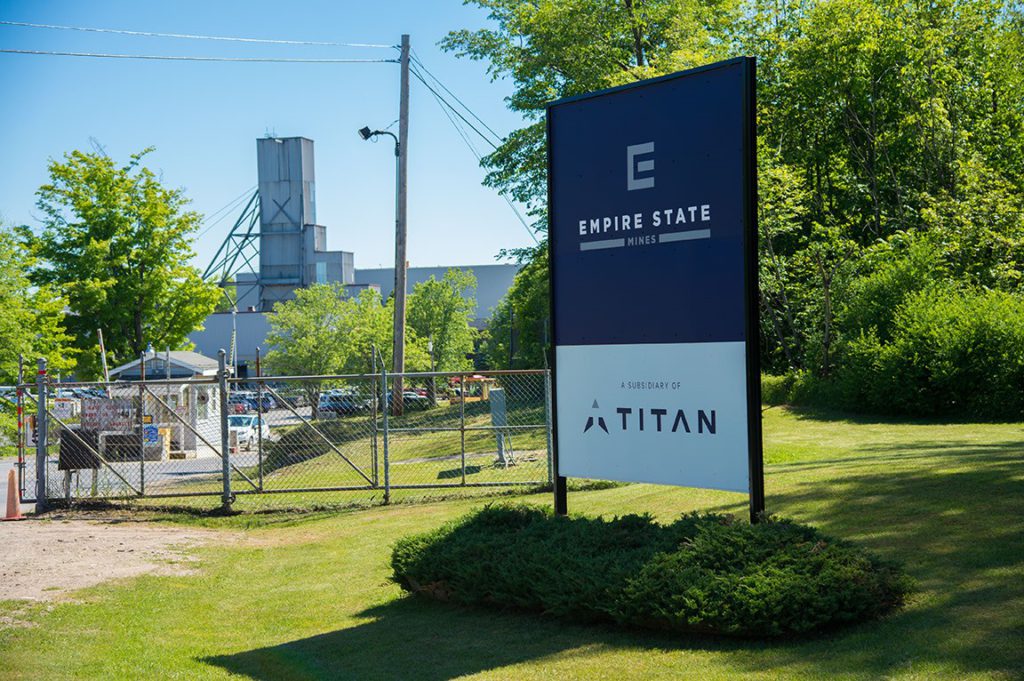
Titan Mining has signed a cooperation agreement with Teck Resources to assess recovering about 13,000 kg/year of germanium from existing process waste streams at the Empire State Mine zinc operation in New York, using Teck’s Trail Operations in British Columbia as the potential processing hub. The partners will test upgraded ESM process streams as germanium-bearing feedstock and negotiate volumes, payability and possible long-term offtake, targeting a capital-efficient flowsheet that avoids new mining. With US warehouse prices at US$5,800–8,600/kg and minimal domestic output, successful recovery could add significant incremental cash flow and establish Titan as a US germanium supplier.
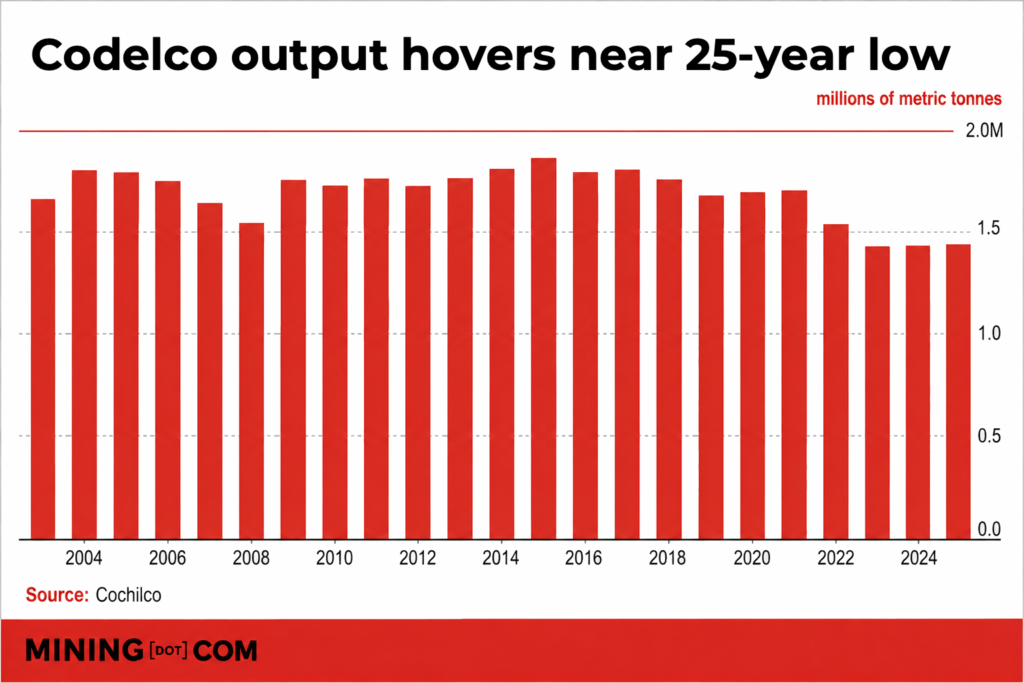
Codelco faces a preliminary internal audit finding that about 20,000 tonnes of material were wrongly counted as December 2025 finished copper, inflating reported output to 172,300 tonnes versus a January–November average of 105,600 tonnes. The disputed tonnage, allegedly authorised by a senior executive outside normal approval channels, comes amid Cochilco data showing January production slumping to 91,000 tonnes and March to 110,900 tonnes, raising doubts over any genuine recovery. Consultants Plusmining and GEM warn of serious governance, traceability and classification issues, with calls for an external audit and potential implications for executive incentives.
Amnesty International accuses Nevada’s three major lithium projects – Lithium Americas’ Thacker Pass, Ioneer’s Rhyolite Ridge and Surge Battery Metals’ Nevada North – of proceeding on ancestral lands without free, prior and informed consent, exposing a gap between US consultation-based permitting and UNDRIP standards. Ioneer cites 328 documented contacts with 13 Tribal Nations, voluntary cultural monitoring agreements and a Nevada District Court decision upholding its federal permit, while Lithium Americas plans US$1.3–1.6 billion capex for Thacker Pass Stage 1. Amnesty warns that advancing large, long-life assets such as Rhyolite Ridge, now scoped at 1.92 Mt LCE over 95 years with US$1.67 billion capex, without consent raises long-term reputational and regulatory risk.
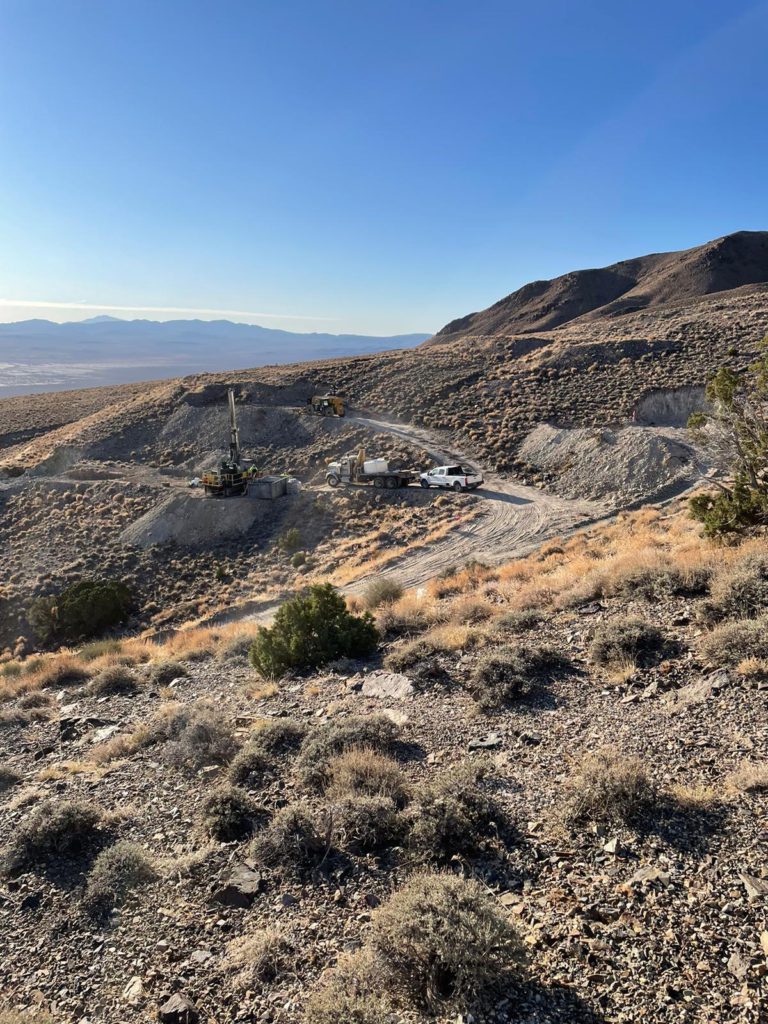
Guardian Metal Resources has expanded its Tempiute tungsten project in Nevada by staking 193 additional claims, increasing its mineral rights footprint by more than 375% to capture what it believes is the full extent of historical tailings from the former Emerson mine. The skarn-type tungsten-zinc-copper-silver operation, located less than 250 miles from Guardian’s Pilot Mountain project, contains tailings from Union Carbide’s 1977–1984 production and has also shown gallium occurrences. CEO Oliver Friesen plans an auger drilling programme to characterise subsurface tailings for near-term tungsten recovery and reclamation, as tungsten prices hit record highs under tightened Chinese export controls.
Core Lithium has awarded a three-year underground mining contract, with a two-year extension option, to Dev Mining Services (a Develop Global subsidiary) for the BP33 deposit that underpins the Finniss lithium operation in Australia’s Northern Territory. The scope covers all underground production activities at BP33, shifting Finniss from open-pit to a combined open-pit/underground operation and locking in a medium-term mining services provider. For engineers and contractors, the deal signals forward work on underground development, ground support and lithium ore handling in a relatively young NT hard-rock lithium district.
Barminco has secured an underground mining services contract worth about A$850 million over four years, with a one-year extension option, at Bellevue Gold’s high-grade Bellevue gold project in Western Australia. The scope is expected to cover decline and level development, production stoping and associated underground services for the planned underground mine, positioning Barminco as the key contractor through the project’s ramp-up phase. The scale and term of the award signal long-term demand for specialised underground fleet, labour and ground support capacity in the WA gold sector.
Boliden’s Somincor zinc and copper operations in Portugal are about to trial their first battery-electric production support unit, a Normet Variomec XS 035 Crew SD mine service vehicle delivered this week after being showcased at The Electric Mine in Lisbon. The compact XS 035 platform is configured for crew transport and general services, targeting reduced diesel emissions and heat in deep workings. Results from this trial will inform Somincor’s wider electrification strategy for auxiliary fleets and associated ventilation load reductions.
Forrestania Resources has exercised its option to acquire 100 per cent of Hyden Project Holdings, giving it full control of the Hyden gold project in Western Australia’s Wheatbelt. The project sits roughly 300km east of Perth and complements Forrestania’s existing lithium and gold tenure in the Forrestania and Southern Cross greenstone belts. The deal consolidates a larger contiguous land package over Archean greenstones, with potential for structurally controlled lode gold systems similar to other shear-hosted deposits in the region, and will likely refocus near-term drilling and resource definition.
Barminco has secured an $850 million underground mining contract from Bellevue Gold for the Bellevue gold project in Western Australia, extending Perenti’s footprint in high-grade underground operations. The scope is expected to cover long-hole stoping, decline and level development, and associated ground support for narrow-vein orebodies typical of the Bellevue deposit. Contractors and suppliers should anticipate demand for high-productivity jumbo development, paste-fill or cemented rockfill systems, and geotechnical instrumentation to manage seismicity and ground conditions in a deep, structurally complex Archean lode.
Tungsten Mining has begun on-site preparation at its wholly owned Mt Mulgine tungsten project in Western Australia, signalling a move towards development of what it aims to position among the world’s largest tungsten operations. The project targets the state’s Mid West region, where existing iron ore and gold infrastructure could support large-scale open-pit mining, high-volume crushing and gravity-flotation circuits typical of hard-rock tungsten deposits. For geotechnical and mining teams, early works will focus on pit design in abrasive, high-density ore and waste, haul road geometry, and water management in a semi-arid environment.
Arafura Rare Earths has signed a US offtake agreement for neodymium-praseodymium (NdPr) from its Nolans rare earths project, 135km north of Alice Springs in the Northern Territory, further underpinning project financing. The Nolans operation is designed as an open-pit mine and processing plant producing separated NdPr oxide for permanent magnets, with a projected mine life of around two to three decades. For mining engineers and project financiers, the long-tenor offtake de-risks revenue assumptions and supports progression towards final investment decision and construction.
Rosh Pinah Zinc and Appian Capital Advisory have commissioned a new process water treatment plant at the Rosh Pinah mine in Namibia as a core element of the RP2.0 expansion. The plant is engineered to retreat and recycle process water from multiple circuits across the operation, cutting freshwater draw and reducing discharge volumes to the site’s TSF and evaporation facilities. For mine planners and process engineers, the scheme tightens the site water balance and may enable higher throughput under existing abstraction permits.
Shuanglin has unveiled an autonomous, battery-electric multi-axle mining truck using distributed drive technology, entering a niche previously explored by China Space Sanjiang Group’s 220 t WTW220E (16 wheels in eight pairs) and ETF’s 218 t MT-240. The new platform targets ultra-heavy haul with multiple driven axles to spread ground pressure and improve traction on weak pit floors, while removing the mechanical drive train. For mine planners and geotechnical teams, such configurations could materially change haul road design, turning radius constraints and underfoot bearing capacity assumptions.
Ivanhoe Electric plans to acquire Robbins’ purpose-built Crossover XRE tunnel boring machine and material handling system, previously used at Anglo American’s Grosvenor coal mine, for its Santa Cruz copper project in Arizona. The mixed-face XRE TBM is designed to handle both hard rock and soft ground, allowing continuous, segmentally lined access tunnels instead of conventional drill-and-blast shafts. For geotechnical and mine development teams, this signals potential for faster, lower-disturbance underground access in complex ground conditions typical of Arizona copper deposits.
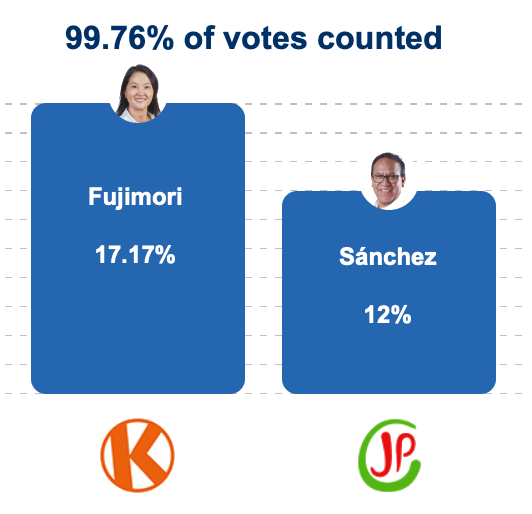
Peru’s 7 June presidential runoff between leftist Roberto Sánchez and conservative Keiko Fujimori is jolting markets and putting roughly $6 billion in annual mining investment at risk, with Peru’s sol and dollar bonds already underperforming and Barclays advising investors to go underweight. Sánchez is proposing higher mining taxes, constitutional reform, a phase-out of open-pit mining and potential use of international reserves for social spending, directly threatening large copper and gold operations run by Glencore, Anglo American, Freeport McMoRan, MMG and Fortescue’s newly acquired Cañariaco project. At the same time, illegal miners are now believed to produce more gold than formal operators such as Hochschild, Buenaventura and Newmont, raising operational and permitting uncertainty even if a business-friendly Congress tempers more radical policy shifts.
Elevra Lithium has secured a A$441 million (US$318 million) funding package, including a fully underwritten A$275 million placement and up to C$145 million in convertible notes from the C$15 billion Canada Growth Fund, to expand its North American Lithium (NAL) mine in Quebec and advance the Moblan project to final investment decision. The three-stage NAL brownfield expansion, with capex of C$366 million, targets throughput increases lifting output to 338,000 t/y of spodumene concentrate and delivers a post-tax NPV of C$3.11 billion, 42% IRR and 25‑month payback. Proceeds will fund mill optimisation, flotation upgrades and crushing circuit enhancements, with Stage 1 starting mid‑2027 and Stage 3 construction due by mid‑2029.
Brazil’s antitrust authority Cade has opened a competition probe into USA Rare Earth’s proposed $2.8 billion acquisition of Serra Verde Group, operator of the Pela Ema rare earth mine and processing plant in Goiás, including a 15‑year US offtake agreement for neodymium, praseodymium, dysprosium and terbium. The review will determine whether the deal is a notifiable “concentration act” and could lead to approval, conditions or a full administrative case. Serra Verde, backed by a recent $565 million DFC funding package, expects Pela Ema to supply about half of ex‑China heavy rare earth output by 2027.
Copper futures in London jumped 2% on Tuesday, briefly breaching $14,000/t and moving back towards January’s $14,500/t record as Chinese inventories fall and state-owned traders signal strong decade-long demand. Satellite data from Earth-i show a sharp drop in global smelting activity in April and Sprott warns that disruptions to Middle Eastern sulphur supplies and fuel availability in Peru threaten output, with about 20% of mined copper dependent on sulphuric acid. Sprott projects data centres and energy-transition uses could take copper’s share of “strategic” demand to 45% by 2040, up from 32% in 2024.
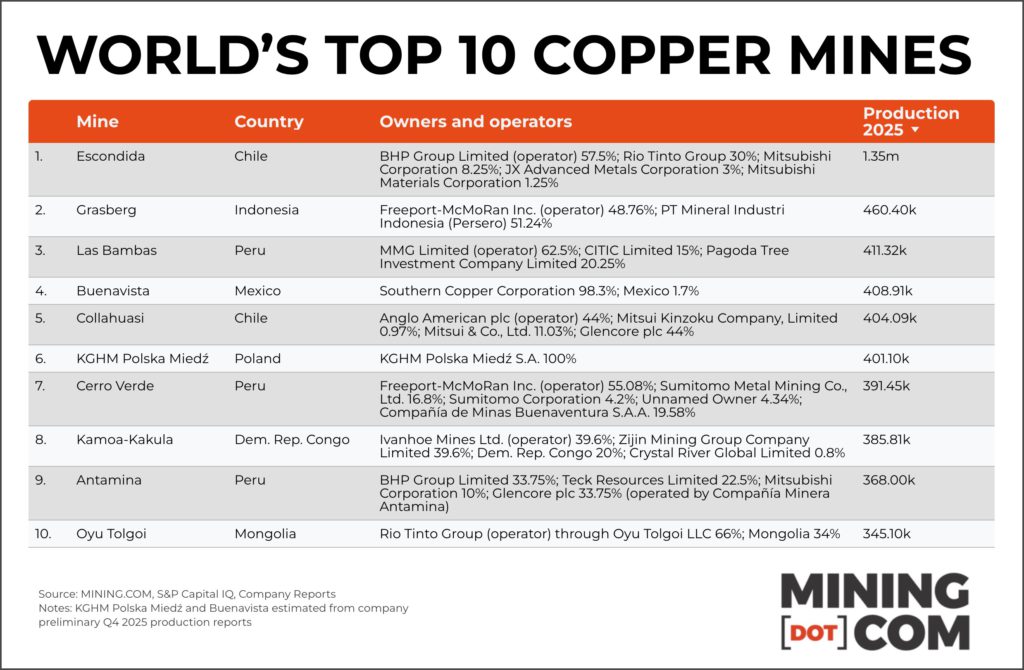
Copper prices, already up 40% in 2025 and hitting a record $14,500/t in January 2026, are being driven by AI-related demand, supply disruptions and looming cost pressures from energy and sulfuric acid shortages, with the ICSG now forecasting a 150,000 t deficit for 2026. The 10 largest copper mines produced 4.9 Mt in 2025, led by Escondida at 1,347.6 kt, while major assets such as Grasberg and Kamoa-Kakula face landslide, flooding and seismic-related constraints that could remove hundreds of thousands of tonnes from the market. For planners and project developers, the rankings emphasise concentration risk in a handful of long-lived operations and the growing influence of infrastructure bottlenecks, community blockades and state renegotiations on effective supply.
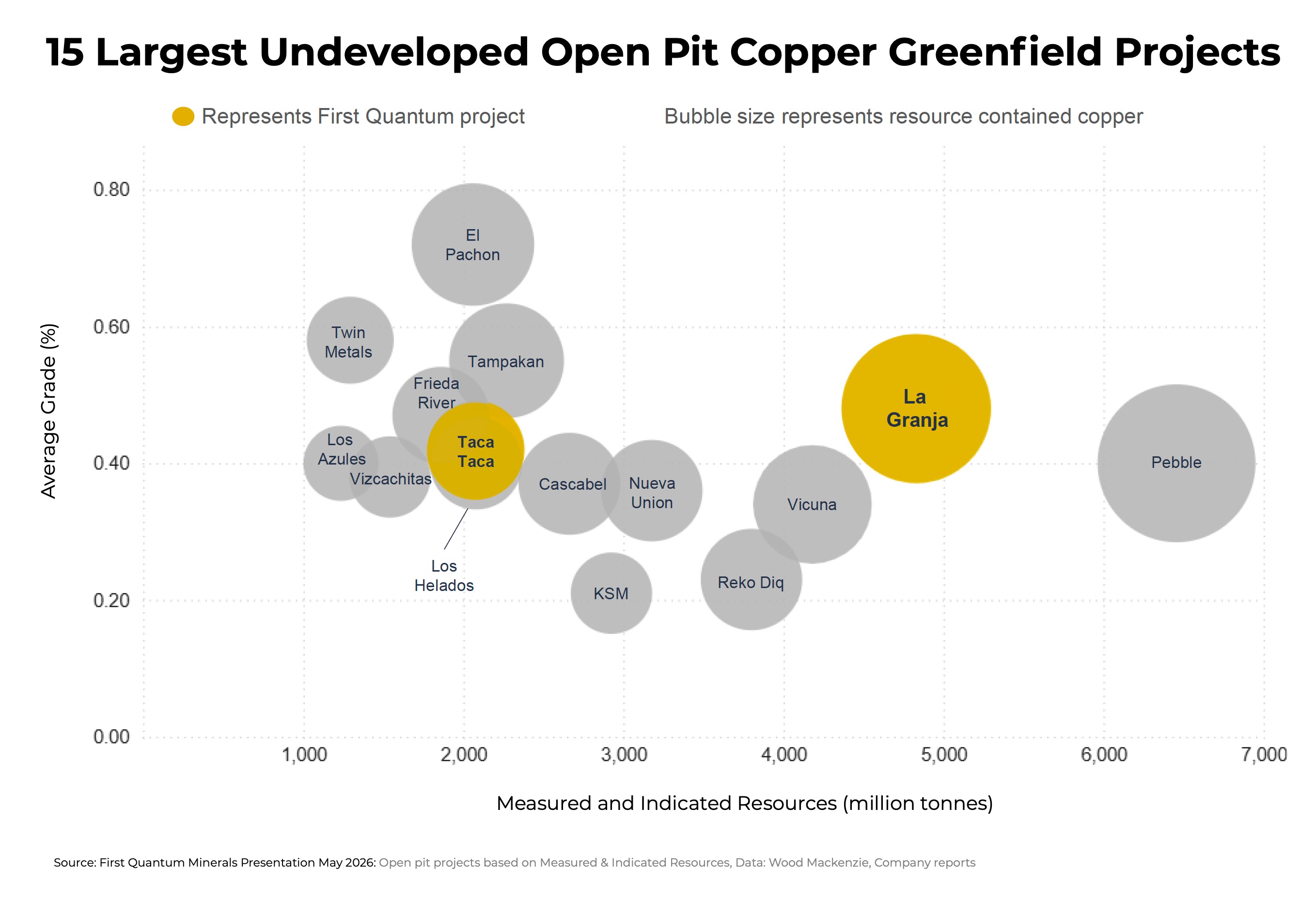
First Quantum Minerals’ updated NI 43-101 for the La Granja copper project in northern Peru outlines 4.8 billion tonnes of measured and indicated resources at 0.48% Cu (23.0 Mt contained), plus 5.2 billion tonnes inferred at 0.40% Cu (20.7 Mt), based on 832 diamond holes totalling 370,000 metres. The company plans pit-side comminution and slurry transport via a 7 km tunnel to a processing and tailings complex on a flatter Pacific coastal plain ~100 km away, using desalinated seawater as primary supply. Engineering focus centres on managing arsenic as discrete, “packageable” mineral phases to maintain saleable concentrate through a conventional flowsheet under Peru’s strict ESIA regime.
RCT – Powered by Epiroc has rapidly deployed its AutoNav Lite semi-automation package on two remotely operated dozers at a major gold mine in northern Canada to accelerate pit-wall stabilisation and remediation works in controlled zones. The system allows operators to run the dozers from a safe location outside exclusion areas while maintaining precise blade control for backfilling, bench shaping and push‑down tasks. For geotechnical and mine operations teams, this points to faster recovery of geotechnically constrained areas without exposing operators to rockfall or ground failure hazards.
BHP and Rio Tinto have formed a Tailings Management Consortium (TMC) and issued joint guidance focused on improving tailings dewatering and storage facility management. The collaboration targets higher degrees of dewatering to move operations away from conventional slurry dams towards safer, lower‑footprint options such as thickened, filtered or dry‑stacked tailings, in line with emerging global standards. Both miners state they will share operational learnings and design practices across industry, signalling more open benchmarking of tailings performance and risk controls.
Zijin Longking has dispatched the first production-line LK220E battery electric mining trucks from its Longyang City plant in Fujian Province, marking the start of series manufacture at the Longjing Smart Environmental Protection Industrial Park. At the same event on 9 May, the company signed a new contract for its larger LK350E battery electric truck, signalling customer commitment to higher-capacity BEV haulage. For mine planners and fleet engineers, this points to accelerating availability of Chinese-built battery trucks in the 220–350 t class for large open-pit operations.