Peru vote uncertainty and $6bn mining capex: risk takeaways for project teams
Reviewed by Joe Ashwell
First reported on MINING.com
30 Second Briefing
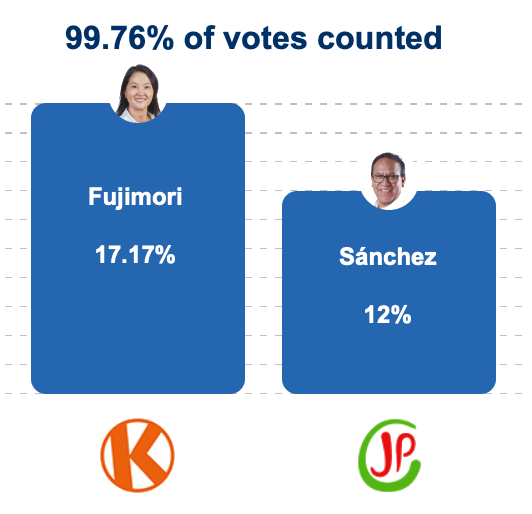
Peru’s 7 June presidential runoff between leftist Roberto Sánchez and conservative Keiko Fujimori is jolting markets and putting roughly $6 billion in annual mining investment at risk, with Peru’s sol and dollar bonds already underperforming and Barclays advising investors to go underweight. Sánchez is proposing higher mining taxes, constitutional reform, a phase-out of open-pit mining and potential use of international reserves for social spending, directly threatening large copper and gold operations run by Glencore, Anglo American, Freeport McMoRan, MMG and Fortescue’s newly acquired Cañariaco project. At the same time, illegal miners are now believed to produce more gold than formal operators such as Hochschild, Buenaventura and Newmont, raising operational and permitting uncertainty even if a business-friendly Congress tempers more radical policy shifts.
Technical Brief
- Fortescue’s Cañariaco open-pit copper project targets 140,000 t/y production, acquired for C$139 million in March.
- Southern Copper’s Tía María project licence, worth $1.8 billion, was revoked then reinstated in April, extending permitting uncertainty.
- Mining investment totalled about $6 billion last year, with expectations of further growth in 2026 before the election shock.
- Peru has cycled through eight presidents since 2016, yet mining still drives roughly 3% annual post-pandemic GDP growth.
- Mining contributes about 60% of Peru’s export revenues, dominated by copper, gold, silver and zinc shipments.
- Peru ranks as the world’s third-largest copper producer, anchoring major operations for Glencore, Anglo American, Freeport and MMG.
- Illegal operations are now estimated to produce more gold than formal miners Hochschild, Buenaventura and Newmont combined.
- Proposed legislation would halve the allowable holding period for unused concessions, pressuring early drilling and feasibility timelines.
- Barclays recommends underweight positioning in Peru’s dollar bonds and selling the sol, signalling higher financing costs for new mines.
- Despite stronger international reserves and a more influential pro-business Congress, analysts still warn of “strong adjustment” risk in local assets.
Our Take
Glencore’s exposure in Peru, combined with recent operational and permitting headlines elsewhere in our coverage (from the Kazzinc incident in Kazakhstan to MRN’s new bauxite licences in Brazil), suggests the group is actively rebalancing risk across jurisdictions rather than relying on Andean copper growth alone.
Given that mining accounts for about 60% of Peru’s exports, prolonged uncertainty around projects such as Tía María is likely to strengthen the bargaining power of alternative copper jurisdictions in Latin America—particularly Chile and Argentina, which feature prominently in other recent project and policy pieces in our database.
Prepared by collating external sources, AI-assisted tools, and Geomechanics.io’s proprietary mining database, then reviewed for technical accuracy & edited by our geotechnical team.
Related Articles

Related Industries & Products
Mining
Geotechnical software solutions for mining operations including CMRR analysis, hydrogeological testing, and data management.
CMRR-io
Streamline coal mine roof stability assessments with our cloud-based CMRR software featuring automated calculations, multi-scenario analysis, and collaborative workflows.
HYDROGEO-io
Comprehensive hydrogeological testing platform for managing, analysing, and reporting on packer tests, lugeon values, and hydraulic conductivity assessments.
GEODB-io
Centralised geotechnical data management solution for storing, accessing, and analysing all your site investigation and material testing data.