Geomechanics, Streamlined.
© 2026 Geomechanics.io. All rights reserved.
Clarion Housing Group’s development arm Latimer has topped out the 296‑home Twyford Park scheme in Ealing with JJ Rhatigan, with 50% of units designated as affordable and private sales already launched. The development integrates rooftop solar PV and air‑source heat pumps for all homes, shifting space and water heating to renewable electricity and targeting lower operational energy costs for residents. Twyford Park sits alongside the restoration of Twyford Abbey’s heritage buildings and landscape, and complements Clarion’s nearby Sherwood Close regeneration, delivering 362 homes, about two‑thirds affordable.
Watkin Jones, with Graham and Lacuna Developments, has reached practical completion of Loftlines, a 627-home build-to-rent scheme for Legal & General in Belfast’s Titanic Quarter. The waterfront development forms part of the wider regeneration of former docklands adjacent to the historic shipyard, requiring complex brownfield construction and coordination with existing port and heritage infrastructure. For civil and geotechnical teams, the scale and location signal continued demand for high-density residential foundations and services in constrained, post-industrial urban sites.
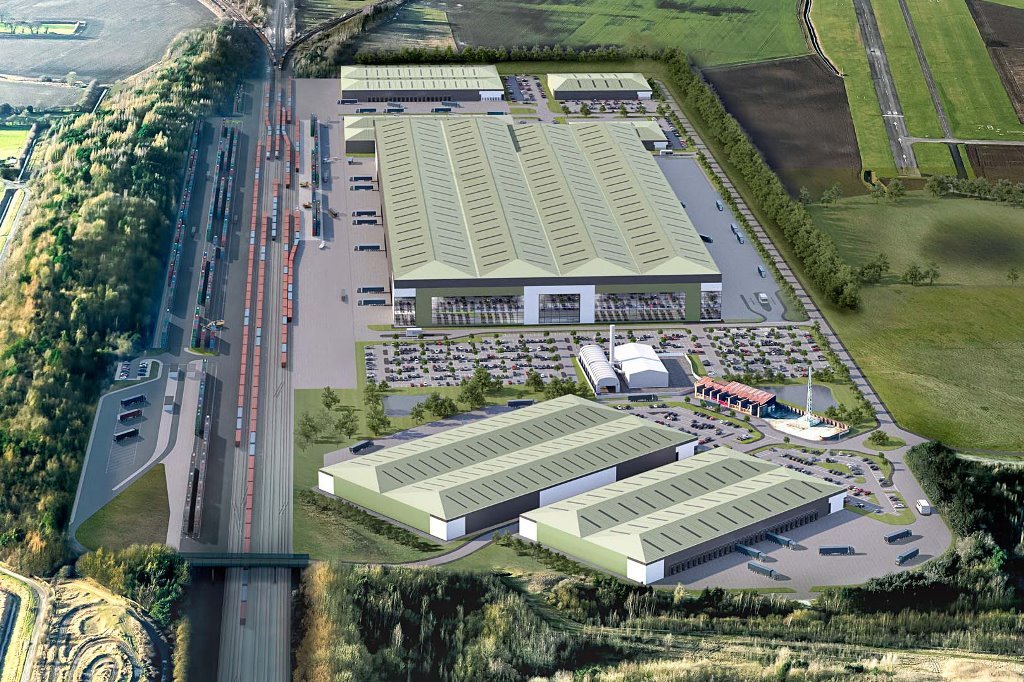
Peel Group has launched a £582m all-cash bid for brownfield developer Harworth Group at 172.5p per share, a 36–37% premium to its one- and three-month volume-weighted averages. Harworth controls a portfolio of modern industrial and logistics assets and strategic land in the North of England and Midlands, including a recently approved £190m scheme at Gascoigne Interchange. Peel, whose Goodweather Holdings arm already owns 29.96%, argues Harworth’s model is strained, citing 2025 admin and net interest costs of £36.34m and £10.6m against passing rental income of £14.7m.
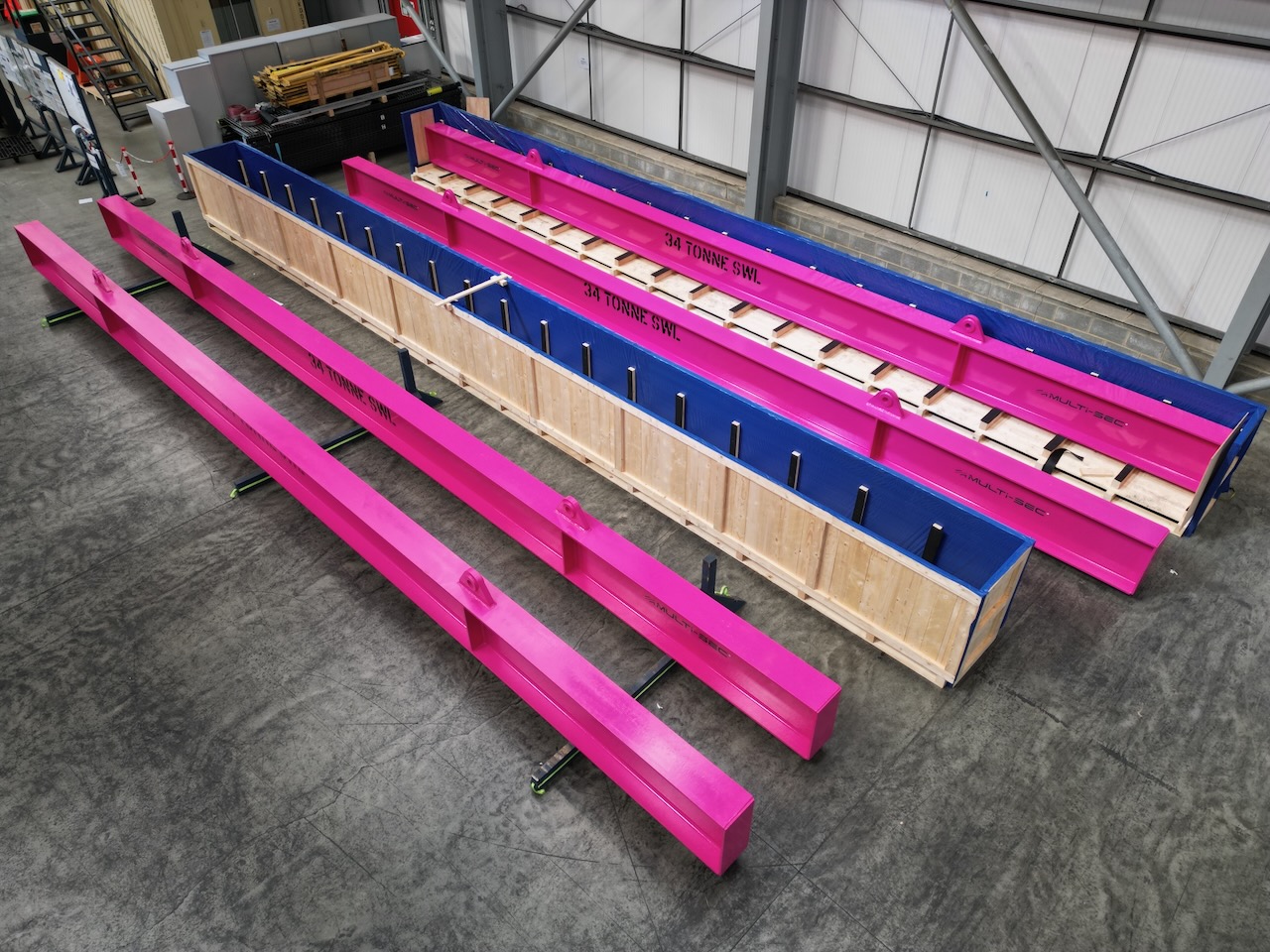
Durham Lifting has secured a repeat US order from a Kansas City client for ten bespoke multi-point spreader beams, each rated to 34 tonnes, signalling continued demand for UK-fabricated heavy lifting gear in North America. The beams will be designed, manufactured and load tested at the company’s Middlesbrough facility, keeping full control of welding procedures, NDT and proof-loading in-house. For contractors, the repeat order suggests confidence in these modular lifting solutions for handling large prefabricated components and heavy plant on complex infrastructure jobs.
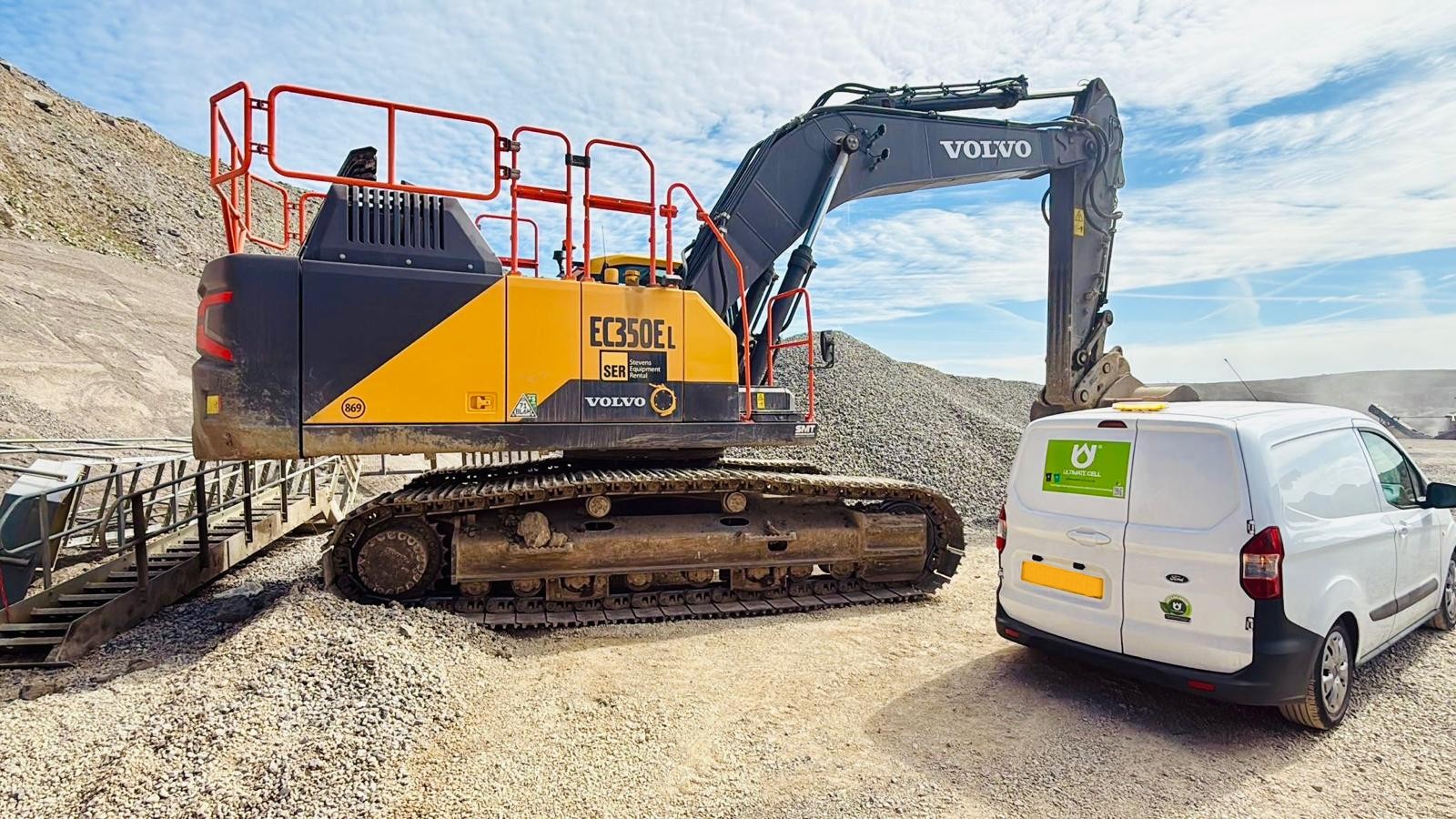
Stevens Equipment Rental has completed a nine‑month trial of Ultimate Cell hydrogen retrofit systems on a 35‑tonne Volvo excavator and an 18‑tonne loading shovel, recording peak fuel savings above 25% on the excavator and over 10% on the shovel under comparable duty cycles. Using OEM telematics and a three‑month pre‑installation baseline, SER projects that a 2,000‑hour annual utilisation could cut diesel use by several thousand litres and CO2 by more than 10 tonnes per machine. The non‑invasive unit draws low current from the battery to electrolyse fluid and inject small hydrogen/oxygen volumes into the air intake, improving combustion, torque and soot levels with only periodic electrolyte replacement.
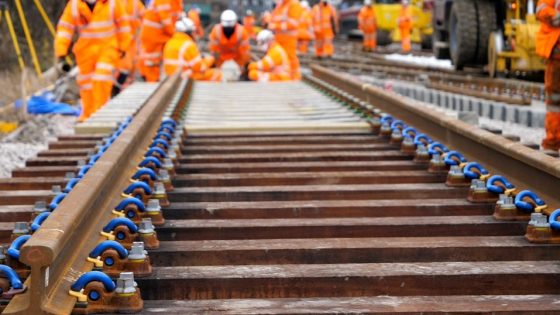
£5.46M of rail works will be delivered by Network Rail across the East Midlands over two weekends this month, with additional engineering possessions scheduled for the August bank holiday. The programme includes track and asset renewals to support the forthcoming roll-out of digital signalling on the East Coast Main Line, where testing of the new systems is already under way. Possession planning and interface management with the East Coast digital signalling programme will be critical for contractors and designers working on track, civils and systems integration.
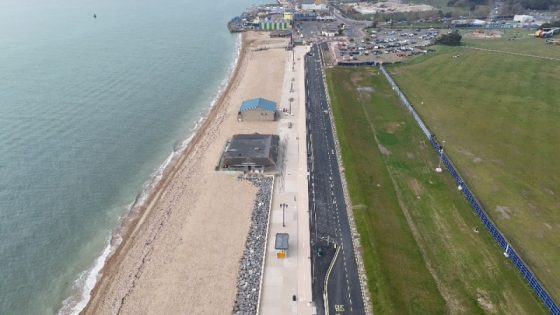
Grey coastal protection is challenged as a default choice, with the Sir John Armitt Prize going to a coastal defence scheme that departs from traditional concrete and rock armour. The award citation is used to argue that hard, grey infrastructure is often a habit rather than an engineering necessity, opening the door for nature-based solutions such as dunes, saltmarsh and managed realignment. For coastal engineers, this signals growing professional backing for hybrid and soft defences where hydraulic loading, sediment transport and long-term adaptability allow.
Egis has secured a place on Yorkshire Water’s £80M Technical Services and Assurance Framework for Asset Management Period 8 (AMP8), covering 2025–2030. The consultancy will provide design, assurance and programme support for water and wastewater infrastructure, including treatment works upgrades, trunk mains, and resilience schemes across Yorkshire’s 62,000km network. For geotechnical and civil teams, the framework signals a pipeline of condition assessment, ground investigation, and complex brownfield rehabilitation projects under tighter performance and regulatory targets.
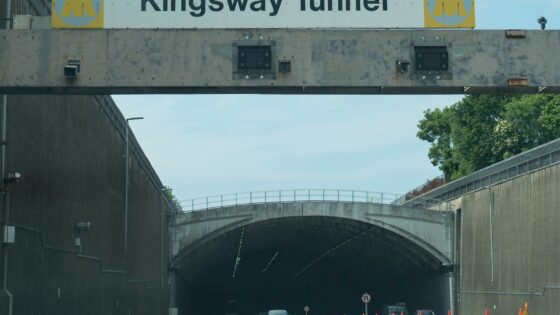
Merseytravel has launched a £15M procurement for a single contractor to deliver early contractor involvement, detailed design and remedial works at eight ventilation stations serving the Kingsway and Queensway road tunnels under the River Mersey in Liverpool. The contract will cover refurbishment of ageing mechanical and electrical ventilation plant, structural repairs to ventilation buildings and shafts, and upgrades to control and monitoring systems. Engineers will need to manage works around live traffic, legacy tunnel infrastructure from the 1930s and 1970s, and strict operational air quality and fire-life-safety requirements.
New Environment Agency classifications under the Water Environment (Water Framework Directive) Regulations show only 14.3% of England’s surface water bodies achieve “Good ecological status” against retained EU standards. The results cover rivers, lakes, estuaries and coastal waters, and are based on biological, chemical and hydromorphological quality elements defined in the Directive. For civil and water engineers, the figures signal continued regulatory pressure on combined sewer overflows, wastewater treatment works and diffuse pollution controls in drainage and catchment management schemes.
Aecom has been appointed by Transport for London to deliver a feasibility study for new depots and sidings to support the Bakerloo Line Upgrade and the introduction of a modern train fleet. The work will examine options for stabling, maintenance and turnback capacity on a constrained deep Tube alignment, where existing facilities at London Road and Queen’s Park are already heavily utilised. Outcomes will shape land-take, track layout, power and signalling interface requirements that contractors and designers will need to accommodate in later GRIP stages.
Heathrow’s proposed third runway and associated terminal works are being framed as a long-term skills engine, with construction expected to run for more than a decade and demand tens of thousands of roles across civils, geotechnical, tunnelling and systems integration. Delivery partners are planning large-scale apprenticeship pipelines, on-site training centres and modular offsite fabrication hubs to tackle shortages in steel fixing, ground engineering and digital design. For contractors and consultants, the programme signals sustained demand for BIM-led delivery, complex phasing around live airside operations and high-volume materials logistics.
Era4 is proposing a landfill gas-powered data centre in Canterbury, using on-site electricity generation from captured methane to run high-density AI compute loads rather than exporting power to the grid. The developer aims to integrate gas engines with modular data hall construction to match generation profiles, arguing this could provide lower-carbon, baseload power compared with diesel backup and grid-only supply. For civil and geotechnical teams, the concept raises design questions around foundation vibration from reciprocating engines, gas collection infrastructure, and long-term settlement on or adjacent to landfill.
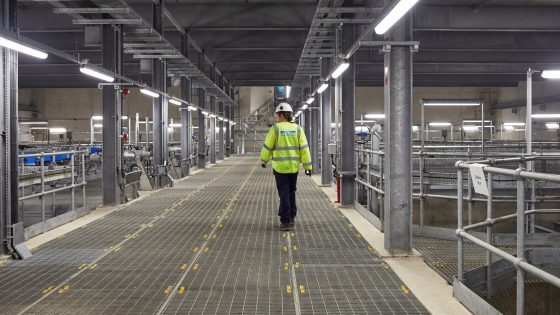
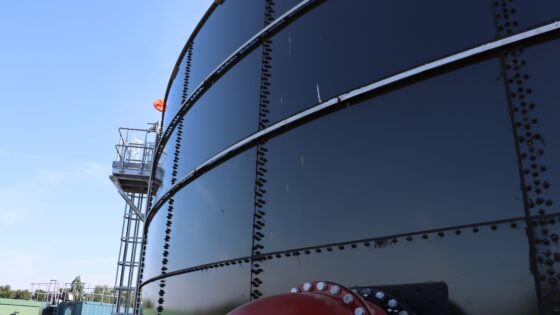
A £3.3M upgrade at Anglian Water’s Canwick Water Recycling Centre in Lincolnshire is nearing completion, with final commissioning of expanded storm storage now underway. The scheme centres on increasing offline storm tank capacity to reduce combined sewer overflows to the River Witham and improve compliance with Environment Agency storm spill permits. Civil works, new mechanical screening and upgraded control systems will alter hydraulic behaviour during peak events, so operators will need updated network models and revised operating rules for intense rainfall.
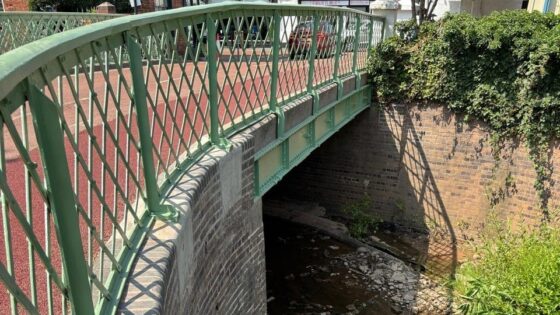
Restoration of the historic Kyre Bridge in Tenbury Wells has been completed by Worcestershire County Council after inspections identified structural deterioration that threatened its continued use. Works focused on preserving the existing load-carrying masonry structure while keeping the crossing operational for local residents, businesses and visitors. The scheme signals ongoing investment in life-extension of ageing rural bridge stock, where targeted structural repairs and protection can defer full replacement.
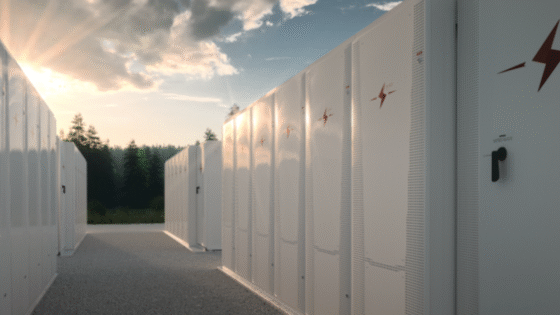
Innovate UK has opened a £3M competition for electrochemical ultra long duration energy storage (ULDES) technologies capable of delivering multi-hour to multi-day grid support beyond conventional lithium-ion systems. Funding will target UK-based businesses developing novel chemistries, cell architectures or balance-of-plant designs that can be deployed at scale for transmission and distribution infrastructure. Civil and geotechnical engineers should expect emerging requirements for foundations, enclosures and thermal management for large stationary electrochemical plants integrated with substations and renewable generation sites.
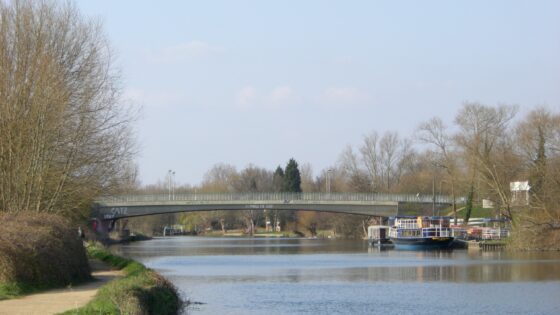
Oxfordshire County Council has applied to the Department for Transport for £8M to repair Donnington Bridge in south Oxford, which is currently subject to weight restrictions limiting heavier vehicles. The funding would address structural deterioration that has reduced the bridge’s load-carrying capacity, with works expected to focus on strengthening key elements such as bearings, deck and supporting piers. For local highways and freight operators, restoring full capacity on this Thames crossing is critical to maintaining network resilience and avoiding longer diversion routes through central Oxford.
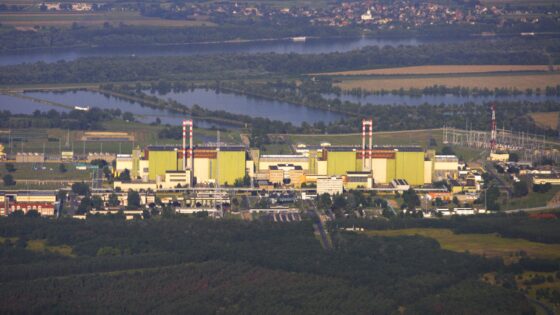
Droughts and historically low river levels across Europe are forcing several nuclear power plants that rely on once-through river water cooling to cut output or temporarily shut down to stay within thermal discharge limits. Facilities on major rivers such as the Rhône and Rhine are constrained by maximum allowable downstream temperature rises of only a few degrees Celsius, reducing available cooling capacity during heatwaves. Civil and mechanical engineers are being pushed to consider retrofitting closed‑loop or hybrid cooling towers, larger intake structures and alternative water sources to maintain design output under more frequent low‑flow conditions.
Real-time oil monitoring using systems such as Shell Remote Sense is shifting mine lubricant management from periodic lab sampling to continuous, sensor-based condition tracking. Remote Sense uses in-line sensors, telemetry and machine learning analytics to monitor parameters like viscosity, contamination and oxidation in engines, gearboxes and hydraulic systems, enabling condition-based maintenance rather than fixed-interval oil changes. For reliability engineers, this supports earlier detection of wear or coolant ingress, reduced unplanned downtime on high-value assets, and tighter control of lubricant consumption across large mobile and fixed plant fleets.
Mid-tier Australian miners are reassessing legacy HR and payroll platforms as rapid site expansions, complex award interpretations and FIFO rostering strain systems originally built for smaller workforces. Workday ANZ senior regional sales director Matt Lovell points to operators running multiple payroll engines, manual allowance calculations and fragmented time-and-attendance data across open-pit and underground sites as key pain points. Interest is growing in cloud-based platforms already deployed on several Australian mine sites that can centralise roster management, automate compliance with enterprise agreements and support faster onboarding during production ramp-ups.
Glencore plans an October secondary listing on the ASX to tap Australia’s A$4.4 trillion pension market and support an organic copper growth strategy, targeting rapid inclusion in the ASX 200 (about A$1.5 billion local market cap) and later the ASX 100 (around A$5.5 billion). The move follows the expiry of its six‑month merger standstill with Rio Tinto and is expected to ease future M&A involving Australian‑listed miners, though some funds question trading liquidity without new equity issuance. First‑half adjusted earnings reached $10.1 billion, up 86% year‑on‑year, driven by elevated commodity prices and volatile energy trading.
Suspended development of the Andes Norte section at Codelco’s El Teniente, triggered by new studies of an “emerging seismic phenomenon” at greater depth, may last up to two years and follows a July 2025 rockburst equivalent to magnitude 4.2 that killed six workers in adjacent Andesita and Teniente 7 panels. El Teniente’s output is already about 27% lower year-on-year and Codelco has conceded its 1.7 Mt/y copper target for 2030 is unattainable, tightening a market where CRU reports one LME participant holding 50–79.99% of live copper warrants. Comex September copper hit an intraday record of $6.7045/lb as Chile posted its weakest Q2 copper production in nearly 20 years, with traders diverting metal into the US ahead of possible tariffs.
SuperCritical Materials has appointed Neal Froneman, founder and former CEO of Sibanye-Stillwater, as chair of its board, bringing more than 30 years’ experience and a track record that includes leading Sibanye’s move into lithium via a stake in Finland’s Keliber project. Froneman, already an investor in SuperCritical, says he was attracted by its focus on fuel‑production infrastructure for nuclear. The company is scaling advanced seawater uranium extraction to expand nuclear fuel supply for new reactors and power‑hungry AI data centres, signalling future demand for large marine and processing facilities.
Copper prices set a fresh US record as a five‑month closure of the Strait of Hormuz and China’s sulphuric acid export ban squeeze feedstock for acid‑leach copper operations. Traders and smelters are hoarding sulphuric acid cargoes, tightening availability for heap leach and SX‑EW plants that rely on large volumes of low‑cost acid to treat oxide ores. The supply shock raises operating risks for marginal producers and could accelerate shutdowns or cutbacks at acid‑dependent mines if logistics and export flows are not restored quickly.