Costain uses 3D printed concrete: design and carbon lessons for project engineers
Reviewed by Tom Sullivan
First reported on The Construction Index
30 Second Briefing
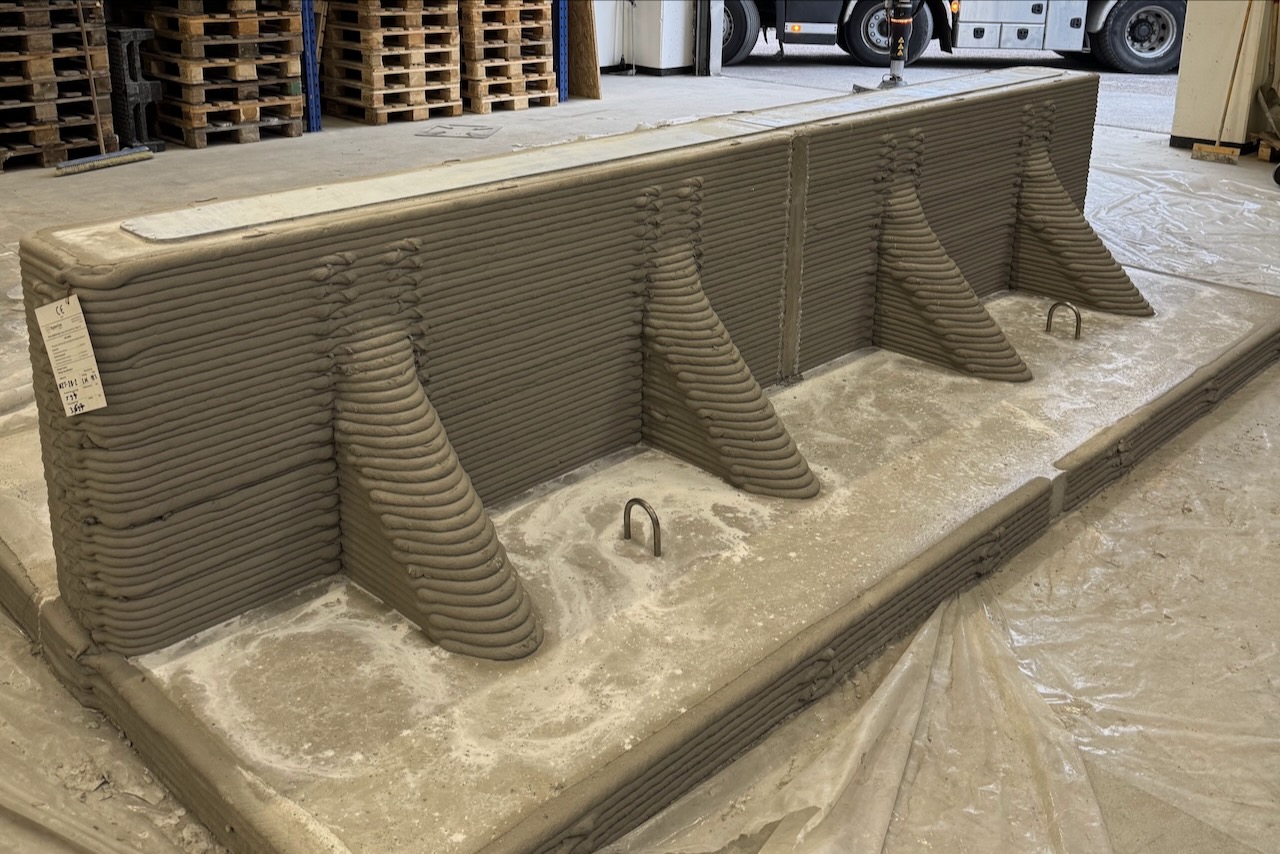
Costain is deploying low-carbon 3D printed concrete sleepers from Hyperion Robotics as pipe support bases on the East Coast Cluster CO₂ transport network being built by Northern Endurance Partnership and A E Yates. Hyperion’s formwork-free printing from its new Forge I facility near Scunthorpe delivers sleepers up to 60% lighter yet up to ten times stronger than traditional units, with a thin, reinforced base design. Compared with conventional precast supports, the solution cuts soil excavation, reduces concrete and steel use by about 40%, and lowers embodied carbon by up to 50%, while enabling faster offsite-led installation.
Technical Brief
- Hyperion’s 3D printing removes all sleeper formwork, avoiding timber/steel mould fabrication and storage.
- Layer-by-layer robotic deposition enables tight geometric tolerances and repeatable pipe invert levels along the CO₂ corridor.
- Offsite manufacture at Hyperion’s Forge I facility near Scunthorpe centralises QA and compressive strength verification.
- Factory production reduces on-site labour and heavy plant demand for sleeper casting and curing operations.
- Lighter units reduce imposed loads on soft ground, easing bearing checks and settlement control for pipe supports.
- Reduced excavation volumes lessen temporary works for trench support and shorten open-trench exposure windows.
Our Take
Costain’s use of Hyperion Robotics’ 3D‑printed concrete on the East Coast Cluster follows a run of water and gas infrastructure work in our database, suggesting the contractor is repositioning towards regulated utility and low‑carbon projects rather than traditional road and rail where its 2025 revenues fell sharply.
The reported 40–60% reduction in concrete, steel and unit weight is significant for the North Sea–linked East Coast Cluster, as lighter, lower‑embodied‑carbon elements can reduce temporary works demands and transport logistics for carbon dioxide handling infrastructure in constrained coastal and industrial sites such as Teesside and Scunthorpe.
Prepared by collating external sources, AI-assisted tools, and Geomechanics.io’s proprietary mining database, then reviewed for technical accuracy & edited by our geotechnical team.
Related Articles


Related Industries & Products
Construction
Quality control software for construction companies with material testing, batch tracking, and compliance management.
Mining
Geotechnical software solutions for mining operations including CMRR analysis, hydrogeological testing, and data management.
CMRR-io
Streamline coal mine roof stability assessments with our cloud-based CMRR software featuring automated calculations, multi-scenario analysis, and collaborative workflows.
HYDROGEO-io
Comprehensive hydrogeological testing platform for managing, analysing, and reporting on packer tests, lugeon values, and hydraulic conductivity assessments.
GEODB-io
Centralised geotechnical data management solution for storing, accessing, and analysing all your site investigation and material testing data.