Geomechanics, Streamlined.
© 2026 Geomechanics.io. All rights reserved.
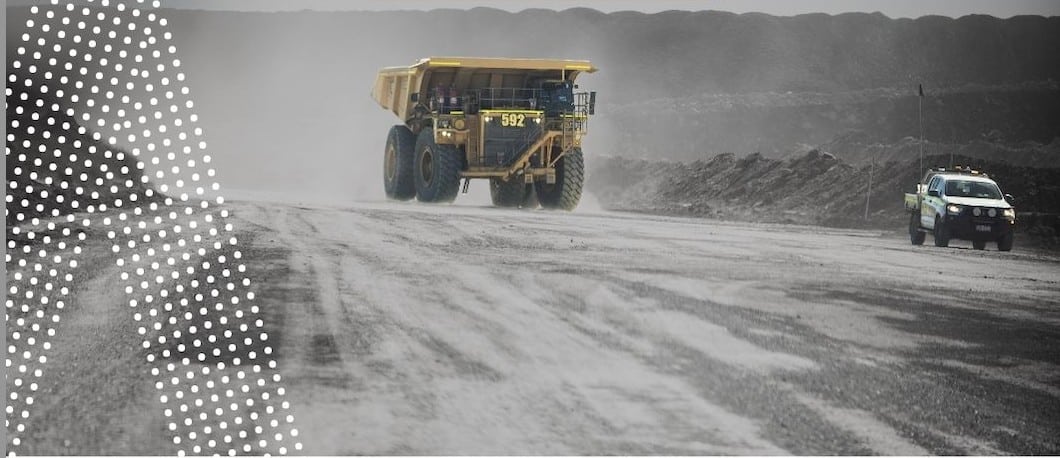
Active risk management in Australian mining is shifting towards real-time, technology-driven controls that separate people from heavy plant in shared work zones. New systems from suppliers such as Aptella integrate collision avoidance, proximity detection and geofencing around haul trucks, loaders and autonomous fleets, using on-board sensors and wearable tags to trigger alarms or automatic slow-downs. For geotechnical and operations teams, this means redesigning traffic flows, exclusion zones and training to match digital risk maps, with the aim of making “zero harm” credible rather than aspirational.
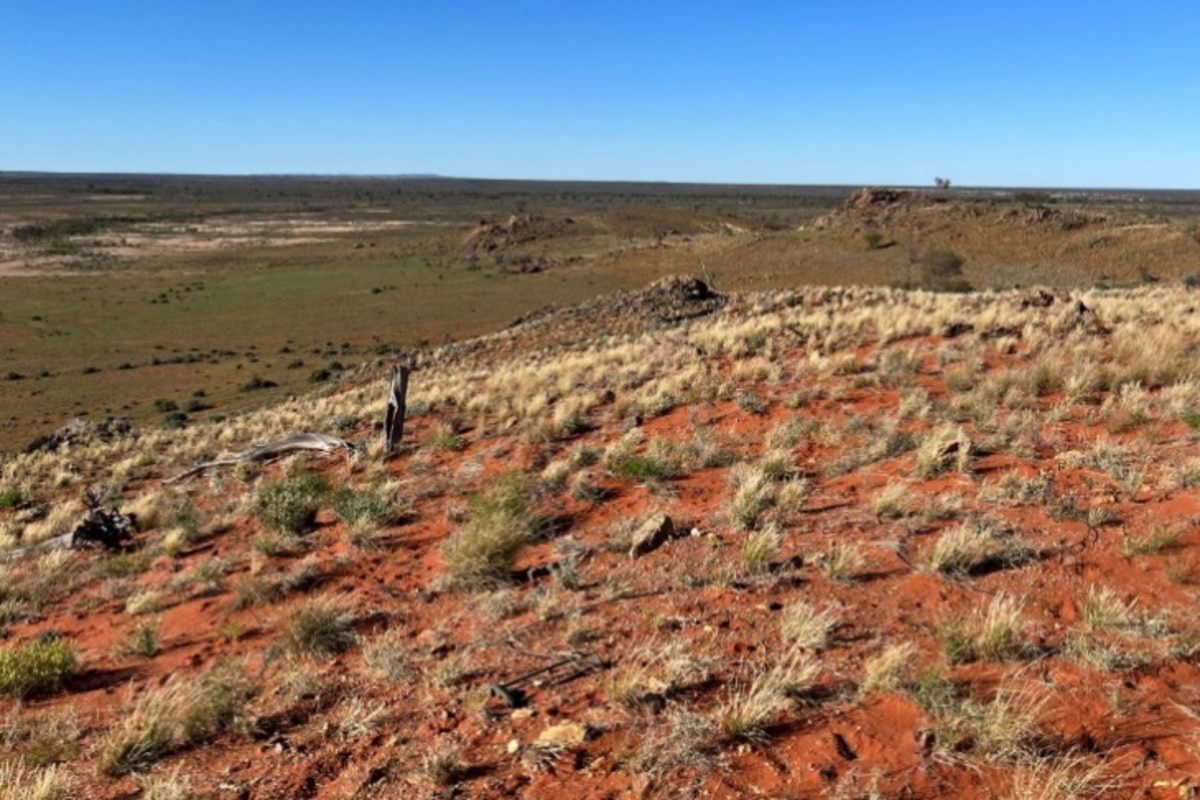
Geoscience Australia has mapped a 1000km continental-scale magmatic arc beneath the Delamerian project region spanning South Australia, New South Wales and Victoria, identifying concealed potential for critical minerals, copper and gold in previously under-explored terrane. Delivered as the first deep-dive study under the Federal Government’s 35-year Resourcing Australia’s Prosperity initiative, the work integrates deep-crustal geophysics and geochemistry to image mineral systems buried beneath thick cover. For explorers, the results materially expand prospective search space below cover sequences rather than in outcropping belts.
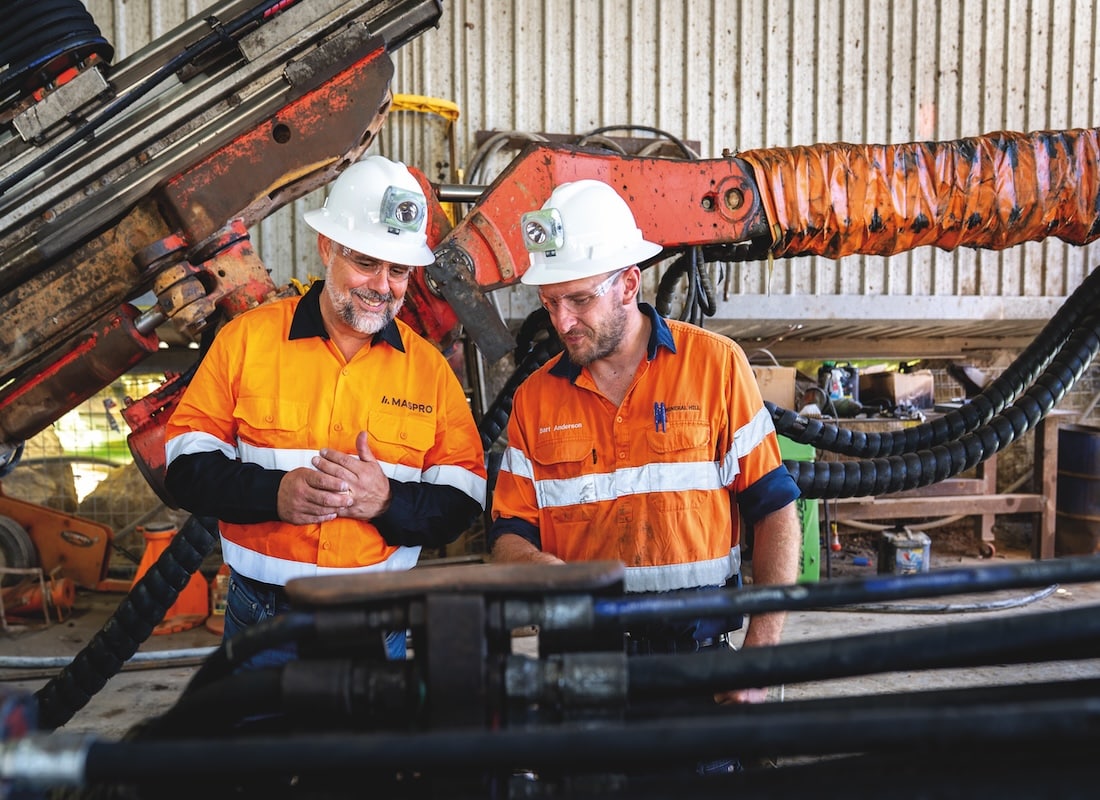
MASPRO is working with underground mines to extend hydraulic cylinder and wear-component life by forensically analysing premature failures that often occur within days in high-load, high-contamination environments. Using teardown inspections, metallurgical assessment and seal and surface finish analysis, the company traces root causes such as side-loading, misalignment, poor lubrication and abrasive ingress rather than accepting short service intervals as “normal”. The approach is feeding back into redesigns of rod eyes, bearing areas and sealing systems, giving maintenance teams data to adjust operating practices and stocking strategies.
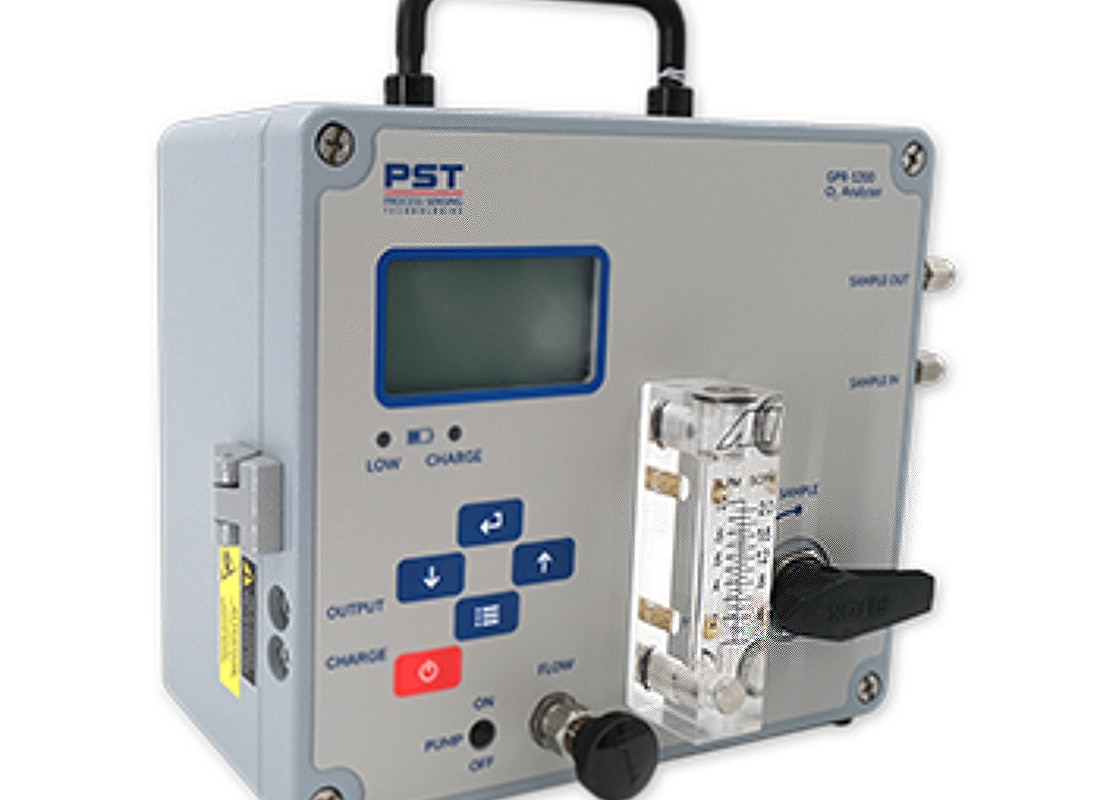
The Analytical Industries Inc. GPR-3500 Portable Purity Oxygen Analyser is a battery-powered unit for field and plant verification of enriched oxygen streams from 0–100 per cent, with selectable high-purity ranges such as 90–100 per cent O₂. Designed for portable use around gas plants, pipelines and on-site storage, it targets purity checks on oxygen-enriched process gas rather than trace-level safety monitoring. For mining operations relying on oxygen for leaching, smelting or cutting, it offers on-the-spot confirmation of gas quality without returning samples to a fixed analyser.
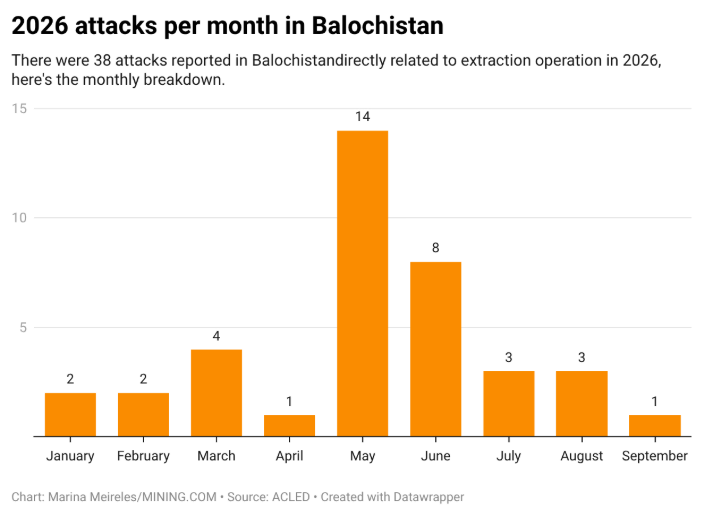
More than 30 mining operations in Pakistan’s Balochistan province have been attacked in 2026, with ACLED recording 38 incidents linked to extractive activity between January and September and over 130 in the past three years. Nearly 90% of separatist attacks on mineral projects occur on haul and access roads, typically disabling coal and copper-gold trucks by shooting tyres and burning vehicles, while heavily guarded sites such as Reko Diq and Saindak see fewer direct assaults. The pattern exposes critical vulnerabilities in transport corridors and raises security, reputational and community‑relations risks for foreign-backed projects.
BOTON and SimFer, the Rio Tinto-controlled operator of Guinea’s Simandou iron ore project, have signed a long-term intelligent operations support services agreement for the site’s conveyor belts and systems, formalised on 14 September in Wuxi, China. The deal extends BOTON’s role from supplying and installing high-capacity overland conveyor belts to providing ongoing intelligent monitoring, diagnostics and optimisation support. For mine operators, this signals deeper OEM involvement in lifecycle performance of critical bulk-handling infrastructure on one of the world’s largest undeveloped iron ore deposits.
XCMG has broken ground on its first overseas Remanufacturing Centre in Balikpapan, Indonesia, dedicated to overhaul and reman of large mining equipment components such as engines, transmissions and hydraulic systems. The facility is positioned as a localised lifecycle support hub for XCMG haul trucks and excavators operating in Indonesian coal and nickel projects around Kalimantan and beyond, reducing downtime and long-distance shipping for major component rebuilds. For mine operators, this signals tighter OEM support for high-hour fleets and potentially more predictable maintenance planning in the region.
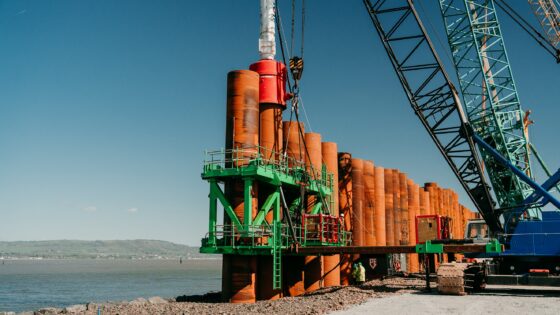
Belfast Harbour’s £90M D3 project is converting reclaimed land into a deep-water quay designed to berth large cruise vessels and support offshore wind installation vessels, within tight tidal windows in a heavily trafficked channel. Engineers are contending with variable fill and soft alluvial deposits, requiring ground improvement and careful quay wall design to control settlement and lateral movement under high berthing and crane loads. Construction methods are being adapted to strict environmental constraints in Belfast Lough, including turbidity limits and noise controls for marine habitats.
Completion of the A38(M) Tame Valley Viaduct strengthening scheme in north Birmingham restores full motorway capacity on this key elevated route, with Arcadis acting as project manager and supervisor for Birmingham City Council. The works focused on extending the life of the multi-span concrete viaduct, which carries the A38(M) over rail, industrial land and the River Tame, where access, traffic management and structural condition posed significant constraints. The project signals continued investment in major post-war viaducts that are now reaching critical stages in their fatigue and durability life.
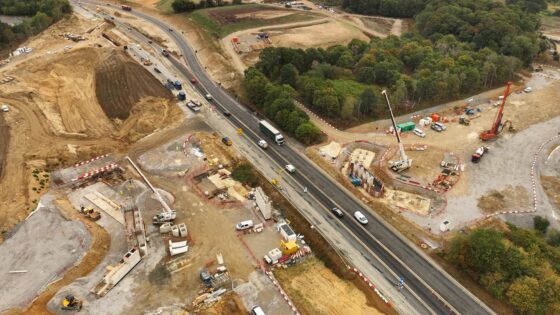
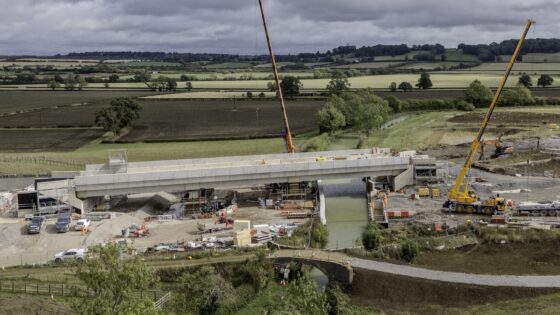
A £153M upgrade of the Thickthorn junction on the A47/A11 south of Norwich is advancing this week with a purpose-built bridge being craned into position to reconfigure one of the region’s busiest strategic road interchanges. The new structure is a key element in separating A11–A47 through traffic from local movements, reducing weaving and short merge lengths that currently constrain capacity and raise collision risk. For designers and contractors, the lift marks the critical transition from earthworks and foundations to full structural integration and subsequent tie-in works under live-traffic conditions.
Black Country Transport, led by City of Wolverhampton Council, has let a £150M (excl. VAT) highways works framework covering multiple Black Country councils for planned maintenance and improvement of local roads. The multi-year framework is expected to package resurfacing, junction upgrades and minor structures works into call-off contracts, giving councils faster procurement for schemes typically below major project thresholds. Contractors will be watching for early work packages involving carriageway strengthening, drainage renewals and footway reconstruction on heavily trafficked urban routes.
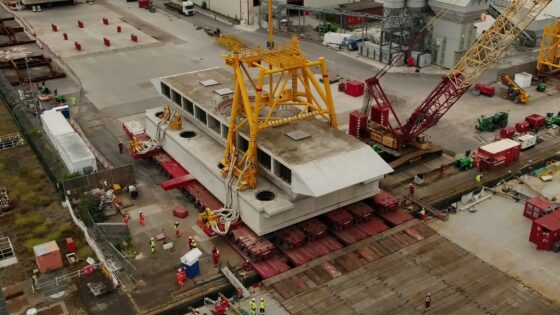
Planning permission has been granted for Sizewell C to build a pre-cast concrete factory at Avonmouth, near Bristol, to produce marine tunnel segments and tunnel heads from 2028. The facility will fabricate large-diameter segmental linings for the nuclear plant’s intake and outfall tunnels, enabling offsite quality control and reducing complex marine construction work offshore. Contractors and designers will need to coordinate segment geometry, reinforcement detailing and marine durability specifications early, as tunnel design will be tightly coupled to the Avonmouth production set-up and logistics.
HS2 has started installing locally sourced ironstone cladding on the new Oxford Canal viaduct near Wormleighton in Warwickshire, giving the high-speed rail structure a visual link to traditional canal-side buildings. The cladding is being fixed to the concrete viaduct piers and deck edges as a non-structural facing, designed to weather to a similar colour and texture as historic ironstone masonry in the area. For designers and contractors, the work illustrates how architectural finishes are being integrated with major rail viaducts without altering primary structural design or load paths.
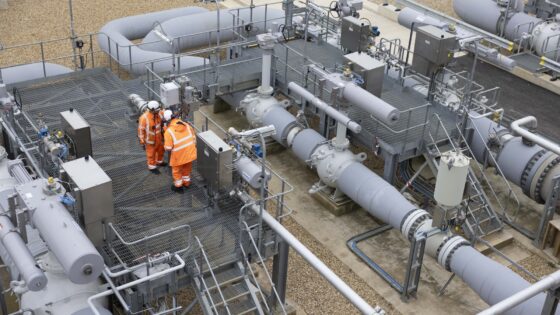
National Gas has advanced the proposed St Fergus–Teesside hydrogen pipeline, part of its 2,414km Project Union network, into the engineering design phase, moving beyond initial feasibility. The section will repurpose existing high-pressure natural gas transmission corridors where possible, with new buried steel pipe only where capacity or routing gaps exist. Designers must address hydrogen embrittlement, fracture control and compressor station modifications, signalling upcoming demand for materials testing, integrity assessment and geotechnical route optimisation along legacy pipeline alignments.
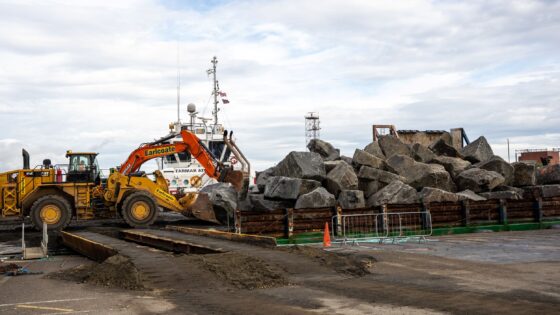
Around 55,000t of rock armour is being placed by PD Ports along the South Gare breakwater at Redcar to reinforce coastal protection for the River Tees against increasingly severe North Sea storm conditions. The works focus on strengthening the existing rubble-mound structure, which has experienced accelerated damage and overtopping, with rock sizes and gradings selected to resist higher wave energy and storm surges. For coastal and geotechnical engineers, the scheme signals a need to reassess armour stability and design return periods on older breakwaters under changing wave climates.
Aya Gold & Silver has reported shallow, high-grade intercepts at its Zgounder mine in Morocco, including 13 metres at 783 g/t silver from surface in hole ZG-RC-24-155 and 11 metres at 501 g/t from 2 metres in ZG-RC-24-354, as part of a 30,000-metre programme using RC, diamond and percussion drilling. Additional near-surface hits such as 12 metres at 762 g/t from 7 metres (T28-26-1404) and 14 metres at 468 g/t from 14 metres (T28-26-1443) could support resource conversion and mine-plan updates around the open pit and central zone. Zgounder, now running a 2,700 t/d plant and targeting 5.2–5.8 million oz silver this year at US$21.50/oz cash costs, is also advancing an exploration drift at the 1,825-metre level to open drilling west of the Zgounder fault in Q4, while the Boumadine project carries a US$3.5 billion NPV and 93% IRR for planned 2030 start-up.
Venezuela is close to a deal to move about 31 tonnes of gold bullion, worth roughly $4 billion, from the Bank of England’s vaults to the Federal Reserve Bank of New York after a seven-year legal and diplomatic deadlock. Interim leader Delcy Rodríguez would gain legal control but be barred from immediate sales, with the metal instead earmarked as collateral for sovereign borrowing, including post-earthquake reconstruction. The transfer still depends on UK court rulings over who controls the Bank of England account and on finalising technical custody and supervision terms.
State-owned China Rare Earth Group is in talks to acquire privately held Shenghe Resources, which owns about 3% of MP Materials, operator of the Mountain Pass rare earths mine in California and recipient of a $400 million Pentagon preferred stock and warrants package. The move would place a Chinese state-controlled entity and the US Department of Defense on the same shareholder register of the only US rare earths producer, currently valued at about $8.6 billion, after MP’s share price fell 2.35% on the news. Any deal would also pull Shenghe’s overseas assets, including Australia’s Peak Rare Earths, into China’s state rare earths consolidation, with implications for global supply quotas and project financing risk.
Canada has at least 15 shovel-ready gold projects with prefeasibility or feasibility studies and 36.6 million ounces in proven and probable reserves that could add roughly 2.5 million ounces a year—about a 35–40% boost—to current output, yet many are stalled in permitting for years. Projects such as Gold Fields’ C$1.9 billion Windfall (12 km of underground already developed), First Mining’s Springpole (federal review cleared after eight years) and Agnico Eagle’s fully approved Hammond Reef illustrate Canada’s average 20‑plus‑year discovery‑to‑production timeline. At a gold price near C$4,300/oz and industry costs around C$1,800/oz, these mines could generate about C$11 billion in annual revenue and roughly C$2.4 billion a year in combined federal and provincial taxes.
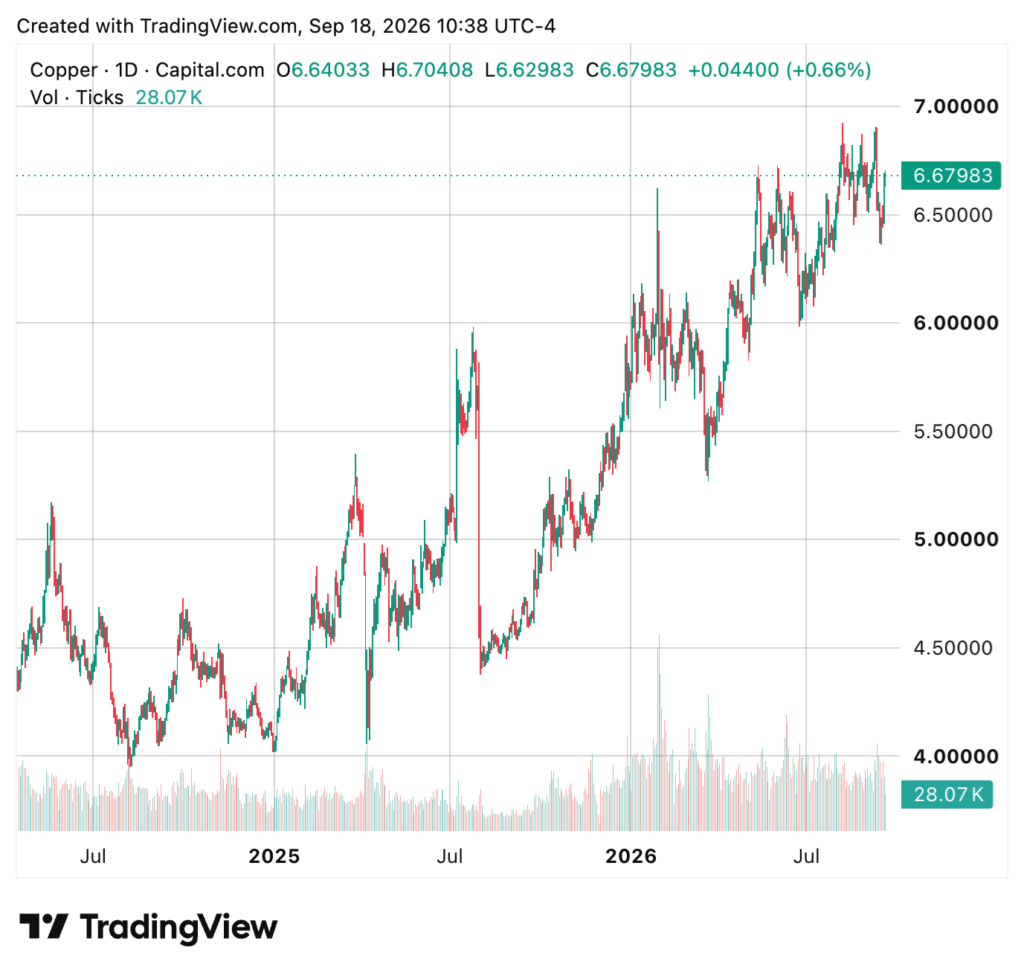
Global mined copper output is on track for its first annual decline since 2017, with a 1.1% year-on-year drop in H1 2026 and about 600,000 tonnes of expected 2026 production lost from Grasberg and Kamoa-Kakula, equal to roughly 2.5% of global mine supply, Sprott reports. Chilean production, 23% of world mine output, fell 6.6% in H1 and 9.4% in July, with Cochilco now forecasting 5.27 Mt for 2026 and BHP’s Escondida guiding down to 1.0–1.1 Mt in FY 2027 despite record throughput. While refined copper still shows a modest surplus, US cathode imports hit a record 223,000 tonnes in July and COMEX inventories jumped 712% since February 2025 on tariff uncertainty, tightening freely available metal outside the US and boosting miners’ margins via lower treatment and refining charges.
US government agency International Development Finance Corp. has conditionally approved a US$414.2 million loan for Global Atomic to build the Dasa uranium mine in Niger, a 40% increase on its 2024 proposal and sized to match updated capex for the 1,000 t/d underground operation. Dasa hosts 73 million lb U3O8 in probable reserves at 4,113 ppm and is expected to produce 68.1 million lb over 23 years, with a 57% post-tax IRR and US$917 million NPV at US$75/lb. Disbursement hinges on securing an export route for U3O8, extending the mining convention and permit, and finalising agreements with Niger’s government and the DFC.
Aura Minerals has secured a US$200 million, five-year syndicated loan priced at SOFR (3.62% on Friday) plus 2.7%, with a two-year grace period, arranged by Citi and Itaú BBA, to support working capital as it ramps up an Americas growth phase. The funding coincides with construction of the Era Dorada gold project in Guatemala, a US$382 million build on a two-year schedule targeting about 111,000 gold-equivalent oz. per year in its first four years. Aura aims to lift group output to more than 600,000 gold-equivalent oz. annually from 313,000 oz. currently, while keeping net debt at 0.21× trailing EBITDA.
Thirty-seven detainees arrested in a Nigeria Security and Civil Defence Corps sweep on suspected illegal mining sites near Minna, Niger State, were found dead in custody, prompting a state-wide mining suspension and 24-hour curfew. Niger State, which reported 880 registered mining companies and cooperatives in 2024 but only 261 profiled, sits over 578 mineral titles including 369 for gold, with widespread unlicensed activity. Federal Mining Marshals, expanded to 2,570 officers, have flagged 374 suspected illegal sites since March 2024, yet prosecutions have yielded only five convictions from 165 cases involving 430 defendants.
The US Department of Energy’s Office of Environmental Management has issued an expression of interest to US companies for potential transfer and recovery of surplus critical minerals and rare earth-related materials at five nuclear cleanup sites: Paducah (Kentucky), Portsmouth (Ohio), Oak Ridge (Tennessee), Nevada National Security Site and Moab (Utah). Targeted materials include aluminium, copper, lead, silver, platinum, tungsten, vanadium, fluorine, lithium hydride, chloride, selenium and cesium-137. Interested parties must supply their own extraction, processing and handling equipment, with DOE evaluating responses on technical capability and proposed end-use plans.