Canada’s 2035 uranium export push: execution and project risk notes for engineers
Reviewed by Joe Ashwell
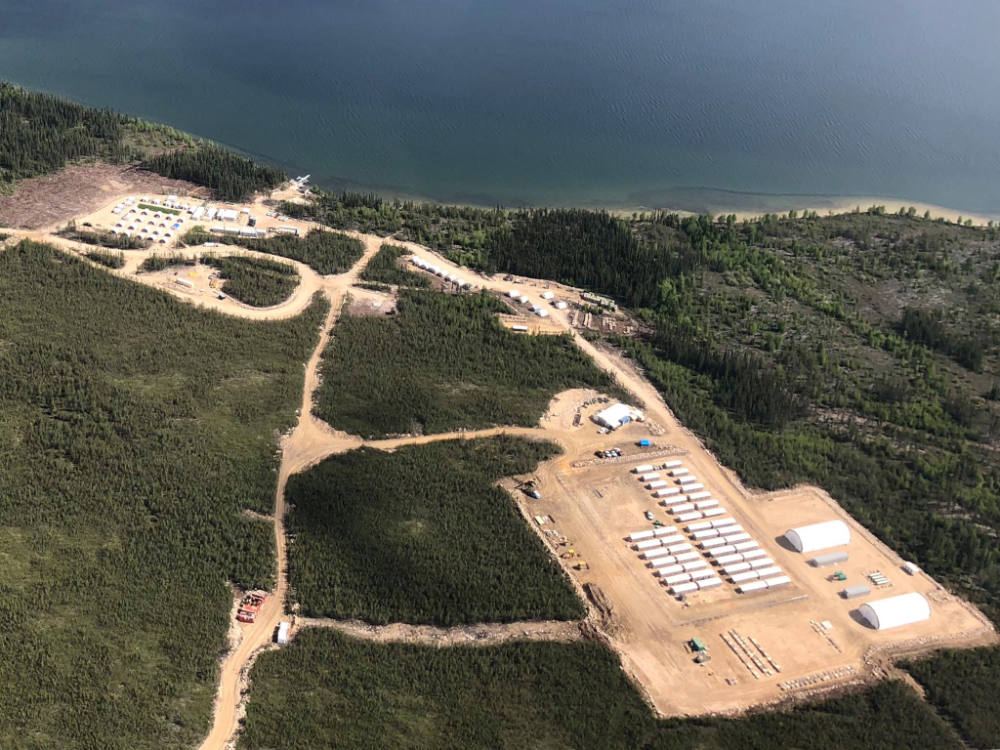
First reported on MINING.com
30 Second Briefing
Canada’s new national uranium strategy targets a doubling of exports by 2035, leveraging high‑grade Athabasca Basin assets such as Cameco’s McArthur River and Cigar Lake mines, Orano’s McClean Lake mill, and pipeline projects including NexGen’s Rook I and Denison’s Wheeler River. Marsh Canada’s Raul Munoz warns execution risk around 10–20‑year mine development timelines, permitting, capital availability and sustained uranium prices is the main constraint, not geology or technology. A key structural gap is the absence of domestic enrichment capacity for SMR‑grade fuel, despite Canada’s strong CANDU and SMR technology base.
Technical Brief
- McArthur River and Cigar Lake are currently Canada’s only producing uranium mines, both in northern Saskatchewan.
- Ore from Cigar Lake is processed at Orano Canada’s McClean Lake mill, centralising high-grade Athabasca Basin milling.
- Canada’s current nuclear fuel output is limited to yellowcake and uranium dioxide, with no enrichment step domestically.
- CANDU reactors’ use of natural (unenriched) uranium removes the need for enrichment in the existing reactor fleet.
- Many SMR designs require enriched uranium, implying a new conversion–enrichment–fuel fabrication chain not yet present in Canada.
- Munoz estimates mine development lead times of roughly 10–20 years, constraining how quickly new capacity can respond.
- Sustained uranium prices at “investment-justifying” levels are flagged as essential to unlock project financing and restart options.
- Higher long-term nuclear demand could bring decommissioned Canadian uranium mines back into production if economics improve.
Our Take
Our database shows NexGen Energy’s Rook I and Denison Mines’ Phoenix ISR project in the Athabasca Basin both moving into full construction phases by 2026, which materially underpins Canada’s ability to lift uranium exports by 2035 but also concentrates execution risk in northern Saskatchewan.
With Canada already ranked second in global uranium production, the push to double exports by 2035 likely hinges less on greenfield discovery and more on timely ramp-up at assets like McArthur River, Cigar Lake and new ISR capacity at Wheeler River, where any permitting or technical delays would ripple straight into export volumes.
The presence of CANDU reactors and emerging SMR plans in Canada and the United States suggests a growing pull for domestically sourced nuclear fuel, meaning Cameco, Orano Canada and NexGen could face a strategic choice between locking in long-term North American supply versus maximising higher-priced export tonnes into Europe and beyond.
Prepared by collating external sources, AI-assisted tools, and Geomechanics.io’s proprietary mining database, then reviewed for technical accuracy & edited by our geotechnical team.
Related Articles


Related Industries & Products
Mining
Geotechnical software solutions for mining operations including CMRR analysis, hydrogeological testing, and data management.
Construction
Quality control software for construction companies with material testing, batch tracking, and compliance management.
CMRR-io
Streamline coal mine roof stability assessments with our cloud-based CMRR software featuring automated calculations, multi-scenario analysis, and collaborative workflows.
HYDROGEO-io
Comprehensive hydrogeological testing platform for managing, analysing, and reporting on packer tests, lugeon values, and hydraulic conductivity assessments.
GEODB-io
Centralised geotechnical data management solution for storing, accessing, and analysing all your site investigation and material testing data.